Unveiling the Veil: A Deep Dive into Kevin A. Davis’s Atlanta’s Guide to Cryptids
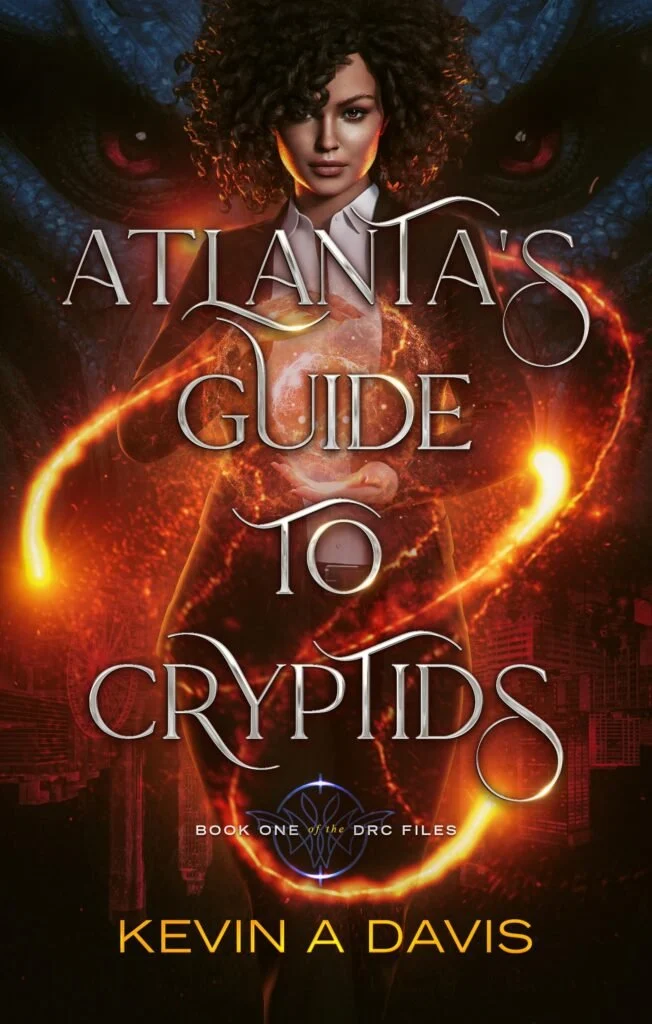
Atlanta, GA – In a world where the veil between the mundane and the monstrous has thinned to translucence, a new literary voice emerges to explore the perilous intersection of urban life and arcane threats. Kevin A. Davis’s Atlanta’s Guide to Cryptids, the inaugural volume in the highly anticipated DRC Files series, introduces readers to a reality where supernatural entities are not just folklore but a tangible, often deadly, problem. This compelling debut plunges protagonist Kristen, the newest recruit to the enigmatic Department of Realm Containment (DRC), into the deep end of a hidden war, forcing her to confront dangers that defy conventional understanding.
The narrative thrust of Atlanta’s Guide to Cryptids is immediate and immersive. Kristen, despite her inexperience, finds herself on the front lines, tasked with understanding and mitigating threats from various "Realms" that have begun to bleed into Earth. Her survival, and indeed the safety of her colleagues, hinges on her ability to rapidly assimilate into a world teeming with werewolves, vampires, witches, and revenants. Armed with a sharp intellect and a nascent mastery of spells drawn from these very same mystical dimensions, Kristen embodies the rookie thrown into an extraordinary crucible, offering readers a relatable entry point into a world of profound wonder and pervasive danger.
The Unveiling of a New Reality: The DRC Files Begin
Kevin A. Davis wastes no time in establishing the core premise: our world is no longer solely our own. The concept of "Realms intertwining with Earth" isn’t a distant prophecy but a lived reality, demanding an institutional response. This response manifests as the Department of Realm Containment, an organization operating in the shadows, dedicated to managing the fallout and containing the creatures that slip through the cracks.
A World on the Brink
The very existence of the DRC signals a significant paradigm shift within the fictional universe. It implies a societal reckoning with the supernatural, a point of no return where the mythical has become mundane enough to necessitate bureaucratic oversight. While the initial article doesn’t detail how these realms intertwined, the implication is that this isn’t a gradual process but a disruptive event, or a series of events, that has permanently altered the global landscape. The threats are not merely isolated incidents but a "real problem," suggesting a persistent and potentially escalating challenge to human civilization. The author’s choice to set this in Atlanta grounds the fantastical elements in a recognizable, contemporary urban setting, enhancing the sense of a hidden world coexisting with our own.
Kristen’s Baptism by Fire
Kristen’s role as an "inexperienced yet determined" protagonist is a classic narrative device that serves the reader well. Her learning curve mirrors our own as we navigate the rules and dangers of this new world. Her "quick wit and mastery of spells plucked from the Realms" are her primary tools, highlighting a blend of intellectual acumen and supernatural ability. This suggests she might be uniquely suited for her role, perhaps possessing a latent connection to the Realms, or simply an extraordinary aptitude for arcane knowledge. The stakes are clear: her rapid development is crucial, not just for her own survival, but for the lives of her team, emphasizing the high-pressure environment of the DRC. This dynamic sets up a compelling character arc for Kristen as she grapples with immense responsibility in an unforgiving profession.
Genre Blending: Paranormal Procedural
Atlanta’s Guide to Cryptids is billed as a "paranormal procedural," a genre that blends the investigative structure of crime procedurals with elements of urban fantasy or horror. This means readers can expect a series of cases or incidents that the DRC team must investigate and resolve. However, the review prudently tempers expectations, noting that it doesn’t offer "NCIS-level investigative sharpness." This distinction is crucial; it suggests that while there is a mystery at the core, the focus might be less on forensic detail and deductive reasoning, and more on the unique challenges and solutions presented by supernatural phenomena. The procedural element likely provides a framework for exploring the various cryptids and the DRC’s methods, while the "paranormal" aspect injects magic, myth, and the unknown into the investigative process.
Navigating the Labyrinth: Kristen’s Chronological Journey
While a detailed chronological breakdown of the plot would venture into spoiler territory, the reviewer’s observations allow us to infer the narrative’s structure and Kristen’s progression within it. The journey is less about meticulous, pre-planned investigation and more about reactive engagement with emergent threats.
From Rookie to Responder
Kristen’s initial steps into the DRC are characterized by immersion. She is "thrown into the deep end," signifying an immediate confrontation with the realities of her new job rather than a prolonged period of training or desk work. This hands-on approach forces her to "rapidly catch up," suggesting a fast-paced narrative where she learns on the job, likely through trial-and-error, mentorship from her colleagues, and sheer necessity. Her early cases would undoubtedly involve understanding the different types of cryptids, their vulnerabilities, and the protocols for their containment or neutralization. This foundational period is critical for establishing her credibility within the team and for the reader’s understanding of the DRC’s operational challenges.
The Unfolding Threat Landscape
The "werewolves, vampires, witches, and revenants" mentioned are not static threats but active "problems." The narrative likely unfolds through a series of encounters with these creatures, each presenting unique challenges that test Kristen’s burgeoning skills and the team’s cohesion. The reviewer notes that the team spends "more time reacting to what comes their way than actually working anything out." This implies a narrative driven by external events and crises rather than an internal, overarching mystery that the team actively pursues from the outset. This reactive chronology could lead to a more episodic feel, where each chapter or arc presents a new cryptid-related incident that the DRC must address, showcasing the diverse array of dangers lurking in the shadows of Atlanta. The mention of "actual murder" indicates that these threats are not merely nuisances but capable of inflicting serious harm, adding a layer of gravity to the proceedings.
Dynamic Adaptation in the DRC
The "reactive" nature of the DRC’s operations also speaks to an adaptive chronology within the organization itself. Faced with unpredictable incursions from the Realms, the Department cannot rely solely on established protocols. Instead, it must constantly evolve its strategies, develop new containment methods, and integrate new knowledge. The "researcher who can apparently do almost anything in half a second" plays a significant role in this adaptive process, serving as a critical resource for rapid information gathering and problem-solving. This reliance on a single, highly capable individual highlights both the specialized nature of the DRC’s work and perhaps the nascent stage of its development, where individual brilliance is crucial in the face of overwhelming unknowns.
The Engine of Engagement: Character and Worldbuilding
While the plot provides the framework, it is the rich tapestry of character interaction and a distinctive approach to worldbuilding that truly elevate Atlanta’s Guide to Cryptids, making it a memorable read despite its deviations from traditional procedural tropes.
A Cast That Captivates
The most significant strength, according to the reviewer, lies in the book’s cast. "The banter is fun, the characters are quirky and good company." This suggests a strong ensemble dynamic, where individual personalities clash and complement each other, creating an engaging internal rhythm for the team. In a genre often dominated by stoic, lone protagonists, a vibrant and well-developed supporting cast can significantly enhance the reader’s experience. This allows for moments of levity and camaraderie, humanizing the high-stakes profession. "Settling into the new job alongside Kristen" further immerses the reader, as we discover these characters and their quirks through her eyes, fostering a sense of shared experience and connection. The contrast with "side characters outside the main group stay fairly shallow" underscores the author’s focused investment in the core team, ensuring their development and interactions drive the narrative’s emotional core.
Pacing and Tone: An Enjoyable Energy
The book’s "easy, enjoyable energy" is a deliberate choice that differentiates it from darker, more intense urban fantasies or thrillers. Despite the presence of "actual murder," the tone "never tips into thriller territory." This implies a narrative that prioritizes character interaction and the unique charm of its premise over unrelenting suspense or grim realism. The pacing is likely steady, allowing readers to savor the banter and the gradual unveiling of the world rather than rushing through plot points. This approach caters to readers who enjoy a lighter touch in their paranormal fiction, where the human element and the wonder of the supernatural are as important as the danger. It offers a refreshing alternative to the often-bleak landscapes of contemporary dark fantasy.
Worldbuilding: Immersion by Discovery
The worldbuilding in Atlanta’s Guide to Cryptids is described as "jump in and find out" rather than "clearly explained." This approach can be a double-edged sword. For some readers, it offers a sense of organic discovery, mimicking Kristen’s own journey of understanding. It can create a more immersive experience, where the reader piece together the lore and rules of the world alongside the protagonist, fostering a deeper engagement with the mystery. This style avoids infodumps, allowing the narrative to flow more naturally. However, as the reviewer notes, it "may frustrate readers who like their orientation upfront," particularly those who prefer a meticulously constructed magical system or a comprehensive historical background of the supernatural world. Ultimately, its effectiveness depends on the reader’s preference for how information is delivered.
A Refreshing Narrative Choice: Absence of Romance
A particularly noteworthy aspect highlighted by the reviewer is the complete absence of romance. "Female leads without that are still rarer than they should be." This observation is significant in a genre often saturated with romantic subplots, particularly for female protagonists. By eschewing romance, Davis allows the narrative to focus squarely on Kristen’s professional development, her relationships with her team as colleagues, and the overarching mission of the DRC. This choice can be incredibly liberating for both the author and the reader, allowing for a broader exploration of themes beyond typical romantic entanglements. It emphasizes Kristen’s agency and competence as an individual, rather than defining her by her romantic relationships. The reviewer’s minor quibble about Kristen noticing a colleague’s looks or pausing to think about her hair is presented as a personal taste, acknowledging that such internal observations are often common in character narration and don’t necessarily detract from the non-romantic focus.
The DRC’s Mandate: Official Responses in a Cryptid World
Given the existence of a Department of Realm Containment, it’s clear that the fictional world of Atlanta’s Guide to Cryptids has moved beyond mere speculation about the supernatural. It has entered a phase of governmental acknowledgment and intervention, necessitating "official responses" to a fundamentally altered reality.
Establishing the Department of Realm Containment
The very formation of the DRC implies a momentous decision at the highest levels of government, likely after undeniable proof of cryptid existence and the ensuing societal disruption. This department would require significant funding, a specialized chain of command, and a mandate that overrides conventional legal frameworks when dealing with non-human threats. Its establishment would have been a landmark event, possibly shrouded in secrecy to prevent widespread panic, or perhaps a gradual public unveiling as the threats became too pervasive to conceal. The DRC would likely draw personnel from diverse backgrounds – law enforcement, intelligence, scientific research, and perhaps even individuals with innate supernatural abilities or unique knowledge.
Public Perception and Policy
In a world where werewolves and vampires are real, public perception would be a complex mix of fear, fascination, and denial. Official responses would likely include stringent public safety campaigns, perhaps even designated "safe zones" or emergency protocols for cryptid incursions. Governments might attempt to control the narrative through disinformation or carefully managed disclosures to prevent widespread panic or vigilante actions. Policies concerning cryptid rights, if any, or their integration into society would be hotly debated, presenting profound ethical and legal challenges. The DRC itself would likely operate with a high degree of secrecy, but its actions would invariably shape the public’s understanding and fear of the unknown.
Inter-Agency Cooperation and Conflict
The DRC would not exist in a vacuum. It would inevitably interact with, and potentially conflict with, existing governmental and law enforcement agencies. How would it coordinate with the Atlanta Police Department or the FBI on cases involving cryptids? Would there be overlapping jurisdictions, or would the DRC have ultimate authority in supernatural matters? Internationally, the concept of "Realms intertwining" suggests a global phenomenon, necessitating international cooperation and the establishment of similar agencies in other countries. Treaties, intelligence sharing, and joint operations would be crucial for global containment efforts, creating a complex web of alliances and rivalries among nations and their respective "Realm Containment" departments.
Internal DRC Protocols and Challenges
Operating on the front lines of supernatural containment would require highly specialized protocols. Training would go beyond conventional combat, incorporating magical defense, cryptid biology, and diplomatic engagement (if possible). Equipment would range from advanced weaponry to arcane artifacts and containment spells. Ethical dilemmas would be rampant: when is lethal force justified against a sentient cryptid? How are captured entities treated? The reviewer’s note about the "researcher who can apparently do almost anything in half a second" suggests a critical reliance on advanced, perhaps magical, research and development within the DRC. This individual or department would be crucial for identifying new threats, developing countermeasures, and understanding the evolving nature of the Realms, implying that the DRC is not just a police force, but also a scientific and magical research institution.
Beyond the First Case: Implications for the DRC Files Series
Atlanta’s Guide to Cryptids sets the stage for a promising series, laying down foundational elements that suggest exciting trajectories for its characters and world.
Evolving Threats and Character Arcs
As Kristen gains experience, the threats she faces will likely become more sophisticated, perhaps moving beyond individual cryptid incidents to more organized supernatural conspiracies or larger-scale incursions from the Realms. Her "inexperienced" status will give way to seasoned competence, offering a compelling character arc where she grapples with the emotional and psychological toll of her work. Future books could explore her personal connection to magic, the origins of her abilities, or her rising influence within the DRC. The established team dynamics could deepen, with existing bonds tested and new relationships forged under pressure.
Deepening the World
The "jump in and find out" worldbuilding, while effective for a debut, has immense potential for expansion. Subsequent volumes could gradually reveal more about the history of the Realms, the nature of their intertwining with Earth, and the deeper lore behind various cryptids. This could be achieved through narrative exposition, character backstories, or the discovery of ancient texts and artifacts. The author could choose to delve into the politics of the supernatural world, exploring alliances and conflicts between different cryptid factions, adding layers of complexity to the human-supernatural dynamic.
The Future of the Paranormal Procedural
The series’ commitment to a "light on drama" and character-driven approach could carve out a unique niche within the paranormal procedural genre. It demonstrates that such stories don’t always need to be grim or high-octane to be engaging. By prioritizing fun banter and relatable characters, Davis offers a model for urban fantasy that emphasizes camaraderie and the joy of discovery alongside danger. This could inspire other authors to explore more diverse tonal approaches within the genre, broadening its appeal.
Broader Societal Questions
Beyond the immediate action, the premise of Atlanta’s Guide to Cryptids inherently invites deeper societal reflections. As the series progresses, it could explore themes of acceptance versus fear, the challenges of coexistence between species, the impact of hidden truths on society, and the ethical responsibilities of those tasked with maintaining order in a chaotic world. How would human society truly adapt to the permanent presence of the supernatural? These questions, subtly woven into the procedural framework, could give the series a resonant depth beyond its entertaining surface.
Reader Expectations for Subsequent Volumes
Ultimately, Atlanta’s Guide to Cryptids delivers on its promise of an easy, entertaining read with a cast worth spending time with. For readers who appreciate paranormal mystery that leans into character dynamics and a lighter tone, this debut is a solid starting point. The implications for the DRC Files series are clear: a burgeoning world of adventure, a growing cast of beloved characters, and the continued exploration of what it means to protect humanity when the threats come not just from within, but from beyond the very fabric of our reality. Kevin A. Davis has opened a door to a vibrant new universe, and many will eagerly await Kristen’s next assignment.