Ancient Mesopotamian Satire: "The Poor Man of Nippur" Challenges Justice and Hospitality Across Millennia
Nippur, Mesopotamia – From the dusty archives of ancient Mesopotamia emerges a compelling narrative that continues to provoke thought and debate millennia after its composition. The Poor Man of Nippur, a literary gem unearthed from archaeological sites, stands as a testament to the enduring power of storytelling to question societal norms and the very nature of justice. This satirical poem, originating in Sumerian antiquity and solidified in Babylonian texts, thrusts its audience into a vivid ethical dilemma: What truly constitutes hospitality, what does a person "deserve," and should social status dictate the fundamental respect owed between individuals?
At its heart, the poem recounts the audacious tale of Gimil-Ninurta, a destitute citizen of Nippur, who suffers a profound indignity at the hands of the city’s corrupt mayor. Spurned and humiliated despite offering a humble gift, Gimil-Ninurta embarks on a meticulously planned, three-fold quest for revenge, employing cunning disguises and psychological warfare to exact his retribution. Far from being a mere tale of vengeance, The Poor Man of Nippur forces a profound introspection into the moral fabric of society, asking whether the powerful should be exempt from the same codes of conduct expected of the poor, and the consequences of such distinctions. Its themes of social justice, the abuse of power, and the individual’s right to dignity resonate as powerfully today as they did in the bustling scribal schools of ancient Iraq.
A Journey Through Time: The Chronology of an Ancient Masterpiece
The Poor Man of Nippur boasts a remarkable lineage, tracing its roots back to the very dawn of written literature. While the most complete manuscript dates to circa 701 BCE, scholars widely agree that the story itself is considerably older, almost certainly Sumerian in origin. This attribution is supported by its references to "the black-headed people," a common self-designation for the Sumerians, and its invocation of prominent Sumerian deities such such as Ea and Ellil (known also as Enki and Enlil), gods central to the Mesopotamian pantheon. It is believed to have been composed in Nippur itself, a city renowned for its intellectual and religious significance, and likely formed part of the curriculum for scribal apprentices, serving both as a literary exercise and a moral lesson.
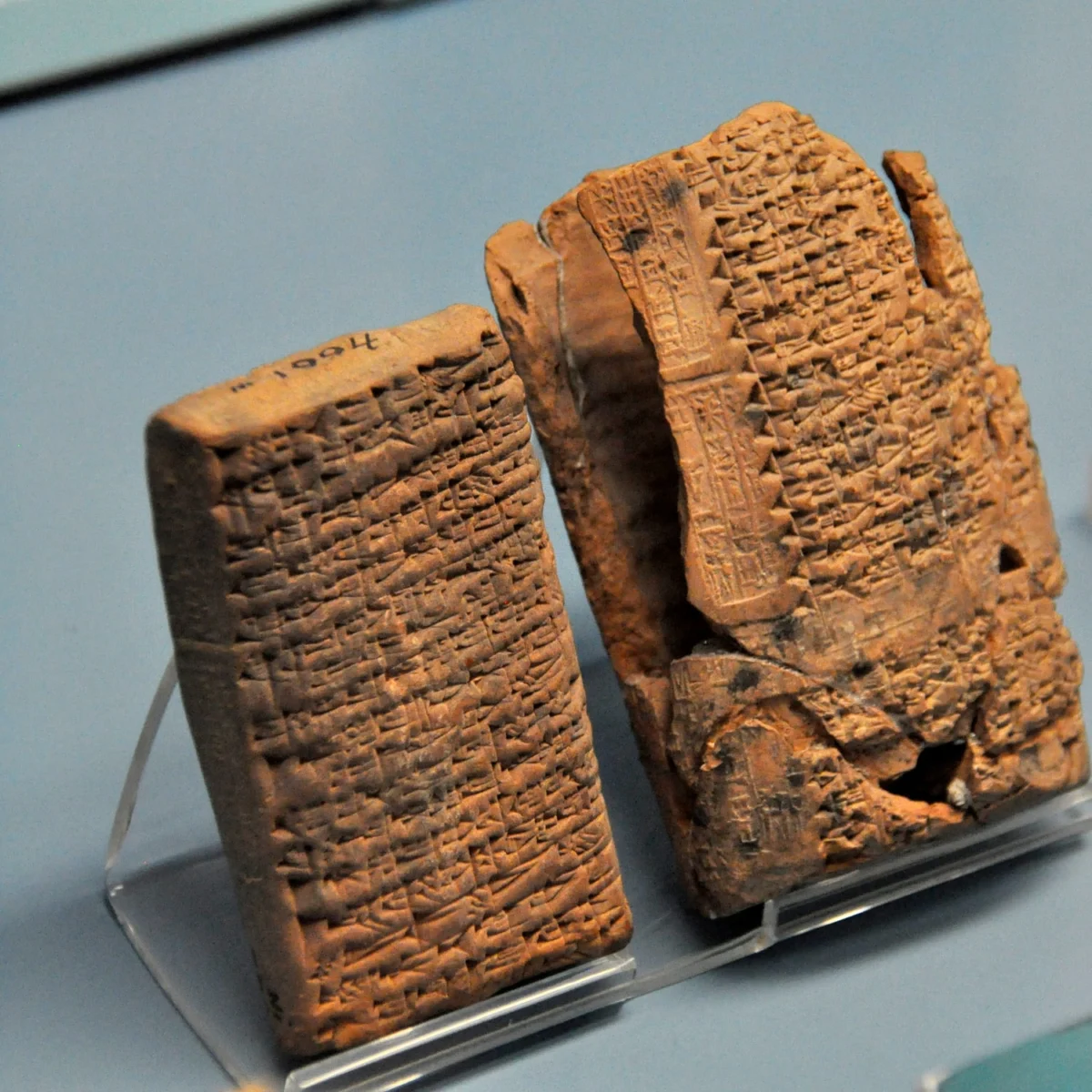
The physical remnants of this ancient epic have been pieced together over decades. Fragments of the work were first discovered amidst the ruins of Nippur, a significant Sumerian city in southern Mesopotamia, and later among the vast collection of tablets in the famed library of the Neo-Assyrian king Ashurbanipal at Nineveh. However, the most substantial and nearly complete text was unearthed much later, in 1952, at Sultantepe, a site in modern-day Turkey. This discovery was a monumental event for Assyriology, providing a more comprehensive view of the narrative than previously available.
In a remarkable resurgence of interest, The Poor Man of Nippur stepped onto the modern stage in 2018 with the release of a short film dramatizing the poem. Produced by students of St. John’s College, University of Cambridge, under the direction of the esteemed Assyriologist Dr. Martin Worthington, the film made history as the world’s first cinematic production in Babylonian. This ambitious project not only brought the ancient text to life but also reintroduced its timeless questions to a contemporary global audience.
Unpacking the Narrative: Supporting Data and Cultural Context
To fully appreciate The Poor Man of Nippur, one must understand the bedrock of Mesopotamian society upon which its drama unfolds: the sacred code of hospitality. In ancient Mesopotamia, treating a guest well was not merely a courtesy but a profound obligation, a social and religious imperative. Regardless of a visitor’s station in life, they were to be provided for and treated with respect. The poem directly challenges this fundamental principle, forcing the audience to grapple with its implications.
The Protagonist’s Name as Prophecy:
Central to the poem’s thematic depth is the name of its protagonist: Gimil-Ninurta. His name, meaning "revenge of Ninurta," is a powerful clue to his destined role. Ninurta, a prominent god in the Mesopotamian pantheon, was revered as a deity of war and a friend of humanity, often associated with divine retribution and justice. As one of the patron deities of Nippur, his connection to Gimil-Ninurta subtly imbues the poor man’s actions with a sense of cosmic justification. In a world where gods were expected to mete out justice, Gimil-Ninurta’s assumption of this role in the gods’ apparent absence highlights the severity of the mayor’s transgression.
The Tale of Three Revenges:
The narrative begins with Gimil-Ninurta, impoverished and hungry, contemplating how to procure a proper meal. He decides to sell his clothes to buy a goat, but realizing he lacks beer to complete a feast—an omission that would insult his neighbors and family (lines 1-20)—he conceives an alternative plan. He will present the goat as a gift to the city’s mayor, relying on the established rules of hospitality to receive a better gift in return. This act positions him as a guest, entitled to proper treatment.
Instead, the mayor, disregarding the sacred tenets of hospitality, humiliates Gimil-Ninurta by giving him only a bone, sinew, and diluted beer, then has him forcibly removed. It is at this moment, as he is being expelled, that Gimil-Ninurta vows a three-fold revenge to the gatekeeper: "Because of the one burden which you imposed on me, / For that one, I will requite you three times!" (lines 67-68).
His meticulous plan unfolds in three distinct acts:
- The Royal Courier: Gimil-Ninurta first rents a chariot from the king, dressing in noble attire and returning to the mayor’s house disguised as a royal courier transporting gold for the Ekur temple. He cleverly places two live birds in the "gold" box to give it weight. Welcomed with lavish hospitality this time, he waits for the mayor to sleep before releasing the birds. The next morning, feigning outrage at the "theft" of the gold for which he is responsible, Gimil-Ninurta severely beats the mayor for his supposed negligence. The terrified mayor offers two minas of gold and new clothes to appease him.
- The Healing Physician: For his second act, Gimil-Ninurta disguises himself as a physician, adopting the identifying practice of shaving one side of his head. Returning to the mayor’s house, he miraculously identifies the mayor’s injuries from the previous beating. Promising a cure that "only succeed[s] in darkness" (line 125), he lures the mayor into a secluded room. There, he ties the mayor down and administers another brutal beating.
- The Goat’s Avenger: For the final phase, Gimil-Ninurta hires a young man who resembles him to go to the mayor’s house and shout, "I am the one with the goat!" (line 144). As the mayor’s household staff rushes out to capture this perceived tormentor, Gimil-Ninurta, lying in wait beneath a bridge, seizes the mayor, who has been left alone. He inflicts a third and final beating, leaving the mayor to crawl back home, his retribution complete.
The Scribe’s Legacy:
The Sultantepe copy of the poem concludes with a colophon, naming the scribal apprentice Nabu-rehtu-usur, who copied the text in 701 BCE, and includes a potent curse against anyone who dares to remove the tablet from the library: "Whoever takes away this tablet, may Ea take him away! … May he have no descendants, no offspring." (lines 164-167). This curse, resonating with the poem’s themes of retribution and the consequences of transgression, adds another layer of intrigue, binding the physical artifact to the very essence of its narrative. The poem’s identification as "Babylonian" stems from the discovery location of the Sultantepe tablet, though its script sometimes leads to its being referenced as "Akkadian," and earlier fragments from Nineveh prompted "Neo-Assyrian" classifications. These distinctions highlight the interconnected linguistic and cultural landscape of ancient Mesopotamia.
Interpretations and Enduring Debates
The meaning and moral compass of The Poor Man of Nippur have been subjects of scholarly debate for decades. While seemingly a straightforward tale of justified revenge, the poem’s nuances invite a deeper, more complex reading.
Gimil-Ninurta: Hero or Schemer?
Many scholars contend that Gimil-Ninurta is undeniably the hero. His name, "Revenge of Ninurta," aligns him with divine retribution, suggesting he acts as an agent of cosmic justice. The mayor’s transgression against the sacred laws of hospitality is egregious, not merely a personal slight but an affront to all poorly dressed guests and the societal order. Gimil-Ninurta, in this view, steps into the void left by absent gods, taking it upon himself to restore balance and punish the mayor for his hubris and disrespect for fundamental human dignity. The mayor’s subsequent lavish welcome of the "noble courier" and the "doctor" underscores his hypocrisy and the class-based discrimination that Gimil-Ninurta seeks to dismantle.
However, an alternative perspective raises questions about Gimil-Ninurta’s own motives. He initially approaches the mayor not out of genuine generosity, but because he lacks the means for a proper feast himself. The poem’s fragmented lines (51-57) detailing his explanation to the mayor leave some ambiguity. Could his "gift" of a goat, purchased with his only worn clothes, have been perceived as a calculated attempt to exploit the hospitality system, rather than an innocent offering? If so, some might argue the mayor saw through the ruse and gave Gimil-Ninurta "what he deserved"—refuse. This interpretation complicates the moral landscape, pushing the audience to consider the ethics of deception, even in the pursuit of justice.
The St. John’s College Film:
The 2018 film by the students of St. John’s College, University of Cambridge, directed by Dr. Martin Worthington, exemplified this ongoing debate. By meticulously reconstructing and performing the poem in ancient Babylonian, the filmmakers aimed to present the story as it might have been experienced by its original audience. Their fidelity to the ancient text ensured that the same questions posed to ancient Babylonians about social obligation, deservedness, and the treatment of others were resurrected for a modern viewership, proving the timelessness of the poem’s core philosophical inquiries.
Implications: Ancient Wisdom for a Modern World
The Poor Man of Nippur is more than an ancient literary curiosity; it is a profound ethical treatise that continues to resonate with contemporary issues. Its implications stretch across various domains:
Enduring Questions of Justice and Equality: The poem’s central inquiry into what one "deserves" and whether social distinctions should dictate treatment remains acutely relevant. In a world still grappling with systemic inequalities, abuses of power, and the struggle for basic human dignity, Gimil-Ninurta’s quest for retribution against a haughty official speaks to a universal desire for justice, regardless of one’s station. It challenges us to reflect on the moral responsibilities of those in power and the potential for marginalized individuals to challenge oppressive systems.
The Power of Narrative and Social Commentary: As one of the earliest known examples of satirical literature, The Poor Man of Nippur demonstrates the ancient world’s capacity for sharp social commentary. It highlights how storytelling can serve as a powerful tool to critique societal flaws, expose hypocrisy, and provoke critical thought. Its clever plot, character development, and use of irony make it a literary forerunner to countless works of satire throughout history.
Insights into Mesopotamian Society and Values: Beyond its narrative, the poem offers invaluable insights into the cultural values of ancient Mesopotamia. It underscores the profound importance of hospitality, the role of deities in everyday life, the educational practices within scribal schools, and the complex interplay of law, custom, and individual morality. The very fact that such a tale was part of the scribal curriculum suggests its didactic purpose in shaping the moral reasoning of future administrators and intellectuals.
A Universal Human Experience: Ultimately, The Poor Man of Nippur taps into a universal human experience: the feeling of being wronged and the desire for rectification. Whether Gimil-Ninurta is viewed as a righteous avenger or a cunning manipulator, his story forces us to confront our own biases and ethical frameworks. The ambiguity embedded within the narrative ensures that the poem remains a vibrant subject of discussion, demonstrating the enduring power of ancient wisdom to illuminate the complexities of the human condition and challenge us to consider what we owe to each other, across all divides.