The Anatomy of a Cinematic Miscalculation: Why ‘Suburbicon’ Became a Pedigree Disaster
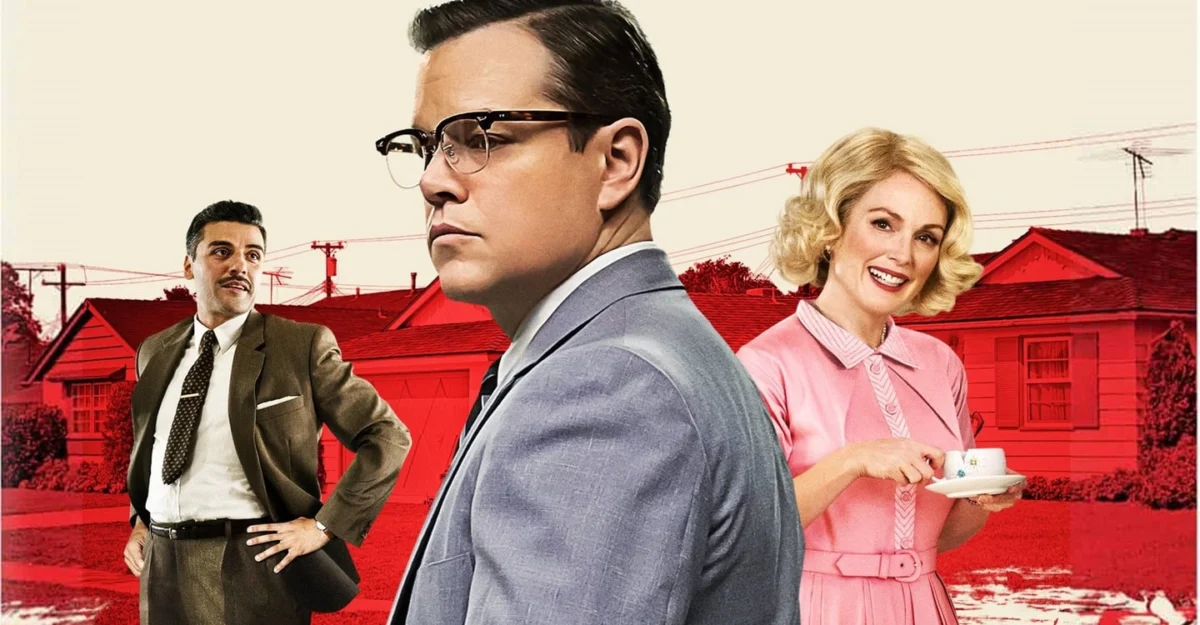
In the modern landscape of Hollywood, "disasters" are often predictable. We see them coming in the form of ballooning budgets, public spats between directors and studios, or release dates that foolishly challenge the dominance of a Marvel or Star Wars behemoth. However, the 2017 film Suburbicon represents a much rarer, more baffling species of failure.
Directed by George Clooney and featuring a script with DNA from the legendary Coen Brothers, the film arrived with the kind of pedigree that usually guarantees awards season glory. It boasted a cast led by Matt Damon and Julianne Moore, a $10 million distribution deal from Paramount, and a prestigious premiere slot at the Venice Film Festival. Yet, upon its release, it didn’t just fail; it alienated its audience so profoundly that it earned a rare D- CinemaScore and became a footnote in the history of wide-release box office bombs.
The story of Suburbicon is not just one of a bad movie, but of a structural and tonal collapse thirty years in the making.
Main Facts: A Convergence of Talent and Turmoil
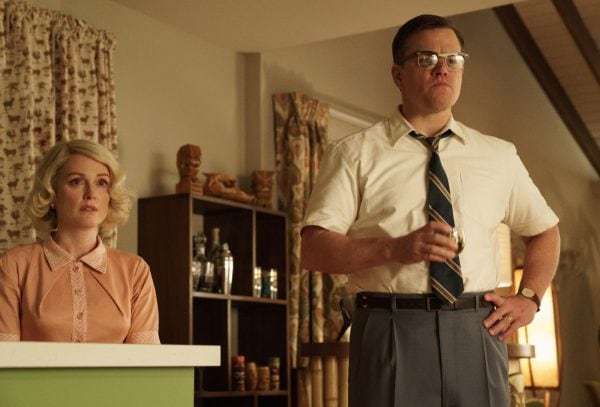
On paper, Suburbicon was a "slam dunk." The film is set in a picturesque, 1950s planned community where every lawn is manicured and every neighbor is friendly—until they aren’t. The plot follows Gardner Lodge (Matt Damon), a family man who becomes entangled in a web of insurance fraud, murder, and betrayal following a home invasion.
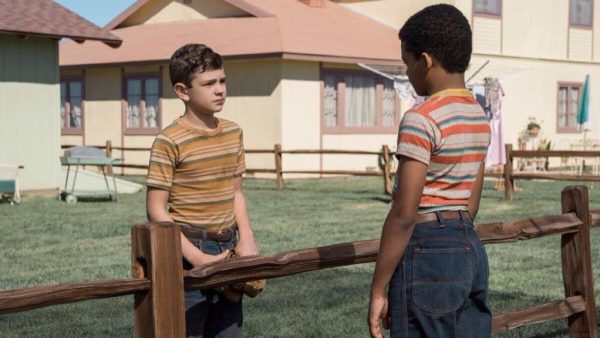
Running parallel to this Coen-esque noir is a second narrative: the real-life-inspired story of the Mayers family, a Black family who moves into the all-white neighborhood and faces escalating, violent racial harassment from their neighbors.

The film’s failure can be traced back to several key factors:
- The Script Hybridization: The merging of a 1986 Coen Brothers dark comedy script with a 2010s Clooney/Heslov social drama.
- Tonal Dissonance: The inability to balance slapstick violence and insurance fraud with the visceral, sobering reality of 1950s white supremacy.
- Deceptive Marketing: A trailer campaign that sold the film as a wacky crime caper, completely omitting the heavy racial themes.
- Historical Context: Releasing a film about racial riots in the same year as the Charlottesville "Unite the Right" rally, which shifted the cultural lens through which the film was viewed.
Chronology: Thirty Years of Incubation
The journey of Suburbicon began in 1986. Fresh off the success of their debut Blood Simple, Joel and Ethan Coen wrote a script that fit perfectly into their burgeoning style: a dark, cynical crime story about a man trying to kill his wife for insurance money, only for his plans to spiral into absurdist chaos.
The script sat dormant for decades, becoming a piece of Hollywood lore. In 2005, George Clooney—a frequent Coen collaborator—expressed interest in the project. However, the project stalled again as Clooney focused on other directorial efforts like The Ides of March and The Monuments Men.
By 2015, Clooney and his producing partner Grant Heslov decided to finally bring Suburbicon to life, but with a significant modification. They decided to graft the Coen’s crime plot onto a separate script they were developing regarding the 1957 Levittown, Pennsylvania, racial riots. This integration was intended to provide "social weight" to the Coen’s noir framework.
Production moved quickly in 2016. The film attracted top-tier talent: Matt Damon took the lead, Julianne Moore played dual roles as twin sisters, and Oscar Isaac joined in a scene-stealing supporting role. The pedigree was so high that Josh Brolin filmed several scenes as a baseball coach, though his entire subplot was eventually cut during editing to streamline the runtime.
The film premiered in competition at the 74th Venice International Film Festival in September 2017, followed by a screening at the Toronto International Film Festival. The initial critical reception was tepid, but the industry still expected the star power to carry it through its October 27, 2017, wide release.
Supporting Data: The Statistical Reality of a Flop
The financial and critical data surrounding Suburbicon paints a picture of a total disconnect between the filmmakers and the public.
The Box Office Collapse
Paramount gave the film a wide release in 2,046 theaters. It opened to a disastrous $2.8 million.
- This represented the worst wide-release opening of Matt Damon’s career.
- It ranked as the 32nd worst opening ever for a film playing in more than 2,000 locations at the time.
- The film’s domestic total reached only $5.7 million. With a worldwide total of roughly $12 million against a $25 million production budget (plus significant marketing costs), the film was a massive loss for Paramount.
The CinemaScore Anomaly
Perhaps the most telling metric was the D- CinemaScore. In the world of audience polling, a "D" grade is exceptionally rare for a film with A-list stars. Usually, such grades are reserved for experimental horror films or movies with "trick" endings that make audiences feel cheated.
For Suburbicon, the D- score was a direct result of the marketing. The trailers presented a colorful, quirky mystery. Audiences who arrived expecting a fun "who-done-it" were instead confronted with harrowing scenes of a Black family being terrorized by a mob, a plot point that felt jarringly disconnected from Matt Damon’s comedic bumbling with a fire extinguisher.
Critical Consensus
On Rotten Tomatoes, the film holds a 28% approval rating. The consensus highlights the structural failure: "A disappointing misfire for director George Clooney, Suburbicon attempts to juggle social commentary, racial tension, and murder mystery — and ends up making a mess of all three."
Official Responses: Silence and Deflection
In the aftermath of the film’s failure, the primary architects offered varying degrees of defense and silence.
George Clooney remained steadfast in his intent, if not the execution. During the press tour, he noted that the film was meant to be "angry" and was a reflection of his feelings regarding the current political climate in America. He admitted that the film was "not a comedy," despite how it was being sold, and expressed a desire to hold a mirror up to the "original sin" of American suburbia.
The Coen Brothers, meanwhile, maintained a conspicuous silence. While they retained a writing credit, they were not involved in the "stitching" of the two scripts. Their absence from the promotional trail and their lack of commentary on the final product suggested a professional distancing from the project.
Paramount Pictures faced criticism for their "bait-and-switch" marketing. Industry analysts suggested the studio knew the racial subplot would be a hard sell in middle America and chose to hide it to protect the opening weekend numbers—a strategy that ultimately backfired by creating a "toxic" word-of-mouth environment.

Implications: The Death of the Mid-Budget Message Movie
The failure of Suburbicon has had lasting implications for the way studios approach "prestige" projects and "message-driven" filmmaking.
1. The Danger of Tonal Inconsistency
Suburbicon serves as a textbook example of why "tonal collision" is a high-risk gamble. By using a Black family’s trauma as a mere backdrop for a white man’s slapstick crime spree, the film inadvertently marginalized the very message it sought to amplify. It suggested that even in a film meant to critique racism, the Black characters were secondary to the white protagonist’s narrative.
2. The Decline of the Auteur Pass
For years, George Clooney enjoyed a "blank check" status as a director due to the success of Good Night, and Good Luck. However, the back-to-back failures of The Monuments Men and Suburbicon signaled a shift. It proved that even with the Coen Brothers’ name and Matt Damon’s face, a film must have a coherent identity to survive in a crowded marketplace.
3. The "CinemaScore" Warning
The D- grade for Suburbicon became a warning to marketing departments everywhere. In the age of social media, you cannot hide the true nature of a film. When the "product" delivered does not match the "product" advertised, the audience reaction will be swift and destructive.
4. The Evolution of Social Commentary
Since 2017, films like Get Out and BlacKkKlansman have shown that social commentary and genre filmmaking can be merged successfully. However, they succeed because the "message" is baked into the "genre," rather than being two separate scripts forced together. Suburbicon remains a reminder that good intentions and high pedigrees are no substitute for a unified creative vision.
In the final analysis, Suburbicon is not a forgotten film; it is a studied one. It stands as a monument to the moment when Hollywood’s obsession with "prestige" collided with a fundamental misunderstanding of how to tell a cohesive story. As Matthew Shepherd noted, the story of how it went wrong remains far more compelling than the 105 minutes of film that actually made it to the screen.