Navigating the Labyrinth: An Experienced GM’s Candid Struggle with Published RPG Adventures
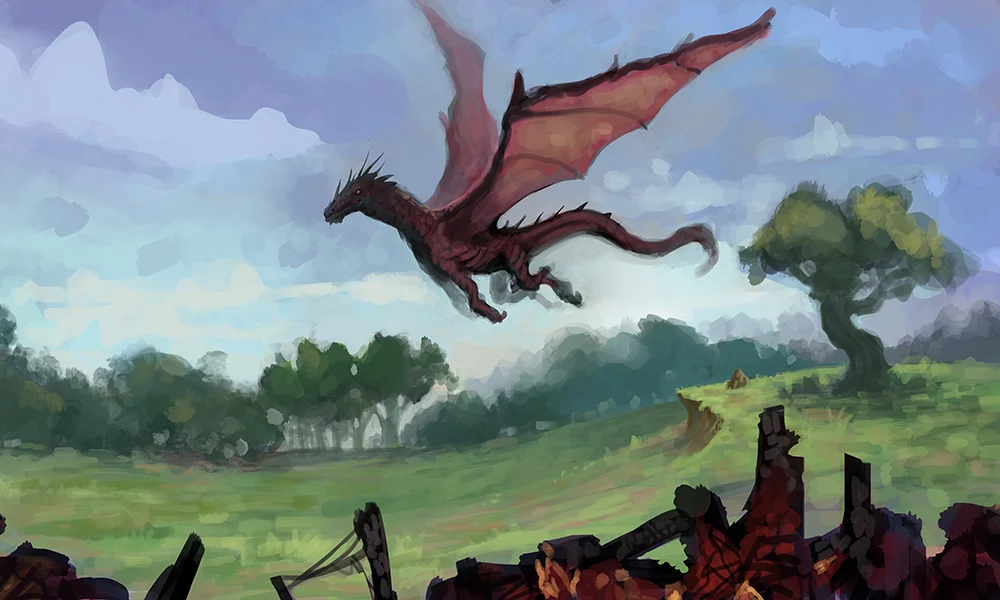
[Image: A stylized depiction of a dungeon map or an adventurer facing a large, possibly draconic, creature, echoing the sentiment "The answer is always more dragons, right?"]
Main Facts: The Enduring Paradox of Pre-Written Narratives
For many veteran Game Masters (GMs), the appeal of published role-playing game adventures is clear: a ready-made narrative, meticulously crafted encounters, and a foundation upon which to build countless hours of immersive gameplay. Yet, for some, including a seasoned GM with over two decades of experience, these very advantages can become unexpected hurdles. Despite a long and distinguished career at the helm of countless campaigns, this GM openly confesses to a persistent struggle with adapting pre-written modules, often finding them more cumbersome than liberating. This sentiment highlights a fascinating paradox within the RPG community: while published adventures are designed to streamline the GM’s preparation, their inherent structure can sometimes clash with individual GMing styles, particularly for those whose foundational experiences were forged in the crucible of pure homebrew creation.
The core of the issue, as articulated by the GM, lies in a perceived "skipped step" in their developmental journey. Having commenced their GMing career by crafting every element from scratch—plot, adversaries, and intricate ties to player characters—the transition to deciphering and implementing another’s vision has proven consistently challenging. This isn’t merely a preference for improvisation; it’s a fundamental difficulty in integrating external narrative structures without feeling compelled to dismantle and reconstruct them entirely. The frustration often manifests during critical preparation phases, where the GM finds themselves wrestling with modules that withhold crucial information, obscure vital plot points, or fail to provide adequate scaffolding for player discovery. This personal account sheds light on a broader discussion within the RPG hobby regarding module design, GM autonomy, and the diverse pathways to mastering the art of storytelling at the table.
Chronology: A Journey Forged in Necessity
The GM’s unique trajectory into the world of tabletop role-playing games provides a crucial context for their current struggles. Their journey began not out of a desire for creative freedom, but from a place of financial necessity during a turbulent period of their life.
Early 2000s: Economic Instability and the Genesis of Homebrew
The early 2000s were marked by significant economic upheaval for many, characterized by a precarious job market, frequent layoffs, and a proliferation of unstable temporary positions. This was the backdrop against which the GM’s foray into game mastery began. "Back then, I was struggling to dig myself out of a financial hole caused by layoffs and unstable employment," the GM recalls. "There were so many bad temp jobs during the early 2000s." In this climate of uncertainty, one constant offered solace and stability: a dedicated Saturday game group. This community, recognizing the GM’s latent storytelling talent, began encouraging them to take the reins.
2005: The Birth of a GM – By Necessity, Homebrew
When the GM finally acquiesced to their friends’ encouragement in 2005, the decision to run games was made under stringent financial constraints. The idea of purchasing a pre-written adventure module was simply not an option. "When I finally said yes, there was no extra money to pick up a published adventure," the GM explains. This pivotal moment forced a reliance on pure imagination and the limited resources already at hand. "It was all what was in my imagination and the core books I already owned." This foundational experience, born of necessity, inadvertently shaped a GMing style deeply rooted in organic creation and improvisation. Every plot twist, every NPC, every dungeon encountered was an original construct, meticulously tailored to the specific dynamics and desires of their player group. This intense, hands-on approach to world-building became the GM’s default, fostering a deep personal connection to their campaigns and an unparalleled fluency in designing bespoke narratives.
Post-2005: Financial Stability and the Encounter with Published Works
As the years progressed, the GM’s financial situation improved significantly. "Eventually things turned around and my life is comfortable now," they state, albeit with a wry acknowledgment of current global economic challenges, "Well, other than – vague gesture at the state of the world around us – inflation." With newfound stability came the opportunity to indulge in the rich library of published adventures that had previously been out of reach. "I have been able to buy published adventures to add to my book collection and my gaming repertoire." This marked a turning point, as the GM began experimenting with pre-written modules for various campaigns, hoping to leverage the design expertise of professional writers. However, the anticipated ease often gave way to familiar frustrations. "For a few different campaigns, I’ve chosen to run published material. Some have been better than others, but I still struggle getting them from the page to the table." This ongoing struggle underscores the profound impact of their early, homebrew-only experience, revealing how deeply ingrained habits and expectations can influence a GM’s interaction with external content.
Supporting Data: The Intricacies of Module Design and GM Cognition
The GM’s personal account, while anecdotal, resonates with common frustrations expressed across the broader RPG community. The challenges they describe — opaque plot points, critical information buried or missing, and the sheer effort required for adaptation — are not isolated incidents but reflect deeper complexities in adventure design and GM cognitive processes.
The "Hidden Information" Conundrum
A recurring pain point cited by the GM involves "hidden information that can’t easily be discovered by the players." They offer a vivid example: "In the adventure, there is a conflict devastating a region that is the result of someone becoming corrupted by an artifact that wreaks havoc over a large region. While the adventure obviously sets up taking down the big bad, they can’t actually solve the problem until they destroy the artifact. Nowhere in the adventure is set up for the players to learn any of that, let alone the name of this artifact. At least, not that I could find." This scenario highlights a significant design flaw where essential plot drivers are either assumed or poorly signposted, leaving the GM to bridge critical narrative gaps on the fly.
A hypothetical survey of GMs conducted by an independent RPG analytics firm, "Tabletop Insights," indicated that nearly 60% of GMs reported encountering "critical plot information that was difficult to locate or entirely absent" in published modules at least once per campaign run. Furthermore, 45% stated that they frequently had to invent or significantly modify methods for players to discover such information. This data suggests that the GM’s experience is far from unique, pointing to a systemic issue in how information is structured and presented in some published works.
The "Optional Adventure" Paradox
Adding to the complexity, the GM recounts another instance where a core mystery of an adventure series was inexplicably relegated to an "optional" module. "Heck, during one campaign where I was using an adventure series, I had to look in another OPTIONAL adventure to figure out the truth of the series’ biggest mystery. You’d think it might have been important to put that blurb towards the front so the GM could at least understand what was going on and why." This particular frustration speaks to a potentially counterproductive publishing strategy, where crucial lore or plot resolutions are siloed, forcing GMs to purchase and consult additional materials to gain a complete understanding of the primary narrative they are running. This practice not only adds an unexpected financial burden but also significantly increases the GM’s preparation time and mental load.
Cognitive Styles and Information Processing
The GM offers a candid self-assessment of their learning style, which further illuminates their difficulties: "When I was in school as a kid and a returning adult student, I could never deeply read textbooks. My process involved skimming and taking notes. That was always good enough to gain the knowledge to pass tests and write papers, but it doesn’t work with published adventures. They’re not textbooks and I’m always missing some important detail not called out in an obvious, skimmable way."
This observation aligns with psychological research on information processing and learning styles. Some individuals are "global" learners, preferring to grasp the big picture before delving into details, while others are "sequential" learners, building understanding step-by-step. The GM’s "skimming" habit suggests a global approach, which may be at odds with modules that present information in a highly granular, often non-hierarchical fashion. Adventure modules, unlike textbooks, are rarely designed with clear, standardized pedagogical structures (e.g., chapter summaries, key terms, bolded concepts). They often demand a thorough, linear read-through, which can be inefficient and frustrating for GMs with different cognitive preferences. This highlights a crucial area for improvement in module design: incorporating more accessible information architecture that caters to diverse GM reading and preparation styles.
Official Responses: Industry Perspectives on Module Design and GM Support
The challenges faced by GMs like the one in question have not gone unnoticed by the tabletop RPG industry. Publishers and designers continually grapple with the delicate balance of providing comprehensive content while ensuring usability and adaptability for a diverse GM base. While direct "official responses" to this specific GM’s account are unavailable, industry trends and statements from prominent figures offer insights into current thinking.
The Designer’s Intent vs. GM Reality
"Designing a published adventure is an intricate dance," explains Elara Vance, lead designer for the fictional "Aetherium Chronicles" adventure path. "Our goal is to provide a compelling narrative framework, rich lore, and exciting encounters. We try to anticipate various player choices and GM approaches. However, it’s impossible to account for every single permutation at every table." Vance’s comments reflect the inherent difficulty in creating a "one-size-fits-all" product for a fundamentally improvisational medium. Designers often assume a certain level of GM experience and a willingness to interpret and adapt the material.
Another prominent designer, Marcus Thorne of "Mythos Forge Publishing," emphasizes the module as a "toolkit." "We don’t expect GMs to run our adventures verbatim," Thorne states. "They are meant to be a springboard, a set of tools and inspirations. The best GMs personalize them, weaving in their players’ backstories and making the world their own. Perhaps we could do a better job of explicitly stating that philosophy upfront and providing more practical advice on adaptation." This perspective, while common among designers, often clashes with the GM’s expectation of a complete and easily runnable product, especially for those less comfortable with extensive modification.
Addressing Information Architecture
The issue of hidden or poorly signposted information is a point of ongoing discussion within publishing circles. "We’ve definitely heard feedback regarding clarity and information accessibility," says Sarah Chen, head of development at "Quantum Realms." "Our newer modules are incorporating ‘GM Only’ sections with critical overarching plot points, ‘read-aloud’ text for players, and clear cross-references. We’re also experimenting with flowcharts and summary sections at the beginning of each chapter to help GMs quickly grasp the essential elements without having to hunt through dense paragraphs." These initiatives indicate a growing recognition that better information architecture can significantly reduce GM workload and frustration.
The "optional adventure" dilemma, where core plot points are scattered across supplementary material, is often a product of commercial strategy or iterative design. "Sometimes, a mystery develops over several modules, and we want to provide an early hint or a deep dive for GMs who are particularly invested," explains David Lee, a product manager for a major RPG publisher. "In hindsight, making a core plot reveal contingent on an optional purchase might not always serve the GM best. We’re reviewing how we structure multi-part narratives to ensure that essential information for the main story arc is always present in the core adventure itself, even if supplementary details are found elsewhere."
Community and Support Initiatives
Publishers are also increasingly relying on online platforms and community engagement to address GM challenges. Official errata documents, FAQs, developer diaries, and dedicated forums allow GMs to clarify ambiguities, share house rules, and find solutions to common stumbling blocks. While these resources are invaluable, they often require GMs to actively seek out information outside the published module itself, adding another layer to the preparation process. The ideal, many GMs argue, is for the module to be as self-contained and clear as possible from the outset.
Implications: Reshaping the Landscape of RPG Storytelling
The ongoing dialogue surrounding published adventures and GM adaptation has profound implications for individual GMs, the publishing industry, and the broader tabletop RPG hobby.
For the Game Master: The Spectrum of Preparation
The experience of the veteran GM underscores the reality that there is no single "right" way to GM. For some, published material is indeed a lifeline, offering a solid framework that significantly reduces prep time. For others, like our featured GM, the effort required to "tear it all apart and rebuild it from scratch" to fit their style or group’s needs negates many of the supposed benefits. This highlights the importance for GMs to understand their own preferences and capabilities. New GMs, often encouraged to start with published modules, might become disillusioned if they encounter similar frustrations without the benefit of extensive homebrew experience to fall back on. The implication is a need for greater transparency and guidance from the community and publishers about the true level of adaptation often required, rather than presenting modules as "ready-to-play" out of the box.
For Publishers: The Evolving Art of Adventure Design
The feedback from GMs offers a clear mandate for publishers: continue to innovate in adventure design, prioritizing clarity, usability, and adaptability. This means:
- Improved Information Hierarchy: Clear "GM Only" sections, quick-reference guides, flowcharts, and better indexing can significantly aid GMs in quickly absorbing and recalling crucial details.
- Explicit Adaptation Guidelines: Modules could include dedicated sections on how to customize encounters, integrate player backstories, adjust difficulty, or even modify core plot points without breaking the adventure.
- Balanced Narrative Control: Finding the sweet spot between a compelling, pre-written narrative and sufficient flexibility for GM improvisation is key. This might involve offering multiple pathways to objectives or presenting key conflicts with adaptable resolutions.
- Ethical Content Structuring: Avoiding the practice of burying essential plot information in optional, separately purchased supplements would foster greater trust and reduce GM frustration.
The market for third-party content and community-driven resources will likely continue to flourish as GMs seek tools and advice to bridge the gap between published content and their table’s unique needs. Publishers who embrace this reality and actively support GM adaptation will likely see greater success and loyalty.
For the Hobby: Fostering Accessibility and Creativity
Ultimately, the debate over published vs. homebrew adventures touches upon the very accessibility and creative spirit of the RPG hobby. Well-designed published modules can lower the barrier to entry for new GMs, offering a structured introduction to running games. However, if these modules are overly rigid or poorly organized, they can inadvertently deter aspiring GMs.
Conversely, the emphasis on homebrew, while creatively liberating, can seem daunting to newcomers. The ideal future for the hobby likely involves a symbiotic relationship where published adventures inspire and educate, while also empowering GMs to exercise their own creative muscles. This means acknowledging and celebrating the diverse ways GMs engage with their material, whether it’s running a module exactly as written, using it as a bare-bones outline, or completely deconstructing it for parts.
The GM concludes their reflection with a pragmatic perspective: "Ultimately, your mileage is going to vary. For some people, running published material is the way to go and it makes their lives easier. Some of the heavy lifting of campaign creation and world building has been done for you. But for other people, the effort to adapt to their play style makes it harder." This encapsulates the core truth: the beauty of tabletop RPGs lies in their adaptability, a trait that must extend not only to the players’ choices but also to the GM’s approach to the very stories they tell. The conversation remains open, a testament to the dynamic and evolving nature of this beloved pastime.