
Re-evaluating a Dark Fantasy Icon: Viz Comics’ 2002 Release of Bastard!! Complete Edition
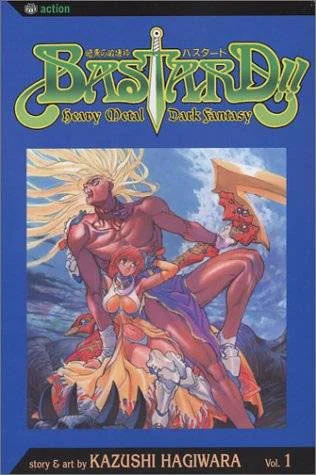
Originally published February 5th, 2002, this critical examination of the inaugural English volume of Kazushi Hagiwara’s Bastard!! Complete Edition offers a fascinating snapshot of manga localization in the early 2000s. While acknowledging the nascent brilliance of its creator’s artwork and flashes of satirical humor, the initial review underscored significant concerns regarding inconsistent pacing and, most notably, a translation that potentially obscured the manga’s intended comedic and dramatic impact. This article delves deeper into the context of Bastard!!‘s enduring legacy, its journey to Western audiences, and the challenges inherent in adapting a complex Japanese narrative for a global readership.
Main Facts: The Grand Overture of Dark Schneider
In early 2002, Viz Comics introduced English-speaking audiences to the Bastard!! Complete Edition, a retouched and re-released version of Kazushi Hagiwara’s long-running dark fantasy manga. Originally serialized in Japan’s Weekly Shonen Jump starting in 1988, Bastard!! carved out a niche with its unique blend of high fantasy tropes, heavy metal aesthetics, and irreverent humor. The Complete Edition, first launched in Japan in 2000, aimed to present Hagiwara’s vision with enhanced artwork and revisions, much like the controversial "Special Editions" of the Star Wars films.
The series is famously subtitled "Heavy Metal Dark Fantasy," a descriptor that, as noted by contemporary critics, wasn’t immediately evident in the initial volume. Instead, the debut chapter leaned into a more comical tone. The core premise revolves around the legendary, notoriously evil sorcerer Dark Schneider, whose personality was sealed away years prior into the body of a young, innocent boy named Lucien. Raised by the high priest of the kingdom of Metallicana as the younger brother to his daughter, Tia Noto Yoko, Lucien holds the key to Dark Schneider’s release: a specific spell requiring a kiss from a virgin innocent, known only to Tia.
The first issue plunges readers into the besieged kingdom of Metallicana, facing an onslaught from a rival evil sorcerer. Desperate, the kingdom is forced to unleash Dark Schneider. His reawakening instantly sparks a complex dynamic: Tia, despite his undeniable evil, finds herself captivated by his charismatic, albeit malevolent, presence. The narrative introduces a peculiar magical twist – each kiss from Tia triggers Dark Schneider’s transformation. This setup, as initially reviewed, promised a foundation for considerable comedic interplay, juxtaposing high-stakes fantasy with character-driven humor and a decidedly unconventional love triangle.
Despite the inherent allure of its premise and the evident artistic talent, the 2002 English release faced scrutiny. While Hagiwara’s burgeoning artistic skill was praised, particularly his ability to craft both intricate and simplified compositions, the review highlighted concerns about the manga’s early pacing and occasional narrative missteps. However, the most significant criticism was directed at the English translation, which was perceived to flatten character voices, dilute comedic timing, and at times, fail to convey the dramatic weight of pivotal scenes. This early reception of Bastard!! Complete Edition underscored the critical role of localization in shaping a manga’s initial impact on a new cultural landscape.
Chronology: A Saga Unfolds Across Decades
The journey of Bastard!! from its genesis in Japan to its English translation in the early 21st century is a testament to its enduring appeal and the evolving landscape of manga publication.
The Genesis in Shonen Jump (1988)
Kazushi Hagiwara launched Bastard!! in the pages of Shueisha’s Weekly Shonen Jump in 1988. This was a period of immense creativity and growth for the magazine, which was home to numerous iconic series. Bastard!! stood out with its distinct blend of Western-inspired heavy metal album art aesthetics, Dungeons & Dragons-esque fantasy elements, and a narrative tone that often veered between epic seriousness and overt parody. Its initial success quickly garnered a fervent fanbase, drawn to Hagiwara’s detailed artwork and the bombastic adventures of Dark Schneider.
However, even in its early years, Bastard!! became known for its notoriously irregular publication schedule. Hagiwara’s meticulous art style and personal circumstances often led to significant hiatuses, a pattern that would continue throughout the series’ run. This stop-and-start nature, while frustrating for readers, also contributed to the manga’s cult status, with fans patiently awaiting each new installment.
The Complete Edition in Japan (2000)
By the turn of the millennium, Bastard!! had cemented its status as a foundational dark fantasy series. In 2000, Hagiwara began releasing the Bastard!! Complete Edition in Japan. This ambitious project involved a comprehensive re-release of the original manga, featuring retouched, redrawn, and generally improved artwork. The Complete Edition wasn’t merely a reprint; it was an artistic endeavor to refine Hagiwara’s earlier work, bringing it closer to his evolved aesthetic standards and providing a definitive version for both new readers and long-time fans. This move reflected a broader trend in the Japanese manga industry of re-packaging and enhancing beloved series for new generations, leveraging advancements in printing technology and artistic refinement.
English Translation by Viz Comics (2002)
Two years after its Japanese debut, Viz Comics, a prominent publisher of manga in North America, undertook the task of translating and releasing the Bastard!! Complete Edition in English. The first volume hit shelves in 2002, introducing a new generation of Western readers to Dark Schneider’s world. The translation was credited to Kaori Kawakubo, with an "English adaptation" by Fred Burke. This dual credit was, at the time, a point of minor confusion for readers, highlighting the nuanced process of manga localization which often involves not just direct translation but also cultural adaptation to resonate with a target audience. Viz Comics aimed to capitalize on the growing popularity of manga in the West, bringing a critically acclaimed and visually distinctive series to a wider audience. The expectation was that the Complete Edition‘s polished artwork would make for a strong entry point, despite the challenges of translating a series with such a unique voice and comedic timing.
Enduring Popularity and Modern Adaptations
Despite its irregular publication and the initial translation challenges, Bastard!! maintained a dedicated global fanbase. Its influence can be seen in various fantasy media, and its distinctive aesthetic continues to resonate. In a testament to its lasting appeal, the series received a new anime adaptation titled Bastard!! -Heavy Metal, Dark Fantasy- in 2022, streamed globally on Netflix. This modern adaptation, coming two decades after the Viz Comics release, reignited interest in the manga and showcased its capacity to attract new viewers, proving that Dark Schneider’s saga retains its power to captivate audiences across different eras and formats.
Supporting Data: Artistry, Humor, and the Perils of Localization
The early 2000s review of Bastard!! Complete Edition meticulously detailed both the manga’s strengths and its significant shortcomings, providing valuable insights into the complexities of translating a visually rich and humor-driven narrative.
Hagiwara’s Artistic Prowess
Even in its earlier iterations, before the full maturity of Hagiwara’s style, his artistic talent was undeniably a cornerstone of Bastard!!‘s appeal. Critics consistently lauded the high quality of his artwork, noting a nascent yet immense skill. The review specifically highlighted how Hagiwara, even in these "more primitive forms and compositions," demonstrated a keen eye for detail and dynamic illustration. His ability to render both intricate, gorgeous scenes and simplify his style when serving character or story was a particular strength. This visual mastery was crucial for a series dubbed "Heavy Metal Dark Fantasy," allowing it to embody the bombastic, often grotesque, yet undeniably cool aesthetic implied by its genre tag. The Complete Edition‘s retouching further aimed to enhance these visual elements, ensuring a more polished experience for readers.
The Nuances of Humor
Beyond the artwork, the humor in Bastard!! was identified as a significant high point. Hagiwara employed a tongue-in-cheek satire that resonated particularly well with fantasy enthusiasts. The review cited an exemplary moment on page four, where Metallicana soldiers, facing an overwhelming horde, lament the simultaneous absence of their king, imperial forces, and priest – a classic fantasy trope exaggerated for comedic effect. This self-aware, almost meta-commentary on genre conventions was a hallmark of the series’ early appeal. Furthermore, the bizarre, mystically tainted love triangle involving Tia, Lucien, and Dark Schneider provided fertile ground for character-driven comedy, exploiting the inherent absurdity of a hero-figure being an immensely powerful, yet morally bankrupt, sorcerer who can only be summoned by an innocent kiss. The juxtaposition of high-stakes fantasy with such personal, often farcical, relationships was a key part of Bastard!!‘s charm.
Pacing, Composition, and Narrative Inconsistencies
Despite the flashes of brilliance, the initial volumes of Bastard!! were not without their structural and narrative flaws. The review pointed out a "dizzying and inconsistent" pacing, suggesting that the narrative flow struggled to maintain coherence. Many compositions were deemed "too crowded," potentially overwhelming the reader and obscuring key details or actions. Furthermore, some panels appeared rushed, indicating a possible struggle with production deadlines or an evolving artistic process in Hagiwara’s early career. Crucially, the review noted instances where Hagiwara "simply drops the ball when it comes to telling the story he’s apparently trying to tell," implying moments of narrative ambiguity or outright confusion for the reader. These issues, while perhaps characteristic of a creator’s early work, nonetheless impacted the overall reading experience.
The Critical Flaw: Translation and Dialogue
The most pronounced criticism leveled against the English release concerned the quality of its translation. The reviewer posited that a "sub-par translation" significantly hampered the manga’s potential. A central issue was the perceived lack of distinct character voices; all characters, regardless of their personality or role, seemed to "talk with the exact same voice." This homogenization of dialogue stripped away individual characterization and made it difficult for readers to differentiate between speakers based on their verbal patterns.
Furthermore, much of the dialogue was described as making one "simply want to wince," suggesting awkward phrasing and unnatural constructions. The most damaging consequence of this translation was the loss of humor. Jokes that were clearly "meant to be jokes" were translated so poorly that their comedic punch was entirely lost. An illustrative example provided was a dialogue exchange between Tia Noto Yoko and Lucien:
Tia Noto Yoko: I swear… you little ant! Don’t you have any feelings of frustration – of being pissed off, or of wanting to pulverize someone?! How can you be totally VOID of those kinds of emotions?
Lucien: Y-you’ve got more than enough for BOTH of us!
While the potential for humor in these lines is evident, the review argued that Tia’s dialogue "doesn’t ring true," sounding artificial and like a "mouthpiece of the writers" rather than a genuine character. This "sitcom effect" where jokes are telegraphed rather than naturally delivered, severely undermined the intended comedic impact. Compounding this, the dialogue often failed to "rise to the dramatic quality of the action," meaning characters sounded identical whether engaged in a casual conversation or annihilating powerful foes with mighty magic, thus diminishing the narrative’s emotional range and impact. This detailed critique highlighted the profound influence of translation quality on a manga’s reception in a new market.
Official Responses: Navigating Localization Challenges
The concept of "official responses" in the context of a 2002 manga review, rather than a breaking news event, requires an interpretation focused on the publisher’s stated practices and the industry’s approach to localization at the time. While Viz Comics did not issue a direct "response" to this specific review, their decisions regarding the Bastard!! Complete Edition translation reflect common industry practices and challenges.
Viz Comics’ Localization Strategy
Viz Comics, as a leading publisher, played a crucial role in shaping the Western perception of manga. Their decision to release the Complete Edition in 2002 signaled a commitment to bringing a visually refined version of a popular, long-running Japanese series to English audiences. The credit given to Kaori Kawakubo for "translation" and Fred Burke for "English adaptation" points to a multi-layered localization process.
- Translation (Kaori Kawakubo): This role typically involves the direct rendering of Japanese text into English, ensuring accuracy in meaning, cultural nuances, and context.
- English Adaptation (Fred Burke): This often involves refining the translated text for readability, flow, and cultural relevance for the target audience. Adaptors might adjust idioms, colloquialisms, or even certain narrative beats to make them more accessible or humorous to Western readers. The original reviewer’s confusion ("I don’t know what that means") highlights that this distinction wasn’t always clear to the public, but it was a recognized practice in manga publishing. The goal was often to make the dialogue sound more natural in English, sometimes at the expense of literal translation.
The critique regarding the "sub-par translation" and homogeneous character voices suggests that, in this instance, the adaptation process might have unintentionally smoothed over distinct linguistic traits of the original Japanese, or that the adaptation choices themselves resulted in dialogue that felt generic or unnatural to the English reader. It’s possible that the pressure to make the series broadly accessible, coupled with the inherent difficulties of translating a highly stylized and comedic work, led to compromises in dialogue fidelity and character differentiation.
Industry Standards and Evolving Practices
In the early 2000s, manga localization was still evolving. While some publishers prioritized literal translation, others leaned towards "Americanization" to make content more palatable. The Bastard!! review reflects a common critique of this era: the struggle to balance faithful translation with engaging adaptation. The idea that all characters "talk with the exact same voice" implies a potential over-reliance on a single stylistic approach for dialogue, rather than carefully crafting distinct speech patterns for each character as they would have had in the original Japanese. This wasn’t unique to Viz Comics or Bastard!!; it was a recurring challenge across the industry, particularly for series with large casts and diverse personalities.
The critique implicitly calls for a more nuanced approach to adaptation – one that respects the original character voices and comedic timing while still ensuring accessibility. This early feedback, alongside countless other fan and critic responses, contributed to the gradual refinement of localization practices over the subsequent decades, leading to a greater emphasis on preserving individual character voices and subtle humor in later manga translations. While there might not be a direct "official response" to this specific review, the industry’s continuous evolution in translation methodologies can be seen as an ongoing, collective response to such critiques from readers and critics alike.
Implications: Legacy, Localization, and the Maturation of a Master
The initial 2002 review of Bastard!! Complete Edition offers more than just a critique of a single manga volume; it provides a lens through which to examine broader implications for manga’s global journey, the art of localization, and the evolution of a creative talent.
The Enduring Legacy of Bastard!!
Despite the criticisms of its early English translation and some of its initial structural inconsistencies, Bastard!! has carved out a significant place in manga history. Its unique blend of "Heavy Metal Dark Fantasy" – a genre descriptor that would become more overtly apparent in later volumes – laid groundwork for subsequent fantasy works. Hagiwara’s intricate world-building, often drawing from Dungeons & Dragons lore and real-world mythology, combined with his distinct character designs and dynamic action sequences, resonated deeply with a specific demographic of fantasy and metal enthusiasts. The series’ long publication history, including its notorious hiatuses, has only solidified its cult status, fostering a dedicated global fanbase that eagerly anticipates new chapters. The recent Netflix anime adaptation underscores its continued relevance and ability to captivate new audiences, demonstrating that its core appeal transcends initial presentation challenges.
The Crucial Role of Localization
The review’s sharp critique of the translation highlights the profound impact localization has on a foreign work’s reception. A well-executed translation can elevate a series, capturing its essence and humor for a new audience. Conversely, a flawed translation, as suggested by the reviewer, can flatten character voices, dilute comedic timing, and diminish dramatic impact, creating a barrier between the creator’s intent and the reader’s experience. The specific issues raised – homogeneous dialogue, lost humor, and unnatural phrasing – are common pitfalls in cross-cultural adaptation. This case serves as a valuable lesson in the manga industry’s ongoing evolution towards more sophisticated localization practices, emphasizing not just linguistic accuracy but also cultural sensitivity and artistic fidelity. Modern localization teams often prioritize distinct character voices and carefully adapt humor to ensure it lands effectively without sacrificing the original spirit, a testament to lessons learned from early experiences like this.
The Maturation of Kazushi Hagiwara’s Talent
The reviewer astutely predicted that Bastard!! would likely be enjoyed more "a year or two down the line – when Hagiwara’s talent has had a chance to mature." This prediction proved remarkably accurate. As the series progressed, Hagiwara’s artwork became even more refined, his compositions more confident, and his storytelling more consistent. He developed a signature style characterized by incredibly detailed armor, elaborate magic effects, and dynamic character designs that became highly influential. The Complete Edition itself was an effort to showcase this artistic evolution, retroactively improving earlier work. This trajectory underscores the natural growth of any artist, particularly in a long-running serial format, where early issues often serve as a canvas for experimentation and development. For many long-time fans, the later volumes of Bastard!! represent the pinnacle of Hagiwara’s artistic vision, justifying the initial patience required with his earlier work.
The "Special Edition" Phenomenon in Media
The comparison of the Bastard!! Complete Edition to the Star Wars Special Editions is telling. It reflects a broader trend in media where creators revisit and revise their past works, often with mixed reception. While the intention is typically to enhance or refine, such re-releases can sometimes alienate purists or simply highlight the distance between the original and the revised vision. In Bastard!!‘s case, the Complete Edition aimed to present a polished, definitive version of Hagiwara’s early efforts, leveraging his mature artistic skill to refine his initial vision. This strategy, when executed well, can reintroduce a classic to new generations while offering a fresh perspective for existing fans.
In conclusion, the 2002 review of Bastard!! Complete Edition offers a rich historical document. It not only dissects the strengths and weaknesses of an iconic manga’s early English release but also illuminates the complexities of cultural translation, the growth of an artist, and the enduring power of a unique narrative vision in the ever-expanding world of global media. Bastard!!, despite its early translation hurdles, has cemented its place as a revered pioneer in the heavy metal dark fantasy genre, a testament to the raw talent of its creator and the unwavering loyalty of its fanbase.


Leave a Comment