The Architecture of Flourishing: Applying Aristotelian Virtue Ethics to the Modern Search for Meaning
Main Facts: The Ancient Blueprint for Modern Well-Being
In an era defined by a multi-billion-dollar self-help industry and a pervasive sense of existential "freestyling," the search for a "good life" remains as elusive as ever. While modern discourse often prioritizes "self-care"—a concept frequently reduced to emotional soothing and passive consumption—contemporary psychology and philosophical inquiry are increasingly returning to a 2,300-year-old source: Aristotle.
The core of the Aristotelian approach to life is not found in fleeting moods or material success, but in the concept of eudaimonia, often translated as "flourishing" or "living well." Unlike the modern definition of happiness, which is largely synonymous with pleasure (hedonia), Aristotle posited that a good life is an active state. It is the result of "virtue," which he defined not as an innate trait, but as a skill developed through relentless repetition.
The fundamental pillars of this framework include:
- The Habituation of Virtue: Character is the sum of repeated actions, not intentions.
- The Alignment of Desire: True excellence is reached when one no longer struggles against temptation but finds genuine pleasure in doing the right thing.
- Happiness as Activity: Happiness is a byproduct of exercising one’s capacities toward worthwhile ends, rather than a goal to be pursued directly.
- The Necessity of Social Connection: Humans are inherently social ("political") animals; flourishing is impossible in isolation.
- Intellectual Self-Defense: The importance of understanding rhetoric and manipulation to navigate a world that is not always honest.
Chronology: From the Lyceum to the Modern Laboratory
The Aristotelian Foundation (384–322 BCE)
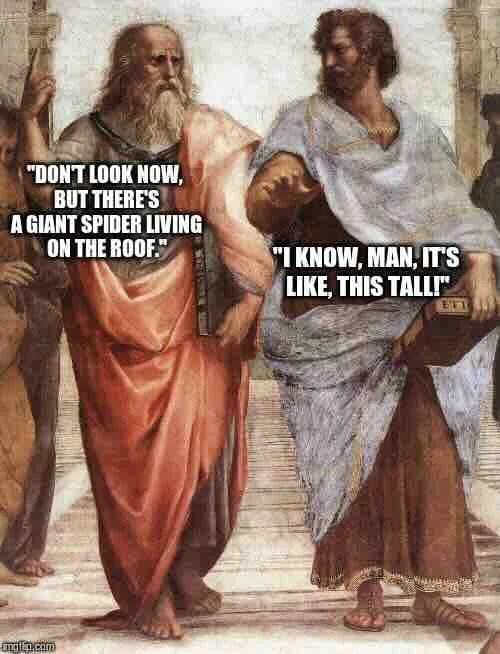
Born in Stagira, Aristotle spent twenty years studying under Plato before eventually founding his own school, the Lyceum. His influence was unparalleled; he served as the tutor to Alexander the Great and wrote extensively on subjects ranging from biology and physics to ethics and poetics.
In his seminal work, Nicomachean Ethics, Aristotle diverged from his mentor Plato. While Plato focused on abstract "Forms" of goodness, Aristotle was a pragmatist. He observed that while humans often possess a "radiator-brain" (his mistaken belief that the brain cooled the blood), their capacity for reason allowed them to shape their own nature through habit. He argued that we are not born brave or just; rather, we become brave by performing brave acts.
The Shift to Modernity
For centuries, Aristotelian ethics formed the backbone of Western education. However, the Enlightenment and the subsequent industrial and digital revolutions shifted the focus toward individual autonomy and the pursuit of subjective happiness. By the 20th century, the "good life" was often marketed as a destination—a state of comfort achieved through wealth or psychological adjustment.
The Contemporary Resurgence
In the last three decades, a movement known as "Virtue Ethics" has seen a resurgence in academic philosophy. Simultaneously, the field of Positive Psychology has begun to validate Aristotle’s ancient claims with empirical data. Researchers have moved away from studying "happiness" as a mood, focusing instead on "meaning" and "grit," concepts that mirror Aristotle’s emphasis on effort and character.
Supporting Data: Scientific Validation of Ancient Wisdom
The Aristotelian claim that "we are what we repeatedly do" finds significant support in modern neuroscience and longitudinal psychological studies.
The Harvard Study of Adult Development
Perhaps the most compelling evidence for Aristotle’s social theories is the Harvard Study of Adult Development, one of the world’s longest-running studies of adult life. Starting in 1938, researchers tracked the lives of 724 men (and later their families) for over 80 years.
The study’s primary conclusion aligns perfectly with Aristotle’s assertion that "man is by nature a political animal": the quality of our relationships is the single greatest predictor of health and happiness. Those who prioritized "eating a bushel of salt" together—Aristotle’s metaphor for the time and trust required for deep friendship—showed slower cognitive decline and higher levels of life satisfaction than those who were wealthier or more successful but isolated.
The Failure of Willpower and the Power of Habit
Aristotle argued that the "virtuous person" does not struggle with temptation; they have trained themselves to want what is good for them. Modern research on self-control confirms this. A 2011 study published in the Journal of Personality and Social Psychology found that individuals with high self-control do not actually use willpower more often than others. Instead, they have built better habits and structured their lives to avoid temptation entirely. They have reached a state where "doing the right thing" is the path of least resistance.
The Happiness Paradox
Aristotle warned that asking "Am I happy?" is a counterproductive exercise. This is now known as the "Happiness Paradox." Research led by Iris Mauss at UC Berkeley has shown that people who highly value happiness as a goal often report feeling more lonely and less satisfied. By treating happiness as a "mood" to be consumed, individuals become "helpless blobs" of feeling, whereas those who focus on "exercising their capacities" (the Aristotelian energeia) find happiness as a natural byproduct of their engagement with the world.
Official Responses: Philosophical and Practical Perspectives
On the Definition of Character
"Character," in the Aristotelian sense, is often misunderstood in modern parlance as a fixed identity. Philosophers and psychologists today emphasize the "plasticity" of character. The "official" response to the excuse "This is just who I am" is that identity is often just a long-practiced habit. If an individual avoids difficult conversations for twenty years, they will feel that "avoidance" is their authentic self. However, Aristotle’s framework suggests that authenticity is not found in past patterns, but in the deliberate choice of future actions.
On the Necessity of Rhetoric
One of Aristotle’s more controversial stances was his insistence on studying rhetoric—the art of persuasion and, by extension, manipulation. He argued that the virtuous must be as skilled in communication as the deceptive.
Contemporary media theorists and psychologists echo this sentiment. In an age of misinformation, "prey behavior"—refusing to understand how manipulation works out of a desire for moral purity—is viewed as a liability. The "official" consensus among educators in the field of critical thinking is that understanding the "dark arts" of persuasion is a prerequisite for protecting the truth. Truth, as Aristotle noted, is not always inherently more persuasive than a well-constructed lie; it requires an advocate who understands the audience’s psychology.
On the Concept of Eudaimonia vs. Hedonia
Modern clinical psychology has increasingly adopted the distinction between hedonic well-being (pleasure, comfort) and eudaimonic well-being (purpose, growth). While hedonic pleasure is necessary for short-term stress reduction, eudaimonic activity is what leads to long-term resilience. The "official" stance of the American Psychological Association (APA) regarding flourishing often includes components of Aristotle’s original list: autonomy, environmental mastery, personal growth, and positive relations with others.
Implications: The Path Forward
The implications of adopting an Aristotelian worldview are profound, requiring a shift from a "consumer" mindset to a "producer" mindset regarding one’s own life.
The Danger of Passive Insight
The primary obstacle to living a good life, according to this framework, is the "illusion of progress" provided by insight. In a digital world, we often consume wisdom (articles, podcasts, quotes) and experience a "warm glow" of understanding. Aristotle would argue that this is functionally useless—and perhaps even harmful—if it does not lead to action. Understanding a virtue is not the same as possessing it. The "good life" is not an idea to be contemplated; it is a job to be performed.
Micro-Habits and Character Architecture
The path to character change is not through "cinematic fireballs" of revelation, but through small, repeated actions. The implication for modern life is the prioritization of "micro-habits." Every time an individual chooses to tell the truth in a minor situation, or shows up for a friend despite being tired, they are "practicing" the person they wish to become. Over time, these actions cease to be effortful and become part of the individual’s nature.
Societal Resilience
On a broader scale, the Aristotelian focus on "political" (social) health suggests that the current epidemic of loneliness cannot be solved through individual therapy alone. It requires a return to communal activities—the slow "eating of salt" through shared projects, neighborhood involvement, and reliable presence.
Final Conclusion
Aristotle’s 2,300-year-old insights provide a rigorous, albeit demanding, alternative to the "vibes-based" approach of modern self-help. By defining happiness as an activity, virtue as a habit, and flourishing as a social endeavor, he removes the "good life" from the realm of luck or fleeting emotion and places it firmly in the hands of the individual.
The "secret pamphlet" for living well does not exist in a book or a blog post; it is written, day by day, in the choices we make. As Aristotle famously implied, the brain may not be a radiator for cooling the blood, but it is certainly the engine of our habits. The work of living well begins the moment we stop reading about it and start "putting on our pants" to do the difficult, rewarding work of being human.