Unveiling the Universal Soul: ‘The Treasury of Folklore’ Returns in a Definitive Compendium
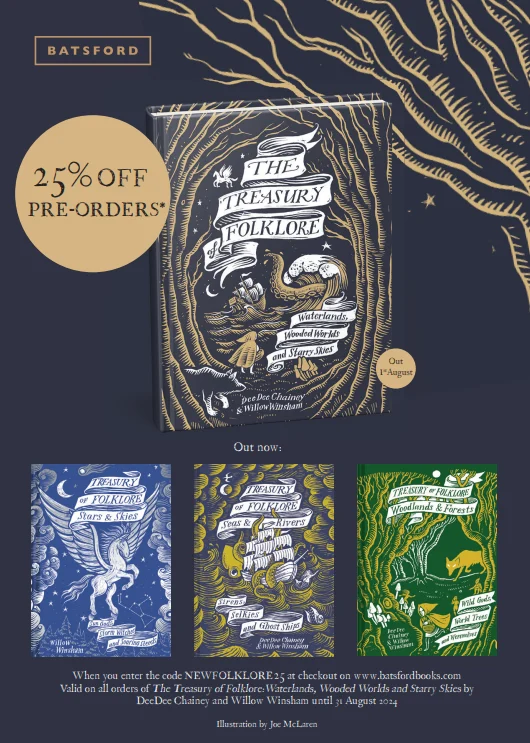
LONDON, UK – Nearly a decade after its inception, a beloved exploration of humanity’s shared myths and legends is returning to its original vision. Authors Dee Dee Chainey and Willow Winsham are set to release The Treasury of Folklore: Waterlands, Wooded Worlds and Starry Skies, a magnificent single-volume compendium that brings together the most captivating tales from their highly successful three-book series. Scheduled for release on August 1, 2024, this "hefty tome" promises to be a cornerstone for anyone fascinated by the enduring power of folklore.
The Genesis of a Grand Vision: Main Facts
The Treasury of Folklore: Waterlands, Wooded Worlds and Starry Skies is not merely a collection, but the realization of an ambition first conceived years ago: to encapsulate the diverse tapestry of human folklore across all physical landscapes in a single, authoritative volume. This beautifully bound edition, featuring elegant cream paper and striking cover art, compiles the most cherished stories and insights previously found in Seas and Rivers, Trees and Woodlands, and Stars and Skies.
The forthcoming compendium is designed to be a definitive statement on the universality of human experience, seen through the lens of myth. It delves into how people across the globe craft customs, beliefs, and narratives around the natural environments they inhabit, revealing profound commonalities in our primal fears and dreams. From the awe-inspiring mysteries of the cosmos to the hidden dangers of the deep and the ancient wisdom of the forests, the book traverses geographical and cultural boundaries to illuminate the shared threads of human imagination.
While the new Treasury re-presents existing material from the original trio of books, it does so with a renewed purpose and aesthetic. It features the wonderful original illustrations by Joe McLaren, which have become synonymous with the series’ evocative storytelling. Positioned as both a beautiful addition to any library and a compelling conversation starter, the book is divided into three distinct sections, mirroring the landscapes explored in its predecessors. Pre-orders are currently open, with an exclusive 25% discount available through Batsford Books using the code NEWFOLKLORE25.
From Digital Spark to Literary Legacy: Chronology of the Treasury
The journey of The Treasury of Folklore began almost ten years ago, sparked by the vibrant, global community fostered through the #FolkloreThursday hashtag. This online phenomenon, a veritable outpouring of shared cultural heritage, inspired the authors to create something tangible and lasting – a work that would mirror the unifying universality of folklore discovered in these digital exchanges.
Their initial concept was ambitious: a single book that would comprehensively cover folklore from every physical landscape. However, the sheer volume and richness of material uncovered quickly surpassed the confines of a solitary publication. This abundance led to the decision to expand the vision into a series of distinct, yet interconnected, volumes.
The first three books in the series – Seas and Rivers, exploring the myths of aquatic realms; Trees and Woodlands, delving into the lore of forests and groves; and Stars and Skies, charting the celestial narratives – were met with surprising and heartwarming popularity. This success underscored the deep human resonance with these ancient tales and affirmed the authors’ initial premise that, despite superficial differences, humanity shares fundamental connections through storytelling.
The idea of consolidating these works into a compendium emerged later, presenting a unique opportunity to revisit and fulfill the original singular vision. The process involved a meticulous re-evaluation of the existing texts. Authors Chainey and Winsham embarked on a painstaking behind-the-scenes effort, rereading familiar words with fresh eyes to select and curate the best material, ensuring a cohesive narrative flow that would seamlessly span shared landscapes across time and place within the new single volume. The culmination of this effort is the upcoming release, a testament to their enduring dedication to the subject.

Echoes of Humanity: Supporting Data and Folkloric Insights
The core philosophy underpinning The Treasury of Folklore is the exploration of how deeply intertwined human identity is with the natural world. The series, and now its compendium, posits that despite the vast diversity of human cultures, we all share primal fears and dreams. Whether gazing into the fathomless ocean, seeking solace in the dense forest, or contemplating the vastness of the starry night, humanity grapples with the same existential questions and emotions. We dread the unknown, long for connection, and stand in awe of the infinite, all reflected in the stories we tell.
The extracts provided from the compendium beautifully illustrate this universality, drawing readers into a world where landscapes are imbued with spirit and meaning.
Water Horses: Majestic and Malevolent Creatures from the Depths
From the "Seas and Rivers" section, the tales of water horses highlight the dual nature of humanity’s relationship with powerful natural forces: attraction and fear. These mythical steeds, found lurking beneath the surface of lakes and waterways, serve as potent cautionary figures.
The most renowned is the Scottish Kelpie, often conflated with the each-uisge. While both are malevolent water horses, the kelpie typically inhabits rivers, luring unsuspecting travelers to a watery grave. The each-uisge, by contrast, is found in the deeper, more mysterious lochs and lakes, often more fearsome. These creatures embody the peril of water, a vital resource that can turn deadly without warning. Tales of taming the kelpie, even temporarily with a cross-marked bridle, reflect a human desire to control the uncontrollable, though such control is invariably fleeting and dangerous. The use of red-hot iron to kill a kelpie is a classic folkloric motif, symbolizing humanity’s attempt to combat supernatural threats with tangible, if magical, means. The enduring presence of the Kelpie in the Scottish imagination is dramatically visible in the colossal 30-meter sculptures near Falkirk and its appearance in modern literature like J.K. Rowling’s Fantastic Beasts and Where to Find Them, showcasing its persistent cultural impact.
Intriguingly, England’s folklore largely lacks such aquatic equine terrors, a stark contrast to its Celtic neighbours. Wales, however, offers the Ceffyl Dwr, a shapeshifting water spirit that often appears as an enchanting horse. These Welsh counterparts, believed in well into the 19th century, were known for their incredible speed, luring riders to their doom. A fascinating exception reveals a denominational equality: clergymen of any creed were said to be immune to the Ceffyl Dwr’s treachery, suggesting a belief in spiritual protection against supernatural threats.
Scandinavia contributes the luminous and majestic bäckahäst or "brook horse," often seen in foggy conditions. Like its counterparts, it beguiles riders before dragging them underwater. The frequent appearance of children as victims in bäckahäst tales amplifies the sense of tragedy and serves as a powerful warning against youthful recklessness near water. Stories where children are saved by accidentally invoking Christian names, or where the bäckahäst can be tricked into labour, reveal common strategies in folklore to exert control or find salvation from overwhelming forces. These tales underscore a universal human vulnerability to the natural world and the myths created to navigate its dangers.
Lords of the Wild: Guardians and Tricksters of the Forest
Moving from the depths to the verdant canopy, the "Trees and Woodlands" section introduces the "Lords of the Wild," figures embodying humanity’s complex relationship with forests—places of sustenance, danger, and spiritual power. These entities range from protective deities to malevolent tricksters, reflecting the unpredictable nature of the wild.
The Finnish Forest God, Tapio (also known as Metsähine or Hiisi), stands as a prime example of a benevolent forest lord. Depicted as tall and thin, with features merging with the forest itself—ermine fur, mossy beard, gnarled tree-like back—Tapio is both the personification and protector of his realm. Hunters traditionally sought his blessing, promising respect for the forest and its creatures, in exchange for a successful hunt. This practice highlights an ancient symbiotic relationship with nature, where reverence and ethical conduct were believed to ensure prosperity. Tapio’s family, including his benevolent wife Mielikki (or the less kind Kuurikki), and children Nyrikki (who guides hunters) and Tulikki (who directs prey), create a rich pantheon that governs the intricate balance of the forest ecosystem. The Estonian equivalent, sharing similarities with Odin’s singular eye, further demonstrates cross-cultural echoes of powerful, nature-bound deities.

In Slavic folklore, the Leshy (or leshii, lyeshy) presents a more ambiguous and often terrifying figure. A tutelary spirit of the woods, the Leshy protects animals (especially wolves and bears in some regions), yet is notoriously dangerous to humans. This shapeshifting creature can alter its size and form, mimicking familiar forest elements or even humans, though it always bears tell-tale signs: lack of eyelashes, shoes worn on the wrong feet, or a kaftan wrapped unconventionally. Its wild hair, cloven feet, and singular eye in some depictions link it to fauns, satyrs, and even the Devil, signifying its liminal, non-human nature.
Leshies are master tricksters, confusing travelers, luring them off paths with mimicry, and even tickling them to death. They inflict illness, abduct women and children, and can curse farms, demanding annual sacrifices to appease their wrath. These tales serve as powerful warnings against disrespecting the forest and its inhabitants. However, folklore also provides methods for protection: turning clothes inside out, swearing at them, or making the sign of the cross. For those brave or foolhardy enough, a ritual involving young birch trees and a renunciation of Christian symbols can even summon the "grandfather of the forest." The Leshy’s love for gambling (with squirrels, no less) and aversion to Christian symbols like the club suit in cards paints a vivid picture of a complex, capricious entity, embodying both the allure and danger of the untamed wilderness.
The Hare on the Moon: Celestial Narratives of Sacrifice and Fate
Finally, from "Stars and Skies," the motif of the hare on the moon showcases humanity’s universal impulse to find meaning and stories in the celestial bodies. Across diverse cultures, the dark markings on the moon’s surface are interpreted as the image of a rabbit or hare, with the Sea of Tranquillity forming its head and other "seas" its ears.
This global motif often centers around themes of self-sacrifice and compassion. In the Buddhist Sasa-Jātaka, the hare, lacking other offerings for the deity Sakka (disguised as a beggar), nobly offers its own body to be eaten. For this ultimate act of faithfulness, Sakka immortalizes the hare’s image on the moon for all eternity. Similar narratives are found in Sri Lankan tales, where Buddha saves a self-sacrificing hare and places it in the moon, and in Japan, where the Tsuki no Usagi (Moon Rabbit) sacrifices itself for a disguised beggar (who is often the Man in the Moon himself). These stories, particularly popular in Japan during the Harvest Moon and Mid-Autumn Festival, serve as moral lessons, extolling virtues of altruism and empathy.
A strikingly different, and more somber, interpretation comes from South African folklore. Here, the hare is not a symbol of virtue but a harbinger of mortality. Moon sends Hare to deliver a message of cyclical death and rebirth to humanity, mirroring the moon’s own phases. However, the flighty Hare misdelivers the message, declaring only that humans will die permanently. In a fit of rage, Moon attacks Hare, splitting its lip, while Hare, in retaliation, scars Moon’s face – the very markings visible from Earth. This tale offers a stark explanation for human mortality and the imperfections seen in the heavens, showcasing how diverse cultures weave narratives to explain fundamental aspects of existence.
These extracts, beautifully illustrated by Joe McLaren, are not just isolated tales; they are windows into shared human consciousness, revealing how we’ve always sought to understand ourselves and our place in the cosmos through story.
A Collective Voice: Official Responses from the Authors
The journey of The Treasury of Folklore has been a deeply personal and professionally rewarding one for its creators. From the initial spark of #FolkloreThursday, the authors expressed a profound desire to forge something meaningful and enduring, reflecting the unifying power of global folklore. The overwhelming popularity of the original three books was, as they describe it, "both surprising and heartwarming," a testament to the universal appeal of their work. They extended their gratitude to "each and every person who has bought and read these books."
When the concept of a compendium was proposed, the authors immediately recognized it as an opportunity to fulfill their initial, grand vision. They recounted the meticulous process of curating the new volume: "Much work went on behind the scenes, reading through the words we already knew so well, with fresh eyes, as we worked out what to include and what to leave out, in the best way to bring it all together in one volume that spans our shared landscapes across time and place."

Their enthusiasm for the final product is palpable. "To say we have been blown away by the end result is an understatement," they stated, expressing their thrill to share this "beautifully bound volume." They particularly praised its physical attributes: "We love the size and the cover combining everything and the beautiful cream paper: it is a ‘hefty tome’ indeed." While emphasizing that the book contains no new material, they confidently position it as "a beautiful addition to any book case or coffee table, a conversation starter, a way to connect." Their voice clearly communicates a deep satisfaction in seeing their decade-long project come full circle, embodying their belief in folklore as a conduit for connection.
The Enduring Legacy: Implications for Culture and Connection
The release of The Treasury of Folklore: Waterlands, Wooded Worlds and Starry Skies carries significant implications for the preservation and appreciation of cultural heritage. In an increasingly globalized world, such compilations serve as vital bridges, highlighting not only the distinct beauty of individual cultures but also the profound commonalities that bind humanity.
This compendium reinforces the enduring power of storytelling as a fundamental human activity. Folklore, often dismissed as mere superstition or childish tales, is revealed through this series as a sophisticated means by which societies have historically transmitted wisdom, moral codes, fears, and aspirations across generations. By presenting these myths within the context of the landscapes that inspired them, the book encourages readers to reconnect with the natural world and consider the deep, often spiritual, bonds that have always existed between humans and their environment.
Furthermore, the book’s stated purpose as a "conversation starter" underscores its potential to foster cross-cultural understanding and empathy. By exploring how different peoples interpret similar phenomena – the dangers of water, the mysteries of the forest, the patterns in the sky – readers can gain insight into diverse worldviews while simultaneously recognizing shared human concerns. In an era marked by division, such works serve as gentle reminders of our collective identity.
For educators, enthusiasts, and casual readers alike, The Treasury of Folklore offers an accessible yet deeply researched entry point into the vast realm of global myths. Its aesthetic appeal ensures it will be a cherished object, while its rich content guarantees repeated engagement. The legacy of Dee Dee Chainey and Willow Winsham’s work, initially sparked by a digital movement, now culminates in a physical testament to the timeless, unifying, and profoundly human spirit of folklore, ensuring these ancient tales continue to resonate for generations to come.