The Digital Brushstroke: Jacob Holster and the Rise of Generative Humanism
In the rapidly evolving landscape of generative media, where the "uncanny valley" often feels like a cold, clinical chasm, a new movement is emerging—one that prioritizes the soul of the stroke over the precision of the pixel. At the forefront of this movement is Jacob Holster, an artist and academic whose work, under the moniker @bandyquantguy, is redefining the aesthetic boundaries of artificial intelligence.
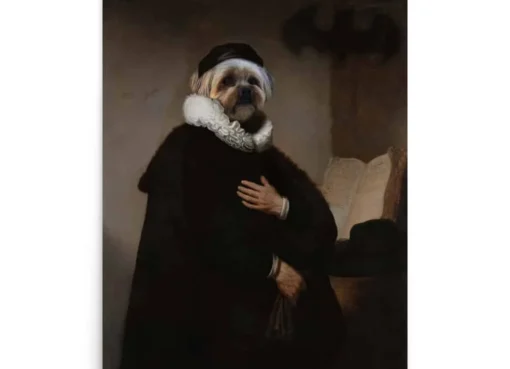
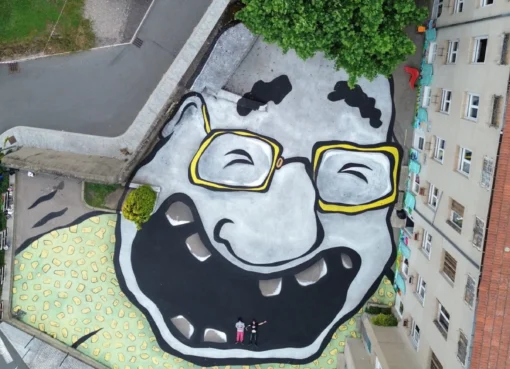
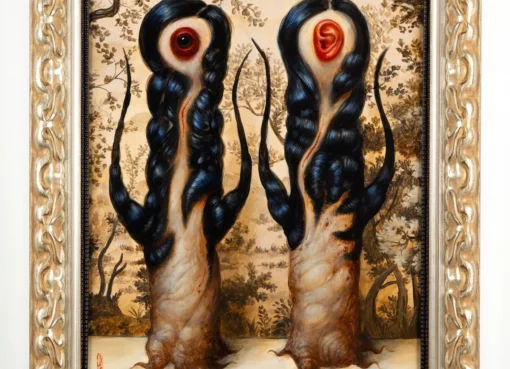
While the broader AI art world has largely been obsessed with hyper-realistic renders and the pursuit of photographic perfection, Holster’s work serves as a profound counter-narrative. His films and visual experiments do not seek to replicate reality; instead, they seek to replicate the feeling of human creation. Through a lens that bridges the gap between the ivory tower of academia and the avant-garde frontiers of digital art, Holster is crafting a "painterly" AI aesthetic that feels less like a machine-generated output and more like a lost masterpiece from the Impressionist era.
Main Facts: The Convergence of Art, Music, and Machine
Jacob Holster occupies a unique position in the contemporary art world. He is not merely a "prompt engineer" or a digital hobbyist; he is a scholar of the creative process. As an Assistant Teaching Professor of Music Education at Penn State University, Holster’s primary professional focus is the intersection of pedagogy, technology, and artistic practice. This academic rigor is the foundation upon which his visual art is built.

The Aesthetic Signature
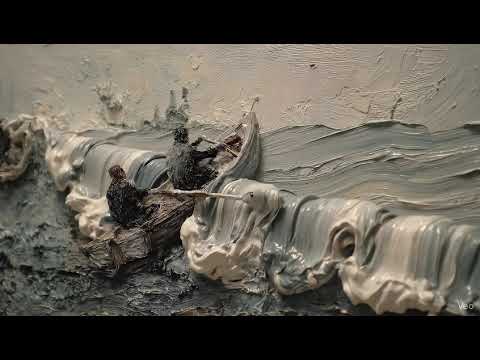
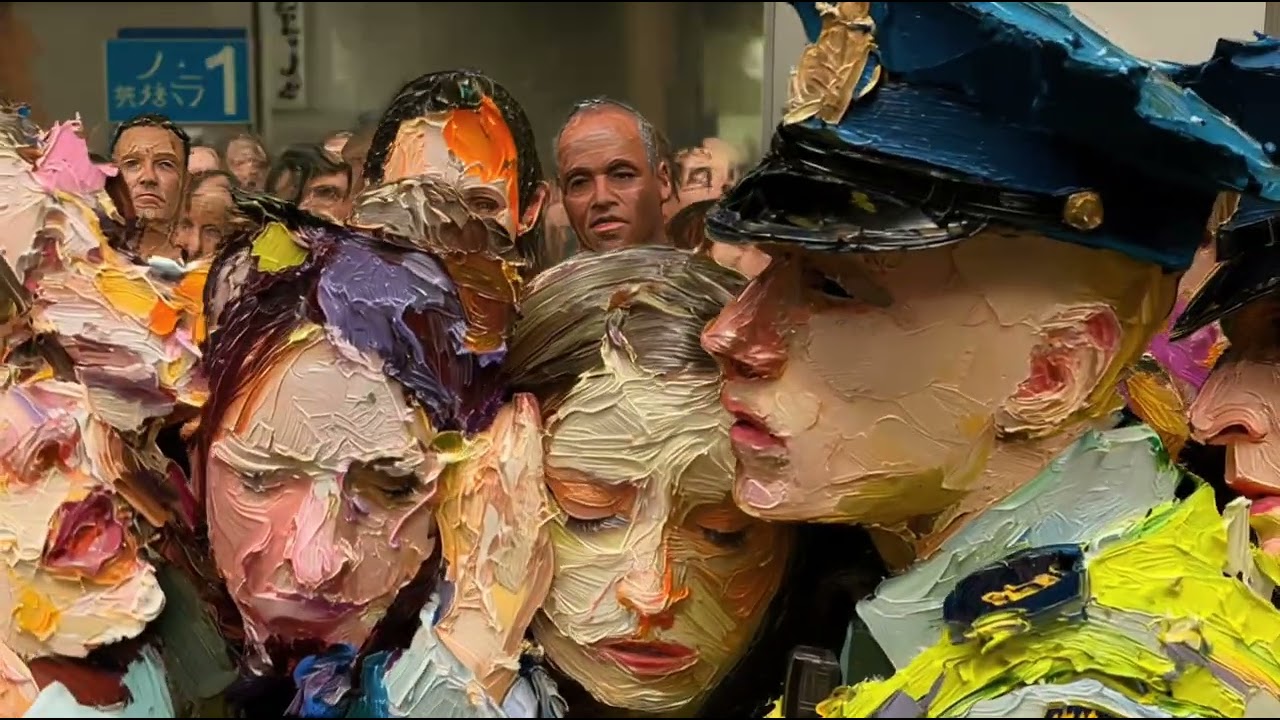
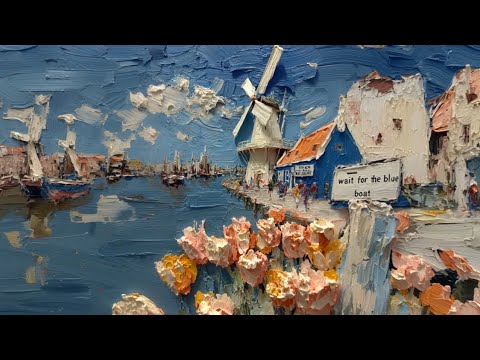
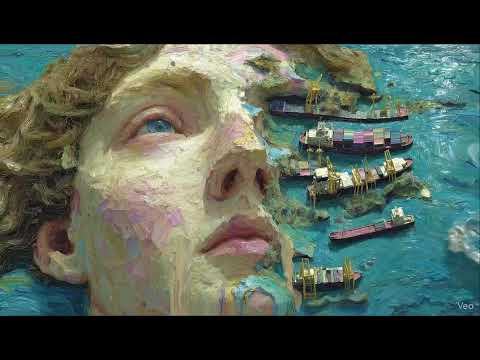
Holster’s work is characterized by a "thick," tactile quality reminiscent of oil painting. In films like Art Is Human Terrain and Le Voyage, the viewer is not met with the glossy, plastic sheen common in standard AI video generation. Instead, the screen vibrates with the simulated weight of impasto brushstrokes, the warmth of a muted color palette, and a deliberate rejection of "perfect" anatomy in favor of emotional resonance.
The Academic Foundation
At Penn State, Holster’s research examines how artificial intelligence can be integrated into music education and creative pedagogy. He views AI not as a replacement for human talent, but as a "collaborative terrain." This philosophy carries over into his filmmaking, where he treats AI models as if they were a new type of instrument—one that requires a deep understanding of theory and "performance" to master.
Key Works
- Art Is Human Terrain: A flagship AI short film that explores the concept of the human spirit as a landscape, utilizing swirling textures and rhythmic pacing.
- Le Voyage [Paint World 28]: A surrealist exploration of movement and transition, emphasizing the "painterly" nature of the AI’s internal latent space.
- Recipe for Consciousness [Paint World 38]: A more abstract, conceptual piece that questions the boundaries between biological thought and digital simulation.
Chronology: From the Classroom to the Canvas
The evolution of Jacob Holster’s artistic voice is a study in the merging of traditional discipline and technological disruption.
Phase 1: The Pedagogical Roots
Before becoming a viral sensation in the AI art community, Holster’s focus was primarily on the structures of learning. His background in music education provided him with a deep understanding of rhythm, composition, and the "scaffolding" required to teach complex creative skills. In the early 2020s, as generative AI began to enter the public consciousness, Holster recognized its potential as a pedagogical tool. He began experimenting with how these models could be used to illustrate complex musical concepts or provide visual accompaniment to auditory learning.
Phase 2: The Shift to Visual Experimentation (2022–2023)
As generative models like Midjourney and Stable Diffusion moved from niche curiosities to powerful creative engines, Holster began to push the tools beyond their default settings. While many users were trying to create "real" photos, Holster began training his eye—and his prompts—to look for the "glitch" and the "texture." He started the @bandyquantguy Instagram account as a digital laboratory, sharing short clips that focused on the interaction between light and digital "paint."
Phase 3: The Emergence of "Paint World" (2024–Present)
In the last year, Holster’s work has matured into a cohesive series known informally as "Paint World." This period saw the release of Art Is Human Terrain, which signaled a shift from short aesthetic loops to narrative-driven AI filmmaking. His work began to gain traction in surrealist circles, where critics noted his ability to make AI feel "warm" and "humanistic"—a feat rarely achieved in a medium often criticized for its coldness.
Supporting Data: The Technicality of Texture
To understand why Holster’s work is significant, one must look at the technical "noise" that defines his style. Most AI video generators (such as Sora, Runway, or Pika) are trained to minimize "artifacts"—the strange, swirling distortions that happen when an AI doesn’t quite know how to render a frame. Holster, however, leans into these artifacts.
The "Flicker" as a Brushstroke
In traditional animation, "flicker" is often seen as a mistake. In Holster’s work, the temporal instability of AI video is harnessed to mimic the movement of light over a textured canvas. By carefully controlling the "denoising" strength and using specific stylistic seeds, he ensures that every frame feels like a new layer of paint is being applied over the last.
The Human Terrain Metric
In his film Art Is Human Terrain, Holster utilizes a concept from his academic research: the idea that art is a "terrain" that humans must navigate. Data from his pedagogical studies suggest that students and observers respond more emotionally to "imperfect" or "hand-crafted" visuals than to hyper-realistic ones. Holster applies this by deliberately introducing "painterly noise" into his AI workflows, which bridges the gap between the digital and the tactile.
Sound and Vision
As a music educator, Holster’s data-driven approach to sound is equally important. The audio in his films is not an afterthought; it is a rhythmic guide. He often synchronizes the "evolution" of the AI’s brushstrokes with musical cadences, creating a synesthetic experience where the viewer can almost "hear" the paint hitting the canvas.
Official Responses: The Academic and Artistic Discourse
Holster’s work has sparked a dialogue within both the art world and the academic community regarding the ethics and aesthetics of generative media.
The Academic Perspective
Colleagues in the field of music education and digital humanities have pointed to Holster as a prime example of "ethical AI engagement." Rather than using AI to bypass the hard work of creation, Holster uses his position at Penn State to advocate for a "literacy-first" approach. His official stance, often reflected in his lectures, is that AI should be taught as a foundational skill that enhances, rather than replaces, human intentionality.
The Surrealist Community
The publication Surrealism Today has noted that Holster’s work represents a "new surrealism." Unlike the 20th-century surrealists who looked to the subconscious mind, Holster looks to the "subconscious" of the machine—the latent space where data becomes dreamlike. Critics have praised his ability to avoid the "AI-look," noting that his films could easily be mistaken for avant-garde stop-motion or experimental oil-on-glass animation.
Public Reception
On platforms like Instagram and YouTube, the response to @bandyquantguy is often one of relief. In a sea of AI-generated "influencers" and generic fantasy art, Holster’s comments sections are filled with artists who find his work "refreshing" and "spiritually resonant." This public data suggests a growing hunger for AI art that acknowledges its own artifice while striving for emotional truth.
Implications: The Future of Generative Humanism
The work of Jacob Holster carries significant implications for the future of film, education, and the broader creative economy.

1. The Death of the "Prompt" and the Birth of the "Process"
Holster’s success suggests that the future of AI art lies not in the "prompt" (the words typed into the box) but in the "process" (how the artist manipulates the machine’s output over time). As AI tools become more accessible, the value will shift back to the artist’s unique eye and their ability to curate a specific aesthetic world. Holster’s "Paint World" is a blueprint for how artists can maintain a recognizable "hand" in an automated age.
2. A New Model for Education
By integrating AI into his work at Penn State, Holster is helping to define a new pedagogical framework. He demonstrates that the next generation of artists and musicians must be "bilingual"—fluent in both traditional creative theory and high-level technical manipulation. His work implies that the most successful creators of the future will be those who can treat a neural network with the same nuance a violinist treats a Stradivarius.
3. The Humanistic Turn in AI
Perhaps the most profound implication of Holster’s work is the realization that AI does not have to be cold. If "Art Is Human Terrain," then the machine is simply a new way to map that terrain. Holster is proving that technology can be used to amplify our most human traits: our love of texture, our appreciation for imperfection, and our drive to find meaning in the abstract.
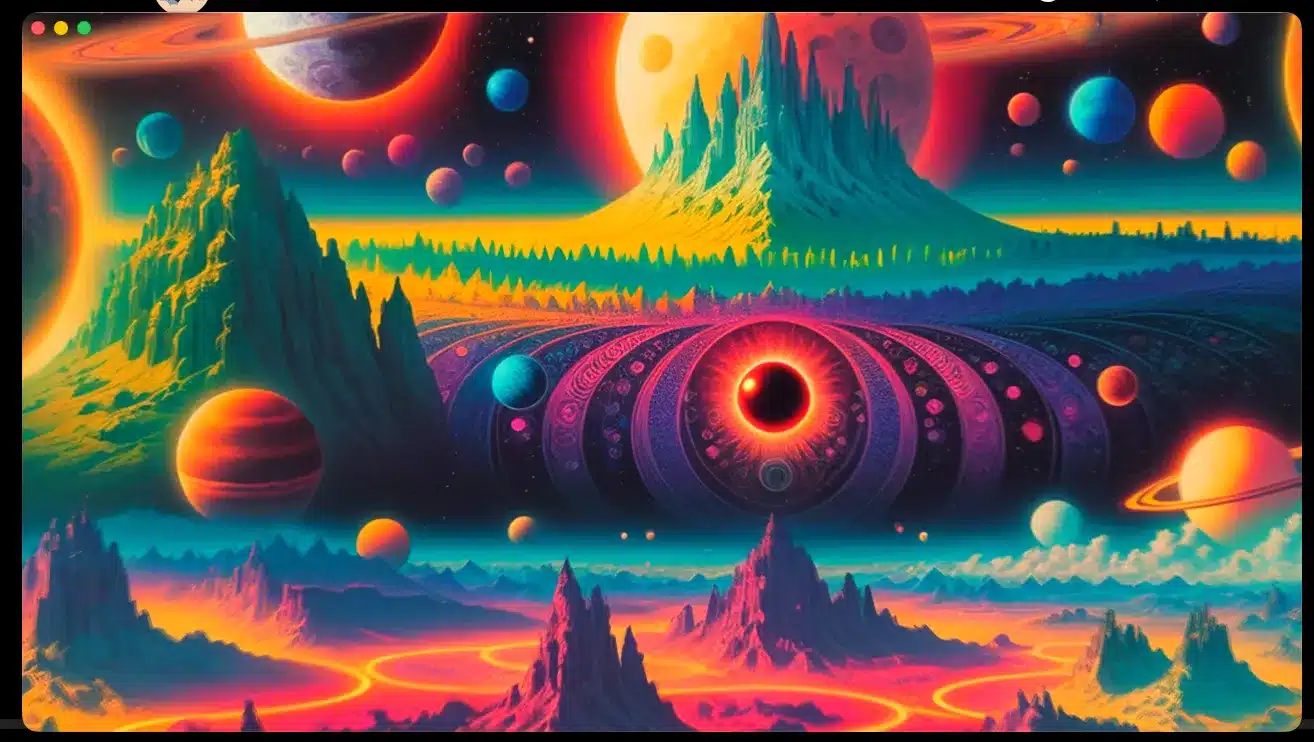
In conclusion, Jacob Holster is doing more than just making "pretty pictures" with a computer. He is conducting a high-stakes experiment in what it means to be a creator in the 21st century. Through his painterly aesthetics and his academic inquiry, he is ensuring that as we move further into the digital age, we don’t leave the "human terrain" behind. Whether he is in the classroom at Penn State or in the digital studio of @bandyquantguy, Holster is reminding us that the brush may be virtual, but the stroke is entirely human.