Reclaiming the Ritual: Why Everyday Folklore is a Call to Action for Modern Life
London, UK – In an age increasingly defined by digital screens and rapid-fire information, the ancient whispers of folklore might seem like quaint relics, charming curiosities best confined to academic texts or fantastical tales. We often relegate folklore to the exotic, envisioning antler-wearing figures of distant festivals or the peculiar practices of bygone eras, like wart charming. To some, it’s dismissed as mere "flim flam"—a fanciful device for lulling children to sleep, twisting a plot, or extracting revenue from fervent fandoms. Yet, for many others, folklore subtly permeates their lives through familiar customs: the evergreen presence of a Christmas tree, the sentiment of a birthday card, or even the debated order of jam and cream on a scone. And then there are those who simply don’t consider folklore at all, oblivious to its pervasive influence.
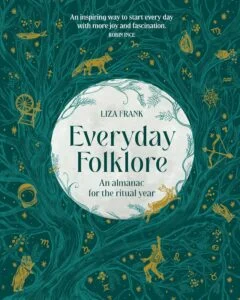
However, as author Liza Frank compellingly argues, folklore is far from an anachronism; it is an omnipresent force, shaping the very fabric of our daily existence. It manifests in the rituals, traditions, and customs that subtly guide our lives, from significant annual observances to the seemingly mundane act of making a cup of tea. Frank’s personal journey, meticulously documented between St Distaff’s Day 2020 and Twelfth Night 2021, involved practicing a ritual of folklore every day. This immersive experience culminated in her recent publication, Everyday Folklore: An Almanac for the Ritual Year, a practical guide designed to help individuals engage with these traditions throughout the year.
For those encountering this piece on the Folklore Thursday website, a foundational interest in the subject is presumed. Yet, even for the ardent enthusiast who observes from the sidelines, Frank presents a compelling call to action. She posits that everyone stands to benefit from consciously incorporating a dose of folklore into their lives, urging readers to "feel the folklore fear and do it anyway." This assertion challenges the passive consumption of folklore, advocating instead for an active, enriching engagement that promises to transform the mundane into the magical.
The Genesis of "Everyday Folklore": A Year of Living Folklorishly
Liza Frank’s journey began with a profound curiosity about the living pulse of folklore. Rather than merely studying it, she committed to a radical experiment: to actively participate in and document a piece of ritual year folklore every single day for an entire year. Spanning from St Distaff’s Day (January 7th), a traditional day marking the resumption of spinning after the Christmas festivities, to Twelfth Night (January 5th of the following year), which concludes the Christmas season, Frank immersed herself in a diverse array of practices.
Her "Everyday Lore Project" (Frank, 2021) was not merely an academic exercise but a deeply personal exploration of how ancient traditions could resonate within a contemporary context. From ancient agricultural blessings to obscure saints’ days, from culinary rituals to weather prognostication, Frank embraced each day’s unique folkloric opportunity. This chronological immersion allowed her to experience firsthand the ebb and flow of the ritual year, observing how these practices connected her to natural cycles, historical precedents, and a deeper sense of cultural heritage. The daily discipline of seeking out and enacting these customs provided the experiential bedrock for Everyday Folklore, transforming abstract concepts into tangible, personal practices. Her work serves as a testament to the enduring relevance of folklore, demonstrating that it is not merely a subject to be studied, but a way of life to be lived.
Beyond the Fringe: Reclaiming Folklore’s Ubiquitous Presence
The prevailing perception of folklore often limits it to the obscure or the exotic—a perception Frank’s work directly challenges. The idea that folklore is "something other people do," whether it’s the famed antler dance of Abbotts Bromley or the forgotten art of wart charming, creates a false dichotomy between "us" and "them." Frank meticulously deconstructs this notion, revealing that folklore is, in fact, woven into the very fabric of our everyday existence.
Consider the ubiquitous Christmas tree, a custom rooted in ancient pagan traditions of winter solstice celebrations and Germanic folklore, now a global symbol of holiday cheer. Or the birthday card, a seemingly modern gesture carrying echoes of ancient blessings and well-wishing rituals. Even the seemingly trivial debate over the correct order of jam and cream on a scone, a seemingly minor point of culinary etiquette, reflects a regional or personal custom that, when examined closely, functions as a form of culinary folklore. As scholar G. E. Warshaver noted, folklore can be found even in the most mundane aspects of our lives, such as "making a brew" (Warshaver, 1991).
The dismissal of folklore as "flim flam" overlooks its profound psychological and social functions. Far from being mere entertainment, folklore serves as a powerful medium for cultural transmission, moral instruction, and community bonding. It shapes narratives that lull children to sleep, but also narratives that define cultural identity and provide meaning. It offers frameworks for understanding the world, for coping with uncertainty, and for marking the passage of time. Frank’s work is a powerful argument for reclaiming folklore from the periphery and recognizing its vital, often unacknowledged, role in shaping our contemporary lives. By actively engaging with these traditions, individuals can tap into a rich vein of cultural heritage that fosters connection, mindfulness, and a renewed sense of wonder.
The Five Pillars of a Folkloric Life: Why You Should Embrace the Ritual Year
Frank’s "call to action" is articulated through five compelling reasons, each highlighting a distinct benefit of consciously incorporating folklore into one’s routine. These are not merely whimsical suggestions but practical pathways to a more engaged, meaningful, and joyful existence.
1. Cultivating Presence: Slowing Down the Sands of Time
In a world that constantly demands speed and efficiency, the passage of time often feels like an uncontrollable rush. Days blur into weeks, weeks into months, leading to the perennial lament of "how fast the year has gone." While folklore certainly cannot literally halt the relentless march of time, engaging with the ritual year offers a profound antidote to this temporal acceleration: it fosters presence and mindfulness.
By consciously participating in practices tied to specific dates, months, or seasons, individuals gain a tangible stake in the unfolding year. Consider the ancient tradition of wassailing in January, a ritual blessing of apple trees to ensure a bountiful harvest. Engaging in such a practice transforms the abstract concept of "harvest" into a personal investment, connecting participants directly to the agricultural cycles that underpin our existence. Similarly, the folkloric practice of counting fogs in August to predict winter snowfalls is not merely a quaint superstition; it encourages keen observation of natural phenomena, grounding individuals in their immediate environment.
This deliberate observation extends to the broader natural world. Experimenting with lunar plantings, for instance, connects one to the subtle rhythms of celestial bodies and their perceived influence on growth. More simply, taking the time to observe the hedgerows—how they transition from barren winter skeletons to budding spring promises, then to fecund summer abundance, and finally back to sparse, autumnal dormancy—is an act of profound mindfulness. The more time one dedicates to observing the intricate dance of nature and tradition around them, the slower their perceived pace of life becomes. This deceleration, in turn, cultivates an openness to possibility and wonder, allowing for a deeper appreciation of the world’s intricate beauty and the rich tapestry of human experience within it. It’s a powerful counter-narrative to the relentless pressure of modern life, offering a pathway to a more grounded and reflective existence.
2. An Abundance of Celebration: Embracing Joy in the Everyday
Life’s calendar is typically punctuated by personal milestones like birthdays and anniversaries, alongside major religious or secular holidays. Yet, the ritual year, in its vastness, offers an almost endless array of additional excuses for celebration, injecting a vibrant and continuous stream of joy into everyday life. This expanded capacity for marking time with festivity is a powerful antidote to monotony and a catalyst for collective happiness.
Want to honour the majesty of trees? The ritual year provides multiple dedicated days for such reverence, inviting reflection on nature’s enduring strength. Surprisingly, there are even entire festivals devoted to the humble belly button throughout June and July, showcasing the delightful absurdity and inventiveness of human celebration. For those who appreciate a fine libation, specific dates like August 19th for wine, the second Saturday of June for gin, and July 31st for rum offer perfect opportunities to raise a glass in good company.
Beyond traditional observances, modern culture has also birthed its own forms of folklore, giving rise to "Back to the Future" Day, "Star Trek" Day, and the universally recognized "May the Fourth be with you" for Star Wars enthusiasts. These examples demonstrate that the human impulse to ritualize and celebrate is ever-present, adapting to contemporary narratives. Furthermore, some days allow for celebration based on non-events, such as the relief when it doesn’t rain on St. Swithin’s Day. And then there are the deeply personal moments of triumph, like the successful completion of a folkloric task—such as counting seven stars on seven consecutive nights and having a wish granted. The ritual year, therefore, is not merely a historical record but a dynamic, living framework with an "endless capacity for marking the passage of time with excuses for joy," transforming every calendar page into a potential occasion for delight.
3. A Cure for Ennui: Engaging Mind and Body with Ancient Customs
In a world where digital entertainment often leads to passive consumption, the specter of boredom and ennui looms large. Folklore, however, offers a vibrant and active remedy, providing a wealth of engaging activities that challenge the mind and body. Frank’s year-long "living folklorishly" project underscored this point, revealing that there is always something intriguing to do, whether it’s a grand public spectacle or a quiet personal ritual.
Consider the leftover Christmas cake. Instead of letting it languish, one could emulate the spirited residents of Manitou Springs, Colorado, by staging a "Great Fruitcake Toss" in January – a wonderfully absurd and community-driven event. Culinary folklore provides a rich avenue for engagement, inviting participants to recreate traditional recipes like "Heg Peg Dumps," "Harvest Shot," or "knotting-sowins." Even baking a large batch of scones for National Cream Tea Day (June 26th) becomes an act steeped in cultural tradition. (A word of caution, however, from personal experience: Frank advises against experimenting with "plum duffs," particularly if involving vegetarian suet and a favourite tea towel!).
For those with a penchant for theatricality, the ritual year offers ample opportunity for costume and performance. One could become "King for a weekend" at the Porthcawl Elvis Festival in September, or embody a badger to celebrate St. Piran’s Day in March, connecting with regional identities and shared narratives. Daredevils are also well-catered for, with events like the infamous Cooper’s Hill cheese-rolling race in May, a thrilling pursuit down a steep incline after a wheel of Gloucester cheese. Or the equally challenging Dorking Wife Carrying Race in March, an obstacle course requiring strength and teamwork. Even solitary, idiosyncratic rituals, such as conducting an exorcism at midnight by spitting black beans and walking backwards for Lemuralia (May 9th), offer a unique and memorable way to stave off the doldrums. These varied activities demonstrate folklore’s capacity to transform leisure into meaningful engagement, fostering creativity, physical activity, and a playful connection to the past.
4. Intellectual Enrichment: Unearthing Curiosities and Winning Trivia
Beyond the immediate sensory and social benefits, delving into folklore is an intellectually stimulating pursuit, akin to tumbling down a fascinating rabbit hole of human knowledge. It’s an excellent way to broaden one’s understanding of the world, offering a treasure trove of peculiar facts and unexpected insights that might just make you the star of the next pub quiz.
Take, for instance, the surprising fact that spiders reportedly prefer classical music over techno (Frings & Frings, 1966). This seemingly whimsical piece of trivia gains folkloric relevance when considering the belief that an uptick of spiders in your home around March augurs rain. Such tidbits illuminate the intricate ways humans have observed, interpreted, and assigned meaning to the natural world. Another captivating example comes from the world of space travel: since the early 1970s, Baikonur cosmonauts have traditionally watched The White Sun of the Desert, a 1970 Russian Civil War comedy, the day before their space missions for good luck (Hollingham, 2014). This highlights how even in the most technologically advanced domains, the human need for ritual and good fortune persists, creating modern folklore.
Then there are bats, creatures steeped in dualistic folkloric reputations. While often cast as the "Devil’s messenger," these winged wonders are also vital pollinators of agave plants (Menchaca et al., 2020). Without their ecological contribution, the beloved Margarita would be replaced by Manhattans, underscoring the surprising practical implications of these creatures often shrouded in myth. These examples illustrate that folklore is not merely a collection of old wives’ tales; it’s a dynamic field that intersects with biology, history, sociology, and psychology. The deeper one explores the folklore rabbit hole, the more unexpected "pub quiz nuggets" and profound connections emerge, enriching one’s intellectual landscape in delightfully unconventional ways.
5. Crafting Personal Narratives: Tales from a Life Lived Folklorically
Ultimately, engaging with folklore provides an invaluable currency in social interaction: compelling stories. Let’s be frank, some folkloric practices verge on the utterly bonkers – a quality that, far from invalidating deeply held beliefs, makes them all the more intriguing. As Frank humorously notes, if you find yourself stalking a churchyard in Leicestershire on June 1st, hoping to witness St. Wistan’s hair sprout amongst the headstones, "you’re my kind of people." The more one participates in these often unusual traditions, the more a rich repertoire of unique anecdotes and personal experiences accumulates.
Imagine recounting the time you were out nutting in September and swore you caught a whiff of demonic sulphur in the woods. Or the utterly inexplicable moment when the persistent boil on your neck seemed to recede after the application of a cabbage leaf. These are not just events; they are personal encounters with the edges of belief, the inexplicable, and the enduring power of traditional remedies. Frank herself shares a charming tale of her St. Luke’s Eve vision of her one true love, conjured after slipping a sprig of rosemary and a crooked sixpence under her pillow – which, in her case, turned out to be Mark Hamill (though, she laments, "He’s not rung though").
These stories, whether humorous, mysterious, or slightly absurd, become part of your personal narrative, offering fascinating glimpses into a life lived with a conscious connection to folklore. However, a word to the wise: while you might find your diligent, albeit unsuccessful, attempts to detect vampire activity in your gardening implements (Vukanovic, 1958) to be an impressive feat of esoteric investigation, such anecdotes might be best reserved for a second date, allowing for a more gradual introduction to your folkloric passions. These tales are not just entertainment; they are a testament to an engaged life, a willingness to explore the unusual, and a delightful way to connect with others through shared wonder and amusement.
Academic Perspectives and Cultural Implications
The burgeoning interest in everyday folklore, championed by works like Frank’s, is not merely a niche hobby; it reflects a broader cultural shift and holds significant academic weight. Folklore studies, as a discipline, delves into the expressive culture of human groups, examining everything from myths and legends to customs, rituals, and material culture. Scholars recognize folklore as a vital lens through which to understand history, societal values, psychological needs, and the very construction of identity.
In an increasingly globalized and homogenized world, there is a growing yearning for authenticity, for connection to place, and for practices that provide a sense of rootedness. This renewed interest manifests in the resurgence of traditional crafts, local food movements, and community festivals. Frank’s book, Everyday Folklore, serves as a practical, accessible guide for individuals to tap into this cultural wellspring. It democratizes the study of folklore, moving it out of the exclusive realm of academia and into the hands of the everyday practitioner. By highlighting the ubiquitous and often subtle presence of folklore in our lives, Frank effectively bridges the gap between scholarly inquiry and personal experience. Her work, therefore, not only enriches individual lives but also contributes to the broader preservation and revitalization of cultural heritage, ensuring that these invaluable traditions continue to evolve and thrive in the modern era.
Conclusion: A New Year’s Resolution for a Richer Life
In summary, the conscious integration of folklore into daily life is more than a whimsical pursuit; it is a powerful resolution for cultivating a richer, more connected, and joyful existence. It encourages curiosity, invites experimentation with new traditions, and challenges individuals to step outside the conventional rhythms of modern life.
As the New Year unfolds, consider making it your personal commitment to consciously weave a thread of folklore into your everyday. Be curious about the origins of your habits, try a new seasonal ritual, or simply take the time to observe the subtle shifts in nature that have inspired human customs for millennia. While January 19th is statistically cited as the day when most New Year’s resolutions falter, the beauty of the ritual year lies in its cyclical nature. With its multitude of "New Year’s Days" celebrated across different cultures and traditions throughout the calendar, there will always be ample opportunities for a fresh start, a do-over, or simply another chance to "feel the folklore fear and do it anyway."
Everyday Folklore: An Almanac for the Ritual Year is available now, offering a practical and inspiring companion for anyone ready to embark on their own journey into the living heart of tradition.
References:
[1] Warshaver, G. E. (1991). On Postmodern Folklore. Western Folklore, 50(3), 219–229. https://doi.org/10.2307/1499876
[2] Frank, L. (2021). The Everyday Lore Project. Retrieved from https://liza-frank.com/the-everyday-lore-project/
[3] Frings, H., & Frings, M. (1966). Reactions of Orb-Weaving Spiders (Argiopidae) to Airborne Sounds. Ecology, 47, 578-588. https://doi.org/10.2307/1933935
[4] Hollingham, R. (2014). The strangest space launch rituals. BBC Future. Retrieved from https://www.bbc.com/future/article/20140610-the-strange-rituals-of-cosmonauts
[5] Menchaca, A., Arteaga, M.C., Medellin, R.A., Jones, G. (2020). Conservation units and historical matrilineal structure in the tequila bat (Leptonycteris yerbabuenae). Global Ecology and Conservation, Volume 23. https://doi.org/10.1016/j.gecco.2020.e01164
[6] Vukanovic, T. P. (1958). The Vampire. Journal of the Gypsy Lore Society, 37(1), 21-31. https://www.proquest.com/scholarly-journals/vampire/docview/1299021299/se-2