The Shadow of Orthodoxy: A Comprehensive Look at the Inquisition
Rome, Italy – For centuries, the term "Inquisition" has evoked images of fear, persecution, and the relentless pursuit of ideological purity. Far from a singular event, the Inquisition was a complex, evolving institution of the medieval and early modern Catholic Church, designed to identify, investigate, and suppress what it deemed heresy and other deviant practices. Its reach extended across Europe and into the burgeoning colonial empires, leaving an indelible mark on religious, political, and social landscapes. This article delves into the origins, methods, and enduring legacy of this powerful and often brutal ecclesiastical tribunal.
At its core, an inquisition was a Catholic judicial procedure where ecclesiastical judges held the authority to initiate, investigate, and try cases within their jurisdiction. Popularly, however, "the Inquisition" came to represent various state-organized tribunals from the medieval to the Reformation eras. Their primary objective was to combat perceived threats to systematic Catholic theology and societal order, including heresy, apostasy, blasphemy, alchemy, witchcraft, and other customs deemed deviant. The institution’s history is a stark testament to the perilous interplay between faith, power, and the human desire for conformity.
The Genesis of Orthodoxy and Heresy
The roots of the Inquisition can be traced back to the earliest days of Christianity, long before any formal institution existed.
Early Christian Debates (1st Century CE)
Christianity began in the 1st century CE, born from the ministry of Jesus of Nazareth, an itinerant preacher whose followers proclaimed him the "messiah" who would usher in God’s kingdom on Earth. As decades passed and the promised kingdom did not materialize, the nascent communities, now known as "Christians" (from christos, the Greek for "anointed one"), began to establish internal guidelines. Church leaders issued dictates on moral living, gender roles, and social conventions, aiming to define what it meant to be a follower of Christ.
A critical early challenge arose concerning the integration of Gentile (non-Jewish) believers. Jewish identity was marked by circumcision and unique dietary laws. The question became: should Gentile converts be required to adopt these tenets of Judaism? This led to a division between "Jewish-Christians" (Torah-observant) and "Gentile-Christians." A pivotal meeting in Jerusalem addressed this, with James, the brother of Jesus, issuing a letter that reportedly mandated abstention from food polluted by idols, sexual immorality, and the meat of strangled animals or blood. Crucially, it did not explicitly require circumcision for Gentile believers. This early distinction established a precedent for ecclesiastical authority to define acceptable practice and belief, and conversely, what constituted deviation. Heresy at this nascent stage was typically punished by "ex-communication," expulsion from the community, a severe social and spiritual penalty.
Institutionalization and Dogma (2nd-3rd Centuries CE)
By the 70s and 80s CE, Christian communities had begun to develop a hierarchical structure, modeled partly on Roman provincial administration. Bishops emerged as figures of authority, akin to magistrates overseeing a diocese, supported by deacons who managed charitable distribution. This clergy sought to establish its legitimacy in a movement that initially championed equality. The requirement for bishops and deacons to remain celibate and chaste elevated their status, framing them as "holy ones" and "living martyrs" who had sacrificed conventional family life for God.
During the 2nd century CE, a group of influential bishops, later known as the "Church Fathers," initiated the intellectual and theological process that would ultimately separate Christianity from its Jewish roots and establish it as a distinct religion. They composed treatises outlining core Christian concepts and rituals. In an era without a central authority like the later Vatican, numerous Christian communities existed across the Roman Empire, each with potentially diverse interpretations. These foundational writings, however, began to coalesce into Christian "dogma."
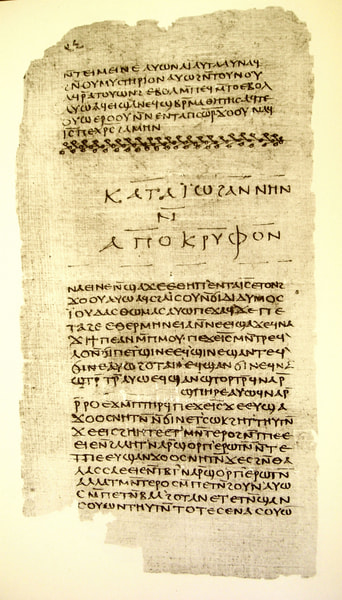
It was during this period that the concepts of "orthodoxy" and "heresy" were formally forged. In response to groups like the Gnostics, who claimed "secret knowledge" (gnosis) and offered alternative views of Jesus’s nature and mission, the Church Fathers defined "orthodoxy" as "correct belief." "Heresy," derived from the Greek haeresis (a term for philosophical schools), became synonymous with "incorrect belief and practice." It is vital to note that those labeled heretics rarely saw themselves as such; they believed their interpretations to be the true path. Early punishments for heresy remained primarily excommunication, but the stage was set for more severe consequences.
Imperial Integration and State-Sponsored Suppression
The 4th century marked a profound shift with the conversion of the Roman Emperor, transforming Christianity from a persecuted sect into the official religion of the Empire.
Constantine and the Imperial Church (4th Century CE)
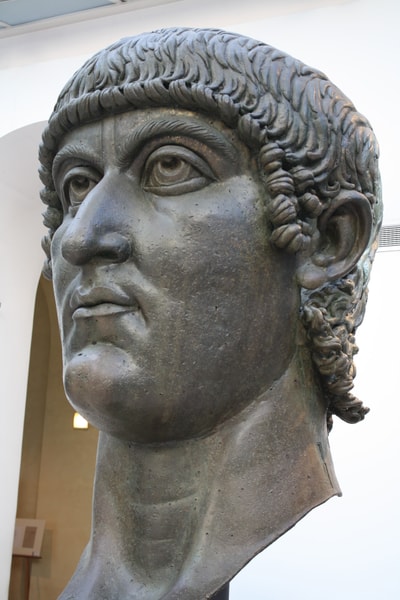
Emperor Constantine I (reigned 306-337 CE) converted to Christianity in 312 CE. As the head of the Empire and now a patron of the Church, he wielded unprecedented authority to shape the parameters of the new faith. Seeking unity within his vast domain, he convened the Council of Nicaea in 325 CE, outside his new capital of Constantinople. Bishops from across the empire were summoned, their expenses paid by the imperial treasury, highlighting the newfound imperial backing of the Church.
At Nicaea, the complex doctrine of the Trinity – the unity of God as Father, Son, and Holy Spirit – was formulated. Constantine also oversaw the creation of the Nicene Creed, a definitive statement of what all Christians should believe and practice. Adherence to this creed became the benchmark for orthodoxy, and any deviation was no longer merely a theological disagreement; it was interpreted as a critique against the Emperor himself, an act of disloyalty tantamount to treason. As treason historically carried the death penalty in the Roman Empire, heretics were now considered traitors and could face execution, often in public arenas, a stark escalation from mere excommunication.
Augustine’s Influence and Early Persecution
The theologian Augustine of Hippo (354-439 CE), a towering figure in Christian thought, further cemented the justification for coercive measures against heretics. While initially advocating for persuasion, Augustine, particularly in his later years, argued for the use of force, famously citing Luke 14:23, "Compel them to come in." This scriptural interpretation, often taken out of context, provided a theological rationale for the state to enforce religious conformity.
In an unprecedented move, Augustine appealed to Emperor Honorius in 410 CE to deploy legions against Christian groups in North Africa who disagreed with his views. The ensuing slaughter and dismantling of churches were so severe that even Augustine expressed some reservations, underscoring the brutal efficacy of state-sanctioned religious repression. This period set a dangerous precedent: the merging of ecclesiastical authority with imperial power meant that theological dissent could now be met with the full force of the state.
The Medieval Inquisition: Formalizing Persecution
The problem of heresy persisted and flared up anew in the High Middle Ages, prompting the formal establishment of the Papal Inquisition.
Emergence of Organized Heresy (12th Century)
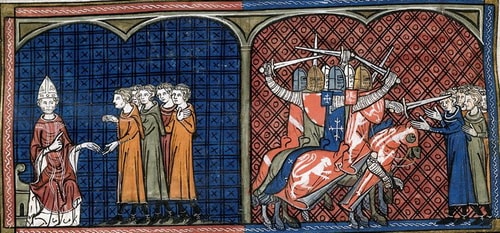
By the 12th century, significant Christian sects emerged, such as the Albigensians (or Cathars) in Southern France and the Waldensians in the Balkans. These groups challenged fundamental Catholic doctrines, with the Albigensians, for instance, espousing Gnostic-like dualistic beliefs that rejected the material world as inherently evil. Their growing influence and perceived threat to the spiritual and social order led to severe countermeasures. The Second and Third Lateran Councils (1139, 1179) prescribed imprisonment and confiscation of property for heretics and threatened excommunication for princes who failed to punish them. The culmination of this alarm was the Albigensian Crusade (1209-1229), a brutal military campaign sanctioned by Pope Innocent III to eradicate Catharism in Languedoc.
Papal Inquisition Established (13th Century)
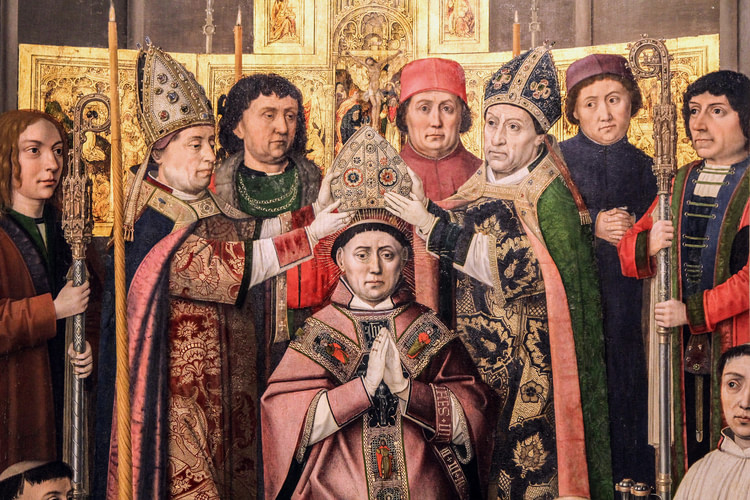
The piecemeal efforts of bishops and secular rulers proved insufficient to contain the spread of heresy. To systematize the process, Pope Gregory IX formally instituted the Papal, or Episcopal, Inquisition in 1231. Gregory mandated that heretics be actively sought out and tried before specialized church courts. This crucial task was largely entrusted to the newly formed mendicant orders, the Dominicans and Franciscans, known for their rigorous theological training and zeal. The independent authority of these Inquisitors often created friction with local clergy and bishops, who resented the encroachment on their traditional jurisdictions.
The Church maintained the theological principle that it "could not stain its hands with blood." Therefore, while the Inquisitors conducted the investigations and trials, the actual questioning (including torture) and subsequent execution of convicted heretics fell to the local secular authorities. This legalistic distinction allowed the Church to claim moral detachment from the physical violence it sanctioned, a practice defended by appealing to biblical passages (often misconstrued) and Augustine’s "Compel them to come in."
The Inquisitorial Process and Punishments
When Inquisitors arrived in a city, they typically announced a "period of grace," during which individuals could voluntarily confess their heretical beliefs, repent, and receive a lighter penance. Following this period, denunciations were invited, often with assurances of anonymity or spiritual reward. Anyone could denounce a suspected heretic, including other alleged heretics, creating an atmosphere of suspicion and fear.
The accused faced an interrogation designed to elicit a confession. Unlike modern legal systems, the accused was rarely informed of the charges or accusers, and legal counsel was either nonexistent or severely restricted. The notorious use of torture became a hallmark of the Inquisition. Methods included burning with live coals, cutting off fingers, toes, tongues, testicles, and breasts, or the strappado, which involved suspending a victim by their wrists with weights attached to their feet, causing severe joint dislocation. The only way to halt the torture was to confess, but a confession, even if coerced, confirmed guilt. Those who refused to confess despite torture were often deemed unrepentant and faced the harshest sentences.
The standard execution for unrepentant heretics was burning at the stake. This was not merely a punishment but a public spectacle, an "act of faith" (auto de fe), intended to purify the soul through fire and serve as a terrifying warning to the populace. The audience served as "witnesses" to the heretic’s punishment and the Church’s unwavering authority.
Expanding Scope: Witchcraft, Alchemy, and Blasphemy
Over time, the Inquisition’s mandate expanded beyond purely theological heresy. It began to target practices deemed to challenge divine order or societal norms, including alchemy, witchcraft, blasphemy, sexual immorality, and even infanticide, often linked to residual pagan beliefs. Lucifer, the Devil, was increasingly believed to be the orchestrator behind all such transgressions, revitalizing the ancient concept of "possession by demons."
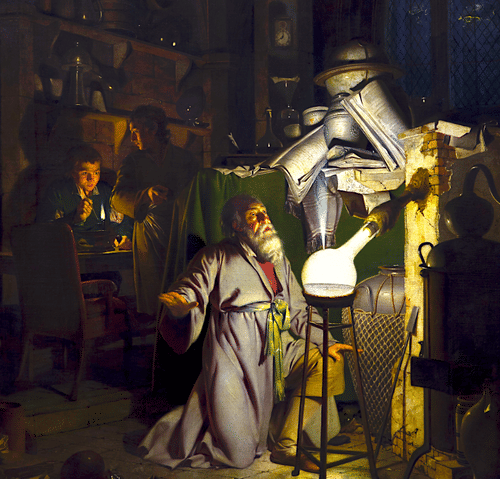
Alchemy, the attempt to transmute base metals into gold or create "magic elixirs" for long life, was condemned as heresy. It was seen as subverting God’s creation and His dictates on the natural order and human lifespan.
The Witch Hunts and Malleus Maleficarum
The focus on witchcraft intensified dramatically in the late medieval and early modern periods. Medieval Jewish folklore, later adopted by Christianity, popularized figures like Lilith as the premier witch, seducing Adam. Witches were conceived as incubi (female demons having sexual intercourse with men) or succubi (female demons stealing semen from men), deriving their power from the Devil’s seed. They were often depicted as beautiful and voluptuous, visiting men at night to drain their life’s energy, leading to ill health, financial ruin, and death.
In the 15th century, two German Inquisitors, Heinrich Kramer and James Sprenger, authored The Malleus Maleficarum (The Witches’ Hammer). This infamous "scientific" manual provided detailed methods for identifying, interrogating, and prosecuting witches. It listed various "marks of the Devil," such as moles or scars, as proof of demonic possession. The publication of The Malleus Maleficarum fueled a surge in witch hunts, with estimations suggesting that more individuals were burned as witches after the late 15th century than as heretics, potentially numbering around 60,000 victims.
Trials by Ordeal: "Dunking" and its Abolition
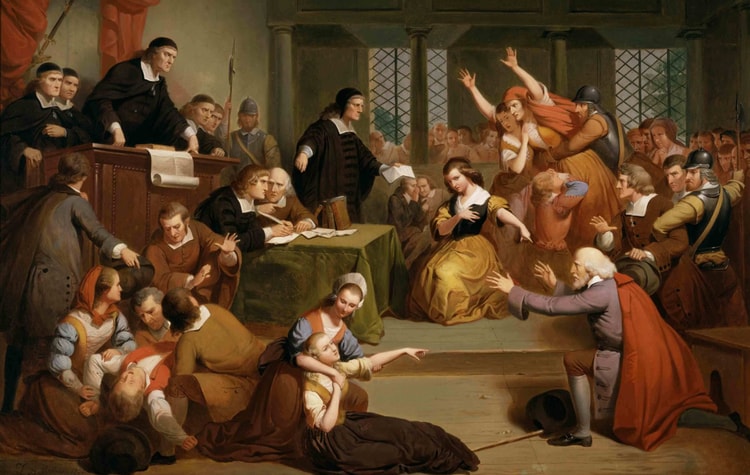
Early methods of discerning guilt included "trials by ordeal," where God was invoked as the ultimate judge. For witches, a common ordeal was "dunking" or "swimming a witch." Suspects were tied and thrown into a river or repeatedly submerged using a diving-board device. The belief was that water, being a pure element that rejected baptism-shunning witches, would cause the guilty to float, while the innocent would sink. Tragically, if they sank and drowned, they were declared innocent, but of course, were already dead. Such "trials by ordeal" were gradually phased out, particularly in England, where Henry III’s reforms in the 13th century laid the groundwork for a new system of government and legal procedure, contributing to the origins of the English Parliament. However, witch trials continued, reaching the American colonies, with the infamous Salem Witch Trials of 1692-1693 in Massachusetts leading to the accusation of 200 people and the execution of 30 by hanging.
The Spanish Inquisition: A Distinctive and Brutal Chapter
The Spanish Inquisition stands as one of the most infamous and institutionally distinct branches of the Holy Office.
Reconquista and Religious Uniformity
In the 7th century, Muslim forces from Morocco and North Africa had conquered much of the Iberian Peninsula, ushering in a period often described as a "flowering of culture" where Jews, Christians, and Moors (Spanish Muslims) often engaged in public debates and intellectual exchange. By the 15th century, however, the Catholic monarchs Ferdinand II of Aragon and Isabella I of Castile, staunchly conservative and loyal to the Pope, sought to unify Spain under a single Christian banner. Their Reconquista culminated in the fall of Granada, the last Moorish stronghold, in 1492. This quest for political and religious unity also targeted the significant Jewish population of Spain.
Tomás de Torquemada and Targeted Groups
The Spanish Inquisition, formally established in 1478, became a powerful tool of the crown. Its first Grand Inquisitor, Tomás de Torquemada, developed an unparalleled relationship of authority with the monarchs. Under his leadership, the Inquisition expanded its persecution beyond traditional heretics to include Marranos (converts from Judaism) and Moriscos (converts from Islam). These communities, many of whom had been Christian for generations, were accused of secretly continuing to practice their original faiths. Torquemada’s tribunals were particularly zealous, leading to the infamous expulsion of all unconverted Jews and Muslims from Spain in October 1492, a pivotal moment in Spanish history.
Racial Theories and "Purity of Blood"
A particularly chilling aspect of the Spanish Inquisition, and Torquemada’s influence, was the development of theories linking behavior to "blood" – a concept of physical, racial impurity passed down through generations. This meant that the conversion of Marranos and Moriscos was always considered suspect, as their "impure blood" was believed to predispose them to apostasy. These emerging racial theories, linking ethnicity to religious and moral deviance, profoundly impacted European thought. As European powers embarked on global exploration and colonialism, they applied these racial frameworks to indigenous populations encountered in new lands. Christian missions often served to monitor native behavior, enforce Christian concepts, and impose social conventions, with the Inquisition’s principles underlying the suppression of indigenous spiritual practices.
The Auto de Fe
The auto de fe (Portuguese/Spanish for "act of faith") was the public ceremony where the sentences of the Inquisition were pronounced. These elaborate and often terrifying spectacles were held in public plazas and involved a grand procession of church and civil leaders, the accused, and sometimes symbolic effigies of those condemned in absentia.
The ceremony typically included:
- A solemn procession of Inquisitors, clergy, nobility, and the accused, often dressed in penitential garments (sanbenitos).
- A lengthy sermon emphasizing the virtues of faith and the evils of heresy.
- The reading of the sentences against the accused, who were given one final opportunity to recant their beliefs publicly.
- Those who repented were reconciled with the Church, though often still faced imprisonment or other severe penalties.
- Those who remained unrepentant were "relaxed" to the secular arm, meaning they were handed over to civil authorities for execution, maintaining the Church’s aforementioned "hands not stained with blood" principle.
- The execution of those condemned to death, most commonly by burning at the stake, was carried out immediately after the auto de fe or shortly thereafter, often accompanied by public shaming and condemnation.
Notable Victims and Evolving Interpretations
Throughout its long history, the Inquisition targeted individuals from all walks of life, often driven by a complex mix of religious zeal, political expediency, and societal fear.
High-Profile Cases
Among the most famous victims were the Knights Templar, a powerful military-religious order accused of heresy, blasphemy, and various immoral acts in the early 14th century. While the Papal Inquisition played a role, their persecution was largely driven by King Philip IV of France, who coveted their wealth and influence. The case of Joan of Arc, the French patriot and military leader, is another poignant example. She was convicted of heresy and burned at the stake by an English-backed Inquisitorial court in Rouen in 1431, primarily for political reasons and for wearing men’s clothing (a defiance of gender norms considered heretical). Decades later, a French Inquisitorial court reinvestigated her trial in 1456, overturning the verdict and declaring it "tainted by deceit and procedural orders," eventually leading to her canonization as a patron saint of France.
The renowned astronomer Galileo Galilei faced the Roman Inquisition in 1633 for advocating the heliocentric model of the universe, which placed the Sun, not the Earth, at the center. This challenged the geocentric view endorsed by the Church and seemingly supported by scripture. Galileo was forced to recant his views and spent the remainder of his life under house arrest, illustrating the Inquisition’s reach into scientific inquiry.
Colonial Inquisitions
The Inquisition’s methods were also exported to the Spanish and Portuguese colonies in the Americas. Christian missions were established to convert indigenous tribes, and the Inquisition served as a tool to monitor and enforce Christian concepts and social conventions. Indigenous populations who rebelled against colonial rule or resisted conversion were often charged and condemned as heretics by Inquisition courts, while others who converted were sometimes granted protections from slavery. The application of inquisitorial principles in the New World highlights how religious authority could be intertwined with colonial power and control.
The Decline and Abolition of the Inquisition
The power of the Inquisition began to wane with the Enlightenment and the rise of secular states, though its formal end was a gradual process.
Napoleonic Era and Gradual Dissolution
The revolutionary and Napoleonic eras delivered significant blows to the Inquisition’s authority. By decree of Napoleon Bonaparte’s government, the Inquisition in Venice was abolished in 1797. Subsequent Napoleonic rulers extended this abolition to the Hispanic Americas between 1813-1825, in Portugal in 1821, and definitively in Spain by 1825. These acts reflected a broader shift towards state control over religious institutions and a growing rejection of ecclesiastical judicial power.
The Papal States and 20th-Century Reconfiguration
In Italy, the Papal States, which encompassed central Italy, maintained the Inquisition’s functions. However, these territories were largely lost during the Italian unification wars, culminating in 1870. The Papal States were nominally restored at various times, but their full sovereignty was only formally recognized during the dictatorship of Benito Mussolini (1922-1943) with the intervention of Pope Pius XI. The 1929 Lateran Treaty established Vatican City as an independent state under the sovereignty of the Holy See, with Italy providing financial compensation for the loss of the former Papal States.
The functions of the Roman Inquisition, though significantly reformed, were retained. In 1908, Pope Pius X renamed it the Sacred Congregation of the Holy Office. In 1965, during the Second Vatican Council, Pope Paul VI further reorganized it, renaming it the Congregation for the Doctrine of the Faith (CDF).
Modern Vatican Responses and Lasting Implications
The legacy of the Inquisition continues to provoke debate and reflection within the Catholic Church and beyond.
Pope John Paul II’s Apology
A significant moment of introspection occurred during the period leading up to the Great Jubilee of 2000, initiated by Pope John Paul II. He called for a profound examination of the Church’s past actions, acknowledging "examples of thought and action that are in fact a source of anti-witness and scandal." In a historic gesture on March 12, 2000, during the Jubilee celebration, Pope John Paul II, on behalf of the entire Catholic Church and all Christians, issued a sweeping apology for past sins. This unprecedented act included repentance for sins against the Jewish people, the dignity of women, and theological and racial minorities, explicitly encompassing the injustices committed during the Inquisition.
Contemporary Role and Legacy
Today, the Congregation for the Doctrine of the Faith (CDF) continues to serve as the principal body of the Holy See responsible for promoting and safeguarding Catholic doctrine. While its methods are vastly different from the historical Inquisition, it still examines and investigates charges of "heresy" in a theological sense, albeit with due process and canonical procedures. Punishments for doctrinal deviation now include "de-frocking" (removal from priestly ministry) and excommunication, spiritual penalties rather than physical ones.
The Inquisition, in its various manifestations, represents a dark chapter in the history of religious authority. Its brutal methods, the suppression of intellectual and religious freedom, and the suffering it inflicted cast a long shadow. Yet, its story also highlights the enduring human struggle with questions of truth, belief, and power. The Vatican’s modern apologies and the transformation of the Inquisition into the CDF underscore a conscious effort to reconcile with a complex past, while still affirming the Church’s commitment to defining and defending its core doctrines in an ever-evolving world. The historical record of the Inquisition remains a powerful reminder of the dangers inherent when spiritual authority becomes intertwined with coercive temporal power.