A Journey Reimagined: "The Treasury of Folklore" Unites Global Narratives in a Definitive Compendium
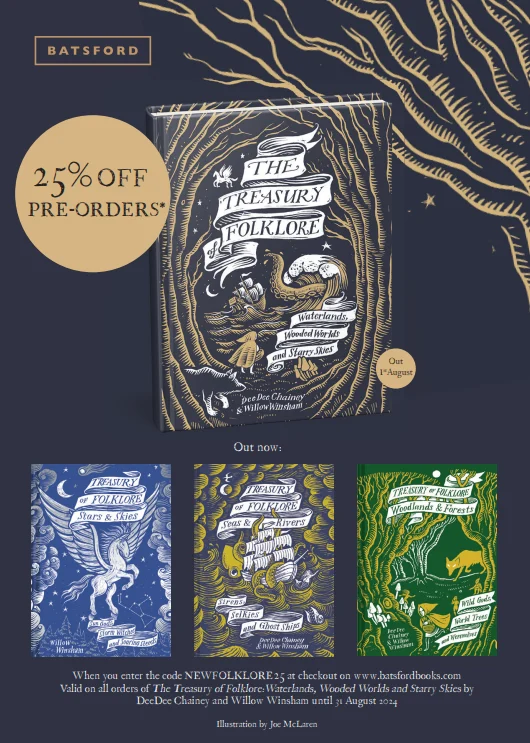
LONDON, UK – Nearly a decade after its initial conception, the acclaimed "Treasury of Folklore" series is set to culminate in a magnificent single volume, "The Treasury of Folklore: Waterlands, Wooded Worlds and Starry Skies." This highly anticipated compilation, featuring beloved tales and myths from across the globe, is scheduled for release on August 1st, 2024, and promises to be a cornerstone for enthusiasts of cultural heritage and human storytelling.
Originally envisioned as a single, all-encompassing tome, the project by authors Dee Dee Chainey and Willow Winsham quickly revealed the immense breadth and depth of global folklore, necessitating an expansion into three distinct volumes. Now, by popular demand and a renewed commitment to their initial vision, the most cherished stories from "Seas and Rivers," "Trees and Woodlands," and "Stars and Skies" have been meticulously curated into one beautifully bound collection, celebrating the universal threads that connect humanity through shared fears, dreams, and awe-inspiring narratives.
Main Facts
"The Treasury of Folklore: Waterlands, Wooded Worlds and Starry Skies" is a comprehensive compilation that brings together the most resonant folklore narratives previously published across three popular books: "Seas and Rivers," "Trees and Woodlands," and "Stars and Skies." Authors Dee Dee Chainey and Willow Winsham have collaborated to present a curated selection that underscores the enduring commonalities of human experience reflected in myths and legends worldwide.
This new volume is not merely a reprinting but a carefully considered reassembly of existing material, designed to fulfil the authors’ original ambition of a single, definitive work. While it contains no new textual content, the compilation offers a fresh perspective on familiar tales, organised into three distinct sections that mirror the original thematic divisions. The book is presented as a "hefty tome," boasting a beautiful cover, high-quality cream paper, and retaining the exquisite original illustrations by Joe McLaren, enhancing its appeal as both a scholarly reference and a striking coffee table addition.
The compendium is currently available for pre-order and will officially launch on August 1st, 2024. Its release marks a significant milestone for the series, reinforcing its mission to explore how humans interpret and interact with their natural world through the lens of folklore.
Chronology: From Singular Vision to Global Phenomenon
The journey of "The Treasury of Folklore" began with a simple yet profound idea: to encapsulate the rich tapestry of human folklore, categorised by the physical landscapes where these stories took root.
The Genesis of an Idea (Nearly a Decade Ago): Authors Dee Dee Chainey and Willow Winsham initially conceived a single, monumental volume that would traverse the entire spectrum of human-inhabited landscapes – from the deepest oceans to the highest stars. Their motivation was rooted in a desire to understand the fundamental human impulse to create customs, beliefs, and tales around their immediate environment. They sought to uncover how diverse cultures, despite geographical separation, shared primal fears, universal dreams, and a common sense of wonder.
The #FolkloreThursday Catalyst: A pivotal influence on the project’s direction was the vibrant online community fostered by the #FolkloreThursday hashtag. This digital outpouring of stories, insights, and shared cultural heritage demonstrated the immense appetite for folklore and, critically, the sheer volume of material available. It became clear that the subject matter far exceeded the scope of a single book, prompting a strategic rethink. The overwhelming engagement solidified the authors’ conviction to create something "meaningful, lasting, that reflected the unifying universality of folklore across the globe."
Expansion into a Trilogy: Faced with an embarrassment of riches, Chainey and Winsham made the pragmatic decision to expand their initial concept into a trilogy. This allowed for a deeper, more focused exploration of specific environments. The resulting books, "Seas and Rivers," "Trees and Woodlands," and "Stars and Skies," each delved into the myths, legends, and customs associated with these distinct natural realms. Their popularity was "surprising and heartwarming," garnering a dedicated readership and validating the authors’ approach to categorising and presenting folklore.
The Call for a Compendium: Following the success of the individual volumes, the idea of a compendium began to circulate. This suggestion resonated deeply with the authors, offering a timely opportunity to revisit and realise their original vision of a unified collection. It was an chance to bring the disparate elements of the series back together, demonstrating the interconnectedness of these landscape-based narratives.

The Editorial Process: Curating a Masterpiece: Bringing the three books into one required a meticulous editorial process. Chainey and Winsham undertook the challenging task of revisiting their own words "with fresh eyes." This involved carefully selecting the "favourite folklore" entries, deciding what to include and what to omit, to craft a coherent and compelling narrative that spanned shared landscapes across time and place. The goal was to ensure that the single volume retained the thematic integrity and evocative power of the original works, while also offering a new, consolidated reading experience. The authors express being "blown away by the end result," highlighting the aesthetic and tactile qualities of the final product – its size, cover design, and the choice of cream paper contributing to its status as a "hefty tome" and a cherished object.
The Unveiling: The culmination of this ambitious journey is the imminent release of "The Treasury of Folklore: Waterlands, Wooded Worlds and Starry Skies" on August 1st, 2024. This launch represents the fulfilment of a long-held dream and the solidification of a significant contribution to the popular understanding and appreciation of global folklore.
Supporting Data: Exploring Universal Threads in Folklore
The brilliance of "The Treasury of Folklore" lies in its ability to highlight universal human experiences through specific cultural narratives. The compilation reinforces the idea that despite differing landscapes and traditions, humanity shares fundamental responses to the natural world. The excerpts provided offer a tantalising glimpse into these profound connections.
Water Horses: Guardians or Gatekeepers of the Deep?
Across diverse cultures, bodies of water – from tranquil rivers to vast, mysterious lochs – have been imbued with spirits, often taking the form of horses. These narratives frequently serve as potent cautionary tales, reflecting humanity’s primal respect and fear of the water’s unpredictable nature.
-
Scottish Kelpie and Each-uisge: Scotland’s folklore is famously rich in water horses. While often used interchangeably, the text clarifies a crucial distinction: the kelpie inhabits rivers and streams, while the more malevolent each-uisge (pronounced "ech-ooshkya") lurks in the deeper, darker waters of lakes and sea lochs. Both share a deceptive beauty, luring unsuspecting travellers, particularly men, to mount them before dragging them to a watery demise. The each-uisge is particularly feared for its insatiable appetite, not only drowning its victims but often devouring them entirely, leaving only the liver. The tales often describe a sticky hide that prevents escape once mounted.
- The possibility of "taming" a kelpie, even temporarily, through a bridle marked with a cross, speaks to the power of human ingenuity and faith against supernatural forces, though such control is always fleeting. The mention of red-hot iron as a weapon against the kelpie highlights a common vulnerability in folkloric creatures, often tied to elements that symbolise purity or destruction.
- The enduring cultural impact of the kelpie is powerfully demonstrated by the colossal 30-meter (98ft) sculptures near Falkirk, a modern testament to an ancient myth. Its appearance in contemporary literature, such as works by Lari Don and J.K. Rowling’s Fantastic Beasts and Where to Find Them, further solidifies its iconic status, showing how traditional folklore continues to inspire new generations. The absence of such water horses in English folklore south of the border is a curious anomaly, highlighting regional specificities in shared island cultures.
-
Welsh Ceffyl Dŵr: In Wales, the Ceffyl Dŵr ("water horse") remained a vibrant belief into the 19th century, showcasing regional variations. In the north, it was a shapeshifting spirit, often violent, while in the south, it consistently appeared as an enchanting, small horse. Its defining characteristic was incredible speed, covering vast distances before vanishing, leaving its rider to drown. The unique exception for clergymen of any creed, who could ride unharmed, offers a fascinating insight into the social and religious values of the time, where spiritual authority could override supernatural peril. This distinction could be interpreted as a subtle endorsement of religious piety or a nod to the societal respect afforded to spiritual leaders.
-
Scandinavian Bäckahäst: The Nordic bäckahäst ("brook horse") shares many characteristics with its Celtic counterparts. Often sighted in fog, it is described as majestic and luminous, its beauty masking its deadly intent. It lures riders, frequently children, onto its back before plunging into the water, its victims unable to dismount. The choice of children as victims in many tales heightens the sense of tragedy and serves as a particularly stark warning against venturing too close to dangerous waters. A notable tale involves a group of boys saved when one accidentally mispronounces a rhyming phrase, uttering "Jesus Christ," a name the bäckahäst despises. This narrative device underscores the protective power of sacred names in folklore, a common motif across various spiritual traditions. Like the kelpie, the bäckahäst could sometimes be tricked into servitude, demonstrating a universal human desire to gain control over formidable natural forces.
Lords of the Wild: Echoes of Nature’s Power
Forests, with their dense canopies and hidden depths, have always been fertile ground for myths of powerful, often ambiguous, spirits. These "Lords of the Wild" personify the untamed aspects of nature, reflecting humanity’s complex relationship with the wilderness – a mix of reverence, dependence, and fear.
-
The Forest God Tapio (Finnish): Finland’s king of the forest realm, Tapio (also known as Metsähine or Hiisi), is a striking personification of the woods itself. His tall, thin frame, covered in ermine fur or moss, and a head capped with a hat, evokes the ancient trees he protects. His mossy eyebrows and great beard link him visually to the "Green Man" motif found across European folklore, symbolising fertility and growth. The detail of his human front and gnarled tree back speaks to the deep animistic belief in nature spirits that are intrinsically part of their environment. Hunters historically sought Tapio’s blessing, pledging respect for the forest and its creatures, a ritual highlighting the symbiotic relationship between humans and nature. Tapio’s ability to grant or deny a bountiful hunt underscored his ultimate authority over the forest’s resources. His family – Mielikki (his wife, embodying both benevolent and fierce aspects), Nyrikki (who guides hunters), and Tulikki (who directs prey) – further illustrates the detailed personification of various forest functions within Finnish mythology.
-
The Leshy (Slavic): The leshy (also leshii or lyeshy) is a complex and formidable tutelary spirit of Slavic forests, a protector of trees and animals, particularly wolves and bears. He embodies the wild, untamed essence of the woods.

- Appearance and Shapeshifting: The leshy is a master of disguise, able to change size and form at will, appearing as tall as a tree or as small as a blade of grass, or even mimicking familiar humans, animals, or plants. His appearance often contains tell-tale signs: no eyelashes or brows, shoes worn on the wrong feet, clothing wrapped incorrectly, or sometimes just one eye. These details serve as crucial identification markers, warning humans of the supernatural presence. His wild hair, cloven feet (linking him to fauns and even the Devil), and sometimes wings or a tail, all emphasise his liminal, non-human nature.
- Behaviour and Influence: Leshies are fiercely territorial. Their bellowing can whip up winds, causing creatures to flee. They are notorious tricksters, using shrieking laughter, clapping, howling, or mimicking voices to disorient and lure trespassers deep into the forest, never to be seen again. This aspect of the leshy reflects the very real dangers of getting lost in vast, unfamiliar woodlands. Beyond confusion, they inflict illness, abduct women for marriage, and snatch children, especially those cursed by their parents or found wandering. Farmers in regions like Olonetsky District even sacrificed cows annually to appease them, fearing their wrath could curse entire farms.
- Social Life and Quirks: Despite their formidable nature, leshies are portrayed with surprising human-like eccentricities. They can live alone or with their wives (the lesovikha) and children in forest huts. They are depicted as prone to battling their own kind with clubs, tearing up trees in their wake. Stories of a leshy frequenting taverns and gambling with squirrels using card decks (minus clubs, due to their resemblance to the Christian cross) add a layer of intriguing, almost relatable, mischief to their character.
- Protection and Summoning: Folklore provides specific methods for dealing with leshies. Turning clothes inside out or shoes on the wrong feet is said to make them laugh, returning the lost person to their path – a common trope in fae lore. Swearing at them mercilessly or making the sign of the cross are other banishing methods. For those daring enough to summon a leshy, a ritual involving cutting young birch trees and arranging them in a circle, while devoid of Christian symbols, promises an encounter with the "grandfather of the forest." These rituals highlight the blend of fear, respect, and a desire for control that characterises human interaction with the wilderness.
The Celestial Hare: A Lunar Legacy
The moon, that constant companion in the night sky, has inspired countless myths and legends, with many cultures seeing a "Man in the Moon" or, more commonly, a "Hare in the Moon." These tales often explain the moon’s markings and impart moral lessons.
-
Universal Motif: The image of a rabbit or hare living on the moon is a widespread motif, observed in the lunar mare (dark plains) such as the Sea of Tranquillity (the head) and the seas of Fertility and Nectar (the ears). This shared interpretation across geographically distant cultures speaks to humanity’s universal impulse to find patterns and meaning in celestial bodies.
-
Buddhist Sasa-Jātaka: This foundational Buddhist story tells of a virtuous hare and his friends (an otter, jackal, and monkey). The hare, embodying the virtue of dāna (generosity), instructs his companions to offer alms on a fast day. When the deity Sakka, disguised as an old beggar, tests them, the otter, jackal, and monkey offer readily available food. The hare, having only grass, offers the ultimate sacrifice: himself. He leaps into a fire for Sakka to eat. Moved by such selflessness, Sakka saves the hare and enshrines his image on the moon for all eternity, either by placing him there or drawing his likeness with the essence of a mountain. This tale powerfully conveys the Buddhist principles of compassion, self-sacrifice, and the accumulation of merit.
-
Sri Lankan and Japanese Variations (Tsuki no Usagi): The theme of the self-sacrificing hare is echoed in other cultures. A Sri Lankan tale features the Buddha himself, lost and hungry, accepting the hare’s offer of self-immolation, only for the Buddha to use his powers to save and place the hare on the moon. In Japan, the rabbit, known as Tsuki no Usagi ("Moon Rabbit"), similarly offers itself to a beggar (the Man in the Moon in disguise) when its animal companions provide other food. The beggar reveals his true form and takes the selfless rabbit to live with him on the moon. This is a beloved Japanese tale, often shared with children during the Harvest Moon and Mid-Autumn Festival in September, connecting the celestial body with themes of harvest, gratitude, and generosity.
-
South African Counter-Narrative: A starkly contrasting tale from South Africa offers a darker explanation for both the moon’s markings and the inevitability of human mortality. Here, the hare acts as a flawed messenger. Moon sends Hare to tell humanity that just as she "dies" and is reborn each month, so too would humans. However, the "flighty creature" misdelivers the message, stating simply that humans would die permanently. Enraged by this error, Moon attacks Hare with a hatchet, only succeeding in splitting his lip. Hare, retaliating, scratches Moon’s face, creating the dark shapes we see today. This myth explores themes of responsibility, the consequences of error, and provides an etiological explanation for two fundamental aspects of existence: death and the moon’s appearance. It highlights the dual nature of mythical creatures, capable of both good and ill, and the role of folklore in addressing existential questions.
Official Responses: Authors’ Gratitude and Vision Realised
Dee Dee Chainey and Willow Winsham have openly shared their profound satisfaction and gratitude regarding the compilation. "When we began writing together nearly a decade ago, we could never have dreamed where it would take us," they reflect, acknowledging the surprising and heartwarming popularity of the initial trilogy.
The suggestion to create a compendium immediately resonated with them, presenting a full-circle opportunity to realise their initial ambition. The behind-the-scenes work of revisiting their material "with fresh eyes" was a labour of love, ensuring that the selected folklore narratives flowed cohesively within the new single volume. The authors are "utterly thrilled" with the final product, particularly praising its physical attributes. They describe it as a "beautifully bound volume" and a "hefty tome," highlighting the tactile experience of the "beautiful cream paper" and the overall design that seamlessly combines the three themes.
They explicitly clarify that the compilation contains no new material, stressing that its value lies in its curated selection of text directly from the existing three books. This transparent approach frames the new volume as a definitive best-of collection, designed to be "a beautiful addition to any book case or coffee table, a conversation starter, a way to connect." The inclusion of Joe McLaren’s "wonderful original illustrations" further elevates the book’s aesthetic appeal, making it a true collector’s item.
Implications: The Enduring Resonance of Folklore
The release of "The Treasury of Folklore: Waterlands, Wooded Worlds and Starry Skies" carries significant implications for the appreciation and preservation of global folklore.
The Enduring Power of Folklore: This compilation underscores the timeless appeal and vital importance of folklore in understanding the human condition. These stories, whether tales of water horses, forest deities, or celestial hares, continue to resonate because they address universal themes: the fear of the unknown, the awe of nature, the search for meaning, and the human capacity for both good and ill. They offer insights into historical beliefs, cultural values, and the psychological landscape of past societies, providing a lens through which to examine our own contemporary anxieties and aspirations.

Bridging Cultures Through Narrative: By bringing together narratives from diverse geographical and cultural contexts, the book actively demonstrates the authors’ core finding: "in so many ways, we are all inherently the same." It fosters cross-cultural understanding and empathy, revealing how common human experiences – primal fears, dreams, and the contemplation of mortality – manifest in unique yet fundamentally similar ways across the globe. This comparative approach encourages readers to look beyond superficial differences and recognise shared humanity.
The Future of Folklore Preservation: In an increasingly digitised and globalised world, publications like "The Treasury of Folklore" play a crucial role in preserving and popularising traditional narratives. By presenting these stories in an accessible, engaging, and aesthetically pleasing format, Chainey and Winsham contribute to keeping these oral and written traditions alive for future generations. The book serves as an invitation to delve deeper into specific cultural traditions, potentially sparking new research and appreciation for endangered folkloric heritage.
A Call to Explore: Beyond its content, the compilation acts as a powerful reminder of the richness of the world’s storytelling traditions. It encourages readers not only to explore the narratives within its pages but also to seek out and engage with their own local folklore, fostering a connection to their heritage and the broader tapestry of human creativity. The book itself, as a "conversation starter," aims to ignite discussions about myths, legends, and their continued relevance in modern society.
Cultural Significance: Ultimately, "The Treasury of Folklore: Waterlands, Wooded Worlds and Starry Skies" solidifies its place as a definitive work that celebrates the profound human need to tell stories about the world around us. It stands as a testament to the power of narrative in shaping identity, explaining the inexplicable, and connecting us all under the vast expanse of shared landscapes and starry skies.
Pre-order Information:
"The Treasury of Folklore: Waterlands, Wooded Worlds and Starry Skies" by Dee Dee Chainey and Willow Winsham is now available for pre-order and will be released on August 1st, 2024.
For a 25% discount, order directly from Batsford Books at https://www.batsfordbooks.com/book/the-treasury-of-folklore/ using the code NEWFOLKLORE25.