Unveiling the Lunar Labyrinth: A Personal Escape and the Echo of Ancient Gateways
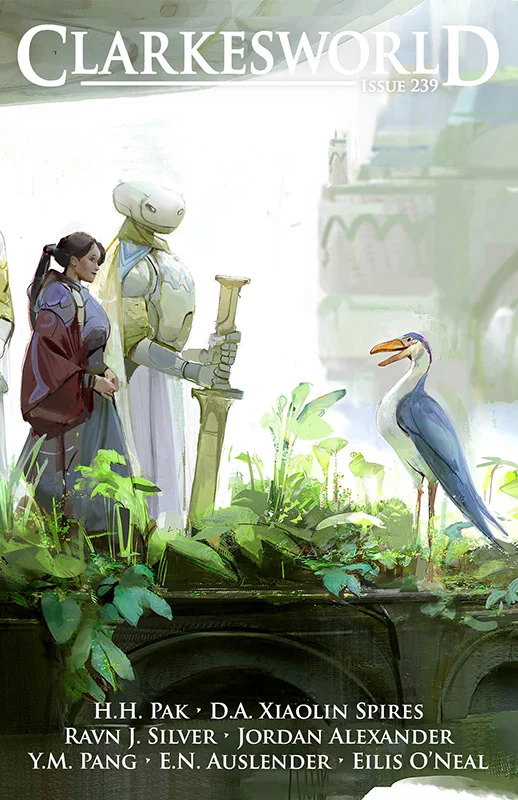
Lunar Colony, Selene — In a development poised to redefine humanity’s understanding of ancient extraterrestrial civilizations and challenge prevailing social norms within the Moon’s domed settlements, a previously dismissed garden "folly" has been revealed as a potentially functioning portal of the enigmatic Etran civilization. The discovery, made by a private citizen, Anna, within the meticulously crafted "Moon garden" of her recently acquired estate, lends unprecedented credence to long-marginalized theories regarding the Etran’s mysterious disappearance and their advanced portal technology.
The incident culminates in Anna’s dramatic, and as yet unconfirmed, departure through the newly activated gateway, sparking intense speculation about her destination and the profound implications for lunar society and interstellar archaeology. While official bodies have yet to issue a formal statement, the academic community is abuzz, with Professor Lydia Song of Selenic College’s Department of Extraterrestrial Anthropology, whose controversial theories on Etran portals initially inspired Anna, finding her research suddenly thrust into the global spotlight.
The purported activation of an Etran portal, a feat previously considered impossible, signals a potential paradigm shift in our quest to comprehend the universe and our place within it. It raises urgent questions about the nature of reality, the boundaries of known space and time, and the very definition of freedom within humanity’s expanding dominion.
Chronology of a Breakthrough: From Domesticity to Departure
The path to this extraordinary event began subtly, interwoven with the domestic routines of a privileged life within a lunar dome. Anna and her husband, Nigel, recently acquired a luxurious residence renowned for its "post-Expansion architecture" and a unique "Moon garden." It was during their initial viewing that Anna first noticed a tall, pale archway at the garden’s distant edge, questioning if it was an "Etran ruin." The estate agent, dismissively, identified it as a "folly"—an imitation built for decoration, a common feature in grand estates mimicking the highly desirable, but rare, discovery of actual Etran structures during the "first great settlement."
Initial Fascination and Quiet Observation:
Settling into her new home, Anna, a former poetry student, found herself increasingly drawn to the folly. While Nigel was occupied with his work in the city dome, Anna meticulously organized their expansive house, accompanied by the ubiquitous pale green "moths"—bio-engineered environmental sensors that subtly adjusted room conditions to optimal comfort. Her initial visits to the folly were solitary and cautious, observing its "moon-pale" stone, the elaborate grooves that marked it as a human-made imitation, and a minor crumbling section at its base. She noted a strange "doubleness" in her vision when viewing it, and an emerging sense of lines of poetry, which she began to record in secret.
The Catalyst: Professor Song’s Lecture:
A pivotal moment arrived when Anna discovered a notice in the aetherpaper for a public lecture by Professor Lydia Song, titled "Gateway to the Stars: A New Examination of Etran Exodus." Driven by an inexplicable pull, Anna attended the lecture at Selenic College, a women’s institution. Professor Song presented her radical hypothesis: that Etran architectural remains, characterized by an "overabundance of arches, doors, and windows," were not merely decorative but were, in fact, "portals to somewhere unreachable through any other means." Song theorized that the Etran, rather than dying out, had departed through these gateways, altering "the very nature of reality" to reach their unknown destination, possibly through "intent—or perhaps great need."
While initially disappointed that the professor’s heliotypes of true Etran ruins didn’t fully match her folly’s appearance, Anna’s curiosity was piqued by the concept of portals operating through "intent." She later engaged Professor Song in a private conversation, learning more about the academic skepticism surrounding her theories and the Etran’s "deliberateness." During this meeting, Anna also had the opportunity to hold a genuine Etran artifact—a simple ceramic bowl—which deeply resonated with her, stirring a renewed creative impulse and a sense of connection.
Aspiration and Suppression:
Inspired by her visit to Selenic College and the echoes of her past as a poetry student, Anna tentatively broached the subject of returning to her studies with Nigel. Her husband, however, firmly dismissed the idea, asserting her current domestic role was sufficient and that further education served no practical purpose for her. This suppression coincided with a period of withdrawal for Anna, where she retreated from the folly, spending days in aimless activities, yet the lines of poetry continued to form in her mind.
The Breaking Point and Departure:
The narrative culminates on a day Nigel announced he would be late. Anna, feeling an urgent restlessness, found herself drawn back to Professor Song’s office. Their second encounter reinforced Anna’s burgeoning resolve, especially after holding the Etran bowl once more and discussing the profound nature of everyday artifacts. Upon her return home, Anna was confronted by Nigel, who, displeased by her unexplained absence and renewed insistence on pursuing her studies, forcibly silenced her, culminating in him crushing one of the house’s sentient "moths" in a display of controlling dominance.
This act of violence, combined with the earlier suppression of her aspirations, proved to be Anna’s breaking point. Recollecting Professor Song’s theory that portals might respond to "great need," and discovering a small, smooth sliver of an unknown material within the crumbling base of the folly, Anna realized the "folly" was a clever disguise. With a desperate "intent," she clawed at the faux stone, revealing a genuine Etran portal within. Pressing her injured hand against it, the archway ceased to be an empty frame, swirling instead with "colors she had no name for." With a final, determined step, Anna vanished, leaving behind her confined existence for an unknown destiny.
Supporting Data: Etran Enigmas and Lunar Life
The events surrounding Anna’s departure are deeply rooted in the unique context of the lunar settlements and the enduring mystery of the Etran civilization.
The Lunar Habitat and Post-Expansion Society:
Humanity’s presence on the Moon is characterized by domed cities designed for comfort and environmental control. The narrative describes a society where advanced technology seamlessly integrates into daily life, exemplified by the "moths"—small, pale green, bio-engineered sensors that regulate temperature and humidity, subtly ensuring occupant "contentment." These creatures also serve as implicit monitors, their movements often mirroring or reacting to the emotional states of the residents.
Architecturally, the "post-Expansion" era favors designs that blend technology with aesthetic appreciation. Anna’s home, with its "long, ever-flowing swimming pool in its portico of honeycombed glass" and its "Moon room" designed to evoke the lunar surface, embodies this trend. The "Moon garden" itself is a meticulously curated landscape featuring "jutting crag[s] of tall white boulder[s]" and "spiraled drift[s] of smaller, smooth white stones," intended to appear "natural yet harmonious."
Within this advanced setting, societal roles, particularly for women, appear to be traditional. Anna’s life as Nigel’s wife is largely confined to the domestic sphere, managing a grand house that can even prepare its own meals. Her intellectual aspirations are viewed as unnecessary by her husband, highlighting a potential undercurrent of patriarchal control within this seemingly utopian lunar society.
The Etran Civilization and Portal Theory:
The Etran remain one of the universe’s most profound enigmas. Their civilization, which once inhabited the Moon, vanished millennia ago without a trace. Conventional archaeological theories suggest either extinction through natural means, conflict, or resource depletion. However, Professor Lydia Song’s research challenges this. She argues that the Etran left behind no evidence of "a long dying off" or "large-scale conflict." Instead, their architectural legacy is dominated by "an overabundance of arches, doors, and windows—gateways."
Song’s "outlandish" theory posits that these structures were not static ruins but functional "portals" to other places or times, perhaps even altering "the very nature of reality." The Etran, she suggests, utilized these portals to "exodus" from the Moon, possibly activated by their "intent" or "great need." Crucially, genuine Etran artifacts and architecture are characterized by an almost unnatural "gliding smoothness" and a tangible "deliberateness" that sets them apart from human construction. The absence of detectable controls on these structures has been a major point of contention for her theories, making the concept of activation through intent or genetic material particularly speculative.
The Phenomenon of "Follies":
The "folly" in Anna’s garden is a key plot device. These imitations of Etran ruins became fashionable during the "first great settlement" of the Moon, driven by the desire to possess a piece of the ancient, enigmatic civilization. As real ruins were scarce, artificial ones proliferated, eventually serving purely decorative purposes due to advances in "modern authentication" that made passing them off as genuine impossible. The design of Anna’s folly, with its "elaborate patterns of grooves and spirals," was a deliberate human addition, marking it as a facsimile in contrast to the smooth, alien surfaces of true Etran structures. The hidden portal within Anna’s folly suggests a deliberate act of concealment, possibly by the house’s original builders, perhaps as a desperate measure or a final contingency.
Official Responses: Academic Scrutiny and Anticipated Reactions
While no formal statement has been released by the Lunar Archival Commission or the Interstellar Archeology Institute regarding Anna’s specific incident, the academic world is in a state of controlled anticipation. Prior to these events, Professor Lydia Song’s "Gateway to the Stars" theory had been met with significant skepticism within established scientific circles. Her reliance on abstract concepts like "intent" and "need" for portal activation, coupled with the lack of tangible control mechanisms in Etran artifacts, placed her work at the fringes of mainstream extraterrestrial anthropology.
Previous Academic Stance:
Leading institutions, such as the Lunar Academy of Sciences, have historically favored theories grounded in observable data—evidence of environmental catastrophe, warfare, or gradual decline. Song’s work was often categorized as speculative, lacking the empirical rigor demanded for acceptance. Her colleagues frequently cited the absence of any known Etran technology capable of such reality-bending travel, or any historical record of successful portal activation by humans. The smooth, impenetrable nature of discovered Etran architecture, often shielded by "protective fields" as seen in the city center, further cemented the belief that these were static, albeit mysterious, remnants of a bygone era.
Shifting Paradigms and Imminent Investigation:
The reported activation of a portal, particularly one hidden within a known "folly," would undeniably force a radical re-evaluation. If confirmed, this incident would provide the first tangible proof of Song’s core hypothesis. It is highly probable that the Lunar Archival Commission and relevant scientific bodies would launch an immediate and extensive investigation into the property, the circumstances of Anna’s departure, and Professor Song’s research. This would likely involve:
- Forensic Analysis: Detailed examination of the "folly" site, including the "crumbling section" and any remaining traces of the hidden portal’s material.
- Witness Interviews: Questioning Nigel, the estate agent, and potentially Lady Ryland, for any observations related to Anna’s behavior or the folly.
- Academic Collaboration: A likely invitation, or even mandate, for Professor Song to collaborate with established institutions, providing her expertise and research data for a comprehensive understanding.
- Public Information Campaign: Given the monumental nature of the discovery, a carefully managed public information campaign would be necessary to address widespread public curiosity and potential anxieties about unknown travel.
The potential for a genuine, active Etran portal demands an unprecedented level of scientific inquiry and interdisciplinary cooperation. The skepticism that once surrounded Professor Song’s theories is now likely to transform into urgent, rigorous scrutiny, as the implications for human exploration and understanding are too vast to ignore.
Implications: A New Frontier for Humanity
The discovery and activation of an Etran portal carry monumental implications across scientific, societal, and philosophical domains.
Scientific Revolution:
If confirmed, the existence of functioning Etran portals would trigger a scientific revolution. The physics of such travel—potentially involving alterations to space-time, quantum entanglement, or unknown energy sources—would become the forefront of theoretical and applied research. This could lead to:
- New Propulsion Technologies: Understanding Etran portal mechanics could inspire entirely new forms of interstellar travel, making distant stars and galaxies accessible in ways previously unimaginable.
- Breakthroughs in Etran Studies: The ability to potentially follow the Etran would provide direct access to their civilization, answering questions about their history, technology, culture, and ultimate fate. This would move Etran archaeology from speculative interpretation to direct observation.
- Fundamental Physics Redefined: The very nature of reality, as Professor Song suggested, might need re-evaluation. Concepts of parallel universes, higher dimensions, or non-linear time could shift from theoretical conjecture to empirical fact.
Societal Transformation:
The social fabric of the lunar colonies, and indeed all human settlements, would be profoundly impacted:
- Shifting Power Dynamics: The discovery of a portal could challenge existing power structures. Control over such technology would be immensely valuable, potentially leading to new geopolitical tensions or collaborations.
- Redefinition of "Home" and "Frontier": If travel beyond known space becomes possible, the concept of a fixed "home" and the boundaries of human civilization would expand exponentially. New waves of exploration and settlement could begin, far beyond the confines of our solar system.
- Psychological Impact: The knowledge that an entire civilization simply "walked away" through portals, and that humans might now possess that capability, could provoke both profound wonder and existential anxiety. It might spark mass movements of people seeking new horizons or fleeing perceived constraints.
Personal Freedom and Existential Questions:
Anna’s journey, from a stifling domesticity to an audacious leap into the unknown, highlights the profound personal implications of such a discovery:
- The Pursuit of Self-Determination: Anna’s escape embodies the universal human desire for freedom and self-determination. Her act, driven by "great need" and "intent," could become a powerful symbol for those seeking to break free from societal or personal constraints.
- The Meaning of "Destination": The portal’s unknown destination forces a re-evaluation of what constitutes a "good" or "meaningful" journey. Anna’s realization that "when you most needed a doorway, the important part was not where it led, but that you walked through" is a powerful philosophical statement about courage and agency in the face of uncertainty.
- The Etran Echo: The Etran’s collective decision to depart, perhaps also driven by a collective "need," resonates with Anna’s individual choice. It suggests a shared experience of seeking something beyond the known, a common thread in the tapestry of sentient existence.
The events unfolding on Selene represent not just a scientific curiosity but a profound moment in human history. The "folly" that was once a mere imitation has become a gateway to an unimaginable future, challenging humanity to look beyond its current horizons and embrace the vast, unknown possibilities that lie beyond. The echoes of Etran intent, now manifested in a lunar garden, invite us to step through our own doorways, whatever their destination may be.