Dark Sun Rises Again: Dungeons & Dragons Unveils First Mature-Rated Setting for 2027 Release
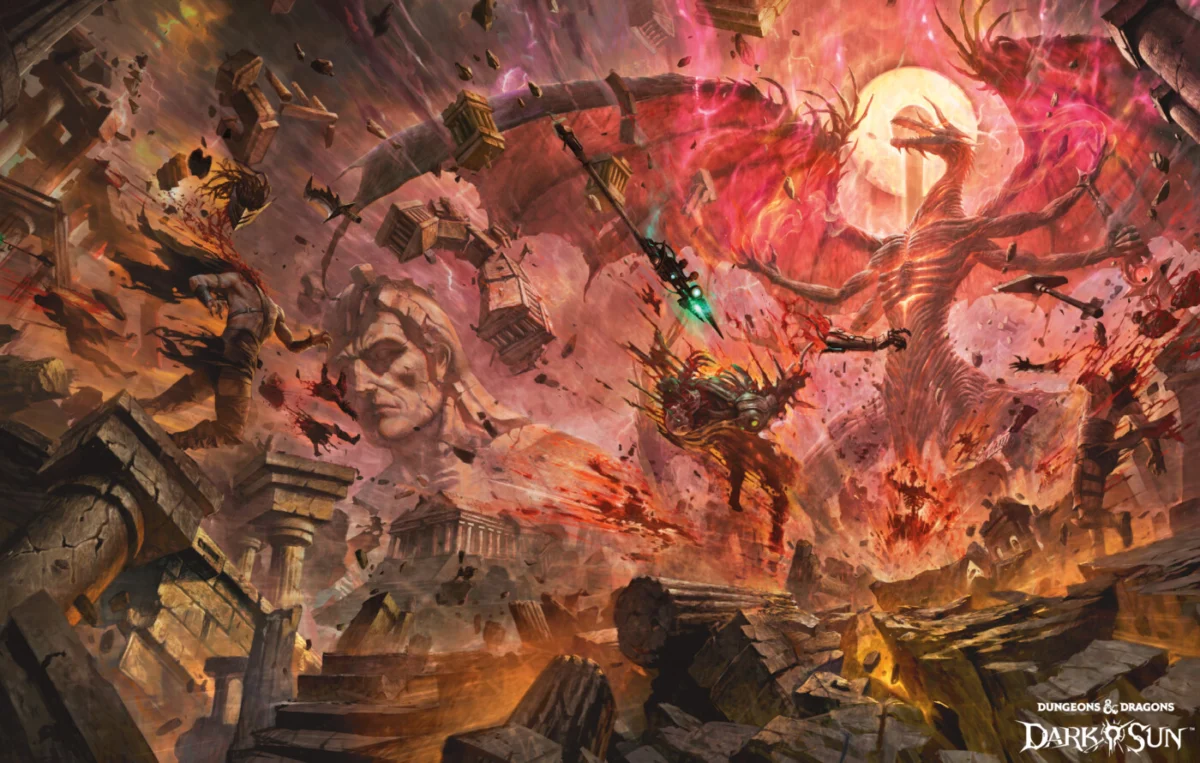
Indianapolis, IN (Gen Con 2026) – In a landmark announcement that sent ripples of excitement and anticipation through the tabletop roleplaying community, Wizards of the Coast, the publisher of the venerable Dungeons & Dragons franchise, confirmed at Gen Con 2026 that its iconic Dark Sun campaign setting will make a triumphant return in February 2027. This highly anticipated revival marks a significant departure for the brand, as Dark Sun will be D&D’s first official setting developed explicitly for mature audiences, carrying an 18+ content rating.
The reveal was met with fervent enthusiasm, particularly from long-time fans who have clamored for Dark Sun’s modern iteration for years. The new release promises to transport players back to Athas, a desolate, dying desert world scarred by millennia of destructive magic and held in the iron grip of tyrannical sorcerer-kings. Unlike the verdant forests and clear moral lines often found in traditional heroic fantasy, Dark Sun plunges adventurers into a brutal struggle for survival. Themes of scarce resources, pervasive environmental destruction, ruthless political oppression, and visceral gladiatorial violence are not mere backdrop but core tenets of the gameplay experience. This uncompromising vision for Athas underscores Wizards of the Coast’s commitment to preserving the setting’s notoriously harsh tone, rather than presenting a softened or sanitized version for a broader audience.
The initial launch in February 2027 will feature two cornerstone publications. Blood and Power is positioned as a player-focused gameplay expansion, introducing a wealth of character options meticulously crafted to fit the unique challenges of Athas. Crucially, this book will finally bring the long-awaited Psion class into the current D&D ruleset, fulfilling a demand from fans eager to harness the mind-bending powers intrinsic to Dark Sun. Complementing the player options, Edge of Oblivion will serve as an essential resource for Dungeon Masters, offering an exhaustive compendium of information about Athas, including its intricate history, detailed geographical locations, terrifying indigenous monsters, compelling adventure hooks, and comprehensive campaign material designed to immerse groups in the setting’s unforgiving reality.
Beyond these core releases, Wizards of the Coast has confirmed plans for a Dark Sun-themed version of the Player’s Handbook, likely a reskin or recontextualization of the core rules to better reflect Athas’s unique mechanics and lore. Further accessories, including a Dungeon Master’s screen adorned with evocative Dark Sun artwork and a comprehensive map pack detailing the scorched landscapes of Athas, are also slated for release.
The decision to rate these books for readers aged 18 and older stems directly from their explicit depictions of bloodshed, graphic violence, profanity, nudity, and sexuality – elements deeply woven into the fabric of Athas. To underscore this mature content, Wizards reportedly intends to sell the physical books shrink-wrapped, a measure designed to prevent the mature artwork from being openly displayed in retail environments and to clearly communicate the product’s intended audience. A preceding announcement trailer, reportedly laden with intense, violent imagery, further solidified the publisher’s intent to deliver an uncompromised experience.
This initial wave of products will be supported by a wider initiative dubbed the “Season of Survival.” While specific details remain under wraps, this thematic season is expected to encompass a variety of supplementary content, which may include additional adventure modules, organized play material for local game stores and conventions, exclusive digital content for platforms like D&D Beyond, and potentially other related merchandise or media that will be unveiled closer to the launch date. This comprehensive approach suggests a significant investment in Dark Sun’s long-term presence within the D&D ecosystem.
The Enduring Legacy of Athas: A Chronology of Dark Sun’s Journey
The return of Dark Sun is not merely a new release; it is the resurgence of a foundational and often revolutionary campaign setting that has captivated players for decades. Its history is marked by innovation, passionate fan engagement, periods of dormancy, and now, a dramatic re-entry into the mainstream.
Origins: A Radical Departure in 1991
Dark Sun first emerged on the tabletop scene in 1991, conceived for the Advanced Dungeons & Dragons (2nd Edition) ruleset. Co-created by Troy Denning and Timothy B. Brown, it represented a radical departure from the prevailing fantasy tropes of the era. While settings like Forgotten Realms, Greyhawk, and Dragonlance offered players worlds of verdant forests, shining kingdoms, and clear-cut good-vs-evil narratives, Athas presented a bleak, post-apocalyptic landscape. Its world was a sun-scorched desert, dotted with city-states ruled by immortal, tyrannical sorcerer-kings, and populated by a bizarre array of creatures and mutated races.
The core tenets of Dark Sun were revolutionary for D&D at the time. Traditional fantasy races were twisted into new forms: elves became nomadic, thieving raiders; dwarves were obsessive taskmasters driven by single-minded pursuits; and halflings were depicted as xenophobic cannibals inhabiting isolated jungles. Metal was an extreme rarity, replaced by obsidian, bone, and stone for weapons and tools. Water was the ultimate currency, more valuable than gold. Most significantly, psionics – powers of the mind – were as common, if not more so, than arcane magic, offering a distinct alternative to traditional spellcasting. Arcane magic itself was a double-edged sword, divided into "preserving" and "defiling" forms. Defilers drew energy directly from the living world, leaving barren wastes in their wake and contributing to Athas’s ecological collapse, while preservers painstakingly sought to minimize their impact. This environmentalist message, couched in a fantasy setting, was remarkably prescient.
Peak Popularity and Subsequent Hiatus in the 1990s
Throughout the 1990s, Dark Sun garnered extensive support and a dedicated following. Numerous modules, setting supplements like The Wanderer’s Chronicle and The Complete Psionics Handbook, and a series of acclaimed novels (including Denning’s Prism Pentad) expanded upon Athas’s rich lore and offered countless adventure opportunities. The setting even branched into video games with titles like Dark Sun: Shattered Lands (1993) and Dark Sun: Wake of the Ravager (1994), further cementing its unique aesthetic and brutal gameplay in the minds of players.
However, as the decade drew to a close and TSR, the original publisher, faced financial difficulties before being acquired by Wizards of the Coast, many of D&D’s diverse settings began to fade from regular publication. Dark Sun, with its niche appeal and complex mechanics, eventually entered a period of dormancy, much to the chagrin of its loyal fanbase.
A Brief Resurgence with Fourth Edition
The setting received a partial revival in 2010 for Dungeons & Dragons Fourth Edition. This iteration reintroduced Athas with new mechanics tailored to 4e’s combat-focused design, providing a new generation of players with a taste of the desolate world. While the Fourth Edition Dark Sun Campaign Setting book and associated adventures were well-received by those who engaged with 4e, the edition itself proved divisive, and Dark Sun did not receive the sustained support or widespread adoption that its previous incarnation had enjoyed. Crucially, it never received an official Fifth Edition setting book, leaving fans to rely on community-created adaptations and homebrew content.
The Road to 2027: Fifth Edition Demand and Teasers
The call for a full Dark Sun release for Dungeons & Dragons Fifth Edition has been persistent and increasingly vocal within the community. Fans yearned for a return to Athas that would fully integrate with the immensely popular 5e ruleset while maintaining the setting’s distinctive identity. Wizards of the Coast began to subtly stoke this interest through various playtest materials. The release of subclasses with post-apocalyptic themes and, most significantly, the playtest material for the Psion – a psychic character class intrinsically linked to Dark Sun – served as strong indicators that Athas was on the minds of the D&D developers. These teasers built considerable anticipation, culminating in the Gen Con 2026 announcement. The 2027 books will, therefore, not just be another release, but the setting’s first comprehensive, officially supported adaptation for the current Dungeons & Dragons rules, promising a fully integrated and definitive Athasian experience.
Supporting Data and Thematic Deep Dive: The Core of Dark Sun’s Identity
Dark Sun’s enduring appeal lies in its fundamental subversion of fantasy tropes and its unwavering commitment to a cohesive, albeit brutal, thematic identity. The upcoming 2027 release appears poised to lean heavily into these core principles, delivering an experience unlike any other in D&D’s extensive catalog.
The Philosophy of Survival and Moral Ambiguity
At its heart, Dark Sun is a setting about survival. It strips away the comforts and conventions of traditional fantasy, forcing players to confront difficult choices in an environment where resources are precious, life is cheap, and moral lines are often blurred. The "hero" archetype is challenged; survival often means compromise, and the greater good can be indistinguishable from personal gain. This inherent moral ambiguity is a cornerstone of the setting, encouraging roleplaying that delves into the grey areas of ethics rather than straightforward heroism. It serves as a stark cautionary tale about environmental destruction and unchecked power, resonating with contemporary concerns about climate change and totalitarianism.
Unique Mechanics and Reimagined Races
The setting’s distinct themes are inextricably linked to its unique mechanics and lore.
- Psionics: Unlike other D&D settings where psionics might be a rare or esoteric alternative, in Dark Sun, it is a pervasive force. Psionic abilities are often as common as, if not more so than, arcane magic. The reintroduction of the Psion class for 5e will be pivotal, requiring a robust system that feels distinct from traditional spellcasting while remaining balanced. It offers players an entirely different pathway to power, emphasizing mental discipline and raw psychic might over incantations and somatic components.
- Resource Scarcity: The scarcity of metal, water, and fertile land is not merely flavor text; it profoundly impacts gameplay. Weapons are often made of bone, chitin, or obsidian, carrying different properties and durability. Water is a commodity to be hoarded, traded, or fought for. Character progression and adventuring logistics are constantly influenced by the need to find and preserve vital resources, making every journey a perilous expedition.
- Altered Races: Athas reinterprets familiar D&D races in fascinating and often unsettling ways. Elves are not forest dwellers but nomadic, opportunistic raiders. Dwarves are not jovial miners but grim, single-minded individuals driven by an all-consuming "focus." Halflings are not gentle folk but insular, cannibalistic jungle predators. The indigenous Thri-Kreen (four-armed mantis-folk) and Muls (half-human, half-dwarf gladiators) are iconic to the setting, offering truly alien or brutal character options that further distinguish Athas from other D&D worlds.
- Defiling vs. Preserving Magic: The world’s ecological catastrophe is directly tied to the practice of defiling magic. Arcane spellcasters who draw life energy from the surrounding flora and fauna accelerate Athas’s demise, leaving behind barren wastes. Preserving magic, while less potent, allows spellcasters to use magic without harming the environment. This stark dichotomy creates profound ethical dilemmas for players and DMs, forcing them to consider the cost of power.
- Gladiatorial Combat and Slavery: Slavery is an endemic part of Athasian society, particularly within the tyrannical city-states. Gladiatorial arenas are a brutal form of entertainment and social control, where slaves fight for their lives and freedom. These elements are not glorified but presented as grim realities, offering compelling hooks for characters seeking to escape oppression or fight for justice in a world that offers little.
The Tyranny of the Sorcerer-Kings
The undisputed rulers of Athas’s city-states are the Sorcerer-Kings, ancient and immensely powerful beings who have prolonged their lives and amplified their magical abilities through unspeakable means. They are beings of immense power, often psionic as well as arcane, and their will is law. Their motives are complex – some seek to restore Athas, others merely to maintain their power – but all rule with an iron fist. Understanding and navigating their political intrigues, or even daring to defy them, forms the backbone of many Dark Sun campaigns, providing clear, yet often insurmountable, antagonists.
The Justification for the "Mature" Rating
The 18+ rating for the new Dark Sun books is not an arbitrary marketing ploy but a necessary acknowledgment of the setting’s inherent nature. The themes of graphic violence in gladiatorial arenas, the psychological trauma of slavery and oppression, the profanity born from desperation, the nudity often associated with tribal cultures or ritualistic practices, and the implied or explicit sexuality that arises in a world without traditional societal norms, are not tacked-on elements. They are integral to portraying the stark, unvarnished reality of Athas. Softening these elements would fundamentally compromise Dark Sun’s identity as a brutal, mature, and deeply thought-provoking fantasy experience. Wizards of the Coast’s decision to commit to this rating demonstrates a respect for the setting’s legacy and a willingness to cater to a segment of its audience seeking darker, more challenging narratives.
Official Responses and Industry Context: D&D’s Evolving Identity
Wizards of the Coast’s announcement regarding Dark Sun’s mature rating and uncompromised tone signals a calculated and significant shift in the brand’s positioning within the broader tabletop roleplaying game (TTRPG) landscape. This move is not merely about re-releasing an old favorite; it represents an expansion of D&D’s identity and its potential target audience.
Wizards of the Coast’s Stance and the "Season of Survival"
While specific quotes from Wizards of the Coast leadership are yet to fully emerge, the messaging surrounding the Gen Con announcement is clear: they are embracing Dark Sun’s harshness. The shrink-wrapping of physical products and the explicit 18+ rating are proactive steps to manage expectations and ensure that the content reaches its intended demographic. This level of commitment to a mature rating is unprecedented for a flagship D&D product, indicating a willingness to explore narratives beyond the traditionally family-friendly or broadly accessible fantasy often associated with the brand.
The "Season of Survival" initiative further underscores this commitment. While details are scarce, such "seasons" in modern gaming often imply a continuous stream of content, ranging from digital supplements and virtual tabletop integrations to organized play events and potentially even crossover media like digital comics or animated shorts. This suggests that Dark Sun is not intended as a one-off release but as a sustained and supported campaign world, allowing players to fully immerse themselves in its unforgiving landscapes for an extended period.
D&D’s Evolving Brand Identity
This release positions D&D as a more versatile and multifaceted brand. For years, D&D has successfully cultivated an image of inclusive, heroic fantasy, attracting millions of new players through its accessibility and popular culture prominence. However, the TTRPG market is diverse, with many players seeking grittier, more morally complex, or horror-infused experiences. By fully embracing Dark Sun’s mature themes, Wizards of the Coast is signaling its intent to cater to this segment of the market, potentially drawing in players who might have previously looked to other TTRPGs for such content.
This could be seen as a strategic response to the growing popularity of TTRPGs that overtly lean into mature themes, such as Call of Cthulhu, Warhammer Fantasy Roleplay, or independent horror games. It demonstrates D&D’s capacity to evolve and adapt, proving that its core mechanics can support a wide spectrum of narrative tones, from high fantasy to post-apocalyptic survival horror. It also serves as a nod to veteran players who have long appreciated D&D’s deeper, more challenging settings, balancing the brand’s broad appeal with its rich legacy.
Community Reception and Anticipated Debates
The announcement has already sparked considerable discussion within the D&D community. The return of Dark Sun, particularly with the Psion class, is a cause for celebration among long-time fans. The 18+ rating, while a bold move, is largely viewed as a necessary and welcome decision, reassuring fans that the setting’s integrity will be preserved.
However, such a move is not without potential for debate. Discussions may arise around the precise nature of the "mature content" – particularly regarding nudity and sexuality – and how it is depicted within the books. There may also be conversations about how this mature rating impacts D&D’s accessibility for younger players who are curious about the setting but are barred by age restrictions. Nevertheless, the predominant sentiment appears to be one of overwhelming excitement and approval, signaling that the community is ready for D&D to push its boundaries.
Implications for Dungeons & Dragons and the TTRPG Landscape
The return of Dark Sun with an 18+ rating is more than just another product launch; it is a pivotal moment that carries significant implications for the future trajectory of Dungeons & Dragons and potentially the wider TTRPG industry.
Impact on D&D’s Future
- Expansion of Target Audience: By explicitly targeting a mature audience, D&D is consciously expanding its demographic reach. This could attract adult players who previously felt D&D was too "soft" or did not offer the depth of mature themes they sought in their roleplaying experiences. It signifies that D&D is not a monolithic entity but a platform capable of supporting diverse narrative styles.
- Creative Freedom and Future Settings: The success of Dark Sun could open the floodgates for Wizards of the Coast to explore other mature-themed settings or to reintroduce beloved but darker campaign worlds from D&D’s past (e.g., Planescape’s more philosophical and grim elements, or Ravenloft’s horror with fewer constraints). It signals to designers that there is an appetite for more challenging and adult content within the D&D framework.
- Rules Evolution and Integration: The reintroduction of the Psion class and Dark Sun’s unique mechanics will inevitably influence the ongoing development of D&D’s core rules. The ways in which psionics are integrated could set precedents for future magical or supernatural systems. Furthermore, the emphasis on resource management and environmental consequences might inspire more granular or thematically rich mechanics in future supplements.
- Sales and Market Performance: The commercial success of an 18+ D&D product will be closely watched. If Dark Sun proves to be a strong seller, it could demonstrate the viability of adult-oriented TTRPG content within the mainstream, potentially encouraging further investment in similar projects. The shrink-wrapping strategy, while a first for D&D, could become a standard practice for future mature releases.
Impact on the Broader TTRPG Industry
- Precedent Setting: D&D’s move could set a significant precedent for other major TTRPG publishers. If the world’s most popular roleplaying game can successfully launch and sustain an 18+ line, it might embolden other companies to explore mature themes more explicitly within their own flagship product lines, challenging the perception that TTRPGs must always be broadly accessible.
- Redefining "Mainstream" Fantasy: Dark Sun’s return directly challenges the conventional image of D&D as solely heroic, high fantasy. It demonstrates that mainstream TTRPGs can effectively delve into themes of survival horror, moral ambiguity, and environmental devastation. This could lead to a broader acceptance of diverse fantasy subgenres within the TTRPG mainstream.
- Fan Engagement and Innovation: The excitement generated by Dark Sun’s return is palpable. It reinvigorates veteran fans who have long cherished the setting and attracts new players looking for a distinct D&D experience. This renewed engagement can foster innovation within the community, inspiring homebrew content, discussions, and new ways of playing the game.
In conclusion, the announcement of Dark Sun’s return in February 2027, coupled with its unprecedented 18+ mature rating, is a bold and strategic maneuver by Wizards of the Coast. It represents not just a nostalgic revival but a forward-looking statement about the evolving nature of Dungeons & Dragons. By embracing the harsh, uncompromising vision of Athas, D&D is poised to redefine expectations, broaden its appeal, and solidify its position as a dynamic and adaptable force within the global tabletop roleplaying game landscape. The "Season of Survival" beckons, promising a deep and challenging journey into a world where survival itself is the greatest triumph.