The Digital Pioneer and the Generative Frontier: Ed Catmull Joins Higgsfield AI Film Jury
By Senior Tech & Arts Correspondent
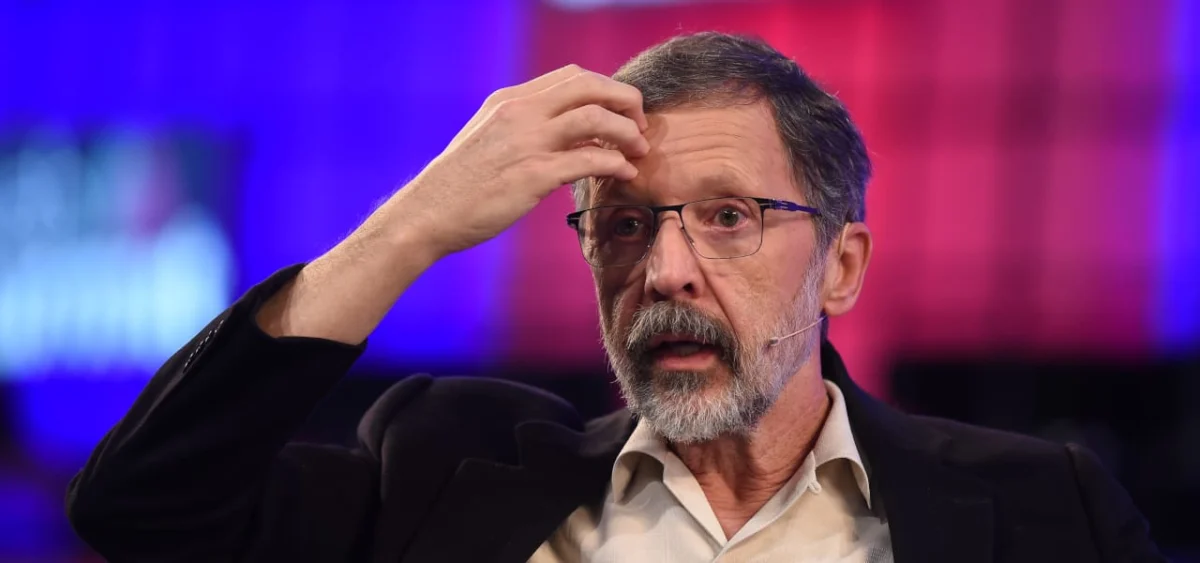
In a move that signals a profound symbolic shift in the landscape of digital media, Ed Catmull—the co-founder of Pixar Animation Studios and former president of Walt Disney Animation—has officially joined the jury of the Higgsfield Global Film Festival. This inaugural competition, organized by the startup Higgsfield AI, is the first of its kind to be devoted exclusively to generative AI filmmaking.
The announcement marks a significant milestone for the burgeoning AI video industry. By securing the endorsement of a man widely considered the "architect of modern computer animation," Higgsfield AI is attempting to bridge the gap between the traditional animation establishment and the controversial frontier of artificial intelligence.
I. Main Facts: A Convergence of Legacy and Innovation
The Higgsfield Global Film Festival is not merely a showcase of short films; it is a strategic platform designed to demonstrate the capabilities of Higgsfield’s proprietary "Cinema Studio." The competition carries strict participation requirements: all entrants must be active Higgsfield subscribers, and every frame of the submitted content must be produced using the company’s generative AI toolset.
The Role of Ed Catmull
Ed Catmull’s participation as a juror is the centerpiece of the festival’s promotional strategy. Catmull, a five-time Academy Award winner and a recipient of the A.M. Turing Award (often called the "Nobel Prize of Computing"), retired from his leadership roles at Disney and Pixar in 2018. His career is defined by the successful marriage of high-level engineering and emotional storytelling—a philosophy that Higgsfield AI claims to emulate.
The Platform: Higgsfield’s Cinema Studio
Unlike general-purpose AI video generators that rely on simple text-to-video prompts, Higgsfield’s Cinema Studio focuses on "character-centric" generative video. The platform aims to provide creators with more granular control over motion, character consistency, and cinematic composition, addressing the primary criticisms leveled against earlier AI video tools.
II. Chronology: From the CG Revolution to the AI Era
To understand the weight of Catmull’s involvement, one must look at the historical timeline of technological disruption in animation, a timeline that Catmull himself largely authored.
1970s–1980s: The Foundations of 3D
In the early 1970s, while at the University of Utah, Catmull invented fundamental concepts of computer graphics, including Z-buffering and texture mapping. His vision was clear: to create the world’s first computer-animated feature film. This journey took him through the New York Institute of Technology (NYIT) and eventually to Lucasfilm, where he headed the Computer Division.
1986–1995: The Pixar Era
Under the ownership of Steve Jobs, Catmull co-founded Pixar. For a decade, the industry remained skeptical that audiences would connect with "cold" computer-generated characters. That skepticism was shattered in 1995 with the release of Toy Story, which Catmull executive produced. It was a moment that fundamentally changed the medium of film, rendering hand-drawn animation a secondary format for major studio releases within a decade.
2006–2018: The Disney Renaissance
Following Disney’s acquisition of Pixar, Catmull was tasked with revitalizing the flagging Walt Disney Animation Studios. By applying the "Brain Trust" methodology—a culture of rigorous, peer-driven creative feedback—he oversaw a new golden age that included hits like Tangled and Frozen.
2024–2026: The AI Pivot
Since his retirement, Catmull has remained an influential voice in the tech community. His decision to join the Higgsfield jury in August 2026 suggests that he views generative AI not as a threat to the craft he built, but as the logical successor to the CGI revolution he sparked fifty years ago.
III. Supporting Data: The Rise of Generative Video
The Higgsfield Global Film Festival arrives at a time of explosive growth and investment in the AI video sector. Market data and industry trends highlight why a figure like Catmull is being recruited to provide "adult supervision" to the space.
- Investment Surge: Since 2023, venture capital investment in generative AI startups has exceeded $25 billion globally. Companies like OpenAI (with Sora), Runway, and Luma AI are competing for dominance in a market that is projected to disrupt the $200 billion global animation and VFX industry.
- The Democratization Factor: Traditional 3D animation requires years of training and hardware costing thousands of dollars. In contrast, Higgsfield AI operates on a mobile-first philosophy. By lowering the barrier to entry, the company reports a 40% month-over-month increase in its user base, consisting largely of "social-first" creators who lack formal animation backgrounds.
- Technical Milestones: Higgsfield’s "Cinema Studio" utilizes a diffusion-based architecture specifically tuned for temporal consistency. Early data from the platform suggests that users can generate 10-second clips with 85% character consistency across different shots—a metric that was virtually impossible for AI just 12 months ago.
IV. Official Responses: Bridging the Divide
The announcement of Catmull’s involvement has elicited a range of responses from the tech and creative sectors.
Alex Mashrabov, CEO of Higgsfield AI:
In a statement on LinkedIn, Mashrabov emphasized the spiritual link between Pixar and Higgsfield. "We admired how Pixar brought artists and engineers together to build something neither could create alone," Mashrabov wrote. "Ed Catmull is the man who invented 3D graphics, and his presence on our jury validates our mission to empower the first generation of AI filmmakers."
The Traditional Animation Community:
The response from professional animators has been more guarded. Many in the industry view generative AI as a tool built on the non-consensual scraping of their work. Representatives from various animation guilds have expressed concern that the "legitimization" of AI by industry icons like Catmull could accelerate the automation of entry-level roles in storyboarding, layout, and background design.
Ed Catmull’s Philosophy:
While Catmull has not released a separate long-form manifesto regarding this specific festival, his previous writings in Creativity, Inc. provide a roadmap for his thinking. Catmull has long argued that "technology does not make movies; people make movies." His involvement suggests he believes AI is another brush, albeit a much more complex one, that requires a human hand to guide it toward meaningful storytelling.
.png)
V. Implications: The Future of the "Artist-Engineer"
Catmull’s entry into the AI space carries three major implications for the future of the film industry.
1. The Validation of AI as a Creative Medium
By participating, Catmull provides Higgsfield with "institutional "gravity." This makes it harder for critics to dismiss generative AI as a mere gimmick or a copyright-infringing engine. If the man who pioneered the most significant shift in animation history sees potential in AI, the broader industry is forced to take a closer look.
2. A Shift in the "Uncanny Valley"
One of Catmull’s career-long challenges was overcoming the "Uncanny Valley"—the point where digital humans look "almost" real but evoke a sense of revulsion. Generative AI is currently mired in this valley. Catmull’s role as a judge likely means he will be looking for filmmakers who can navigate these aesthetic pitfalls, prioritizing emotional resonance over mere technical spectacle.
3. The Redefinition of the "Studio"
The requirement that films be produced within Higgsfield’s "Cinema Studio" highlights a shift toward vertical integration in AI. We are moving away from open-source chaos toward "walled garden" platforms where the AI company acts as the studio, the software provider, and the distribution network simultaneously.
Conclusion: A New Chapter in Visual Storytelling
The Higgsfield Global Film Festival represents more than just a competition; it is a litmus test for the future of cinema. With Ed Catmull at the helm of the jury, the event seeks to answer a fundamental question: Can the soul of animation—the meticulous, frame-by-frame intention of the artist—survive in an era of algorithmic generation?
As the festival progresses, the industry will be watching closely. If the winning entries manage to capture even a fraction of the charm and narrative depth found in Catmull’s early Pixar shorts, it may mark the official end of the "CGI era" and the beginning of the "Generative Era." For Catmull, it is a return to familiar territory: standing at the edge of a new technology, insisting that the story remains the most important part of the machine.