Songbird, Siren’s Screech: Unveiling the Power of a Common Commander
I. Introduction: The Allure of the Unconventional Commander
In the ever-evolving landscape of Magic: The Gathering’s Commander format, where players often gravitate towards high-value legendary creatures or established archetypes, encountering a deck that genuinely defies expectation is a rare and memorable event. For many seasoned players, particularly those with a background in competitive formats like Modern or Yu-Gi-Oh, a specific intersection of "jank" (unconventional, seemingly weak cards) and raw power represents the ideal. This player archetype, often characterized by a mild contrarian streak and a yearning to break from the pack, actively seeks out commanders that promise unique, even "heinous," strategies. It is within this philosophy that the revelation of a seemingly unassuming common, Songbird, Siren’s Screech, as a commander, can ignite a spark of genuine intrigue.
Upon its reveal in the Command Zone, Songbird, Siren’s Screech, a 2-mana common creature, appears, at face value, almost comically outmatched by the powerhouses typically seen in the format. Commanders like Tevesh Szat or Edgar Markov often dominate discussions, boasting immediate board impact or overwhelming value generation. Yet, beneath Songbird’s modest facade lies a quiet, potent truth: it functions as a free, repeatable discard enabler at instant speed, for a mere two mana. This article delves into why such an ostensibly simple ability makes a common card a compelling and surprisingly powerful choice for the Command Zone, exploring its mechanical implications, strategic applications, and its burgeoning popularity within the Commander community. This exploration is part of a broader shortform series designed to rapidly dissect pivotal Commander concepts that might not warrant a full-length feature but offer significant strategic insights.
II. The Mechanics of Untapped Power: The "Free Action" Principle
A. The "Eat Garbage" Lexicon: Understanding Costless Abilities
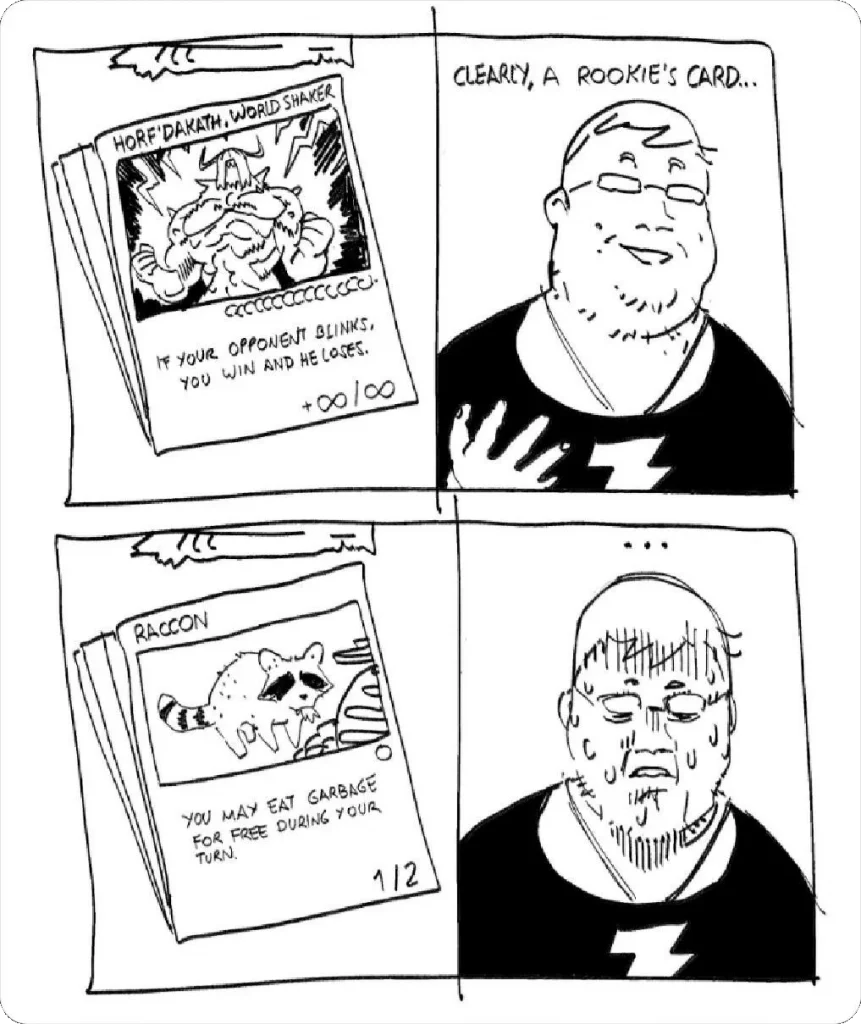
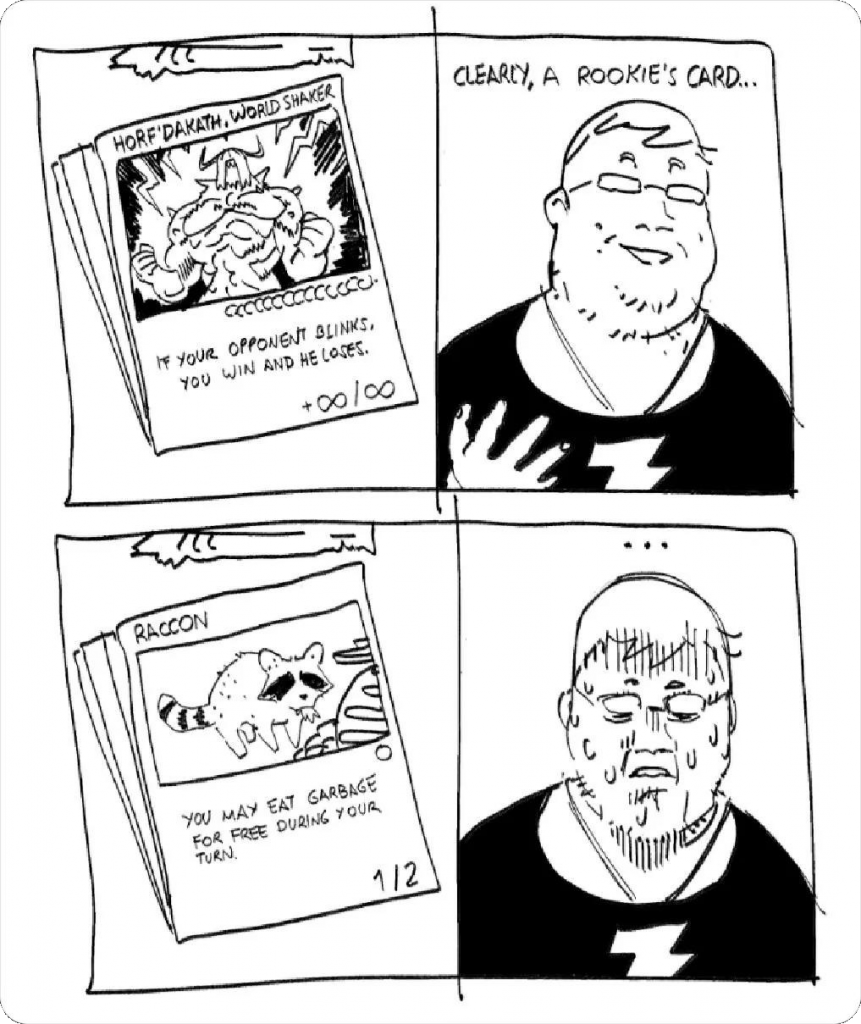
The Magic: The Gathering community has developed a unique lexicon to describe certain powerful card interactions, none more evocative than the concept of a "free garbage eater." This phrase, often used in playtesting groups, refers to any card that allows a player to perform a game action costlessly, at any time, and often any number of times. The sheer ability to activate an effect without paying additional mana, tapping, or sacrificing other resources fundamentally disrupts Magic’s core resource management system. It doesn’t even need to be a good something; the mere capacity to take an action infinitely or at will, given the right tools, almost invariably leads to powerful payoffs.
This principle is why Wizards of the Coast (WotC) has increasingly implemented "once per turn" restrictions on abilities, or stipulations limiting effects to the first instance of a trigger each turn. The design space for unrestricted, free actions has proven historically volatile. Even seemingly minor rules changes, such as the brief, swiftly reversed attempt to retroactively rebrand post-combat main phases as "second main phase" (now standard on new cards), reflect WotC’s ongoing effort to manage the complexity and power of game actions.
B. Historical Precedents: Exploiting Unrestricted Activations
The history of Magic is replete with examples of seemingly innocuous cards whose unrestricted abilities led to format-defining, often broken, combinations. A classic example is the "Cephalid Breakfast" combo in Legacy, utilizing the interaction between Nomads en-Kor and Cephalid Illusionist. Nomads en-Kor allows players to redirect damage to another creature for free, any number of times. When paired with Cephalid Illusionist, whose ability triggers whenever it’s targeted, this creates an infinite self-mill engine, enabling game-winning graveyard strategies. Neither card is individually powerful in isolation, but their synergy, built on the foundation of a free, repeatable action, proved devastating.
Another, more recent example in mono-black, is the author’s own Gorex, the Tombshell list, which leveraged Necropolis as a free way to repeatedly exile a card from the graveyard. While Necropolis is far from a "good" card by conventional metrics, its ability to exile a specific card like Eternal Scourge repeatedly provided a crucial, otherwise difficult-to-achieve, free action in mono-black. Songbird, Siren’s Screech, with its 2-mana cost and free, instant-speed discard, steps into this storied lineage of "free garbage eaters." Its accessibility and position in the Command Zone elevate its potential significantly beyond its predecessors.
C. Songbird’s Place in the Pantheon of Enablers
What makes Songbird particularly potent is its status as a commander. Unlike Nomads en-Kor or Necropolis, Songbird is consistently available from turn two, assuming land drops. This consistent access to a free, repeatable discard outlet is unparalleled in Commander at such a low mana value. Its instant-speed activation also means it can respond to threats, bait counterspells, or simply fuel graveyard strategies at the most opportune moments, even during an opponent’s turn. This combination of low cost, accessibility, and unrestricted utility positions Songbird as a premier enabler for a variety of powerful strategies, primarily reanimator and combo.

III. Core Strategies: Leveraging Songbird’s Discard Engine
A. Reanimator: Accelerating Graveyard Strategies
Reanimator, a perennial powerhouse archetype across multiple Magic formats, thrives on three fundamental pillars: formidable creatures worth resurrecting, spells to bring them back from the graveyard, and efficient ways to get those creatures into the graveyard in the first place. The third pillar is where Songbird, Siren’s Screech shines brightest. Few feelings are worse in a reanimator deck than holding a hand full of game-ending 7-to-10 mana threats with no means to discard them, leaving them to rot until it’s too late.
1. The Pillars of Reanimator: Streamlined by Songbird
Songbird, at a mere two mana and with instant-speed discard, essentially solves the "discard outlet" problem single-handedly for mono-black reanimator. This allows deckbuilders to drastically reduce the number of other milling or pitching effects, dedicating more slots to impactful threats and powerful reanimation spells. The efficiency gained in deck construction translates directly into increased consistency and speed.
2. Premier Reanimation Targets
The brutality of a Songbird reanimator deck is directly proportional to the strength of its targets. Players can quickly accelerate powerful creatures onto the battlefield, turning games on their heads. Examples include:
- Demonlord Belzenlok: Enters, draws several cards (often discarding more large threats in the process), and provides a formidable flying body.
- Vilis, Broker of Blood: A massive flying threat that turns any loss of life (including your own for card draw) into a powerful draw engine.
- It That Betrays: A game-ending Eldrazi that punishes opponents for sacrificing permanents, a common strategy in many Commander metas.
- Razaketh, the Foulblooded: A flying, trampling demon that sacrifices creatures to tutor for any card, often enabling game-winning combos on the spot.
- Hoarding Broodlord: A powerful dragon that tutors for an artifact or enchantment upon entering the battlefield, offering incredible utility and combo potential.
- Burning-Rune Demon: Enters, allows you to search for two cards, one of which goes to your hand and the other to your graveyard, providing both card advantage and graveyard setup.
The ability to consistently dump these haymakers into the graveyard by turn two or three means the deck can "pop off" significantly faster than many opponents might anticipate, even at higher power levels.
3. Streamlining Deck Construction
By having Songbird reliably available, the deck can focus on maximizing its threats and reanimation spells. This reduces the need for less impactful self-mill cards or other discard outlets, making the deck more focused and powerful.
B. Combo Potential: Infinite Loops and Card Advantage
Beyond mere reanimation, Songbird’s free discard ability opens up potent combo avenues, particularly when combined with cards that reward repeated discard.
1. The Bone Miser Engine
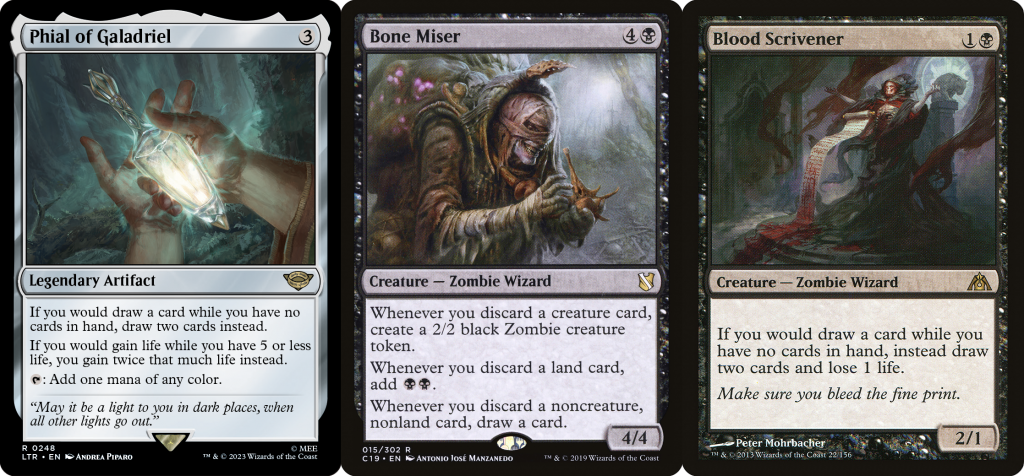
One of the most powerful interactions involves Bone Miser. This legendary Zombie generates various resources (mana, Zombies, cards) whenever you discard a card. When paired with repeatable mana sources that also trigger discard or draw, like Phial of Galadriel, Blood Scrivener, or Alhammarret’s Archive (which doubles Bone Miser’s draw triggers), Songbird can create an incredibly efficient engine. The sequence often involves:

- Activate Songbird, discarding a card.
- Bone Miser triggers, generating a resource (e.g., a Black mana or a 2/2 Zombie).
- If a card like Phial of Galadriel is in play, it might allow you to discard for mana, effectively creating a self-sustaining loop with Bone Miser generating additional resources.
- With Alhammarret’s Archive, each discard trigger from Bone Miser that would draw a card now draws two, rapidly digging through the library.
This engine can quickly draw through a significant portion of your deck, creating an army of Zombies (thanks to Bone Miser) and generating vast amounts of mana. With a sac outlet (easily found in mono-black), the Zombie tokens can then be leveraged for infinite mana or other game-ending effects.
2. Auxiliary Combo Pieces and Tutors
Mono-black’s robust tutor suite makes finding these combo pieces remarkably consistent. Cards like Moonsilver Key can fetch artifacts like Phial of Galadriel, while Infernal Tutor (especially with a nearly empty hand, a common state after Songbird activations) can find any card. More generally, Vampiric Tutor and Demonic Tutor are staples that further enhance consistency. The beauty of these combos is that many of the best reanimation targets (like Razaketh, Hoarding Broodlord, and Burning-Rune Demon) are also tutors themselves, allowing the deck to seamlessly transition from a reanimator game plan into a combo finish.
3. Flexibility and Resilience
A well-constructed Songbird deck can be surprisingly resilient. By weaving together both reanimator and combo elements, it doesn’t fold to a single piece of hate (e.g., graveyard hate might hinder reanimator but not stop a Bone Miser combo if the pieces are in hand). This hybrid approach allows the deck to adapt to different game states and opponent interactions, often outracing even high-powered combo decks.
IV. Synergistic Interactions and Design Nuances
A. Maximizing Discard Payoffs: Madness and Beyond
Beyond the primary reanimator and combo strategies, Songbird naturally synergizes with any card that benefits from discarding. The Madness mechanic, for instance, allows cards to be cast for an alternate, often cheaper, cost when discarded. With Songbird, cards like Big Game Hunter, Call to the Netherworld, and Grave Scrabbler can effectively be cast at instant speed for their Madness cost, providing removal, recursion, or card advantage at virtually no additional cost. The newer "Mayhem" mechanic also offers discard payoffs, though fewer playable options currently exist. The sheer control Songbird offers over when to pitch cards is invaluable for optimizing these effects.
B. Distinguishing Discard as Cost vs. Discard as Payoff
It’s crucial to understand the fundamental distinction between cards that see discard as a cost to be offset, and those that see it as a beneficial action in itself. Cards like Containment Construct or Moonstone, Harsh Mistress (which allow you to play discarded lands or cast discarded spells, respectively) are excellent in decks where discard is a cost for another effect (e.g., Wheel effects). However, in a Songbird deck, where the discard is the desired action, these cards offer less direct synergy. The advantage with Songbird is the act of pitching itself, not mitigating a loss. Despite this, EDHREC data shows these cards appearing in 19% and 29% of Songbird decks, respectively, indicating some players may misunderstand the nuanced interaction or include them for redundancy in case of other discard effects.
C. The Uncommon Rarity, Uncommonly Powerful Effect
The fact that Songbird, Siren’s Screech is a common card is a significant design nuance. Commons are typically intended to be simple, accessible, and not format-defining. Yet, Songbird breaks this mold by providing a uniquely powerful, unrestricted ability at an extremely low cost. This makes it not only budget-friendly but also universally available to players, democratizing access to powerful graveyard strategies in mono-black. Its art, depicting a captivating figure amidst chaotic soundwaves, also adds to its allure, creating an immediate "confusion/wow factor" when revealed.
V. The Commander Metagame: Popularity and Perception
A. EDHREC Data: A Surprising Ascent
The real testament to Songbird’s power and appeal lies in its rapid adoption. Within a mere month of its release (within the context of the "Marvel" set discussed in the original article), Songbird, Siren’s Screech had amassed nearly 400 decks on EDHREC. This is a staggering figure for a common card, especially when compared to other, seemingly more complex or "powerful" commanders. For instance, Harold and Bob, First Numens, a unique green commander released in March 2024, or Sanwell, Avenger Ace, from November 2022, both sit at under 200 decks. These commanders, arguably far more interesting at face value with their intricate mechanics, simply haven’t captured the community’s imagination or strategic attention in the same way as Songbird. This rapid proliferation underscores the inherent power of a simple, unrestricted ability.
B. The "Thought Leader" Phenomenon: Shaping the Metagame
Songbird’s swift rise in popularity is also a fascinating case study in the modern Commander content ecosystem. The proliferation of content creators, streamers, and writers in recent years means that virtually every new card is scrutinized by countless eyes and discussed by numerous voices. A single "bright idea" for a commander, articulated and disseminated by a recognized "thought leader," can rapidly influence how that commander is perceived and built by a vast audience. The author’s own experience with Princess Yue, where their insights significantly shaped the burgeoning archetype despite not receiving explicit credit, illustrates this phenomenon. Songbird’s clear, powerful ability, once identified and championed, quickly resonated with players seeking efficiency and unique angles.
C. The Appeal of the Underdog: Why Players Embrace Songbird
The appeal of Songbird, Siren’s Screech, extends beyond its raw power. There’s an inherent satisfaction in finding a "gem amid a very busy set," especially one at common rarity. The "confusion/wow factor" it generates when revealed at a casual table is a powerful draw for players who enjoy breaking norms. Its simple, yet uniquely powerful text on an otherwise innocuous card embodies the spirit of discovery and ingenuity that many players cherish in Commander. It offers a clear path for players yearning to "buck the norms of value-based modern designs" and explore more direct, combo-centric strategies.
VI. Official Responses and Design Considerations (Inferred)
A. Wizards of the Coast’s Design Philosophy on "Free" Abilities
While there are no official responses directly addressing Songbird, Siren’s Screech, its design raises questions about Wizards of the Coast’s ongoing philosophy regarding "free" abilities. Historically, WotC has moved away from printing unrestricted, repeatable effects without significant costs or "once per turn" clauses, precisely because of their propensity to be broken. The shift in errata and templating (like the "second main phase" example) reflects a continuous effort to manage complexity and power. Songbird, with its ability to discard any number of cards at instant speed for no additional cost beyond its initial two-mana investment, appears to be an outlier in this modern design philosophy, particularly at common rarity. It harks back to an earlier era of Magic design where such potent enablers were more prevalent, often leading to powerful, sometimes unintended, consequences.
B. The Role of Commons in Set Design
Commons are typically the backbone of any set, designed to be simple, flavorful, and accessible, often showcasing basic mechanics. They are rarely intended to be cornerstones of competitive Commander decks. Songbird, however, subverts this role entirely. It provides a highly specialized, potent engine that transcends its rarity. This might be an intentional design choice to inject unexpected power at lower rarities, encouraging players to look beyond mythics and rares for commander options, or it could be an oversight regarding the long-term implications of such a "free" effect in the Command Zone.
C. Balancing Power at Lower Rarities
Designing powerful effects at lower rarities presents a unique challenge for developers. While it democratizes access to certain strategies, it also risks creating easily accessible, highly efficient engines that can dominate casual or even competitive metas. Songbird, by offering a "Putrid Imp" or "One With Nothing" effect consistently from the Command Zone for two mana, walks this fine line. Its existence suggests a willingness to experiment with power levels at common, perhaps to inject excitement into sets or to explore new design spaces for highly specific archetypes.
VII. Implications and Future Outlook
A. Impact on Commander Diversity and Power Levels
Songbird, Siren’s Screech undoubtedly contributes to Commander’s diversity by providing a powerful, yet unconventional, mono-black commander option. It empowers players to explore graveyard-centric combo and reanimator strategies with unprecedented consistency and speed, pushing the boundaries of what a two-mana common can achieve. Its popularity suggests a hunger among players for commanders that offer unique angles of attack rather than just raw value, potentially influencing future design choices for legendary creatures.
B. The Legacy of "Hidden Gems"
Songbird stands as a testament to the enduring appeal of "hidden gems" in Magic. It reinforces the idea that even seemingly innocuous cards, especially those at lower rarities, can become format staples through clever deckbuilding and community exploration. This continuous discovery process is a core part of Commander’s appeal, where every new set offers potential for unexpected innovation.
C. A Glimpse into Future Design Trends?
The question remains whether Songbird is an anomaly or a harbinger of future design trends. Will WotC continue to print such powerful, free enablers at low mana costs and rarities, or will Songbird be viewed as a lesson learned, leading to tighter restrictions on similar effects in the future? Its impact on the meta will likely be monitored closely, especially given its rapid adoption and high efficiency.
VIII. Conclusion: A Siren’s Song for the Discerning Commander
In conclusion, Songbird, Siren’s Screech, a common card from the "Marvel" set, has rapidly established itself as a compelling and potent commander in Magic: The Gathering. Its unique ability to provide free, repeatable, instant-speed discard from the Command Zone for just two mana unlocks powerful reanimator and combo strategies, allowing players to build highly consistent and explosive mono-black decks. Its unexpected popularity, evidenced by its rapid ascent on EDHREC, highlights the community’s keen eye for undervalued cards and the significant influence of "thought leaders" in shaping the format.
Songbird’s success is a vibrant illustration of ingenuity in Commander, proving that raw power isn’t solely reserved for mythic rares or complex value engines. It’s a "real gem" that offers both immediate confusion and eventual appreciation, appealing to players who seek to buck conventional wisdom and forge their own path. As Commander continues to evolve, the legacy of cards like Songbird will serve as a reminder that sometimes, the most unassuming cards sing the loudest, leading players down paths of unexpected power and creativity.