The Changing Architecture of the Gaming Industry: Analyzing Activision Blizzard’s Revenue Streams Amid the Microsoft Acquisition
Introduction: A Paradigm Shift in Gaming Economics
On August 22, 2022, Nicholas Lovell, founder of Gamesbrief and a veteran analyst of the gaming business, highlighted a startling revelation buried within Activision Blizzard’s annual report. As the gaming world stood on the precipice of the largest acquisition in tech history—Microsoft’s $68.7 billion bid for Activision Blizzard—the financial data revealed a landscape far different from the traditional "Console War" narrative.
For decades, the industry was viewed through the lens of hardware dominance: Nintendo vs. Sega, then Sony vs. Microsoft. However, the 2022 financial disclosures from Activision Blizzard suggested that the power dynamics had shifted irrevocably toward mobile platforms and diversified ecosystems, leaving traditional console revenue as a significant, yet shrinking, piece of the total pie. This analysis explores the fiscal realities of one of the world’s largest publishers and what they signify for the future of digital entertainment and antitrust regulation.
Main Facts: The Revenue Breakdown
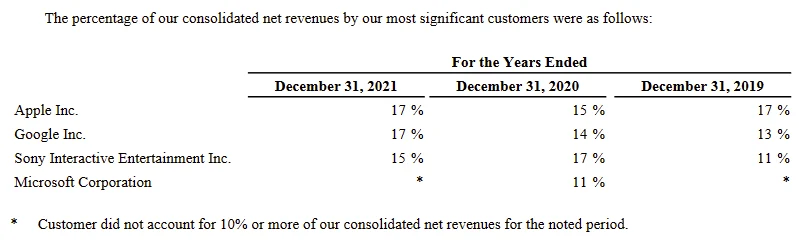
The central revelation of the Activision Blizzard 2022 annual report was the disproportionate relationship between the company and its prospective buyer, Microsoft. Despite Microsoft’s status as a global tech titan and the owner of the Xbox platform, it accounted for less than 10% of Activision Blizzard’s total revenue at the time of the report.
In contrast, Sony—Microsoft’s primary rival in the high-end console space—accounted for a larger share of Activision’s top line, exceeding the 10% threshold that requires specific disclosure in financial filings. Even more telling was the dominance of the mobile sector. The two primary mobile gateways, the Apple App Store and the Google Play Store, combined to represent approximately one-third (33%) of the company’s total revenue.
When aggregating the "Big Four" platforms—Apple, Google, Sony, and Microsoft—they represented 57% of Activision Blizzard’s revenue in 2020. This left a substantial 43% of income originating from "other" sources. This category includes:
- PC Platforms: Specifically Blizzard’s proprietary Battle.net (hosting World of Warcraft, Hearthstone, and Overwatch) and Valve’s Steam.
- Nintendo: Though a major player in hardware, Nintendo accounted for less than 10% of Activision’s revenue, likely due to the hardware limitations of the Switch regarding high-fidelity titles like Call of Duty.
- Regional Partnerships: Revenue from large territories like China (via NetEase at the time) and Southeast Asia.
- Direct-to-Consumer and Advertising: In-game advertising within King’s mobile titles and merchandising.
Chronology: From Independence to the Regulatory Spotlight
To understand the weight of these figures, one must look at the timeline leading up to this analysis.
The King Acquisition (2016)
The seeds of the 2022 revenue structure were sown in 2016 when Activision Blizzard acquired King Digital Entertainment for $5.9 billion. This move was a strategic pivot to insulate the company from the cyclical nature of console releases. By 2022, King’s Candy Crush franchise had become the company’s most consistent "ATM," often outperforming the more volatile console segments.
The Microsoft Merger Announcement (January 2022)
In a move that shocked the global markets, Microsoft announced its intent to acquire Activision Blizzard for $95.00 per share in an all-cash transaction. The deal was framed by Microsoft CEO Satya Nadella as a play for the "Metaverse" and mobile gaming, rather than just a way to bolster Xbox console sales.

The Regulatory Gauntlet (Mid-2022)
By the time Nicholas Lovell published his analysis in August 2022, the Federal Trade Commission (FTC) in the United States, the Competition and Markets Authority (CMA) in the UK, and the European Commission had begun deep-dive investigations into the merger. The revenue data became a focal point for these regulators: if Microsoft was such a small part of Activision’s revenue, would owning the company allow them to unfairly "foreclose" on rivals like Sony, who contributed more to Activision’s bottom line?
Supporting Data: The Rise of Mobile and the "Other" 43%
The data analyzed by Lovell underscores a massive transition in how games make money. The fact that consoles (excluding PC) represent only about one-third of the revenue for a company that owns Call of Duty—the quintessential console shooter—is a testament to the "platform-agnostic" future of gaming.
The Mobile Juggernaut
The 33% revenue share from Apple and Google highlights the success of Call of Duty: Mobile and the King portfolio. Mobile gaming offers a "long-tail" revenue model through microtransactions that traditional $60 or $70 console games struggle to match without significant live-service infrastructure. For Microsoft, the acquisition was less about "winning" the console war against the PlayStation 5 and more about gaining a foothold on the billions of smartphones globally where Xbox has historically had zero presence.
The Strength of PC and Battle.net
The 43% "Other" category is perhaps the most interesting. A significant portion of this is attributed to Blizzard Entertainment’s PC ecosystem. Unlike many publishers who rely on Steam (and pay a 30% platform fee), Blizzard has successfully migrated its audience to Battle.net, a direct-to-consumer platform. This allows the company to retain 100% of its revenue from subscriptions (like World of Warcraft) and in-game purchases, making the PC segment more profitable per user than the console segment.
The Nintendo Factor
The revelation that Nintendo accounts for less than 10% of revenue highlights a missed opportunity that Microsoft frequently cited during the merger hearings. Microsoft argued that by acquiring Activision, they could bring titles like Call of Duty to Nintendo’s 100-million-plus user base, thereby increasing competition rather than stifling it.
Official Responses and Regulatory Stance
The financial disparity between Microsoft and Sony’s contributions to Activision Blizzard became a double-edged sword in the legal arena.
The Microsoft Defense
Microsoft’s legal team argued that it would be "economically irrational" to withhold Call of Duty from Sony’s PlayStation. Given that Sony represented a significantly larger portion of Activision’s revenue than Xbox, Microsoft claimed that cutting off that revenue stream would create a financial hole that the Xbox ecosystem could not easily fill. They positioned themselves as the "underdog" in the console space, using the <10% revenue figure as proof of their limited market power.
The FTC and the "Lina Khan" Doctrine
Under the leadership of Chair Lina Khan, the FTC took a more aggressive stance. As Lovell noted, the FTC moved away from the traditional "Consumer Welfare Standard"—which only looks at whether a deal raises prices for consumers—and toward a broader definition of antitrust harm. The FTC expressed concern that Microsoft could use its control over Activision’s content to dominate the emerging "Cloud Gaming" market, regardless of current revenue percentages on physical consoles.

Sony’s Counter-Argument
Sony Interactive Entertainment (SIE) argued that even if Microsoft kept the games on PlayStation, they could degrade the experience or delay content, eventually forcing users over to the Xbox ecosystem. To Sony, the fact that they were such a large part of Activision’s revenue was proof of how vital the content was to their platform’s survival.
Implications: What This Means for the Future of Gaming
The analysis of Activision Blizzard’s revenue distribution provides a roadmap for where the industry is headed. Several key implications emerge:
1. The De-prioritization of the Console
While consoles remain the "prestige" platform for gaming, they are no longer the primary financial driver for the world’s largest publishers. The future is "cross-play" and "cross-progression." Publishers want their games on every screen—mobile, PC, and console—to maximize the 57% of revenue currently controlled by the platform giants.
2. The Strategic Value of Mobile
For a company like Microsoft, the acquisition of Activision Blizzard was effectively the acquisition of King. By owning Candy Crush, Microsoft instantly becomes one of the largest mobile publishers in the world, bypassing years of failed internal development in the mobile space. This allows them to compete with Apple and Google on their own turf.
3. Subscription Over Sales
The move toward Microsoft’s Game Pass model is a direct response to these revenue charts. If Microsoft only accounts for 10% of a major publisher’s revenue, the only way to increase that share is to change the delivery method. By moving to a subscription model, they aim to capture more of the "Other" 43% and the mobile 33% by offering a unified value proposition across all devices.
4. Regulatory Precedents
The scrutiny of this deal suggests that future M&A activity in the gaming sector will be met with intense resistance. Regulators are no longer looking at just the hardware in the living room; they are looking at data, cloud infrastructure, and mobile app store dominance.
Conclusion
Nicholas Lovell’s observation in August 2022 serves as a reminder that the public perception of the gaming industry often lags behind its financial reality. While gamers focus on the rivalry between Xbox and PlayStation, the balance sheets tell a story of mobile dominance and the rise of independent PC ecosystems. Microsoft’s acquisition was not an attempt to bolster a winning console business, but a desperate and expensive bid to stay relevant in a world where the traditional console—and the revenue derived from it—is no longer the center of the universe. As the industry continues to consolidate, the "Big Four" platforms may find themselves in a struggle not just with each other, but with the very developers who are increasingly finding ways to reach consumers directly.