Jo Kaplan’s ‘The Midnight Muse’ Unravels a Gothic Rock Mystery and the Terrifying Price of Inspiration
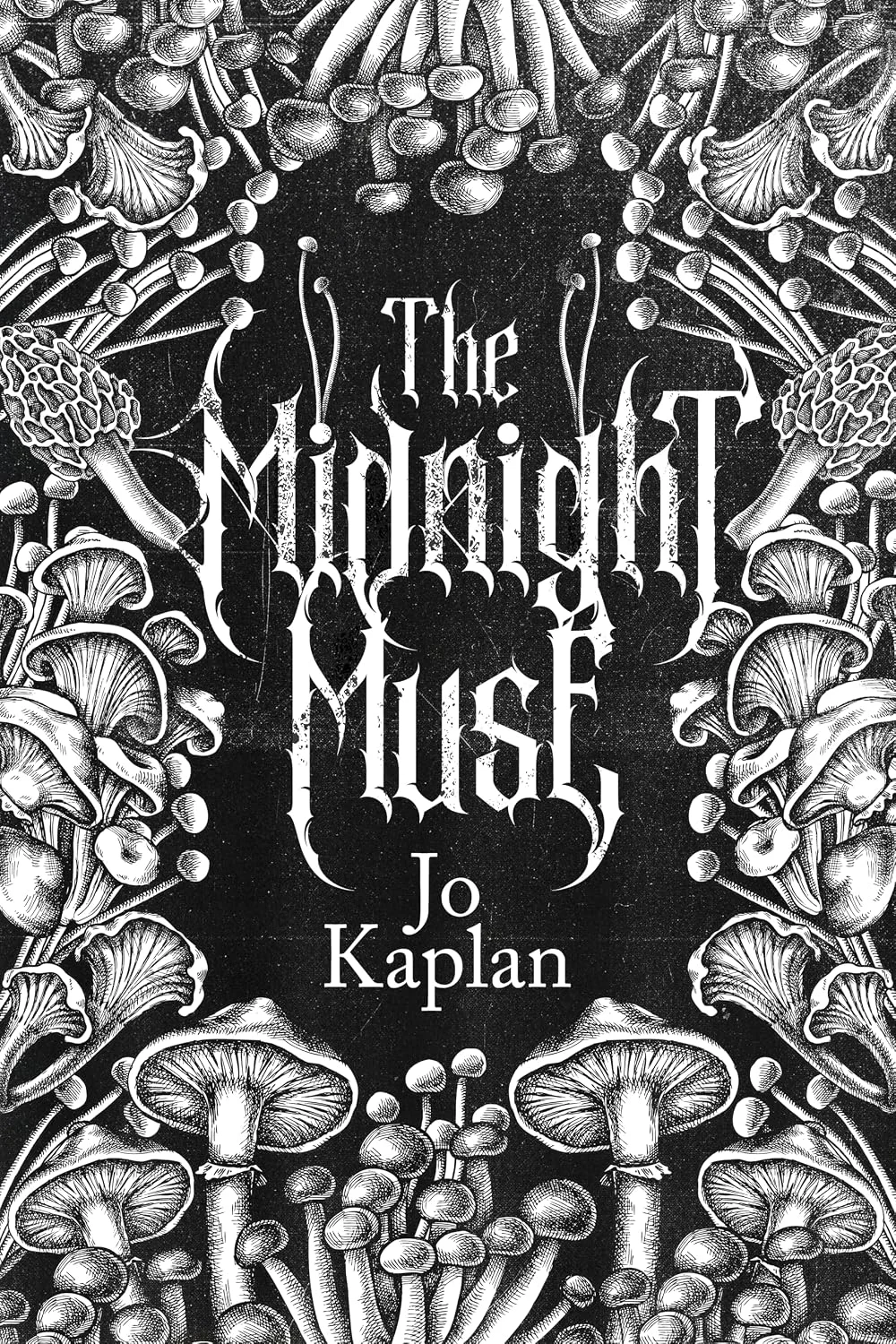
Seattle, WA – In a literary landscape often saturated with conventional narratives, Jo Kaplan’s The Midnight Muse emerges as a chilling and intellectually stimulating horror novel, delving into the sinister undercurrents of artistic creation, rock mythology, and psychological torment. Published by [Publisher Name, if known, otherwise omit or generalize], the novel weaves a complex tapestry of past trauma, present dread, and a blurring reality, centered around the enigmatic cult band Queen Carrion and the mysterious disappearance of its frontwoman, Brynn Werner.
The narrative thrust of The Midnight Muse is ignited by a devastating tragedy: a stampede at a Queen Carrion concert at the infamous Wonder Room, which resulted in the death of a young fan. This calamitous event serves as a dark prelude to the central mystery – the vanishing of Brynn Werner, the band’s visionary singer and songwriter, during a solitary hike in the foreboding Umpqua Forest of Oregon’s Cascade range. Werner, whose evocative Gothic lyrics are not merely decorative but form the very "chorus and kernel" of the novel’s plot, becomes a phantom presence, ventriloquised through interviews, articles, and the haunting memories of her childhood friend and band drummer, Harlow Sorenson. Harlow, alongside her brother and Queen Carrion guitarist, Thorn, are arguably the novel’s true protagonists, their shared, intricate backstory forming a crucial underpinning for a narrative that masterfully intertwines multiple temporal and psychological strands.
Kaplan’s work transcends typical horror tropes, offering a profound exploration of inspiration, obsession, and the insidious nature of unresolved trauma. It challenges readers to question the origins of genius and the potential, terrifying costs of pursuing it, leaving an indelible mark long after the final page is turned.
Chronology of Dread: Tracing Queen Carrion’s Descent
The Midnight Muse meticulously reconstructs a timeline of escalating dread, from the band’s initial rise to the ultimate unraveling of its members’ psyches.
The Rise and Tragic Fall of Queen Carrion
The legend of Queen Carrion began with Brynn Werner, a mesmerizing and deeply enigmatic figure whose gothic sensibilities and poetic lyrics quickly garnered a fervent cult following. Her songwriting, steeped in dark romanticism and existential angst, resonated with a generation hungry for authenticity and intensity. The band’s ascent, though marked by an almost mythical aura, was not without its shadows. Locally, their story became an obsession, drawing comparisons to the tragic mythology surrounding figures like Syd Barrett and Pink Floyd – artists whose brilliance was inextricably linked to their perceived fragility and eventual unraveling.
The first major rupture in Queen Carrion’s trajectory came during a performance at the Wonder Room. What precisely sparked the terror that caused the crowd to surge towards the exits, leading to the fatal trampling of a young fan, remains shrouded in mystery for much of the novel. This cataclysmic event, however, irrevocably cemented Queen Carrion’s reputation as a band not merely talented, but "cursed," their music forever tinged with tragedy and public fascination.
Brynn Werner’s Enigmatic Disappearance
In the wake of the Wonder Room disaster, Brynn Werner embarked on an ambitious project: The Orchid, a concept album intended to be Queen Carrion’s magnum opus. She was reportedly working on the final, crucial song, believing that its completion would propel the band to unprecedented success. To achieve the necessary inspiration, Brynn retreated to the secluded, ancient Umpqua Forest in Oregon. Her journey was framed as a pilgrimage to connect with the elusive "Muse," a spiritual quest to unlock the album’s ultimate potential.
However, Brynn Werner never returned from the Umpqua Forest. Her disappearance, sudden and unexplained, added another layer of chilling mystery to the band’s already dark legacy. The forest, once a source of potential inspiration, became a silent, ominous witness to her vanishing, leaving behind a void that the remaining band members struggled to comprehend.
The Retreat to the Umpqua Forest: A Year Later
A year after Brynn’s vanishing, the surviving members of Queen Carrion — drummer Harlow Sorenson, guitarist Thorn Sorenson, lead guitarist Rhys, cellist Wendy, and bassist Lou — made a collective decision to return to the Umpqua Forest. They rented an isolated Airbnb cabin, seemingly in an attempt to confront the unresolved trauma of Brynn’s disappearance, or perhaps to simply decide the band’s future, which hung precariously in the balance. Accompanying them was Jacqueline, Rhys’s girlfriend, an outsider whose presence subtly amplifies the internal tensions within the group.
The cabin itself, described as "rather sordid," serves as a perfect microcosm for the band’s fractured state. Cut off from all modern communication – phone and GPS signals – their isolation is complete, fostering an atmosphere ripe for psychological unraveling. Each member carries their own baggage: Harlow battles a burgeoning drink problem, a coping mechanism for deep-seated guilt; Wendy yearns for a more stable career as a session musician in Los Angeles; Rhys harbors ambitions for greater creative control within the band, alongside an unspoken longing for Brynn. Jacqueline, often relegated to the stereotypical role of "the guitarist’s girlfriend," chafes under the band members’ distrust, desperate to forge her own identity. This volatile mix of personalities, trapped in a remote setting, sets the stage for the novel’s descent into horror.
Unearthing the Darkness: The Cabin’s Secrets
The true horror begins with the discovery of a trapdoor in the cabin, an innocuous detail that quickly spirals into something far more sinister. Initially, the discovery is met with a mix of dark humor and unease, Thorn quipping, "Haven’t you ever seen Evil Dead?" However, the jest quickly fades as Harlow descends into the darkness, finding not an empty space, but a set of stairs leading to a tunnel. It is here, in the echoing darkness, that she hears it: a voice, alarmingly similar to Brynn’s.
This first encounter establishes the novel’s tone, paving the way for a series of increasingly unsettling events. Figures with "insect-featured" characteristics are glimpsed in the forest; Jacqueline, venturing into the tunnel herself, hears a "faint chewing" and catches sight of an apparently headless figure; Rhys consumes a strange "white fuzz" that appears to be a peculiar fungus. Kaplan masterfully plays with traditional horror "jump scare" expectations, often building tension only to pull back, leaving the reader in a state of unsettling ambiguity. Yet, these moments are merely a prelude to "unrelenting scenes which are not for the squeamish," pushing the narrative into truly disturbing territory and hooking the reader with Kaplan’s intricate storytelling.
Supporting Data: Kaplan’s Masterful Narrative and Thematic Depth
Jo Kaplan’s The Midnight Muse is not merely a sequence of terrifying events; it is a meticulously constructed psychological puzzle, rich with thematic complexity and narrative innovation.
Narrative Complexity and Dislocation
One of the novel’s most profound strengths lies in its audacious narrative structure. Kaplan deftly juggles multiple temporal and perspectival elements, creating a sense of profound dislocation for both characters and readers. Scenes in the Umpqua woods are intercut with entries from the cabin’s visitors’ book, offering glimpses into past horrors experienced by previous guests. Furthermore, the narrative occasionally shifts to the aftermath of the forest events, depicting a disturbed Harlow in what might be a "lunatic asylum," blurring the lines of her current reality. These internal narratives are juxtaposed with external extracts from articles and interviews, revealing the "creepy public obsession" with Queen Carrion, a band now famed "not for their music, not for their talent, but because they are cursed."
This non-linear, fragmented approach skillfully builds an atmosphere of pervasive uncertainty. The reader, much like Harlow, becomes increasingly unsure of what is real, what is memory, and what is hallucination. The strong sense of place in the ancient, foreboding forest is amplified by a growing uncertainty about key events in the characters’ lives, culminating in the chilling resonance of Brynn’s lyric: "The dead collect in low places."
The Muse Reimagined: Inspiration as Obsession
At the heart of The Midnight Muse is a radical reinterpretation of the concept of the "Muse." Brynn Werner initially described her songwriting process in romantic terms, as "a muse whispering in your ear." However, as the narrative unfolds, Kaplan reveals an "ingenious answer" to the spark of creativity that is far more sinister than a mere poetic metaphor. The novel delves into the very essence of inspiration, questioning whether it is a benevolent force or a parasitic entity, demanding an unbearable toll.
The "low places" alluded to in Brynn’s lyrics become literal and terrifying, housing what truly lurks beneath the surface of artistic genius. By the novel’s conclusion, the Muse is stripped of its ethereal, inspirational connotations and re-envisioned as a potent, consuming "force or persona that instils something akin to obsession or mania." This reinterpretation is central to the novel’s horror, suggesting that the most profound artistic expressions might stem from a wellspring of unfathomable darkness.
Psychological Depth and Interpersonal Dynamics
Beyond the supernatural elements, Kaplan crafts a deeply human story rooted in complex psychological dynamics. The "unsettling, even problematic relationship" between Brynn and Harlow, bonded since childhood, forms the emotional core of the novel. Harlow’s profound guilt over an incident that left her brother, Thorn, permanently disfigured adds another layer of personal torment, influencing her perception of events and her increasingly fragile mental state.
The band members themselves are not monolithic figures but individuals grappling with their own ambitions, insecurities, and unresolved conflicts. Wendy’s desire for a stable career, Rhys’s hunger for creative input and Brynn’s affection, and Jacqueline’s struggle for recognition all contribute to the pressure cooker environment in the isolated cabin. These interpersonal tensions are expertly woven into the supernatural unfolding, blurring the lines between external horror and internal psychological breakdown, making the characters’ vulnerabilities as terrifying as any external threat.
Genre Blending and Influences
Kaplan demonstrates a keen awareness of horror and genre conventions, often playing with reader expectations before subverting them. The initial setup, with the isolated cabin and mysterious occurrences, evokes classic horror scenarios like Evil Dead. However, The Midnight Muse quickly moves beyond simple "jump scares," transitioning into more profound psychological and existential dread.
The latter third of the novel is particularly notable for its audacious genre blending, oscillating "between the borders of supernatural fiction and science fiction." This deliberate ambiguity, where both the reader and Harlow are left "unsure about what is happening," amplifies the sense of estrangement and uncertainty. While some moments, such as the discovery of decades-old events, might evoke comparisons to popular culture phenomena like Stranger Things, Kaplan ultimately pivots towards a "much more interesting, even metaphysical, focus," demonstrating an originality that transcends mere homage. The novel ingeniously starts by echoing rock myths of possession and identity, where Brynn embodies a "gothic construct" akin to David Bowie’s Ziggy Stardust, only to conclude with the very concept of "Queen Carrion" being consumed and redefined by an entirely different, terrifying force.
Critical Reception and Authorial Intent
While The Midnight Muse is presented in the original context as a review, its enthusiastic tone and detailed analysis allow us to infer a strong critical reception and Kaplan’s masterful authorial intent.
Inferred Critical Acclaim and Genre Impact
Kaplan’s work, as presented, is hailed for its "powerful narrative" and "skilful backstory," indicating a high level of literary craftsmanship. The "major strength" of its structural dislocation and its "ingenious answer" to the nature of creativity suggest a novel that is both compelling and intellectually stimulating. Publishers, in their promotional materials, aptly describe the book as an "ominous spiral of psychological torment," a descriptor that the novel evidently delivers upon with chilling precision. It is clear that The Midnight Muse is poised to be recognized as a significant contribution to contemporary psychological horror, offering a fresh perspective on well-trodden tropes. The narrative’s ability to transition from subtle unease to "unrelenting scenes which are not for the squeamish" without sacrificing its intellectual depth is a testament to Kaplan’s skill in navigating the genre’s demands.
Author’s Craft and Thematic Depth
Kaplan’s authorial intent appears to be multifaceted: to craft a genuinely terrifying experience while simultaneously exploring profound philosophical questions about art, identity, and the human psyche. Her ability to weave together disparate narrative threads – the band’s history, the current events in the forest, and Harlow’s fragmented memories – into a cohesive and compelling whole speaks volumes about her command of storytelling. Even Brynn, who is never seen in "real time" as a character, remains a potent, almost spectral presence, testament to Kaplan’s character development through indirect means. The novel’s cunning ending, which "jettisons and reinterprets the concept/persona of the Muse," demonstrates Kaplan’s ambition to challenge conventional understandings and leave readers with lingering, unsettling questions. Her commitment to maintaining a sense of "estrangement" and uncertainty throughout the narrative showcases a sophisticated understanding of psychological horror, where the most terrifying monsters are often those that reside within the mind or blur the lines of reality itself.
Implications: The Lingering Echoes of the Muse
The Midnight Muse leaves a lasting impression, prompting readers to contemplate the profound implications of its narrative long after the final page.
The Enduring Mystery of Creativity
The novel’s most significant implication lies in its audacious re-examination of artistic creativity. It challenges the romanticized notion of the Muse as a benevolent, inspiring force, instead presenting it as something potentially ancient, demanding, and utterly terrifying. Kaplan forces us to confront a chilling question: What truly sparks genius? Is it a divine gift, a deep-seated psychological drive, or something far more sinister – an entity that whispers not just inspiration, but obsession and mania? The novel suggests that the pursuit of profound artistic expression might come at an unbearable cost, leading to psychological unraveling, physical danger, and even the loss of self. It provokes a deep reflection on whether "such works might be worth the torment and danger in creating them."
The Legacy of Queen Carrion and Cursed Artistry
Queen Carrion’s story, as depicted in The Midnight Muse, becomes a cautionary tale about the dark side of fame and the public’s morbid fascination with "cursed" artists. The band’s notoriety stemming "not for their music, not for their talent, but because they are cursed" mirrors real-world rock mythology, where the tragic lives of musicians often overshadow their artistic output. The novel leaves readers pondering the fate of The Orchid, the potentially "great unfinished album" that Brynn Werner was creating before her disappearance. Its incompleteness, tinged with Brynn’s tragic fate and the band’s subsequent descent into horror, ensures its legendary status within the novel’s universe. This element serves as a powerful metaphor for the allure of the unknown and the enduring fascination with what might have been, particularly when shrouded in mystery and dread.
A New Voice in Contemporary Horror
Jo Kaplan’s The Midnight Muse solidifies her position as a compelling new voice in contemporary horror. By expertly blending psychological torment, supernatural dread, and elements of science fiction, she moves beyond formulaic scares to deliver a nuanced, thought-provoking, and deeply unsettling experience. The novel’s ability to weave intricate character backstories with a propulsive, genre-bending plot showcases a significant talent for storytelling. Its ultimate implication is its success in prompting readers to reflect on the boundaries of reality, the nature of perception, and the terrifying, often hidden, forces that might shape human experience and creative endeavors. The Midnight Muse is a novel that will resonate deeply with those who appreciate horror that challenges the mind as much as it chills the blood, leaving an indelible mark on the landscape of modern speculative fiction.