
Prosper Ifeanyi’s "Sometimes it gets dark in here, I need your eyes" Illuminates Uncanny Magazine Issue Seventy
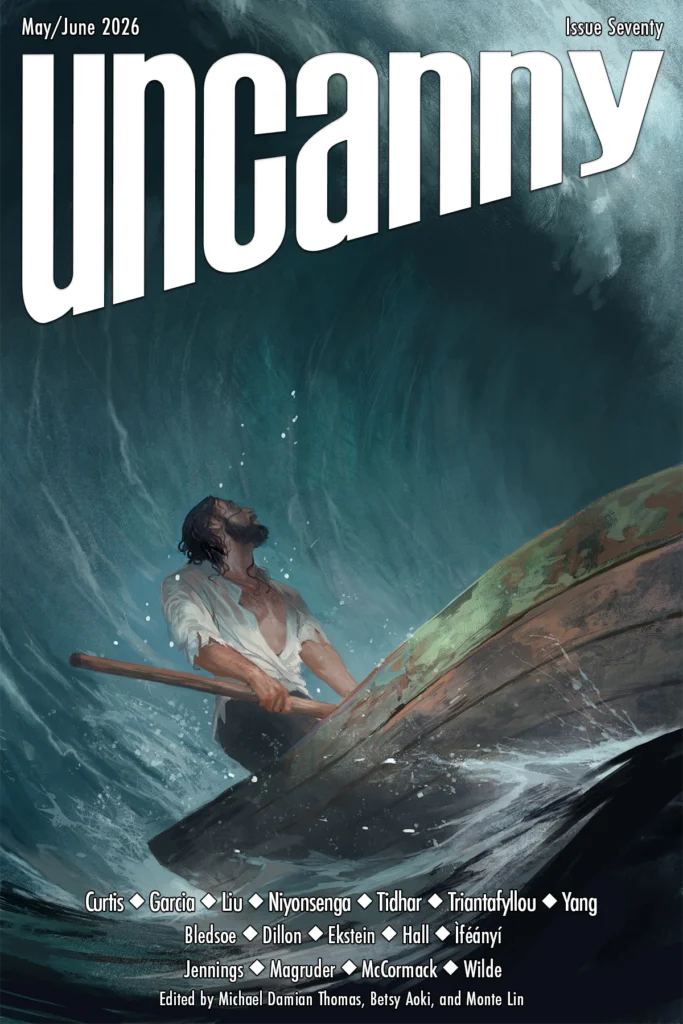
LAGOS, NIGERIA / [Current Date] – In a significant moment for contemporary poetry, Nigerian writer Prosper Ifeanyi has captivated readers and critics alike with his latest poem, "Sometimes it gets dark in here, I need your eyes," featured prominently in the highly anticipated Uncanny Magazine Issue Seventy. The evocative piece, a concise yet profound exploration of introspection, memory, and the human condition, solidifies Ifeanyi’s reputation as a burgeoning voice in the literary world, particularly within the speculative arts landscape that Uncanny Magazine champions.
The publication marks a notable milestone for Ifeanyi, whose work consistently garners attention for its raw emotional honesty and intricate metaphorical layering. Appearing in a venue renowned for its commitment to diverse and innovative storytelling, Ifeanyi’s poem offers a hauntingly beautiful counterpoint to the issue’s broader speculative fiction narratives, underscoring the enduring power of poetry to articulate the ineffable.
The Poetic Landscape of Uncanny Magazine Issue Seventy
Uncanny Magazine, co-founded by Lynne M. Thomas and Michael Damian Thomas, has established itself as a multi-award-winning digital magazine of science fiction and fantasy, known for publishing "beautiful, provocative fiction and poetry from a diverse range of voices." Its seventieth issue continues this tradition, presenting a curated selection of stories, essays, and poems that challenge conventional boundaries and invite readers into new realms of thought and emotion.
The inclusion of poetry like Ifeanyi’s is not merely an aesthetic choice but a deliberate curatorial decision that reflects Uncanny‘s broader editorial philosophy. By integrating poetry, the magazine enriches the reader’s experience, demonstrating how poetic expression can resonate with, amplify, and even expand upon the themes typically explored in speculative fiction – themes of identity, otherness, transformation, and the unknown. Ifeanyi’s poem, with its deeply personal yet universally resonant imagery, perfectly embodies this intersection, offering a lyrical journey into an interior world as vast and mysterious as any distant galaxy or magical realm.
A Deep Dive into "Sometimes it gets dark in here, I need your eyes"
Ifeanyi’s "Sometimes it gets dark in here, I need your eyes" is a masterclass in compressed emotion and evocative imagery. Across its 192 words, the poem unfurls a complex tapestry of vulnerability, self-perception, and a longing for understanding. It begins with an immediate plea for external light amidst internal gloom: "Sometimes it gets dark in here, I need your eyes / To hollow it down for me." This opening sets a tone of intimate confession, inviting the reader into a private space where the speaker grapples with profound existential questions.
The poem delves into the speaker’s consciousness, exploring the nature of memory and legacy: "My blood is sanguine, / My heart, so steep, I imagine what it means to be / Remembered this way." The juxtaposition of "sanguine" (optimistic, but also blood-red) with a "steep" heart suggests a powerful, perhaps overwhelming, internal landscape. The desire to be "remembered this way" hints at a self-awareness of one’s own intense internal fire, which is metaphorically depicted as "A dancing fire hatching / Itself into a conflagration." This imagery suggests both creation and potential destruction, a powerful internal force that is both beautiful and formidable.
A recurring theme of bodily disconnection and identity surfaces as the speaker questions, "I do not believe that I / Somehow outgrew this body, because how else / Do I explain this brittle dream I keep on having? / The one where I am a flaneur, & loneliness drapes / Every flat-footed dance I make." Here, Ifeanyi introduces the figure of the flaneur – an observer, a wanderer – but imbues it with a sense of "loneliness" and "flat-footed" awkwardness, contrasting with the typical detached elegance associated with the archetype. This dream sequence underscores a persistent sense of alienation or discomfort within one’s own skin, a common thread in contemporary discussions of identity and belonging. The speaker’s declaration, "I am incandescent / & sometimes I let the fire quieten inside me a bit," reveals a duality: immense internal energy balanced by a conscious effort to manage or contain it, suggesting a delicate equilibrium between passion and self-preservation.
The poem then shifts its gaze outwards, albeit through the filter of imagination and internal processing. "The weathermen report that the lightning forked / Its way through the ribcage of the clouds & I think / I imagined for a bit the eyes of my brothers outside / Eyes filled with heaven, body torqued into graceful / Etchings—the ghost of moonshine & all that white / Emptiness." This passage is rich with sensory detail and powerful metaphor. The external drama of a lightning storm mirrors an internal turbulence, yet the speaker’s focus drifts to an idealized vision of "brothers," their eyes "filled with heaven" and bodies "graceful." This vision is tinged with melancholy, described as "the ghost of moonshine & all that white / Emptiness," suggesting either an unattainable ideal, a past memory, or a longing for connection that is ultimately unfulfilled or spectral.
The poem’s penultimate lines bring a stark contrast between this internal longing and an observed, perhaps remembered, external reality: "Down, with all that laying, the tablecloth, / The spoons, candlelight, mars, sunglow, crushed / Into paste, laughter now pours from their sunburnt / Faces." This vivid scene of domesticity and celebration, complete with "sunburnt faces" and pouring "laughter," stands in sharp relief to the speaker’s earlier introspection and loneliness. The phrase "crushed / Into paste" is particularly striking, implying a violent erasure or transformation of these idyllic elements, perhaps by the weight of external joy, or by the speaker’s own internal processing of them.
The poem concludes with a poignant, almost accusatory series of questions directed at an unspecified "you": "How can you, in this trying time, administer / Fine prints of sorrow, crocuses & shattered sprigs? / How did you learn to hurt like that empty music clef?" These lines infuse the poem with a sense of betrayal or deep-seated pain. The "fine prints of sorrow" and "shattered sprigs" are delicate, almost beautiful images of grief, while the "crocuses" hint at fragile beginnings or false hope. The final metaphor, "empty music clef," is particularly potent. A music clef dictates the pitch of notes, but an "empty" one suggests a fundamental absence of melody, an unplayed potential, or a profound silence at the core of the "hurt." It questions the source of pain, framing it as a learned, precise, and deeply impactful act.
Throughout "Sometimes it gets dark in here, I need your eyes," Ifeanyi masterfully employs free verse, allowing the lines to breathe and carry their emotional weight without the constraint of strict meter or rhyme. His use of vivid, sometimes surreal, imagery creates a dreamlike atmosphere, enhancing the poem’s exploration of the subconscious. The poem’s strength lies in its ability to be simultaneously intensely personal and broadly relatable, touching on universal themes of isolation, self-discovery, and the complex interplay between inner experience and the external world.
The Ascent of Prosper Ifeanyi: A Chronicle of Literary Promise
Prosper Ifeanyi’s journey to literary prominence is a testament to his persistent dedication and unique artistic vision. Hailing from Lagos, Nigeria, Ifeanyi brings a distinct cultural lens to his work, enriching the global tapestry of contemporary poetry. His background undoubtedly informs the nuanced emotional landscapes he creates, often weaving universal human experiences with subtle echoes of his Nigerian heritage.

Ifeanyi is currently an MFA candidate at the University of Alabama’s creative writing program, a testament to his commitment to honing his craft through rigorous academic and artistic development. This academic pursuit provides a structured environment for growth, allowing him to refine his poetic voice and engage with critical literary theory.
Before his appearance in Uncanny Magazine, Ifeanyi had already garnered significant recognition within the literary community. His poems have been published in a host of highly respected literary journals, including Prairie Schooner, Transition, Plume, Black Warrior Review, North American Review, Shenandoah, Muzzle Magazine, and RHINO, among others. These publications are not merely entries on a CV; they represent an ongoing endorsement from some of the most prestigious gatekeepers of contemporary literature. Each journal has a distinct editorial identity and a reputation for publishing high-quality, impactful work, indicating the versatility and broad appeal of Ifeanyi’s poetic style.
His burgeoning career has also seen him nominated for several significant awards, including Best New Poets, the Pushcart Prize, and Best of the Net. These nominations are critical markers of an emerging writer’s impact, signaling that his work is not only published but also recognized by editors and peers as among the best and most promising in the field. The Pushcart Prize, in particular, is one of the most celebrated literary awards in the United States, honoring the best poetry, short fiction, and essays published in small presses. Such recognition firmly places Ifeanyi among the rising stars of contemporary poetry.
Ifeanyi’s trajectory demonstrates a consistent upward arc, characterized by a steady stream of publications in reputable venues and critical acclaim. His work often delves into themes of identity, memory, spirituality, and the complexities of human emotion, rendered with a lyrical precision and profound introspection that resonate deeply with readers. As a Nigerian writer gaining international recognition, Ifeanyi also contributes significantly to the growing visibility and influence of African voices in global literature, challenging preconceived notions and offering fresh perspectives.
"Official" Endorsement: Uncanny Magazine‘s Curatorial Vision
The decision by Uncanny Magazine to publish "Sometimes it gets dark in here, I need your eyes" serves as a powerful endorsement of Prosper Ifeanyi’s artistic merit and the poem’s profound relevance. Uncanny is highly selective, publishing only a fraction of the submissions it receives, which means that every piece featured has undergone a rigorous editorial process and is deemed to meet the magazine’s exceptionally high standards for quality and innovation.
For a poet like Ifeanyi, having his work appear in such a prestigious platform provides invaluable exposure to a diverse and engaged readership that spans the literary and speculative fiction communities. It signals to other editors, critics, and readers that Ifeanyi is a poet whose work demands attention and who is capable of producing pieces that transcend genre boundaries. This publication can significantly bolster his professional profile, opening doors to further opportunities, including broader readership, potential collections, and additional accolades.
Uncanny Magazine‘s curatorial vision extends beyond simply publishing good writing; it actively seeks to foster and amplify unique voices. By featuring Ifeanyi’s work, Uncanny reinforces its commitment to literary excellence and its role as a tastemaker in contemporary speculative arts. The magazine recognizes that poetry, even when not explicitly fantastical, can evoke a sense of the uncanny – the strange, the unsettling, the profoundly moving – which aligns perfectly with its editorial ethos. Ifeanyi’s poem, with its exploration of internal darkness, brittle dreams, and spectral visions, certainly taps into this sense of the uncanny, making it a fitting inclusion for the issue.
Implications: The Broader Tapestry of Contemporary Poetry and Speculative Arts
The publication of "Sometimes it gets dark in here, I need your eyes" carries significant implications for several facets of the literary world. Firstly, it further enriches the landscape of contemporary Nigerian literature. As more writers like Ifeanyi gain international recognition, they contribute to a vibrant and evolving narrative that challenges monolithic representations and showcases the diverse creative expressions emerging from the continent. His work joins a growing chorus of African voices that are reshaping global literary discourse, bringing unique cultural insights and universal human experiences to the forefront.
Secondly, Ifeanyi’s poem exemplifies the increasing fluidity between traditional literary poetry and the speculative arts. For decades, a perceived divide existed, but platforms like Uncanny Magazine are actively bridging this gap, demonstrating that speculative themes, imagery, and sensibilities can profoundly enhance poetic expression, and conversely, that deeply personal poetry can find a resonant home within speculative contexts. Ifeanyi’s exploration of internal worlds, dream logic, and elusive realities aligns seamlessly with the imaginative breadth often found in speculative fiction, proving that emotional depth and genre-bending innovation are not mutually exclusive.
Furthermore, this publication underscores the continued vitality and relevance of poetry in an era often dominated by prose and visual media. Poems like Ifeanyi’s remind us of poetry’s unique capacity to condense complex emotions and ideas into potent, memorable forms. In a world grappling with uncertainty and rapid change, the introspective and questioning nature of "Sometimes it gets dark in here, I need your eyes" offers readers a space for reflection, empathy, and connection, validating their own internal struggles and triumphs.
The poem’s exploration of vulnerability, the search for identity, and the bittersweet nature of human connection resonates deeply with modern audiences. It speaks to a collective experience of navigating internal landscapes while observing, and sometimes longing for, external realities. The enduring questions posed at the poem’s conclusion – about the nature of sorrow and the origins of pain – ensure its lasting impact, inviting readers to ponder these profound mysteries long after they have finished reading.
Conclusion
Prosper Ifeanyi’s "Sometimes it gets dark in here, I need your eyes" in Uncanny Magazine Issue Seventy is more than just a poem; it is a profound literary statement. It represents a significant moment for an emerging writer whose talent is now being showcased on a global stage, an affirmation of Uncanny Magazine‘s discerning editorial vision, and a testament to the enduring power of poetry to articulate the deepest human experiences. As Ifeanyi continues his journey as an MFA candidate and an increasingly recognized voice, his work promises to further enrich the literary world with its unique blend of vulnerability, incandescence, and evocative power, solidifying his place as a poet to watch in the years to come.



Leave a Comment