The Paradoxical General: George B. McClellan’s Ill-Fated Command of the Union Army
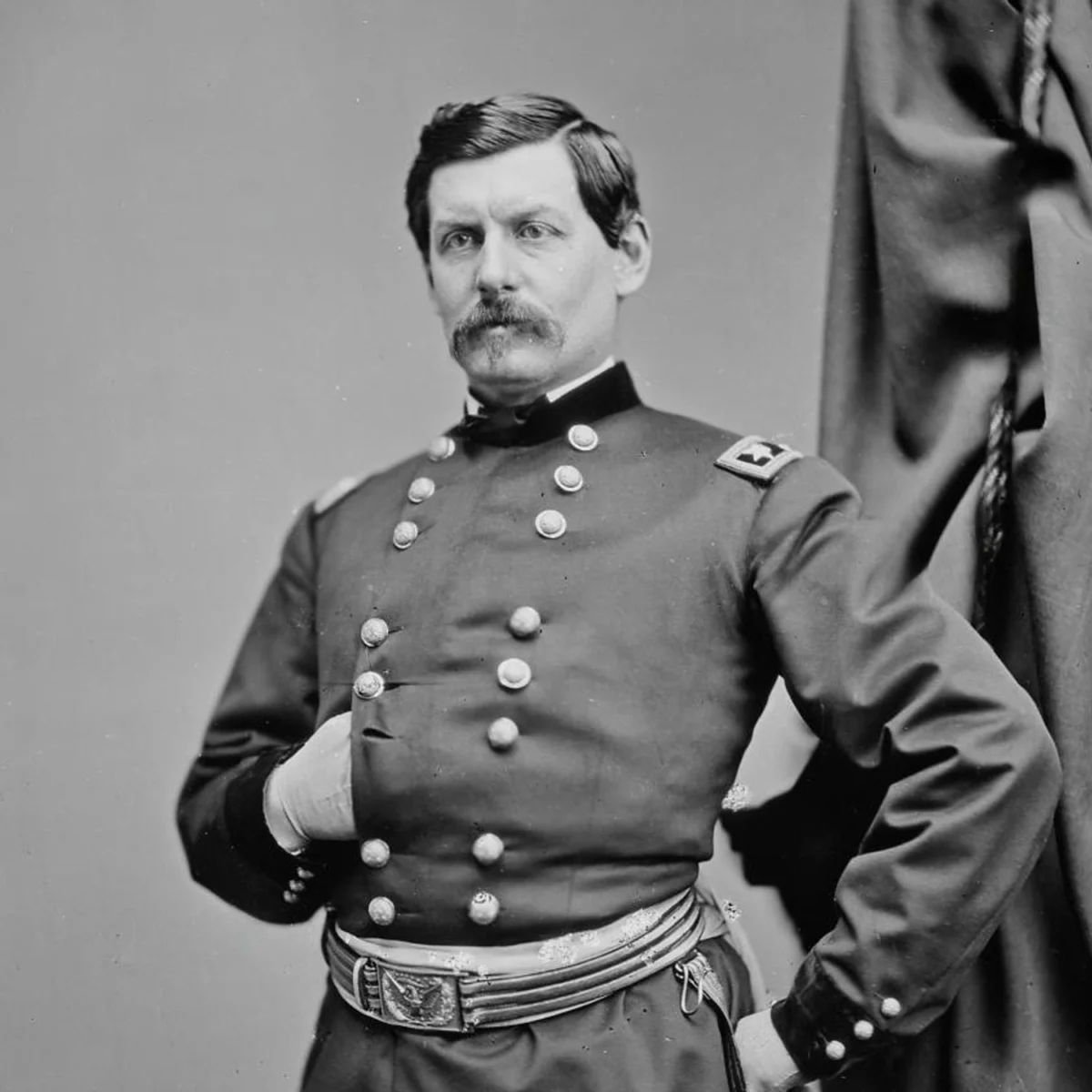
Washington D.C. – George B. McClellan (1826-1885), an American army officer and engineer, remains one of the most enigmatic and debated figures of the American Civil War. Elevated to the esteemed position of Commanding General of the United States Army in 1861 and concurrently serving as the Major General of the Army of the Potomac from 1861-1862, McClellan was a brilliant organizer and beloved by his troops. Yet, his tenure was consistently marred by an almost pathological caution and an unwavering reluctance to engage the enemy decisively, earning him the enduring criticism for his failure to effectively utilize the formidable army he himself had forged.
Often cited as one of the worst generals of the American Civil War, a more nuanced perspective suggests he was less inherently incompetent and more fundamentally miscast. Had the Lincoln Administration retained McClellan in an administrative or logistical capacity, his formidable organizational talents would undoubtedly have shone. However, his character, deeply shaped by a life of early, effortless success, rendered him incapable of embracing the calculated risks indispensable for a successful field commander in the brutal crucible of civil war.
Chronology of a Controversial Career
Early Life and West Point Foundations
Born on December 3, 1826, in Philadelphia, George Brinton McClellan was the son of George and Sophia McClellan, a family that deeply valued education. His early intellectual precocity was evident; he attended an ‘infant school’ at five, studied under Sears Cook Walker for four years, and received private classical tutoring from ages ten to thirteen, mastering Latin and French. Initially destined to follow his physician father into medicine, a financial strain within the family, preventing simultaneous university education for both George and his older brother John, altered his path.
At the tender age of 15, McClellan secured acceptance to the prestigious West Point Military Academy, an exception to the age requirement of 16, reportedly through his father’s direct appeal to the Secretary of War and potentially President John Tyler’s intercession. Here, his academic brilliance was undeniable, though scholar Stephen W. Sears notes that "Cadet McClellan sometimes worked only as hard as was necessary to get by" (5), a testament to his natural aptitude. He graduated second in his class in 1846 at the precocious age of 19, immediately signaling a promising military future that led him directly to the front lines of the Mexican-American War.
Mexican-American War and the Inter-War Period: A Crucible of Talent
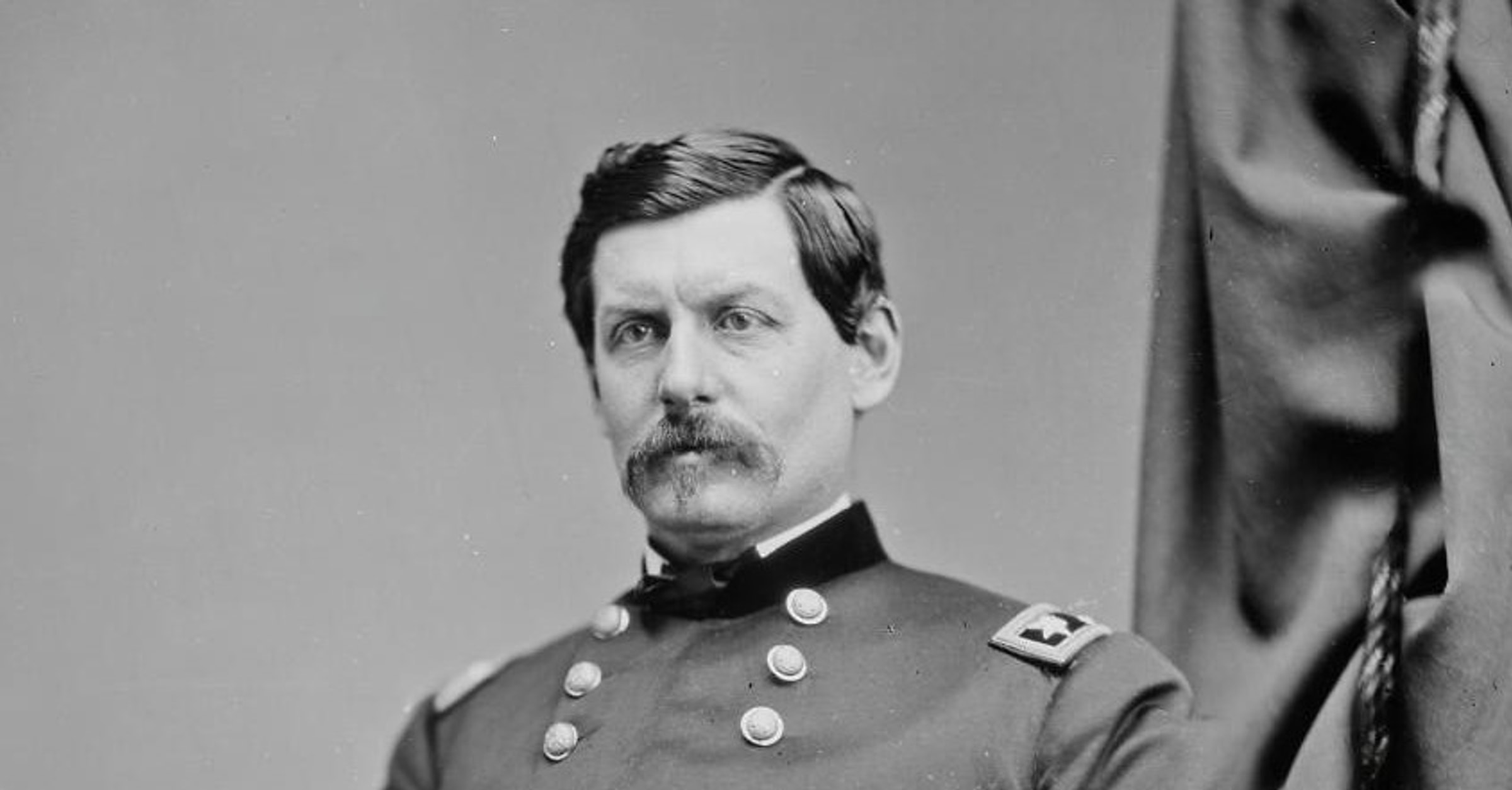
McClellan arrived in Mexico with a keen desire to prove himself in battle, but his initial experience was a harsh introduction to the realities of war, as he contracted malaria and dysentery, leading to a month-long hospitalization. Upon recovery, he distinguished himself within the U.S. Army Corps of Engineers, meticulously constructing roads and bridges, and conducting vital combat reconnaissance for General Winfield Scott. He saw action at key engagements including Contreras, Churubusco, and Chapultepec, earning two brevet promotions to lieutenant and then captain.
His time under Scott proved invaluable, offering firsthand lessons in tactics, particularly the efficacy of flanking movements and the strategic advantage of well-executed sieges over costly frontal assaults. His proficiency in Latin facilitated an easy mastery of Spanish, making him fluent by the war’s end. Returning to West Point, he served as an engineering instructor, a role that further honed his technical expertise.
The years between the Mexican-American War and the Civil War were formative. In 1852, he joined Captain Randolph B. Marcy’s expedition to locate the source of the Red River in Arkansas, followed by extensive surveying duties in 1853 to identify the optimal route for the nascent transcontinental railroad. These assignments, while demonstrating his engineering acumen, also revealed a burgeoning characteristic that would define his later command: an unshakeable belief in his own correctness, a tendency to overestimate his own knowledge relative to others, and a marked disdain for authority figures who dared to contradict him.
His linguistic skills (French fluency), engineering prowess, and political connections (his father’s friendship with Scott) led to a prestigious assignment in 1855: observing European military innovations during the Crimean War. He meticulously studied artillery, cavalry, and siege warfare, observations that would later be published in a manual on cavalry tactics and influence his strategies during the 1862 Peninsula Campaign. This period also saw his design of the iconic "McClellan Saddle," which remained standard issue for the U.S. Army until 1942.
In 1857, McClellan resigned his commission to transition into a highly successful civilian career, first as chief engineer for the Illinois Central Railroad, then as president of the Ohio and Mississippi Railroad by 1860. This period of personal and professional triumph was capped by his marriage in 1860 to Ellen Mary Marcy, after a previous refusal in 1855. His life, by the eve of the Civil War, was an unbroken chain of achievements, fostering a deep-seated aversion to anything resembling failure.
Command in Northwestern Virginia: Unearned Heroism
At the outbreak of the Civil War, despite his impressive engineering background and theoretical knowledge, McClellan lacked practical experience commanding large formations in combat. Yet, his manual on cavalry tactics and reputation as an engineer deeply impressed Ohio Governor William Dennison, leading to his commission as a major general in April 1861 and command of the Ohio militia.
His first assignment was to secure the pro-Union region of Northwestern Virginia against secessionist forces. The initial engagement, the Battle of Philippi (often dubbed the "Philippi Races"), occurred on June 3, 1861. McClellan, headquartered in Cincinnati, dispatched Brigadier General Thomas A. Morris to confront largely inexperienced Confederate recruits. The Confederates, having neglected to post pickets, were utterly surprised by the Union artillery barrage and fled the field in disarray. This swift, almost bloodless victory, though orchestrated by a subordinate and lacking McClellan’s direct involvement, was instantly seized upon by the Northern press, elevating "Little Mac" to national hero status.
The subsequent Battle of Rich Mountain on July 11, 1861, further solidified this unearned reputation. The victory was largely secured by Colonel William S. Rosecrans’s flanking maneuver. McClellan, however, demonstrated the same crippling caution that would later define his command. Historian Stephen Budiansky vividly describes the scenario: "The plan was to draw off the defending Confederates with a flanking attack and then follow up by striking on their front with two brigades that McClellan remained behind to command. Overestimating the enemy force by a factor of four, and hearing sounds of battle not quite where he expected, McClellan decided the flank attack had failed, and did nothing" (43). Rosecrans’s independent success dislodged the rebels, but McClellan’s inaction allowed many to escape. Jacob Cox, one of McClellan’s brigade commanders, critically observed, "The Rich Mountain affair, when analyzed, shows the same characteristics which became well known later. There was the same overestimate of the enemy, the same tendency to interpret unfavorably the sights and sounds in front, the same hesitancy to throw in his whole force when he knew that his subordinate was engaged" (43).
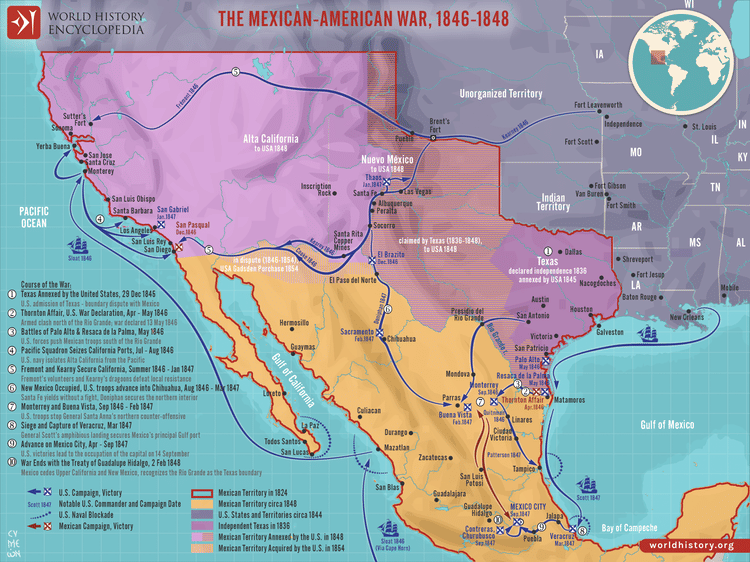
Despite his detachment and hesitancy, McClellan claimed full credit for the victory, and the Northern press continued its adulation. These early, seemingly effortless triumphs dangerously fueled the Northern belief that the Confederate army was weak and that the war would be brief, while simultaneously reinforcing McClellan’s own conviction in his infallible leadership.
The Army of the Potomac and General-in-Chief: A Nation’s Hope
The illusion of a quick victory was shattered by the Union’s decisive defeat at the First Battle of Bull Run (First Manassas) on July 21, 1861, under General Irvin McDowell. The demoralizing rout prompted President Lincoln to summon McClellan, replacing McDowell as commander on July 25, 1861. McClellan, convinced he was divinely chosen to save the Union, embarked on what would become his greatest administrative achievement.
In less than five months, McClellan transformed the fragmented, demoralized, and undisciplined Division of the Potomac into the professional, highly motivated fighting force that would become the Army of the Potomac. He instituted rigorous daily drills, meticulously planned and oversaw the construction and garrisoning of forty forts around Washington, D.C., establishing a formidable defensive perimeter. His personal charisma, his evident commitment to his troops, and his regular, morale-boosting reviews endeared him deeply to the men, who affectionately called him "Little Mac." This revitalized army attracted an influx of recruits, swelling its ranks from 50,000 to an impressive 168,000 men between July and November 1861.
With the resignation of General-in-Chief Winfield Scott in October for health reasons, McClellan, on November 1, 1861, was appointed General-in-Chief of all Union armies. He now commanded the largest armed force in U.S. history, and the nation held its breath, awaiting his decisive move.
McClellan v. The United States: The Paralysis of Perfection
The anticipated offensive, however, never materialized. McClellan’s inherent caution, coupled with flawed intelligence from his Chief of Secret Service, Allan Pinkerton, led him to consistently inflate the estimated numbers of Confederate soldiers. He insisted on endless drills and further training, delaying any advance. The deeper issue lay within McClellan himself: his life had been a series of successes, and he could not countenance the thought of risking that pristine record through potential defeat.
As 1862 dawned, impatience mounted across the Union. President Lincoln, his cabinet, Congress, the Northern press, and the general public grew increasingly exasperated by the massive, well-trained army’s continued inaction. The "Radical Republicans" and other abolitionists began to openly question McClellan’s loyalties, suspecting a lack of commitment to crushing the rebellion. McClellan, meanwhile, did little to assuage these concerns, his contempt for superiors and subordinates alike becoming legendary. As Budiansky notes, "His contempt for superiors and subordinates alike never wavered… as general-in-chief of the army and commander of the Army of the Potomac, his abuse of colleagues and administration officials, even the President himself, never let up… [He believed everyone but himself was incompetent]… even the smallest detail could never be trusted to anyone but himself. ‘Everything here needs the hand of the master,’ he wrote his wife" (41-42).
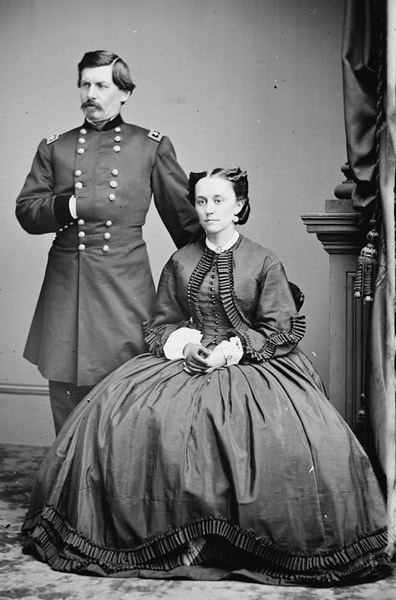
McClellan’s primary justification for delay was the need to meticulously plan a campaign to outflank Confederate General Joseph E. Johnston’s army, which he believed held superior numbers and artillery positions near Washington, D.C. The growing criticism reached a fever pitch when Johnston finally withdrew south, burning his supplies. Inspectors arriving at the abandoned Confederate positions made a humiliating discovery: the "cannon" McClellan had so feared were nothing more than logs painted black, derisively termed "Quaker Guns." With his excuses evaporated, Lincoln, on March 11, 1862, removed McClellan as General-in-Chief, leaving the position open rather than appointing a direct replacement, and explicitly ordered him to move his army south.
The Peninsula Campaign: A Flawed Masterpiece
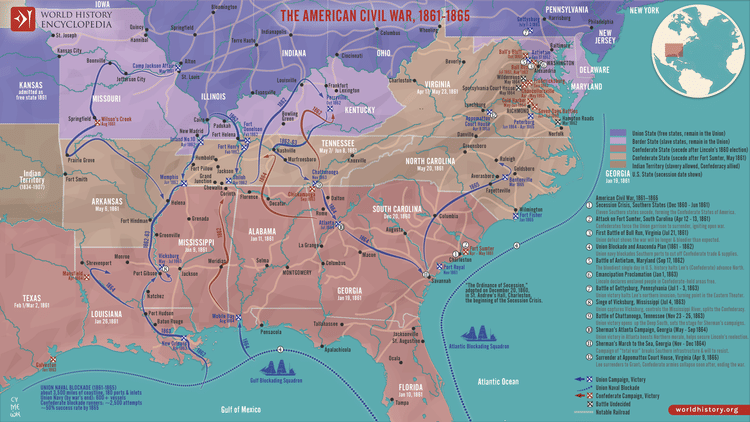
On March 17, 1862, McClellan finally embarked on the Peninsula Campaign, a grand strategic design to advance up the Virginia Peninsula and capture the Confederate capital of Richmond. However, from the moment his forces landed at Fort Monroe, the campaign was plagued by his characteristic mismanagement. Budiansky highlights the systemic failures: "The moment McClellan’s force went ashore, the woeful inadequacy of existing systems for everything else began to tell with a vengeance. Uncoordinated attacks fell apart, wagons clogged roads for days, units went astray for lack of basic topographic information or cavalry guides to lead the way or post directional signs at crossroads" (49).
McClellan’s leadership style, rooted in 18th-century command principles, proved disastrous for a modern army. He lacked a robust general staff to coordinate operations, believing all crucial details must remain in his sole hand, communicated personally or via a small retinue of aides. This centralization of command led to a critical lack of operational coordination, especially "when in actual contact with the enemy" (51). After a month-long, unnecessary siege of Yorktown, the Confederates again slipped away. McClellan’s forces, lacking coordinated supply and transport, were unable to pursue effectively.
Despite advancing within four miles (6.4 km) of Richmond and engaging in the series of Seven Days’ Battles (June 25 – July 1, 1862), McClellan’s ingrained caution prevented him from seizing decisive opportunities. He consistently overestimated enemy strength, failed to commit his full force, and ultimately retreated, blaming everyone but himself for the campaign’s abject failure.
Antietam: A Missed Opportunity
During McClellan’s floundering on the Peninsula, Lincoln appointed Major General John Pope to command the Army of Virginia, ordering him to advance on Richmond from the northeast. McClellan, instructed to support Pope, again delayed, contributing significantly to Pope’s crushing defeat at the Second Battle of Bull Run (Second Manassas) from August 28-30, 1862.
In the ensuing crisis, with Confederate General Robert E. Lee launching his Maryland Campaign on September 4, Lincoln, despite significant objections from his cabinet, reluctantly reinstated McClellan to command the defenses of Washington and pursue Lee. The two armies clashed near Antietam Creek, Sharpsburg, Maryland, on September 17, 1862, in what became the single bloodiest day in American military history.
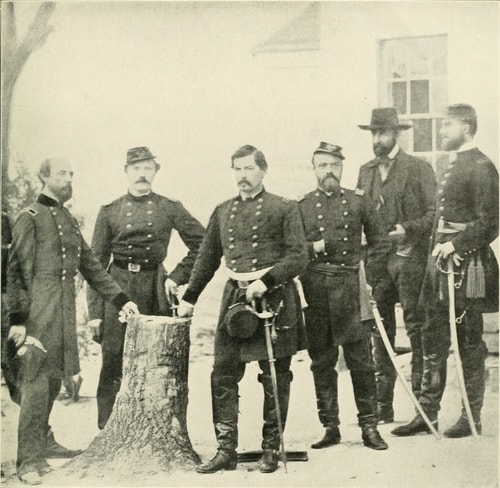
Historian Alan Taylor describes McClellan’s tactical approach: "McClellan launched poorly coordinated attacks, allowing Lee to shift reserves to receive each blow on different parts of his line" (216). True to form, McClellan dramatically overestimated Lee’s numbers, believing he faced over 50,000 Confederates when Lee commanded just over 30,000. His strategy was to launch piecemeal attacks, preserving portions of his army should any single assault fail. This cautious, sequential approach prevented a decisive breakthrough against Lee’s numerically inferior, but expertly handled, forces.
The fighting on September 17 was brutal, but McClellan refused to press his advantage. As Taylor recounts, "On September 18, Lee refused to retreat, but McClellan declined to attack, satisfied he had ‘fought the battle splendidly & that it was a masterpiece’ that had ‘defeated Lee so utterly and saved the North so completely.’ Possessed of a rich fantasy life, McClellan did not want to lose his masterpiece by fighting the next day… That night, Lee’s army escaped across the Potomac to Virginia" (217).
Antietam was a tactical draw but a crucial strategic Union victory, as it halted Lee’s Maryland Campaign and forced his retreat south. This victory provided President Lincoln the necessary position of strength to issue the preliminary Emancipation Proclamation on September 22, fundamentally transforming the nature of the war. However, McClellan’s repeated failure to pursue and destroy Lee’s vulnerable army was the final straw for Lincoln, who removed him from command and replaced him with Major General Ambrose Burnside, a decision that would prove to be even more disastrous for the Union at Fredericksburg.
Presidential Run and Civilian Life: A Return to Administration
Following his final removal, McClellan was ordered to Trenton, New Jersey, to await further orders that never came. He established a residence there, effectively in military limbo. With his military career seemingly over, he shifted his energies to politics, becoming increasingly active within the Democratic Party.
In 1864, the Democrats nominated him for President, running against his former commander-in-chief, Abraham Lincoln. McClellan campaigned on a strong anti-war platform, though he personally believed the war should continue until the Union was restored. This stance, however, clashed sharply with his party’s official platform of "peace at all costs" through an immediate end to the war and recognition of the Confederacy. His refusal to compromise with his own party’s core message ultimately caused his campaign to implode. He garnered only 21 Electoral College votes to Lincoln’s 212 and also lost the popular vote.
After the war concluded in 1865, McClellan took his family to Europe, returning in 1868 to again dabble in politics. In 1877, he was elected Governor of New Jersey. In this role, he once again demonstrated his exceptional talents for administration and organization, though still characterized by the same overcaution that had hampered his military command. Despite this, he was considered an effective governor.
Death and Legacy: McClellan’s Own Story
George B. McClellan died from a heart attack at the age of 58 in Orange, New Jersey, shortly after completing his memoirs, McClellan’s Own Story. His manuscript was prepared for publication by his wife, Ellen, and his friend William Cowper Prime. In an attempt to present his friend in the best possible light, Prime included many of McClellan’s personal letters to Ellen written during the Civil War. However, these letters inadvertently did him a disservice. They offered a stark, unvarnished glimpse into the mind of a man consumed by self-regard, incapable of accepting criticism, dismissive of all advice, paralyzed by the fear of failure, and deeply dependent on adoration.
Supporting Data and Official Responses
Throughout his military career, McClellan’s decisions were often influenced by highly questionable intelligence. Allan Pinkerton, his Chief of Secret Service, consistently provided inflated estimates of Confederate troop strength, which McClellan readily accepted and used to justify his inaction. For instance, at Antietam, Pinkerton’s intelligence suggested Lee had 100,000 men, when the actual number was closer to 30,000. This pattern of overestimation became a critical piece of supporting data for his critics, demonstrating a self-fulfilling prophecy of caution.
President Lincoln’s frustration with McClellan is well-documented. Lincoln famously remarked, "If McClellan does not want to use the army, I would like to borrow it for a while." His official responses evolved from initial trust and hope to exasperated demands for action, culminating in two dismissals. The "Quaker Guns" incident was a turning point, stripping McClellan of his last credible excuse for inaction and hardening Lincoln’s resolve to replace him. The political atmosphere in Washington, particularly the growing influence of the Radical Republicans, also played a role, as they openly questioned McClellan’s commitment to the Union cause, further pressuring Lincoln to take decisive action against his hesitant commander.
Implications: The Cost of Caution
McClellan’s story is a profound study in the misapplication of talent. A man so accustomed to effortless success found himself utterly unprepared for a conflict that demanded audacious risk and decisive action. His aversion to failure, deeply ingrained from a life where "everything came easily," prevented him from seizing critical opportunities that could have shortened the war and saved countless lives.
While there were certainly worse Union generals in the American Civil War, such as Benjamin Butler and Ambrose Burnside, McClellan stands out as an especially tragic figure. He possessed the administrative genius to create and organize the finest fighting force the nation had ever seen. He had the resources and, arguably, the strategic opportunities to potentially win the war twice in 1862—first during the Peninsula Campaign and again after Antietam. Yet, he made use of neither, paralyzed by a fear of failure and an inability to embrace the inherent risks of command.
His legacy is one of stark contrasts: a brilliant engineer, an unparalleled organizer, a charismatic leader beloved by his troops, yet simultaneously a commander whose overcaution and self-serving pride ultimately prolonged a brutal conflict. George B. McClellan remains a powerful reminder that even the most exceptional talents can be rendered ineffective when character and circumstance clash with the demands of history. His career underscores the vital distinction between building an army and effectively leading it in battle, a lesson learned at immense cost to the Union.