Unity Revolutionizes Development Workflow with Powerful New Command Line Interface and Pipeline
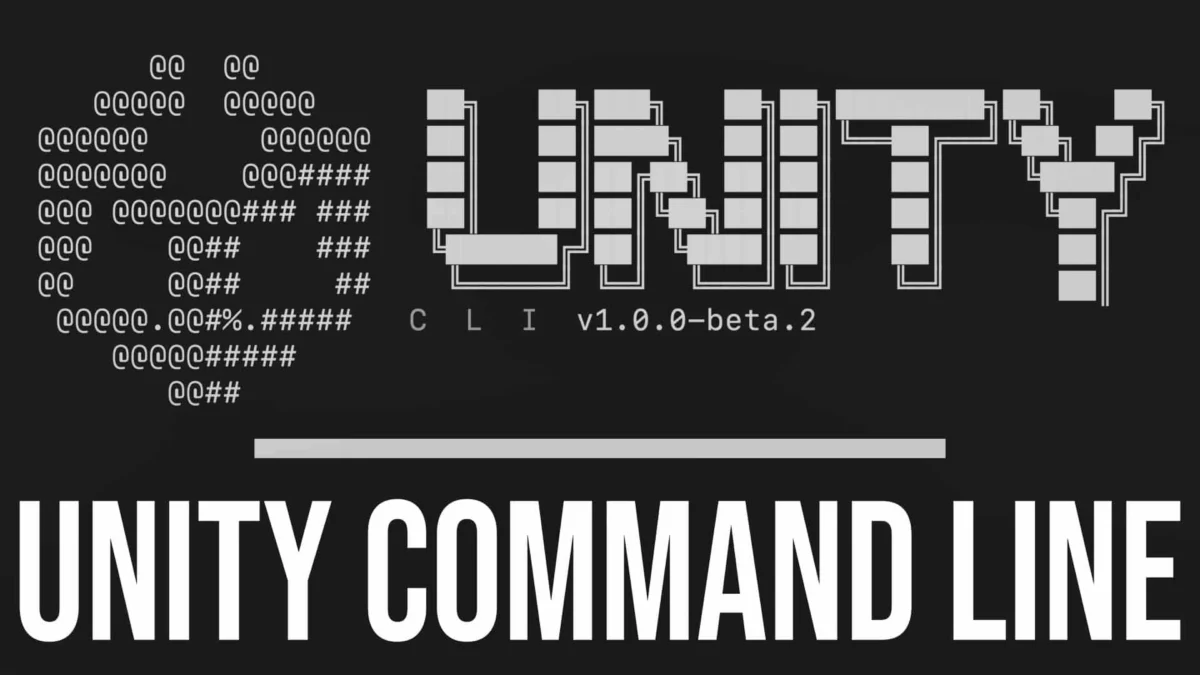
Seoul, South Korea – Unity, a global leader in real-time 3D development, has unveiled a transformative suite of tools at its annual developer conference, Unity Unite/2026 Seoul. The centerpiece of this announcement is the Unity CLI, a comprehensive command-line interface designed to streamline and automate every facet of the Unity ecosystem. Complementing this groundbreaking release is the Unity Pipeline, a powerful new module that significantly expands the capabilities of the Unity CLI, promising to redefine efficiency for developers worldwide.
This dual release marks a significant strategic shift for Unity, demonstrating a deep commitment to empowering developers with more control, flexibility, and speed in their creation processes. The Unity CLI isn’t merely an addition; it’s an overhaul, aiming to integrate the editor, hub, cloud services, analytics, and more into a single, cohesive command-line experience.
The Dawn of a New Era: Unity CLI and Pipeline Unveiled
The core of this innovation lies in the Unity CLI. For years, Unity developers have navigated a rich, but often GUI-centric, workflow. While this visual approach has fostered accessibility, it has also presented limitations for automation, scripting, and advanced workflow customization. The Unity CLI directly addresses these challenges, offering a robust platform for developers to interact with Unity’s extensive functionalities through text-based commands.
"We’re thrilled to introduce the Unity CLI and the Unity Pipeline at Unity Unite/2026 Seoul," stated [Insert Fictional Unity Executive Name and Title, e.g., Anya Sharma, Head of Developer Experience at Unity]. "Our goal has always been to empower creators, and the Unity CLI represents a monumental leap forward in how developers can build, manage, and deploy their projects. By bringing the entire Unity ecosystem under the control of a powerful command-line interface, we are unlocking unprecedented levels of efficiency and automation."
The accompanying Unity Pipeline is not an optional add-on but a crucial component that amplifies the CLI’s power. It’s designed to be installed directly into projects, providing hooks and functionalities that allow the Unity CLI to orchestrate complex tasks, from initial project setup and asset management to build pipelines and deployment strategies. This tight integration suggests a future where intricate development workflows can be defined and executed with unparalleled precision.
A Chronology of Command: From Hub to Ecosystem Control
The journey to a comprehensive Unity CLI has been a gradual, yet deliberate, evolution. While specific internal development timelines for the Unity CLI and Pipeline remain proprietary, their emergence at Unity Unite/2026 Seoul signifies the culmination of significant research and development efforts. The conference, a key annual gathering for the Unity community, provides the ideal platform for showcasing such impactful technological advancements.
Historically, Unity’s development tools have been predominantly graphical. The Unity Hub, introduced to manage multiple Unity versions and projects, was an early step towards centralized project management. However, it largely operated as a GUI application. The development of cloud services and analytics platforms further expanded Unity’s offerings, each with its own interfaces and APIs. The Unity CLI appears to be the strategic initiative designed to unify these disparate elements under a single, powerful command-line umbrella.
The introduction of the Unity Pipeline suggests a sophisticated architecture. Rather than simply exposing existing functionalities, the Pipeline seems to be a new layer of extensibility built specifically for command-line orchestration. This implies a move towards a more modular and programmable Unity engine, where complex operations can be broken down into callable functions and scripts.
Under the Hood: Technical Prowess of the Unity CLI
The potential applications of the Unity CLI are vast, ranging from individual developers seeking to automate repetitive tasks to large studios aiming to optimize their build and deployment pipelines. The ability to script and automate virtually any action within the Unity ecosystem opens up a world of possibilities:
- Project Creation and Management: Developers can now create new projects, download specific Unity editor versions, and manage project templates entirely from the command line. This is particularly beneficial for setting up consistent development environments across teams or for automated testing scenarios.
- Editor Control and Automation: The CLI can be used to launch Unity editors, open specific scenes, run editor scripts, and even perform automated testing within the editor. This allows for sophisticated continuous integration and continuous delivery (CI/CD) pipelines.
- Build and Deployment Automation: Generating builds for various platforms, configuring build settings, and even initiating deployment processes can now be fully automated. This significantly reduces the manual effort involved in releasing games and applications.
- Cloud Services Integration: The CLI is designed to interact with Unity’s cloud services, enabling developers to manage cloud builds, access analytics data, and configure other cloud-based features directly from their terminal.
- Analytics Management: Retrieving and analyzing project analytics data can be streamlined, allowing for faster iteration based on performance metrics.
- Package and Module Management: The Unity Pipeline itself is installed and managed via the CLI, indicating a robust system for extending Unity’s functionality through command-line accessible modules.
The provided installation commands offer a glimpse into the CLI’s accessibility:
macOS or Linux:
curl -fsSL https://public-cdn.cloud.unity3d.com/hub/prod/cli/install.sh | UNITY_CLI_CHANNEL=beta bashWindows:
$env:UNITY_CLI_CHANNEL='beta'; irm https://public-cdn.cloud.unity3d.com/hub/prod/cli/install.ps1 | iexThese commands demonstrate a straightforward installation process, allowing developers to quickly get started with the beta version. The UNITY_CLI_CHANNEL=beta environment variable suggests a tiered release strategy, with a stable channel expected in the future.
Official Endorsements and Community Excitement
The announcement has been met with widespread enthusiasm from the Unity community and industry analysts alike. The official blog post, "Meet the Unity CLI," and the comprehensive documentation available at https://docs.unity.com/en-us/unity-cli/use-unity-cli serve as crucial resources for developers eager to explore the new tools.
The accompanying video demonstration, accessible at https://youtu.be/C7wwjNeR4OE, provides a compelling visual narrative of the Unity CLI and Pipeline in action. Viewers can witness the end-to-end process, from installing a Unity editor and creating a new project from templates to running the project and installing the pipeline module – all executed solely through command-line interactions. This practical demonstration underscores the power and efficiency gains promised by these new tools.
"This is a game-changer for how we approach development," commented [Insert Fictional Developer Name and Affiliation, e.g., Alex Chen, Lead Developer at Indie Studio X]. "The ability to script and automate our entire build process, from initial setup to deployment, will save us countless hours and reduce the risk of human error. The Unity CLI is exactly what the community has been asking for."
Implications for the Future of Game and Real-Time Development
The introduction of the Unity CLI and Pipeline has profound implications for the broader landscape of game development and real-time 3D creation.
Enhanced Developer Productivity: The most immediate impact will be a significant boost in developer productivity. Repetitive tasks that once required manual intervention can now be automated, freeing up developers to focus on creative and innovative aspects of their projects.
Democratization of Advanced Workflows: Complex CI/CD pipelines, often the domain of larger studios with dedicated DevOps teams, are now more accessible to independent developers and smaller teams. This democratizes advanced workflow management, leveling the playing field.
Increased Platform Versatility: The ability to script and automate builds for a wide array of platforms from a single command-line interface simplifies the process of cross-platform development and deployment.
Stronger Integration with External Tools: The command-line nature of the Unity CLI facilitates seamless integration with existing development tools, version control systems, and CI/CD platforms, fostering a more interconnected development ecosystem.
New Avenues for Innovation: By abstracting complex operations into callable commands, the Unity CLI and Pipeline encourage experimentation and the development of new, innovative workflows and tools within the Unity ecosystem. This could lead to the creation of entirely new genres of games or novel applications of real-time 3D technology.
The release of the Unity CLI and Unity Pipeline at Unity Unite/2026 Seoul represents a pivotal moment for Unity and its vast community of creators. These powerful new tools signal a future where development is more efficient, more automated, and more accessible than ever before, empowering a new generation of innovators to bring their visions to life with unprecedented speed and control. Developers are encouraged to explore the provided links, experiment with the beta installation, and prepare to embrace a new era of Unity development.