Jane Schoenbrun’s "Teenage Sex and Death at Camp Miasma" Ignites a Cinematic Reckoning with Sex and Identity
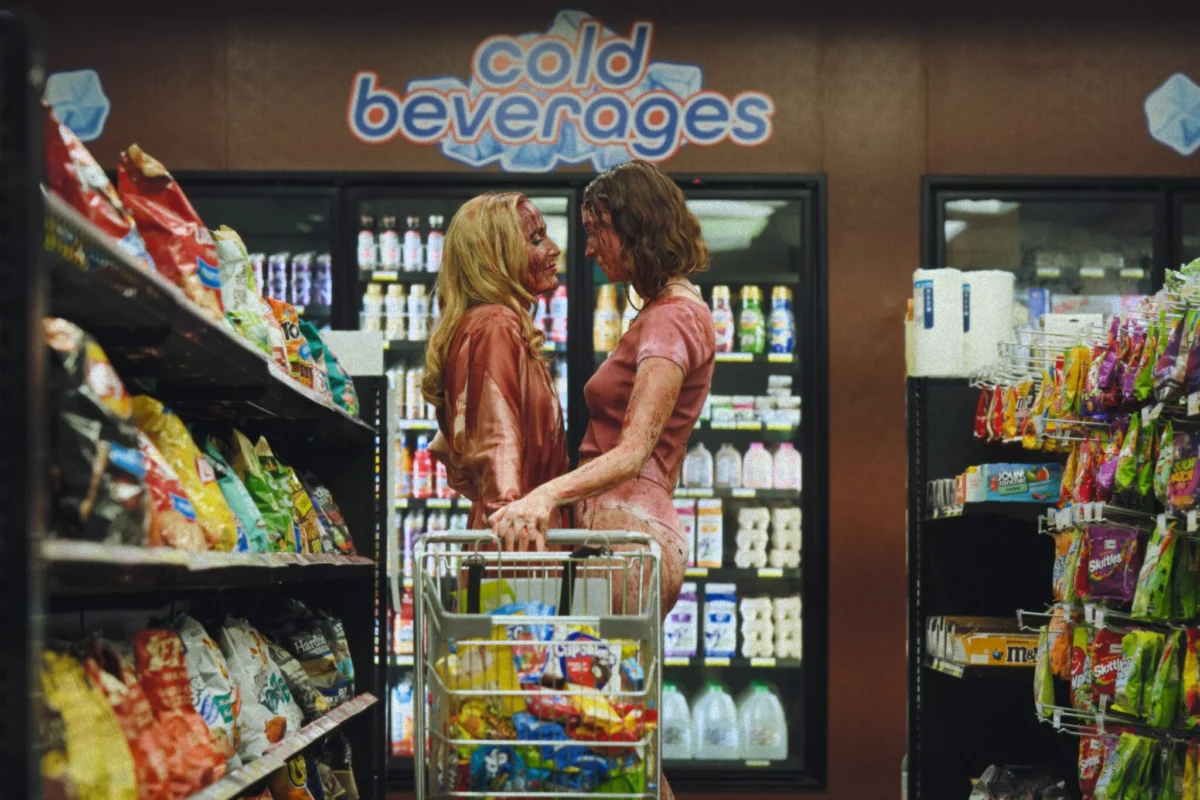
In an era where mainstream cinema has largely retreated from explicit portrayals of sex, favoring sanitized suggestions and idealized bodies, a seismic shift is underway. Amidst widespread discussions about the diminishing role of intimacy on screen and a documented decline in sexual activity among younger generations, a new wave of filmmakers is boldly reclaiming the narrative. At the forefront of this movement is Jane Schoenbrun, whose latest feature, Teenage Sex and Death at Camp Miasma, is not merely a film but a defiant, tender, and "orgasmic" exploration of pleasure, identity, and the reclamation of problematic cultural spaces.
This highly anticipated release, following Schoenbrun’s critically acclaimed I Saw the TV Glow, plunges viewers into a meta-aware horror narrative starring Hannah Einbinder as Kris, a queer filmmaker tasked with rebooting a notorious slasher franchise. Kris’s journey to unearth the transphobic origins of the series’ villain, Little Death, leads her to the reclusive original "final girl," Billy Presley, portrayed with mesmerizing power by Gillian Anderson. Far from a mere genre exercise, Camp Miasma emerges as a profound commentary on generational divides, the therapeutic power of fandom, and the radical act of finding and celebrating pleasure in all its forms, especially within queer communities.
The Retreat and Resurgence of Sex in Cinema
The past two decades have witnessed a noticeable de-sexualization of blockbuster cinema. Driven by a desire for broader appeal and perhaps a subtle societal squeamishness, major studio productions have often presented increasingly unattainable physical ideals while shying away from depicting the messy, complex, and often vulnerable realities of sexual desire and its manifestation. This cinematic landscape stands in stark contrast to earlier eras of filmmaking that frequently explored sexuality as a core component of human experience and artistic expression.
This cinematic trend mirrors broader societal shifts, particularly among younger demographics. Recent reports indicate that Generation Z exhibits significantly less interest in sex and engages in it less frequently than their older counterparts. While multifaceted factors contribute to this phenomenon – including economic anxieties, the pervasive influence of social media, and a discernible "sharp swing toward conservativism in many young men," as noted by various sociological studies – culture undeniably plays a pivotal role in shaping societal norms and individual experiences.
However, a counter-current is now emerging. A cohort of contemporary filmmakers is actively challenging this cultural reticence, striving to bring authentic and diverse portrayals of sex and intimacy back to the silver screen. This year’s releases signal this burgeoning movement, with films spanning a spectrum from the "strangely dystopian" One Night Only to the "melancholy" The Invite and the "fever dream abstraction" of I Love Boosters. Unsurprisingly, queer filmmakers are leading this charge, offering fresh perspectives unburdened by conventional heteronormative constraints. The wider release of Harry Lighton’s Pillion in 2026 and Gregg Araki’s I Want Your Sex premiering this summer underscore this vital cinematic renaissance, culminating in Jane Schoenbrun’s daring and deeply personal Teenage Sex and Death at Camp Miasma.
A Chronology of Reclamation: From Problematic Past to Pleasure-Positive Future
Teenage Sex and Death at Camp Miasma unfurls as a compelling chronology, not just within its narrative but also in its broader cultural context, mirroring Schoenbrun’s own artistic evolution and the changing tides of queer representation.

Schoenbrun’s Artistic Journey: From Struggle to Celebration
Jane Schoenbrun’s previous film, I Saw the TV Glow, resonated deeply with critics and audiences alike, earning widespread acclaim for its haunting exploration of identity and dysphoria. As the reviewer notes, the film was crafted "in the midst of their transition, a process incomplete." This personal context imbued I Saw the TV Glow with a palpable sense of longing and suffocation, serving as a powerful metaphor for the internal struggle preceding the choice to transition. It depicted the peril of slowly suffocating under the weight of an unacknowledged self.
Teenage Sex and Death at Camp Miasma, however, arrives from a different vantage point—"on the other side" of this transformative journey. This shift in perspective infuses the film with a newfound tenderness and a bold confidence in exploring themes that were previously shrouded in existential angst. It’s a testament to Schoenbrun’s growth as an artist and as an individual, allowing for a more direct and celebratory engagement with the complexities of self, desire, and community.
The Camp Miasma Franchise: Confronting a Problematic Legacy
The film’s narrative begins with Kris (Hannah Einbinder), a talented young queer filmmaker, being courted by a major studio. Their mission: to revive the dormant Camp Miasma franchise, a once-lucrative slasher series notorious for its villain, Little Death. From the outset, the film establishes that Little Death’s origins are "decidedly transphobic," a dark stain on the franchise’s history. The studio’s decision to hire Kris, a rising queer creative, is presented with a cynical meta-awareness – an overt attempt to "ameliorate their past sins" through tokenism, yet Kris sees a deeper opportunity. The films, despite their flaws, hold significant personal meaning for her, representing a chance to reclaim and redefine a narrative that once excluded or harmed her community.
Kris embarks on a "discovery phase," seeking out Billy Presley (Gillian Anderson), the enigmatic "final girl" from the original Miasma film. Presley, who abruptly ended her career after the first installment for undisclosed reasons, lives as a recluse on the very campground where the original film was shot – Camp Tivoli. Anderson’s portrayal of Presley is a masterclass in enigmatic allure, evoking a "daydreamed combo of Norma Desmond, Blanche du Bois, and Miss Havisham," draped in flowing robes and layers of dramatic mascara. She embodies a "gentle femme domme sternness" that immediately captivates Kris and, by extension, the audience.
The Unveiling of Little Death: A Mirror to Modern Bigotry
During Kris’s interviews, Presley hints at a mysterious "hole at the center of the property’s lake where Little Death’s stories come from," though she quickly dismisses it as a joke. Yet, the lore of Little Death, as revealed through flashbacks to the original film, is anything but humorous. The film explicitly details Little Death’s origin story, describing it as a force of "electric silent reckoning," personified by Jack Haven. This origin is strikingly "blatant in its bigotry," echoing "trans panic rhetoric invented to frighten parents and school districts and lawmakers into litigating the community out of existence today."
Little Death is depicted as a figure who "occupies the entire gender spectrum at once," named from the French term for orgasm. This killer possesses a body with both breasts and the capacity for impalement, sporting an "air vent countenance" that defies easy categorization. The film highlights how such a figure, embodying a fluid and complex gender presentation, directly challenges rigid societal binaries – a concept that, in the minds of bigots, "cannot exist in the same place." Yet, Little Death, much like the persistent fight for queer liberation, "always returns to kill again."

The Blurring Lines: Fandom, Fantasy, and the True Horror
As Kris delves deeper into the Camp Miasma lore and her relationship with Billy intensifies, the lines between reality and fantasy begin to blur. Little Death awakens under the lake, threatening to cross into Kris’s present. However, the film subverts traditional horror tropes by suggesting that for those within fandom, these seemingly terrifying worlds can also be spaces of comfort and growth. "Stepping into the worlds themselves could never hurt you (any more than you wish to be hurt… because sometimes you do)."
The narrative gracefully transforms from a story about cracking the code of a slasher remake into a profound exploration of what "turns us on." Kris, initially convinced she’s incapable of enjoying sex, finds guidance and understanding in Billy, who has walked a similar path. Billy Presley evolves into a multifaceted figure: "a siren and a mentor and an artist and a weirdo and a lover," whose presence resonates deeply with queer audiences who found their own identities shaped by powerful, enigmatic women on screen.
The film posits that the true horror lies not in the slasher’s blade, but in the terrifying vulnerability of allowing another person to experience you in a state of total intimacy. As the reviewer poignantly states, "All the murder and mayhem are a cute parable by comparison."
Supporting Data and Contextual Depth
The power of Teenage Sex and Death at Camp Miasma is amplified by its keen awareness of both contemporary social trends and the historical context of the horror genre.
Gen Z and the Shifting Landscape of Sexuality
The article references compelling data regarding Gen Z’s relationship with sex. A 2025 Guardian report indicated that Gen Z is "far less interested in sex" than older generations, a sentiment echoed by an NPR piece in 2025 suggesting that "Gen Z is afraid of sex—and for good reason." These findings point to a generation navigating unprecedented levels of social anxiety, digital connection, and a complex interplay of personal identity formation. The "sharp swing toward conservativism in many young men," cited by a King’s College London study in 2025 where "almost a third of Gen Z men agree a wife should obey her husband," further complicates the sexual landscape. Camp Miasma directly addresses this cultural moment, probing the anxieties and desires of a generation grappling with evolving sexual norms and the resurgence of traditionalist values. By explicitly bringing sex back into focus, Schoenbrun offers a counter-narrative to both cinematic prudishness and societal apprehension.
Horror’s Complicated Relationship with "Otherness"
The horror genre, while often a refuge for outcasts, has historically been deeply complicit in othering marginalized identities. Camp Miasma meticulously deconstructs this problematic legacy. The article highlights how horror films "simultaneously told those kids that parts of them could never belong." Classic examples abound:

- Norman Bates in Psycho dresses as his mother, conflating gender non-conformity with murderous psychosis.
- Buffalo Bill in The Silence of the Lambs kills women to make a "woman suit," a grotesque misrepresentation that fueled transphobic stereotypes for decades.
- Slasher films famously punish female sexuality, with the "girl who wants to have sex, first and with extreme prejudice" often being the initial victim.
- Disability has frequently been depicted as "literal monstrosity," reinforcing harmful societal prejudices.
The explicitly transphobic origin of Little Death in Camp Miasma is therefore not merely a plot device, but a direct confrontation of this history. By making the villain a literal embodiment of "trans panic rhetoric," Schoenbrun forces audiences to reckon with how fear of the "other" has been weaponized, both on screen and in society.
A Tender Exploration of Pleasure, Beyond the Explicit
Crucially, Camp Miasma expands the definition of "pleasure" far beyond the purely sexual. While sex and orgasm are central themes, the film dedicates equal attention to "what gives pleasure that isn’t inherently sexual on its own." This expansive view of joy is a hallmark of the queer perspective, which often necessitates finding solace and delight in spaces outside of conventional norms.
The film’s rich tapestry of pleasures includes:
- The tactile satisfaction of "a bucket of KFC and fluids are barbecue dipping sauce."
- The creative release of "painting and drawing."
- The comforting nostalgia of "fandom ephemera, a tub full of popcorn and candy (so much candy, every single kind of candy that you’ve ever tied a memory to), DVDs and film reels."
- The intimate details of "someone else’s lipstick and the warmth of a fire."
This broad definition highlights how pleasure, in its myriad forms, is a vital aspect of human experience, particularly for those navigating identities that are often denied or policed. It underscores that finding joy, comfort, and connection is a radical act of self-preservation and community building.
Official Responses and Critical Acclaim
The initial reception to Teenage Sex and Death at Camp Miasma has been overwhelmingly positive, particularly for its innovative narrative and powerful performances.
The Studio’s Calculated Response
Within the film’s own meta-narrative, the studio’s decision to hire Kris as the face of the Camp Miasma revival serves as a biting commentary on corporate attempts at "diversity" and "inclusion." Kris herself is "only too aware of this" calculated move to "ameliorate their past sins" by tapping an "up and coming queer creative." This internal critique reflects real-world debates about tokenism and authentic representation in Hollywood. The film’s parodic side characters—Kris’s "empty-headed" poly partner and his boyfriend, the "money-obsessed agent," the studio exec who "speaks in buzzwords and only wants good news," and the "Queer Assistant" labelled as such on a Zoom call—further satirize the often-superficial approaches institutions take to marginalized communities.

Critical Buzz and Audience Resonance
Critics have lauded Camp Miasma for its "deadly clever" satire, its intricate deconstruction of horror tropes, and its profound "metatextual understanding of the landscape it’s joining." The performances, particularly from Einbinder and Anderson, have been singled out for their depth and chemistry. Anderson’s portrayal of Billy Presley, a figure of both vulnerability and formidable strength, has been described as a career highlight, solidifying her status as an icon for queer audiences.
Beyond its intellectual merits, the film has resonated on a deeply personal level with viewers. The reviewer’s own confession—"I have never encountered a film that was about how I have sex"—speaks to the rare and powerful experience of seeing one’s specific, often unarticulated, experiences reflected on screen. This emotional impact transcends typical critical analysis, highlighting the film’s success in forging genuine connections with its audience, particularly those who have felt unseen in mainstream portrayals of intimacy.
Schoenbrun’s Vision
While Jane Schoenbrun has not made explicit official statements regarding Teenage Sex and Death at Camp Miasma in this specific context, the film itself serves as a powerful declaration of artistic intent. It embodies a vision of cinema that is fearless in its exploration of identity, radical in its embrace of diverse pleasures, and committed to transforming historically hostile spaces into welcoming homes. The shift in tone from I Saw the TV Glow to Camp Miasma suggests a director who has not only navigated personal transformation but is now channeling that experience into a vibrant and affirming cinematic language for her community.
Implications for Cinema and Queer Culture
Teenage Sex and Death at Camp Miasma is more than just a film; it is a cultural touchstone with significant implications for the future of cinema and the ongoing evolution of queer culture.
Reshaping the Cinematic Narrative of Sex and Identity
The film unequivocally signals a burgeoning movement to re-integrate nuanced portrayals of sex and identity into cinematic storytelling. By demonstrating that such narratives can be both commercially viable and critically acclaimed, Camp Miasma paves the way for other filmmakers to explore intimacy with greater honesty and diversity. It challenges the notion that explicit sex or queer desire must be niche, instead asserting their universality and artistic merit. This film, alongside others by queer directors, is actively expanding the canvas of what is possible on screen, moving beyond suggestion to tangible, complex depictions of human connection and pleasure.
Reclaiming and Transforming Problematic Genres
Perhaps the most profound implication of Camp Miasma lies in its successful reclamation of the horror genre. Historically, horror has served as a space where "otherness" is often punished or pathologized. Schoenbrun’s film takes this deeply flawed foundation and transforms it. As the reviewer eloquently puts it, the film takes "a place that only ever accepted you with caveats and footnotes and the uncomfortable clearing of throats, and turning it into an amusement park coop where you and all of your friends and lovers can play." This act of artistic alchemy creates a sanctuary, a new "home" within a genre that once excluded or harmed its audience. It suggests that any cultural space, no matter how tainted its past, can be re-imagined and repurposed for liberation and joy.

Beyond "It Gets Better": Providing Roadmaps for Queer Life
The film offers a powerful alternative to the well-meaning, yet often insufficient, platitudes offered to queer youth. The reviewer states, "We can do better than ‘It Gets Better.’ We can give each other roadmaps. We can share our hiding places. We can show up with a fucking feast." Camp Miasma embodies this philosophy. It doesn’t merely promise a brighter future; it actively constructs a vision of that future, providing tangible "roadmaps" for navigating identity, vulnerability, and pleasure. It invites audiences into a "hiding place" where their experiences are validated, celebrated, and explored with depth and tenderness. The "feast" it offers is a rich tapestry of understanding, connection, and unabashed joy.
The Radical Act of Pleasure
In a society that often polices and shames non-normative desires, the film’s expansive celebration of pleasure – both sexual and non-sexual – is a radical act. It champions the right to define and experience pleasure on one’s own terms, free from external judgment or prescribed templates. For queer individuals, whose bodies and desires are frequently subjected to negotiation and external scrutiny, finding and creating spaces for authentic pleasure is not just an indulgence but a fundamental component of self-actualization and well-being. Camp Miasma becomes a "canvas" rather than a "template" for this exploration, encouraging individual discovery and collective celebration.
Ultimately, Teenage Sex and Death at Camp Miasma is a triumph of queer cinema. It is a film that takes the thorny complexities of identity, the lingering shadows of past bigotries, and the terrifying vulnerability of intimacy, and transforms them into a vibrant, joyful, and deeply resonant experience. It is a cinematic welcome mat with the names of countless queer individuals subtly woven into its fabric, inviting them to a place where, much like Little Death, desire for "flesh and fluids" is not to be feared, but embraced, whenever and however it arrives.