The Labyrinth of Lore: How Marvel and DC’s Publishing Strategy Alienates New Readers in the Graphic Novel Era
Main Facts
In a publishing landscape increasingly dominated by collected editions, the titans of American comic books, Marvel and DC, find themselves at a critical juncture. For decades, the industry has witnessed a gradual but inexorable shift from single-issue "floppy" pamphlets to comprehensive graphic novel collections. While this evolution has opened doors to mainstream bookstores and new demographics, it has simultaneously exposed a fundamental flaw in the publishing strategies of the two largest superhero publishers: a bewildering lack of clarity in how their stories are packaged and presented. This navigational nightmare, characterized by confusing numbering, inconsistent titling, and fragmented narratives, is not merely an inconvenience; it represents a significant barrier to entry for potential new readers and a substantial hindrance to Marvel and DC’s ability to compete effectively in the booming graphic novel market, where they currently command less than 10% market share compared to industry leaders like Scholastic and manga publishers.
A Historical Arc: From Newsstands to the Direct Market and Beyond
The current challenges faced by Marvel and DC are deeply rooted in the historical evolution of the comic book medium. Understanding this trajectory is crucial to grasping the paradox of their current predicament.
The Pulp Era’s Twilight and Newsstand Decline
For much of the 20th century, comic books were a ubiquitous presence on newsstands, alongside an array of pulp magazines that dominated fiction sales from the mid-19th century. This widespread distribution allowed for casual discovery and spontaneous purchases, forming the backbone of the industry’s mass appeal. However, the mid-20th century ushered in profound shifts in media consumption. The advent of television and the rise of affordable paperback novels began to erode the newsstand model, hitting pulp magazines hard and progressively diminishing the visibility and sales of comic books. By the 1970s, the traditional distribution channels for comics were in a state of collapse, threatening the very existence of publishers like Marvel and DC.
The Birth and Double-Edged Sword of the Direct Market
In response to this existential crisis, the "direct market" emerged. This innovative distribution model bypassed traditional newsstands, establishing a network of specialty comic shops that ordered directly from distributors, guaranteeing sales and minimizing returns. The direct market was, unequivocally, the lifeline that saved the American comic book industry. It allowed Marvel and DC to survive with significantly smaller sales volumes than their Golden Age heydays, providing a stable, if niche, commercial environment. More profoundly, it fostered a renaissance in North American comic book storytelling. Freed from the pressures of mainstream appeal and the restrictive Comics Code Authority (which had policed content for decades), creators explored complex narratives, mature themes, and innovative artistic styles, elevating the medium to unprecedented creative heights.
However, the direct market, while a savior, also proved to be a double-edged sword. Its most significant long-term impact was the "ghettoization" of comic books. No longer readily available in supermarkets, drugstores, or general newsstands, comics became a product primarily found in specialized retail outlets. This meant that the casual reader, the curious child, or the browsing adult could no longer stumble upon a new comic; they had to actively seek out a dedicated comic shop. This dramatically narrowed the funnel for new readership, transforming comic books into a cult phenomenon rather than a mainstream cultural staple.
The 1990s Crash and Lasting Fallout
The direct market’s history is replete with its own sagas, including Marvel’s disastrous attempt to monopolize distribution in the mid-1990s through exclusivity deals. This gamble spectacularly backfired, contributing to a massive industry crash whose fallout continues to resonate not only within comics but also in neighboring hobby industries like tabletop role-playing games (e.g., the article’s mention of Paizo’s financial woes can be traced, in part, to these historical distribution tremors). This era further cemented the direct market’s insularity and highlighted the fragility of a system heavily reliant on a dedicated, but ultimately limited, consumer base.
Graphic Novels: Breaking the Ghetto Walls
Despite the direct market’s limitations, it inadvertently laid the groundwork for the next major transformation: the rise of graphic novel collections. Unlike their "floppy" counterparts, which remained largely confined to specialty shops, graphic novels—bound like traditional books—could be stocked in mainstream bookstores, libraries, and online retailers. This was a pivotal moment. Suddenly, comics, in their collected form, became discoverable by the general public once more, accessible alongside other books and reaching audiences far beyond the traditional comic shop demographic. This shift was poised to revolutionize the industry, yet Marvel and DC, despite their immense intellectual property libraries, have struggled profoundly to capitalize on it.
The Accessibility Paradox: Why New Readers Struggle
The data speaks volumes: Marvel and DC, combined, account for less than 10% of the graphic novel market, while Scholastic Books dominates with a staggering 40%. This disparity isn’t due to a lack of quality storytelling from the legacy publishers, but rather a fundamental disconnect in how their products are presented to the burgeoning graphic novel audience.
The Scholastic and Manga Blueprint: Clarity as a Competitive Advantage
The success of publishers like Scholastic offers a stark contrast and a clear blueprint. A key turning point was Scholastic’s licensing of Jeff Smith’s critically acclaimed independent series, Bone, previously self-published through the direct market. The phenomenal success of Bone in bookstores and schools prompted Scholastic to significantly expand its graphic novel publishing program, directly leading to creators like Raina Telgemeier becoming the bestselling comic authors in North America.
The secret to their success is disarmingly simple: clarity and intuitive navigation. If a new reader hears about Bone or Amulet or a popular manga like One Piece or Spy x Family, they know precisely where to begin: Volume 1. They then proceed to Volume 2, Volume 3, and so on, until they complete the story. This sequential, self-evident numbering system requires no external research, no prior knowledge, and no intricate reading orders. It’s an easy, intuitive, and obvious user experience, mirroring how consumers engage with traditional book series.
The Labyrinthine World of Superhero Collections
Compare this streamlined approach to the often-bewildering experience of trying to read a modern Marvel or DC superhero story:
The "Blackest Night" Conundrum
Consider a hypothetical new reader drawn to Geoff Johns’ acclaimed DC Comics event, Green Lantern: Blackest Night. They might find a collection titled Blackest Night Saga, purporting to collect issues #0-8 of the main series. Logically, this would seem to be the complete story. However, as the original article highlights, this is far from the case. The narrative of Blackest Night was designed to weave through multiple concurrent titles, creating a complex web of interconnected collections:
- Blackest Night Saga
- Blackest Night: Green Lantern
- Blackest Night: Black Lantern Corps – Vol. 1
- Blackest Night: Black Lantern Corps – Vol. 2
- Blackest Night: Green Lantern Corps
- Blackest Night: Tales of the Corps
The reader is then faced with an immediate, insurmountable question: which of these do I read, and in what order? The original "floppy" pamphlets often included helpful continuity blurbs ("The story continues in X issue!"), but these are routinely removed from collected editions. The only viable solution for the bewildered reader is to scour online forums, wikis, and fan-made reading guides, desperately trying to piece together the narrative while simultaneously trying to avoid spoilers. Even then, the process involves constantly flipping between disparate volumes to follow the story chronologically – a fundamentally "bad user experience." The alternative, a 1700-page, $150 Blackest Night 10th Anniversary Omnibus containing "every single crossover comic," is an intimidating, expensive, and often unnecessary proposition for a casual reader just trying to understand the core story.
The "Fantastic Four" Fiasco: A Case Study in Confusion
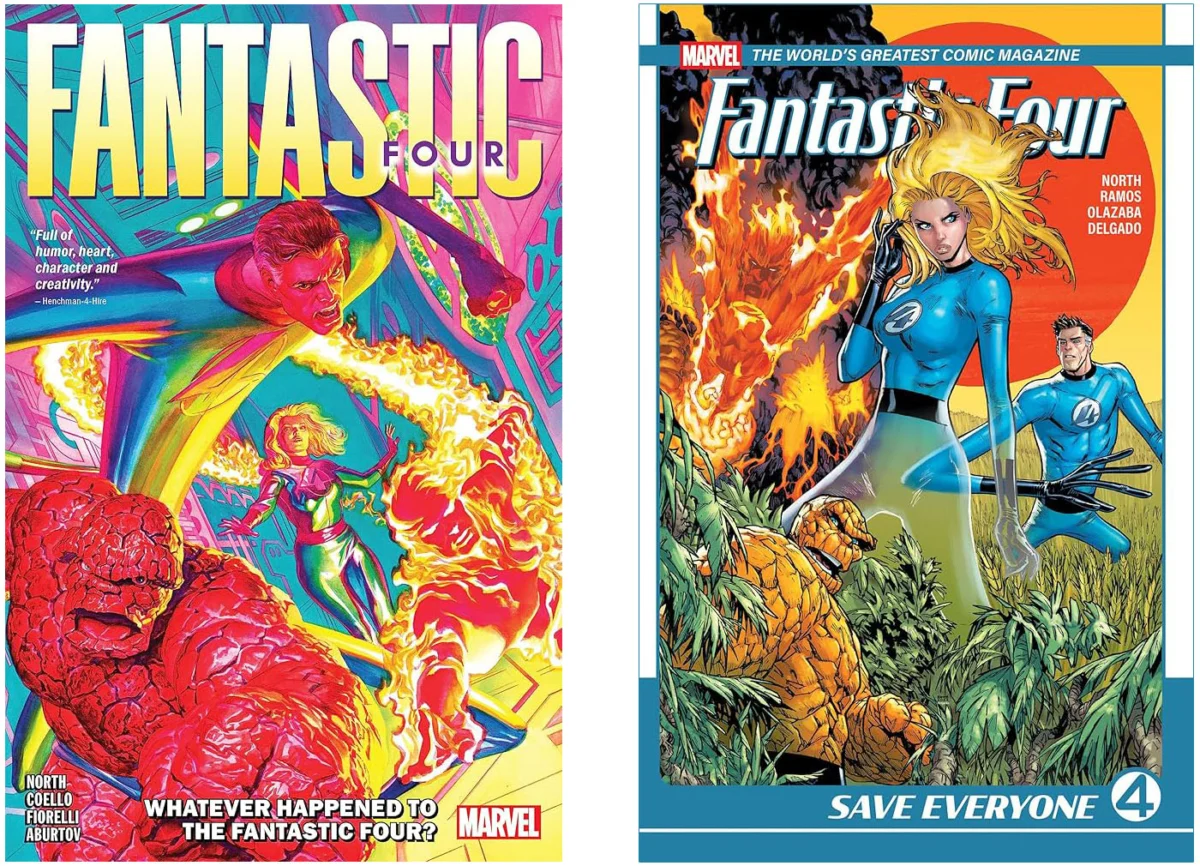
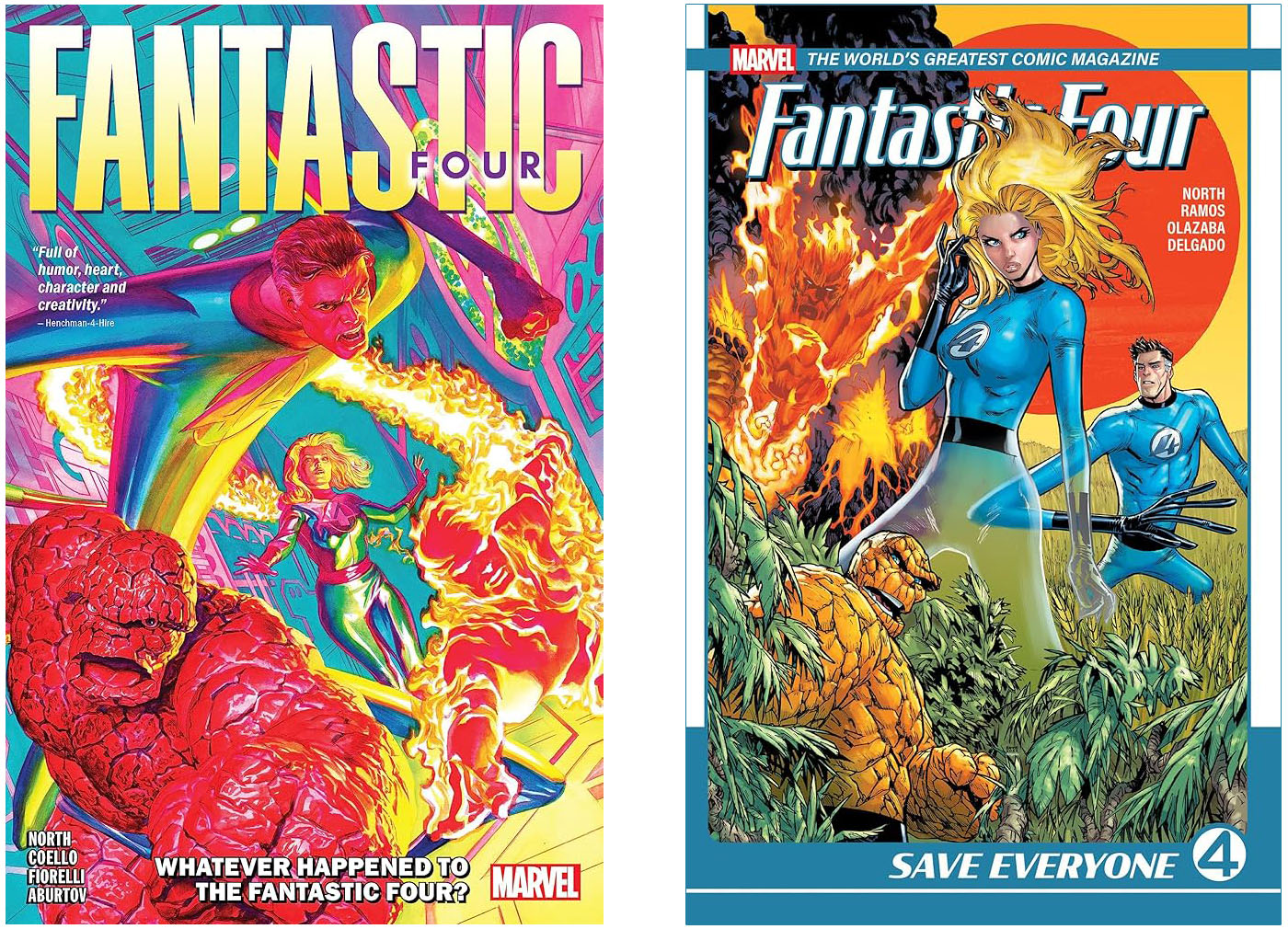
The problem isn’t confined to sprawling event comics; it plagues even acclaimed, self-contained runs. Ryan North’s Fantastic Four is celebrated as one of Marvel’s best current superhero titles, praised for its quality and its ability to engage new readers. Yet, its collected editions exemplify the industry’s self-sabotaging practices. After publishing six sequential "Volume 1" through "Volume 6" paperbacks, Marvel then released a different "Volume 1" for the same run, creating an absurd scenario for any potential reader:
- Didi: "I hear Ryan North’s Fantastic Four is great. Where do I start?"
- Gogo: "Fantastic Four – Volume 1."
- Didi: "Great! Which one? There are literally dozens of Fantastic Four – Volume 1s, and several by Ryan North alone."
This confusion is not merely hypothetical. It actively impacts real-world sales and inventory management. As the original article notes, an Amazon listing for the 2023 Fantastic Four – Vol. 1 by Ryan North was updated to show the cover for the 2026 Fantastic Four – Vol. 1 by Ryan North, creating identical-looking listings for entirely different books. This inevitably leads to stocking errors, incorrect shipments, and immense frustration for both consumers and retailers. Further compounding the issue, an in-book "reading guide" for one Fantastic Four Vol. 1 might actually point to a completely different Fantastic Four series, rendering internal navigation useless.
The Roots of the Problem: Legacy and Pamphlet-Centric Design
Marvel and DC’s struggle with clarity stems from several interconnected factors:
- Vast Legacy Continuity: Both publishers boast immense libraries spanning decades, featuring characters with complex, evolving backstories. This makes a simple "Start with Volume 1!" approach problematic, as it would force readers through potentially hundreds of mediocre issues before reaching iconic runs like Frank Miller’s Batman: Year One or Scott Snyder’s Court of Owls.
- Pamphlet-Centric Storytelling: Many stories, both historical and contemporary, are still primarily conceived to sell monthly pamphlets. Crossover events, while effective at driving readers to multiple titles in the direct market, become "labyrinthine puzzles" when collected, disrupting narrative flow and making stories impenetrable. Even non-event stories, like the Doctor Doom/Daredevil/Fantastic Four crossover from 1968, demonstrate this fragmentation, with integral parts of a single story often collected in entirely different character lines, sometimes with crucial issues omitted.
- Resistance to "Book-First" Design: The ingrained publishing culture still prioritizes the monthly issue cycle, with collected editions often treated as secondary products or afterthoughts, rather than the primary entry point for new readers.
Industry Perspectives and Current Responses
Despite the clear market signals, Marvel and DC have been slow to fundamentally alter their publishing strategies. Their inertia can be attributed to several factors, including the weight of tradition, the complexities of managing vast intellectual property, and a perceived need to cater to the long-standing direct market fanbase.
The Weight of Tradition and Fan Expectations
For decades, the core readership of Marvel and DC has been composed of dedicated fans accustomed to navigating complex continuities, understanding publishing quirks, and actively participating in the "hunt" for specific issues or collections. There is a legitimate concern within these companies about alienating this loyal base, which still forms a significant portion of their monthly pamphlet sales. Changing established numbering conventions or drastically altering collection strategies could be seen as disrespectful to this history and these fans. Furthermore, the sheer volume of legacy material presents an organizational challenge of epic proportions, making a comprehensive overhaul seem daunting.
Attempts at Clarity: Acknowledging Progress, Highlighting Shortcomings
It is not to say that Marvel and DC have made no attempts at improving accessibility. The proliferation of "omnibus" editions, while expensive, often provides comprehensive collections of specific runs or events, appealing to completionists. Furthermore, collections branded "by creator" – such as Green Lantern by Geoff Johns or Batman by Scott Snyder & Greg Capullo – represent a step in the right direction. These at least provide a clear authorial anchor, making it easier for readers to follow a specific creative vision.
DC Comics, in particular, has seen significant success with its "Absolute" titles. These deluxe, oversized editions often collect seminal stories (e.g., Absolute Superman) in a self-contained manner. The strength of the Absolute line, beyond the high production quality of the comics themselves, lies in its simplicity: Absolute Superman Vol. 1 leads to Absolute Superman Vol. 2. This clarity makes them incredibly attractive to new readers and gift-givers. However, these are often premium, limited-run products, not a comprehensive solution for the entire publishing line.
Despite these efforts, the fundamental problem persists across the majority of their collected output. The example of Ultimate Spider-Man Vol. 1 (not to be confused with the numerous other Ultimate Spider-Man Vol. 1s) which requires readers to arbitrarily stop reading, jump to a different series, and then return, underscores that even attempts at streamlined narratives can fall short due to legacy "pamphlet logic."
The Digital Dimension: Replicating the Chaos
The rise of digital comics, which now account for approximately one-fifth of all comic book revenue in North America, offers another avenue for accessibility. However, Marvel and DC’s digital platforms often replicate, or even exacerbate, the organizational chaos of their physical counterparts. Navigating vast digital libraries, identifying correct reading orders, and distinguishing between myriad identically-titled "Volume 1"s remains a significant challenge, undermining the potential for digital platforms to be a truly frictionless entry point for new readers.
Charting a Clearer Path Forward: Implications and Solutions
The path to broader success in the graphic novel market for Marvel and DC requires a fundamental shift in philosophy: moving from a pamphlet-first to a book-first content creation and publishing strategy. This doesn’t necessitate abandoning monthly pamphlets, which serve a dedicated collector base and provide serialized content, but rather acknowledging that the primary goal for long-term growth is producing collected editions that can be sold for years or decades, not just a single month.
Strategic Solutions for Enhanced Accessibility:
-
Unique Arc Titles: This is arguably the most crucial step. Instead of generic "Volume 1" labels, every story arc should be given a unique, memorable, and descriptive title. Frank Miller’s Batman: Year One stands as a testament to the power of a distinct title. If it had been Batman – Volume 1, it would likely be lost in a sea of similarly named collections. While titling a serialized work before completion can be challenging, literary precedents (Dickens, Dumas) and modern manga creators (Takahashi) demonstrate its feasibility. This unique title should ideally be consistent across both pamphlets and collected editions, perhaps accompanied by a "legacy numbering badge" on pamphlets to appease traditional collectors.
-
Intelligent Crossover Collection: For standard crossovers, the full story should ideally be included in every collection that contains a part of the event. For "mega-event" crossovers, which are too extensive for this, a consistent collection strategy is vital. This typically involves:
- A core narrative collection that focuses solely on the main event storyline.
- A comprehensive "omnibus" collection that gathers every single tie-in.
- Crucially, both types of collections must include clear, in-book methods for referencing individual parts and explicit guidance for readers who wish to follow the event through other collections. No more forcing readers to external websites.
-
Retroactive Titling for the Backlog: The vast back catalog is both a treasure trove and a quagmire. Marvel and DC must actively and retroactively create clear, evocative titles for their older, seminal works. While "by creator" collections are a good start, more descriptive and memorable titles are needed. Imagine Amazing Spider-Man: Origins for the character’s earliest adventures, or Fantastic Four: The Coming of Galactus for a classic Stan Lee/Jack Kirby epic. This creates distinct, recommendable entities, rather than generic "Masterworks" or "Epic Collections" that only completionists can navigate. An archival line can still exist for those who want everything, but it should be clearly differentiated from accessible entry points.
-
Distinguishing Archival from Accessible: It’s imperative to recognize that different readers have different needs. The "general public" wants clear, self-contained stories. Long-time collectors and historians might desire exhaustive, chronological archives. Both can coexist, but they must be explicitly labeled and marketed differently. The current strategy often conflates the two, serving neither effectively.
The Benefits of Clarity and the Cost of Inaction
Embracing these solutions would unlock immense potential for Marvel and DC. By prioritizing reader accessibility and intuitive navigation, they can:
- Attract New Generations: A clear, welcoming entry point is essential for converting casual interest into lifelong fandom. This is how Scholastic and manga have thrived, drawing in diverse, younger demographics.
- Expand Market Share: By making their products easily discoverable and consumable in mainstream bookstores and libraries, they can significantly increase their presence and sales in the lucrative graphic novel market.
- Enhance Brand Value: When stories are easily found and enjoyed, the iconic characters and their narratives become more culturally relevant and enduring.
- Reduce Retailer Frustration: Simplified naming and consistent numbering would streamline inventory management, reduce errors, and foster stronger relationships with booksellers.
Conversely, continued inaction carries significant risks. Marvel and DC risk becoming increasingly niche, catering only to a shrinking pool of dedicated fans willing to navigate their complex systems. They will continue to cede market share to publishers who understand the power of clarity, potentially marginalizing their immensely valuable intellectual properties in the broader cultural consciousness.
Conclusion
The shift from monthly pamphlets to collected graphic novels represents a seismic change in the comic book industry. While Marvel and DC have historically driven the medium’s creative evolution, their current publishing strategies for collected editions are an anachronism, rooted in a bygone era of newsstand sales and direct market exclusivity. The labyrinthine nature of their collections, with their confusing numbering, inconsistent titling, and fragmented narratives, actively deters new readers and undermines their competitive standing. By embracing unique arc titles, intelligent crossover collection, retroactive titling, and a "book-first" mentality, Marvel and DC can not only simplify the reader’s journey but also secure their future relevance in a rapidly evolving publishing landscape. The choice is clear: adapt to the demands of the modern reader, or risk becoming increasingly lost in the very lore they helped create.