Mastering Your Digital Identity: An Author’s Guide to SEO and AI in the Age of Information
In today’s hyper-connected world, the first impression an author makes is often digital. A quick Google search of a name can reveal a patchwork of online presences – an outdated LinkedIn profile, a dormant social media account, or even an unrelated individual sharing the same moniker. For authors, this digital landscape presents both a challenge and a profound opportunity. The ability to control and optimize one’s online identity is no longer a luxury, but a necessity for establishing authority, connecting with readers, and ensuring one’s work stands out in a crowded marketplace.
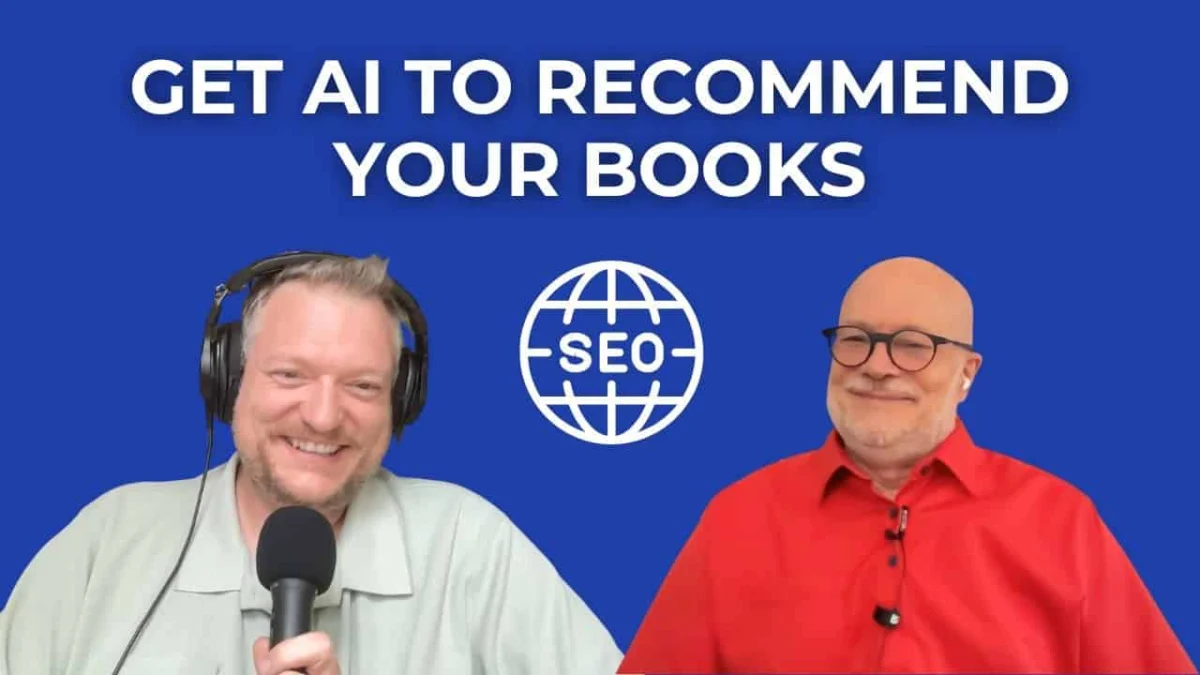
This article delves into the crucial strategies for authors to master search engine optimization (SEO) and navigate the increasingly influential realm of artificial intelligence (AI) in shaping their online presence. Drawing insights from an in-depth conversation with digital marketing expert Jason Barnard, founder of Kalicube, we explore how authors can leverage their own websites as the ultimate tool for digital control and discoverability.
The Author’s Digital Fortress: Why Your Website Reigns Supreme
The digital footprint of an author is a complex tapestry, woven from various online platforms. However, not all digital real estate is created equal. While Amazon and Goodreads profiles offer valuable visibility, they are ultimately third-party platforms, subject to their algorithms and ownership. Your author website, on the other hand, is your undisputed territory – the one piece of the internet you fully control.
"Your most powerful asset for ranking isn’t your Amazon page or your Goodreads profile. It’s your author website," emphasizes Thomas Umstattd, host of the discussion and author himself. This assertion underscores a fundamental truth: while external platforms can amplify your reach, your website serves as the central hub for your digital identity, the authoritative source of information about you and your work.
Deconstructing the Search Engine’s Mind: SEO Fundamentals for Authors
For authors aiming to claim the coveted top spot on search engine results pages (SERPs) for their name and book titles, mastering SEO is paramount. Jason Barnard, a seasoned digital marketer with over a decade of experience teaching search engines and AI about individuals, offers a clear roadmap.
The Power of the About Page: Crafting an Entity Home
A cornerstone of effective SEO for authors lies in the strategic construction of their "About" page. This page transcends a mere biographical sketch; it functions as an "Entity Home" for search engines and AI.
"You need an about page that isn’t your homepage," advises Barnard. "On your homepage, state who you are, what you do, who you serve, and why people would enjoy your books." This clear division of purpose ensures that each page serves its intended audience.
Crucially, the About page must be written in the third person. Authors often err by using the first person ("I started writing when I was three years old"), obscuring their name and making it difficult for search engines to associate the content with the author. "AI and Google don’t understand ‘I’," Barnard explains. "They understand the name of the person." Repeating the author’s name consistently throughout the About page, even if it feels slightly redundant, is vital for establishing a clear digital identity.
Furthermore, the About page should prioritize recent and important information at the top, rather than a chronological history. This ensures that both human visitors and AI crawlers quickly grasp the most relevant details about the author’s current work and expertise.
Consistency Across Platforms: The Echo Chamber of Truth
The information presented on your author website, particularly the About page, should be mirrored across all your other online presences. This includes social media profiles, professional networking sites, and book retailer pages.
"Google, Bing, and the AI look for that page from you, about you, on your own website to see what you say about yourself," Barnard states. "Then they go around the web checking whether everyone else agrees." This corroboration of information builds trust and authority in the eyes of search algorithms. Any discrepancies can lead to confusion and hinder your ranking potential.

Embracing the AI Revolution: Understanding the New Search Landscape
The integration of AI into search engines has fundamentally altered how information is processed and presented. AI models, such as ChatGPT, Grok, and Claude, are increasingly capable of answering queries directly, drawing upon vast datasets.
"It’s important to remember that search is what we were all looking at with Google or Bing. Today I’d break it into three things: search engines, assistive engines, and agents," Barnard clarifies. For authors, understanding the "assistive engines" – those that help users find information – is crucial.
If an AI model has sufficient information about an individual, it can answer questions "off the top of its head." However, if its knowledge is incomplete, it will perform a web search, often leveraging Bing. Authors must ensure that their digital presence provides sufficient, clear, and consistent information for AI models to accurately represent them.
Thomas Umstattd highlights the utility of his "AI Knowledge Checkers" in the Patron Toolbox. These tools allow authors to assess what an AI truly "knows" about them without it resorting to a live search. Negative feedback on these tools often stems from AI "hallucinations," which occur when the AI lacks sufficient information and attempts to fill the gaps. "If the AI is hallucinating about you, it’s because it doesn’t know much about you," Umstattd notes.
Navigating the Landscape of Online Authority: Wikipedia, Grokipedia, and Beyond
The pursuit of online authority often leads to discussions about Wikipedia. While a Wikipedia page can undeniably boost an author’s visibility, Barnard cautions against pursuing it prematurely.
"Wikipedia will always get you an amazing result across all these engines, but it isn’t for everybody," he warns. "If you’re not famous enough that people would instinctively search your name in an encyclopedia, don’t try to create a Wikipedia page." An unsuccessful attempt to create a Wikipedia page, due to a lack of notability, can be detrimental, signaling to search engines that the information is not trustworthy.
Instead, Barnard points to platforms like Grokipedia as more accessible avenues for AI to recognize and catalogue information about individuals. By strategically searching your name alongside established entities, you can guide AI models like Grok to generate relevant content.
"The key is consistency and clarity of information across the web, not volume," Barnard reiterates. The goal is not to inundate the internet with data, but to ensure that the information presented is accurate, consistent, and easily digestible by both human readers and AI.
The Architecture of Authority: Homepage and Book Pages
Beyond the About page, the structure and content of an author’s homepage and individual book pages play a significant role in SEO and AI understanding.
The Homepage: Your Digital Welcome Mat
The homepage serves as the initial point of contact for many visitors. It should clearly articulate who you are, what you do, and who you serve. Basic SEO principles, such as optimizing meta titles and descriptions, remain vital.
"Your meta title is the big blue underlined text on the search engine results page," Umstattd explains. This title should be descriptive and include relevant keywords to ensure users understand the page’s purpose at a glance. Similarly, the meta description provides a concise summary of the page’s content, acting as a digital elevator pitch.

Dedicated Pages for Each Book: Showcasing Your Literary Portfolio
A common pitfall for authors is consolidating all their book information onto a single page. This approach dilutes the authority of each individual book and can lead search engines to favor retailer pages like Amazon.
"I recommend creating a separate page for each individual book," Umstattd advises. This strategy allows each book to have its own dedicated "Entity Home," providing a rich repository of information for search engines and AI. These pages should include detailed descriptions, cover art, and clear calls to action, such as links to purchase the book.
While a general "Books" page is beneficial for navigation, it should serve as a gateway to these individual book pages, rather than containing all the details itself. This approach maximizes the potential for each book to rank independently while keeping visitors engaged on the author’s own platform.
The Nuances of Domain Names and Digital Identity
The choice of a domain name is a critical decision that impacts an author’s online identity and SEO potential.
Owning Your Name: The Power of Yourname.com
Ideally, authors should aim to secure theirname.com. This domain provides the highest level of control and instantly signals ownership of a personal brand. If the .com is unavailable, considering variations like first-middle-last.com or author[yourname].com can be effective.
"I tell authors not to buy your name with a hyphen, so not Jason-Barnard.com," Barnard strongly advises. Hyphens can be interpreted as Boolean operators by machines, leading to confusion and hindering AI’s ability to process the name accurately.
Consistency is Key: The James vs. Jim Dilemma
Maintaining absolute consistency in name usage across all online platforms is paramount. The subtle difference between "James" and "Jim," or the inclusion or exclusion of a middle initial, can create disambiguation problems for AI.
"You have to use the same name everywhere," Barnard emphasizes. "Whatever variant you pick, you must be incredibly consistent, or you’re throwing another rock into the machine’s pond as it tries to understand you."
The Technical Backbone: Schema Markup and Website Platforms
While the technical intricacies of SEO can seem daunting, understanding the fundamentals of structured data and platform choices can significantly enhance an author’s online presence.
Structured Data: Making Your Content Understandable
Structured data, in its various forms, helps search engines and AI understand the context and relationships within your website’s content. While schema markup is a powerful tool, Barnard suggests focusing on simpler forms of structured data.
"I wouldn’t bother [with complex schema markup]," he states. "I’d create an HTML table, which anyone can do in WordPress. It’s just as effective." HTML tables, headings, and lists all contribute to structured data, making your content more accessible to machines.

WordPress and Yoast SEO: Simplifying the Technicalities
For authors using WordPress, the Yoast SEO plugin is a widely recommended tool that simplifies many of the technical aspects of SEO. Yoast handles schema markup, sitemaps, and provides guidance on optimizing content for search engines.
"If schema scares you, just use Yoast," Umstattd suggests. "It has these wonderful little dots. You turn the dots green." The free version of Yoast is often sufficient for most authors, providing a user-friendly interface to manage their website’s SEO.
Optimizing for Discovery: Interviews, Press Kits, and Beyond
Guest interviews on podcasts and contributions to other media outlets offer a powerful avenue for authors to expand their reach and build authority.
Leveraging Interviews for SEO and AI
Each interview represents an opportunity to generate valuable backlinks and reinforce your digital identity. Umstattd recommends creating a dedicated "Press Kit" page on your website that lists all your media appearances.
"Every article about you, every podcast appearance, and every video needs a page on your website," he advises. "List them all, link to them. Create an HTML table or a list of structured data." This centralized listing not only benefits human readers but also provides AI with clear signals about your online presence and expertise.
The Evolving Landscape: From Antagonism to Collaboration
The era of SEO has shifted from a combative approach to one of collaboration. AI tools are now designed to assist users in understanding and optimizing their online presence.
"Now AI wants to work with you and help you," Umstattd observes. "You can ask Gemini, ‘How can I optimize for Google?’ and it’ll tell you." This accessibility empowers authors to take a proactive role in shaping their digital narrative.
Conclusion: A Strategic Investment in Your Authorial Future
Mastering SEO and understanding the evolving role of AI is no longer an optional endeavor for authors; it is a strategic imperative. By focusing on creating a robust author website, crafting a clear and consistent digital identity, and leveraging available tools and platforms, authors can significantly enhance their discoverability, connect with a wider audience, and ultimately, drive their career forward in the increasingly digital world. The investment in understanding and implementing these strategies will yield substantial returns, not only in search engine rankings but in building a lasting and authoritative presence in the literary landscape.