The Resurrection of Hollywood’s Geodesic Crown: Sony, Alamo Drafthouse, and the Grassroots Battle to Save the Cinerama Dome
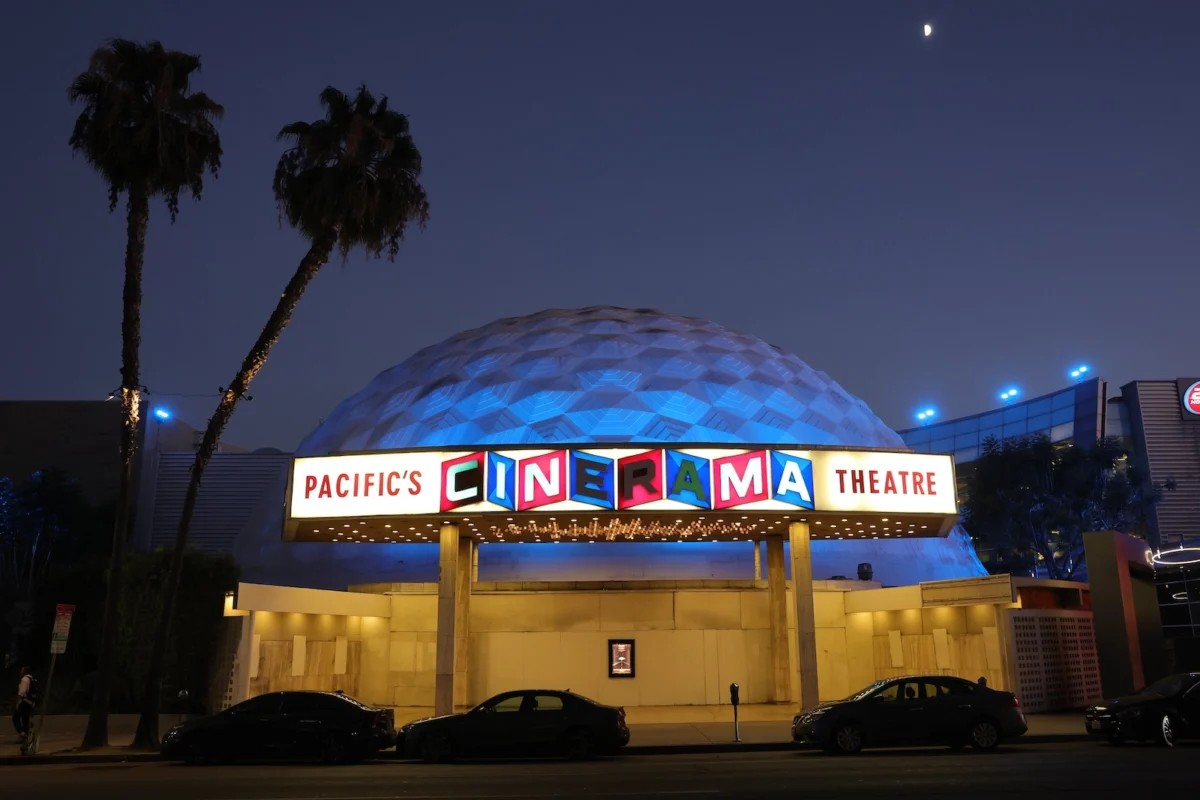
The cinematic landscape of Los Angeles is defined not just by the stars on the sidewalk, but by the silhouettes of its historic theaters. For three years, a shadow hung over Sunset Boulevard as the Cinerama Dome and the adjacent Arclight Cinemas Hollywood sat dark, a casualty of the pandemic-induced shuttering of Pacific Theatres and Decurion Corporation’s exhibition arm. However, a landmark deal has recently signaled a new dawn for the iconic venue.
Sony Pictures Entertainment has officially acquired the Cinerama Dome and the Arclight Hollywood multiplex, with the Austin-based cinema-eatery giant Alamo Drafthouse slated to manage operations. While the corporate maneuverings of major studios often happen behind closed doors, the revival of this particular landmark is being credited to an unlikely source: a 26-year-old film student whose digital activism forced the hand of industry titans.
Main Facts: A Strategic Acquisition and a Cultural Victory
The return of the Cinerama Dome is a multi-layered victory for the theatrical industry. The core facts of the revitalization project include:
- The Acquisition: Sony Pictures, a studio that has remained vocal about its commitment to the theatrical window, purchased the property from the Decurion Corporation. This move places Sony in an elite group of studios—including Netflix (The Egyptian) and Disney (The El Capitan)—that own and operate flagship premiere venues in Los Angeles.
- The Operator: Alamo Drafthouse, recently acquired by Sony itself, will take over the day-to-day operations of both the Dome and the massive Arclight multiplex. This ensures a "cinephile-first" approach to programming, combining high-end technology with the chain’s signature food and beverage service.
- The Catalyst: Ben Steinberg, a student at California State University and a budding filmmaker, led a three-year "Save Your Cinema" campaign. His grassroots efforts, which included a petition garnering over 30,000 signatures and high-profile protest stunts, are widely cited as the pressure point that kept the Dome in the public consciousness and eventually attracted Sony’s interest.
- The Technical Specs: The revival includes the restoration of the Dome’s unique projection capabilities and the reopening of the Arclight’s premiere screens, which feature 70mm projection and a massive 32-foot-high, 86-foot-wide screen.
Chronology: From Shuttered Windows to Neon Lights
The journey from the Dome’s closure in 2021 to its impending reopening in 2025 is a testament to the volatility of the modern film industry.
2020–2021: The Dark Ages
In March 2020, like all theaters globally, the Cinerama Dome closed due to COVID-19. However, while other chains slowly reopened, Decurion Corporation announced in April 2021 that it would not be reopening its Pacific Theatres and Arclight locations. The news sent shockwaves through the industry, as the Dome was not just a theater, but a historic-cultural monument (designated in 1998) and a top-grossing location for blockbuster premieres.
2021–2023: The Digital Resistance
Recognizing the potential loss of a landmark, then-23-year-old Ben Steinberg launched a Twitter (now X) account dedicated to saving the theater. Over the next two years, Steinberg transformed a simple social media handle into a sophisticated advocacy group. He leveraged the nostalgia of Hollywood locals and the global film community, keeping the hashtag #SaveTheDome trending during crucial industry events.
March 2024: The Projection Protest
The turning point occurred in early 2024. Frustrated by the lack of transparency from Decurion, Steinberg orchestrated a daring "guerilla" marketing stunt. Using high-powered projectors, he beamed the faces of Decurion’s owners onto the white concrete dimples of the Dome itself, demanding a sale or a reopening. The move risked legal citation but succeeded in generating a new wave of press coverage. Sources close to the deal suggest this specific moment re-ignited Sony’s interest in the property as a PR-friendly acquisition.
Late 2024: The Sony Intervention
Following months of speculation, Sony Pictures confirmed the purchase. By integrating the Dome into the Alamo Drafthouse ecosystem, the studio established a permanent footprint in the heart of Hollywood, ensuring that their future tentpoles—and those of other studios—would have a prestigious home for decades to come.

Supporting Data: The Economic and Technical Weight of the Dome
To understand why Sony and the public fought so hard for this venue, one must look at the data regarding its historical performance and technical architecture.
A Revenue Powerhouse
Before its closure, the Arclight Hollywood was consistently among the top five highest-grossing theaters in the United States. Its ability to draw "prestige" audiences—viewers willing to pay a premium for reserved seating, high-end concessions, and a "no-talking" policy—made it a goldmine for both blockbusters and independent "awards-season" films.
Architectural Uniqueness
The Cinerama Dome is the only concrete geodesic dome in the world. Built in 1963 in just 16 weeks to showcase the three-projector Cinerama process, it remains one of the few places on Earth capable of projecting onto a deeply curved screen without distortion. The screen itself, measuring 32 by 86 feet, provides an immersive experience that digital IMAX often struggles to replicate in terms of sheer peripheral coverage.
The 70mm Factor
The Arclight multiplex was a rare bastion for 70mm film projection. In an era where digital 4K is the standard, the ability to project 70mm (as seen with recent hits like Oppenheimer or Dune: Part Two) is a significant draw for cinephiles. The Arclight’s "Screen 14" was historically one of the most technologically advanced rooms in the country, a feature Alamo Drafthouse intends to maintain and upgrade.
Official Responses and Industry Perspectives
The reopening has sparked a flurry of commentary from industry insiders, many of whom discussed the implications on the latest episode of IndieWire’s Screen Talk podcast.
Ben Steinberg, Founder of "Save Your Cinema":
Speaking on the podcast, Steinberg remained humble yet focused on the future. "It started with a tweet, but it ended with a community," he noted. Steinberg emphasized that his work isn’t finished; he is currently pivoting his "Save Your Cinema" operation toward the Bruin Theater in Westwood Village, another 90-year-old palace facing an uncertain future.
The Studio Perspective:
While Sony has not released a granular breakdown of the purchase price, executives have signaled that this is a "legacy play." By owning the Dome, Sony secures a venue for its own premieres (such as the upcoming Spider-Man installments) while collecting rent and operating fees from other studios who wish to use the iconic space.
The Festival Circuit:
The news coincides with a shift in the global festival landscape. With the New York Film Festival (NYFF) announcing the world premiere of Godzilla Minus Zero, critics on Screen Talk pointed out that international tentpoles are increasingly filling the void left by American blockbusters. The Cinerama Dome’s return provides a high-capacity venue for these international "spectacles" to make their U.S. debuts.

Implications: A Paradigm Shift in Theater Ownership
The Sony-Arclight deal represents a broader trend in Hollywood: the "Studio-as-Exhibitor" model. Following the 2020 overturning of the Paramount Consent Decrees—which previously prevented studios from owning theaters to avoid monopolies—the floodgates have opened.
The "Boutique" Future
The success of the "Save Your Cinema" campaign suggests that the future of moviegoing is not in the "cookie-cutter" suburban megaplex, but in "eventized" cinema. Audiences are increasingly unwilling to leave their homes for a standard experience but will pay premium prices for the history, architecture, and superior technology offered by the Dome.
Corporate Consolidation and Creative Demands
The industry remains in a state of flux. Discussions are swirling regarding George Clooney’s rumored interest in purchasing Warner Bros., and the estate of the late Nikki Finke is reportedly preparing to sell "Hubris," a tell-all Hollywood exposé. Amidst this corporate drama, the Dome stands as a stable symbol of the medium’s endurance.
Furthermore, the pressure is on Warner Bros. to meet the creative and financial demands of Greta Gerwig and Noah Baumbach for a potential Barbie sequel. As talent demands more control and higher budgets, studios are finding that owning the "stage" (the theater) is just as important as owning the "script."
The Westwood Village Expansion
Ben Steinberg’s move toward the Bruin Theater suggests a new era of "civic cinephilia." If grassroots campaigns can save a landmark as massive as the Cinerama Dome, there is a blueprint for saving historic houses across the country. The implication is clear: the survival of cinema in the 21st century may depend less on corporate benevolence and more on the audacity of the fans who refuse to let the screens go dark.
As the neon lights of the Cinerama Dome prepare to flicker back to life, Hollywood is reminded that while the business of film is about spreadsheets and acquisitions, the soul of film is about the room where the lights go down and the story begins. For Ben Steinberg and the 30,000 people who signed his petition, that room is finally coming back.