"The Flowers of Algorab": A Sweeping Sci-Fi Odyssey Demanding a Master Navigator
Free League Publishing Unveils a Visually Stunning Yet Structurally Demanding Expansion for "Coriolis The Great Dark"
[CITY, COUNTRY] – [Date] – Free League Publishing has released "Coriolis The Great Dark: The Flowers of Algorab," an ambitious 192-page campaign expansion for its acclaimed tabletop roleplaying game, "Coriolis The Great Dark." While universally lauded for its breathtaking presentation and the promise of an epic science fiction narrative, early reviews highlight a significant caveat: the campaign’s intricate structure and variable pacing demand an exceptional level of commitment and adaptability from its Game Masters (GMs).
The original "Coriolis The Great Dark" established a hauntingly beautiful and desolate universe, known as the Third Horizon, where players delve into ancient ruins plagued by the enigmatic "Blight" – a mysterious affliction tied to forgotten secrets and artifacts. "The Flowers of Algorab" takes this compelling premise and weaves a grand campaign around the 500-year-old mystery of a lost ship, inviting players to uncover long-buried truths that could reshape the future of the Horizon. However, the path to these revelations, while visually spectacular, is fraught with structural challenges that could either elevate it to legendary status or lead to its premature abandonment, depending on the GM’s skill and dedication.
Main Facts: A Grand Vision with Complex Execution
"Coriolis The Great Dark: The Flowers of Algorab" arrives as a highly anticipated continuation of the critically acclaimed "Coriolis The Great Dark" universe. Published by Free League Publishing and designed by Kosta Kostulas, Nils Karlén, and Martin Grip, this substantial campaign book, spanning 192 pages, is priced at £43 and suitable for players aged 14 and above.
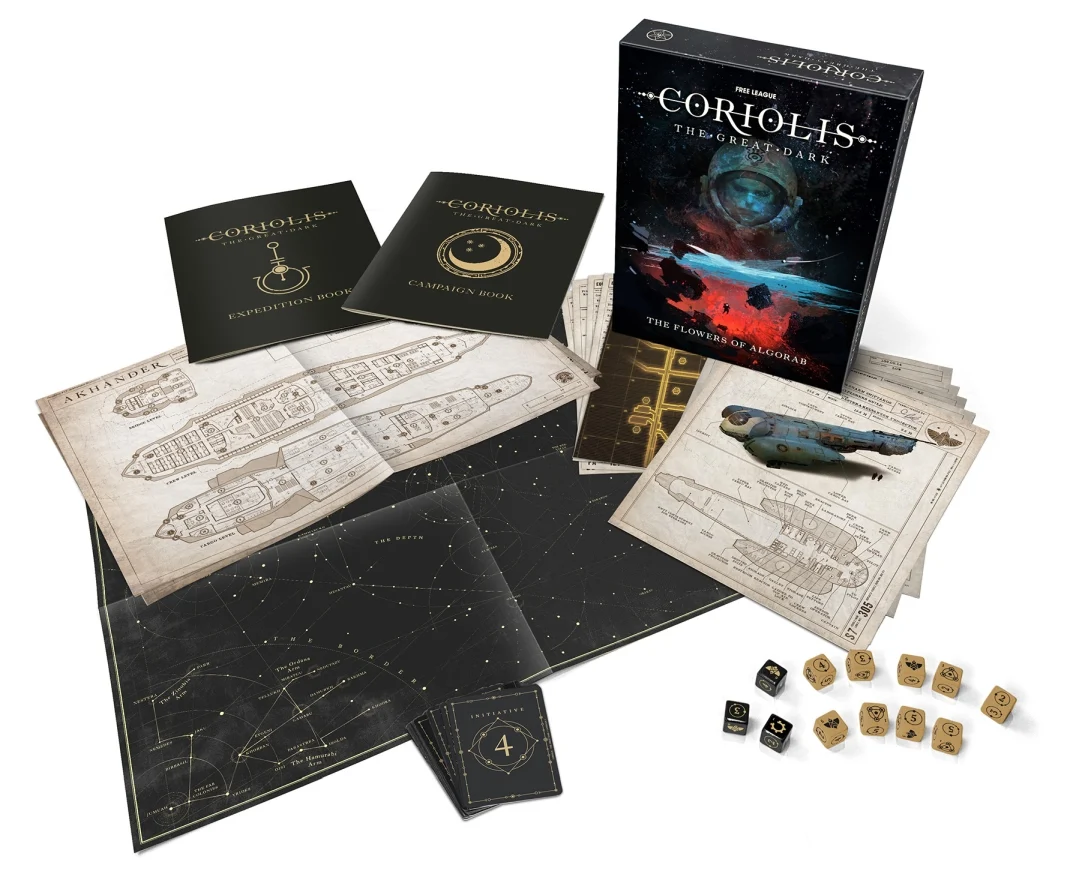
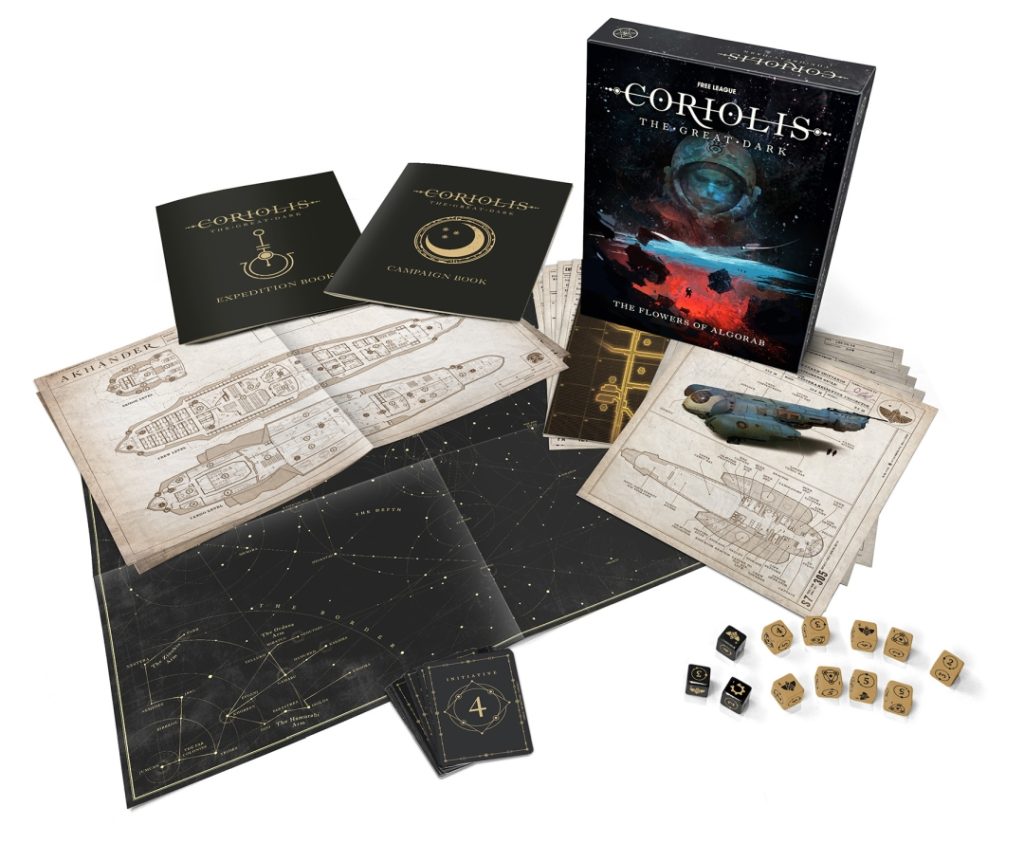
At its core, "The Flowers of Algorab" is an epic science fiction campaign designed to immerse players in a sprawling mystery concerning a starship lost half a millennium ago. It promises a deep dive into the lore of the Third Horizon, featuring a rich cast of non-player characters (NPCs), warring factions, and the signature ruin-delving exploration that defines the "Coriolis" experience. The physical product itself is a testament to Free League’s commitment to quality, boasting gorgeous maps, detailed ship schematics, evocative report handouts, custom dice, and a deck of initiative cards, all contributing to an immediate sense of immersion upon unboxing.
However, the campaign’s narrative flow presents a significant challenge for Game Masters. The initial chapter is characterized by a peculiar pacing, oscillating between overly slow and jarringly fast segments. A notable design choice involves "Escalation Events," pre-written moments intended to advance the plot, which have been described as akin to "cutscenes" in video games. While designed to raise stakes, these events often sideline player agency, leading to a sense of being "railroaded" through critical plot points. Furthermore, combat encounters are notably scarce in the early stages, relying heavily on skill rolls for Logic or Perception that, paradoxically, feel arbitrary due to their necessity for plot progression.
The campaign then shifts dramatically in subsequent chapters, moving from a linear, if problematic, introduction to a much more open-ended structure. These later sections are less a traditional narrative and more a collection of world guides and plot beats, demanding extensive pre-planning, improvisation, and even significant restructuring from the GM. The core story, for those GMs willing and able to undertake this demanding curation, is described as riveting. Ultimately, "The Flowers of Algorab" is positioned as a potential masterpiece for the most dedicated and creative GMs, but a daunting undertaking for others.
A Journey into the Great Dark: The Narrative and World
"The Flowers of Algorab" doesn’t just expand the "Coriolis" universe; it deepens its mysteries and broadens its horizons, literally. To understand its significance, one must first appreciate the foundation laid by the original game.
The Legacy of Coriolis: The Great Dark
"Coriolis The Great Dark" transported players to the Third Horizon, a cluster of star systems connected by ancient, unstable portals. It is a setting where advanced technology coexists with deep-seated mysticism, where the remnants of a forgotten civilization litter the void, and where the constant threat of the "Blight" looms. The Blight is not merely a disease but a cosmic phenomenon, an existential threat that manifests around ancient artifacts and locations of profound secrets, corrupting minds and twisting reality. It forces players into roles of daring explorers, desperate survivors, or cynical mercenaries, all navigating a bleak, intrigue-laden world inspired by both classic space opera and the rich tapestry of Arabian Nights folklore. The game masterfully blends exploration, horror, and political maneuvering, creating a unique atmosphere that has captivated a dedicated player base. The core appeal lies in delving into hazardous, forgotten ruins, deciphering cryptic clues, and confronting the unknown horrors of the Great Dark.
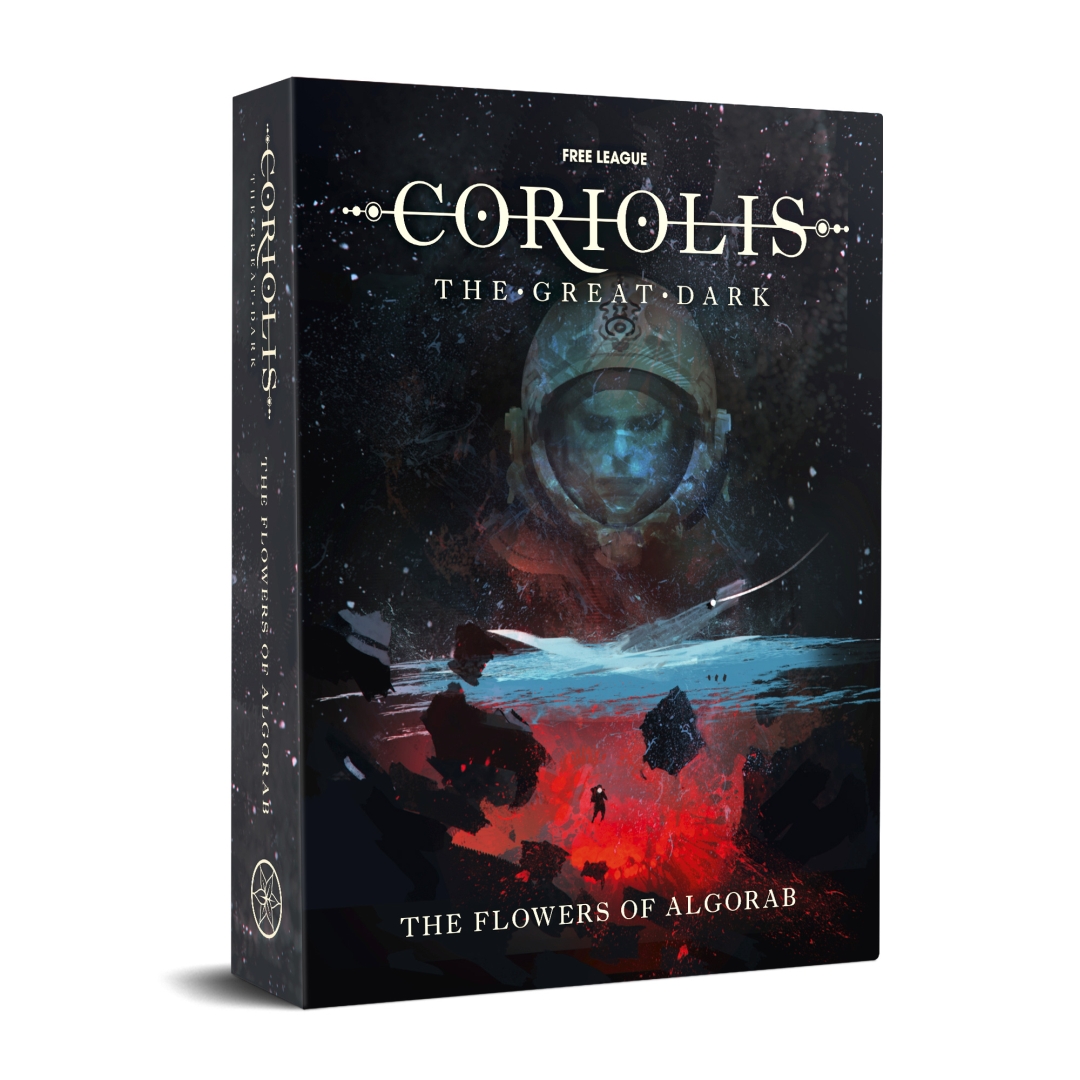
Unveiling The Flowers of Algorab: A 500-Year Mystery
"The Flowers of Algorab" takes this established framework and injects a focused, overarching mystery that promises to challenge players’ perceptions of the Third Horizon’s history. The campaign’s central enigma revolves around a starship that vanished five centuries prior. This isn’t just a simple missing persons case; the sheer passage of time suggests deep, systemic implications, potentially linked to the very origins of the Blight or the forgotten truths of the Firstcome civilization.
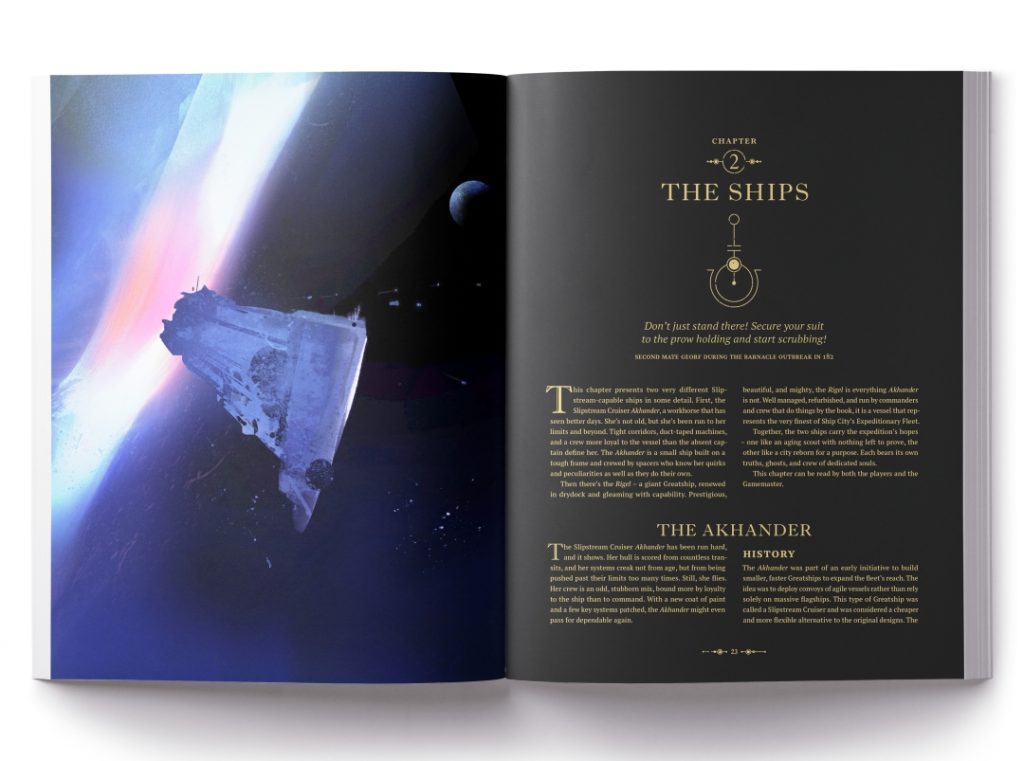
The campaign book is described as a treasure trove for lore enthusiasts, filled with detailed descriptions of new areas, each accompanied by evocative reference imagery. Players will encounter a rich array of non-player characters, each belonging to one of the myriad opposing factions that vie for power and influence within the Third Horizon. These factions are not mere window dressing; their intricate politics and conflicting agendas are woven into the fabric of the mystery, ensuring that player choices have far-reaching consequences. The "ruin delving" aspect, a beloved element of the original game, is central to "Algorab," serving as the primary mechanism for players to trickle out intel, piece together fragments of history, and slowly uncover the truth behind the lost vessel and its profound secrets. The campaign promises the epic scale of space adventures, pushing the boundaries of discovery and danger in the "Coriolis" universe.
The GM’s Crucible: Campaign Structure and Challenges
While the narrative premise and world-building of "The Flowers of Algorab" are undoubtedly strong, the campaign’s structural design presents significant challenges, particularly for the Game Master. The reviewer, Arlie Pallant, highlights a dichotomy in pacing and design philosophy that requires considerable GM intervention.
The Double-Edged Sword of Chapter One: Pacing and Player Agency
The opening chapter of "The Flowers of Algorab" is characterized by an uneven pace, described as simultaneously "too slow and sometimes too fast." This initial phase of the campaign is designed with pre-written narrative beats, known as "Escalation Events." These events, such as an NPC being murdered or players receiving a stern warning from a powerful force, are intended to inject urgency and advance the plot. However, their execution is likened to "cutscenes in a video game," where player characters have minimal agency or impact on the unfolding events.
In a tabletop roleplaying game, player agency is paramount. The ability for characters to influence the story through their decisions, actions, and even failures is what distinguishes TTRPGs from other narrative mediums. When critical plot points are delivered as pre-scripted "cutscenes," it can lead to players feeling disengaged, as if they are merely spectators rather than active participants. This can be particularly frustrating when these events are meant to "raise stakes" but simultaneously strip players of the means to address them creatively. For a campaign that promises epic space adventures, a slow, railroaded start where player choices feel inconsequential can significantly dampen enthusiasm.
Adding to this concern are the Logic or Perception rolls required for players to gather essential information. While skill checks are fundamental to TTRPGs, when the information is absolutely "required for the plot to progress," the rolls themselves can feel arbitrary. A failed roll might stall the narrative or force the GM to contrive ways for the information to be discovered regardless, undermining the significance of the dice roll. This combination of mandatory skill checks and pre-determined "Escalation Events" contributes to a strong sense of railroading in the opening chapter. Furthermore, for a game that features potential combat, the reviewer notes that "real combat doesn’t show up until several sessions in, even when played at breakneck speed," which might disappoint players looking for immediate action or variety in encounters.
The Vastness of Later Chapters: A GM’s Burden or Canvas?
The campaign’s structure undergoes a dramatic shift from chapter two onwards, moving to the opposite extreme of linearity. These later chapters are described as feeling "more like world guides and collections of plot beats instead of actual narrative." This design choice, while potentially offering immense creative freedom, places an extraordinary burden on the Game Master.
Instead of a clearly delineated plot with established scenes and transitions, GMs are presented with a toolbox of elements: detailed locations, intriguing NPCs, and potential story hooks. It becomes the GM’s responsibility to connect these disparate elements into a cohesive, engaging, and player-driven narrative. This requires a level of pre-planning, improvisation, and even outright rewriting that might be comparable to creating a freeform plot from scratch. The GM must act as an architect, constructing bridges between plot beats, developing intricate character arcs, and ensuring that the players’ actions genuinely influence the unfolding story. While the underlying story itself is lauded as "riveting," accessing and delivering it effectively demands a GM with exceptional storytelling prowess and an intimate understanding of their players’ preferences. Without such a dedicated and skilled GM, the campaign risks becoming a disjointed series of events rather than a coherent saga.
Supporting Data: Production Quality and Components
One area where "The Flowers of Algorab" receives unequivocal praise is its production quality and the sheer volume of immersive components included in the box. Free League Publishing has a reputation for delivering premium physical products, and this expansion is no exception.
Upon opening the box, players and GMs are immediately greeted with a sense of quality and attention to detail. The review highlights the "gorgeous" presentation, which is more than just aesthetic; it’s designed to thrust participants directly into the game’s rich setting.
What’s in the Box?
- Campaign Book (192 Pages): The core of the expansion, containing the detailed narrative, lore, NPCs, and settings for the extensive campaign. Its substantial length underscores the depth of the story Free League aims to tell.
- Expedition Booklet: Likely provides supplementary information, perhaps for specific encounters, side quests, or detailed locations, designed to be referenced during play without needing to flip through the main campaign book.
- Maps and Handouts: Crucial for immersion, these include detailed maps of solar systems, star charts, and potentially maps of specific locations or ruins. Handouts – such as in-game reports, cryptic messages, or faction manifestos – enhance the roleplaying experience by providing tangible props for players.
- 10 Initiative Cards: Streamline combat and encounter management, allowing GMs to easily track turn order and player/NPC actions.
- 12 Equipment Cards: Provide quick reference for gear, artifacts, or special items acquired during the campaign, making inventory management and understanding item properties more fluid.
- 6 Discovery Cards: Likely tied to significant findings or revelations within the campaign, adding a layer of excitement and tangible reward for exploration.
- 84 Tokens: Used to represent various in-game elements, such as status effects, special abilities, or specific locations on maps, aiding visual tracking during play.
- 2 Ship Blueprints: Offer detailed layouts of starships, essential for ship-to-ship combat, exploration, or boarding actions, enhancing tactical play.
- 2 Vehicle Blueprints: Similar to ship blueprints but for ground-based or smaller craft, adding another layer of strategic detail.
- 9 Base Dice & 3 Gear Dice: Custom dice designed for the "Coriolis" system, ensuring that players have all the necessary tools for resolving actions and challenges. The distinct types of dice suggest different mechanics for standard rolls versus those involving specialized equipment or circumstances.
This comprehensive array of components not only justifies the £43 price point but also significantly contributes to the overall immersive experience. The visual and tactile quality of these materials helps to ground players in the bleak yet beautiful universe of "Coriolis," compensating, to some extent, for the narrative’s structural idiosyncrasies.
Official Responses and Design Philosophy
As the provided text is a review and not a direct interview or press release from Free League Publishing, there are no explicit "official responses" to the specific criticisms raised. However, we can infer and discuss the likely design philosophy behind the choices made in "The Flowers of Algorab," particularly regarding its narrative structure.
Free League Publishing is renowned for its commitment to rich world-building, high production values, and often, a certain level of narrative ambition. Their games, including "Coriolis," "Tales from the Loop," and "Mutant: Year Zero" (which the reviewer suggests trying if you liked "Algorab"), frequently blend compelling lore with unique mechanics.
The decision to include "Escalation Events" that function like "cutscenes" in Chapter One likely stems from a desire to ensure that key plot points are hit and that the campaign’s overarching narrative progresses in a specific, impactful way. In a game with a complex, overarching mystery, designers sometimes opt for such narrative control to guarantee that players receive crucial information or experience pivotal moments necessary for the story to unfold as intended. This approach can be particularly appealing to GMs who prefer a more guided experience in the initial stages, ensuring they don’t miss critical setup elements. It might also be an attempt to emulate the cinematic feel of science fiction epics, where certain dramatic reveals or encounters are presented with undeniable force.
Conversely, the shift in later chapters towards a more open-ended, "world guide" style reflects another common design philosophy: empowering the GM with creative freedom. After establishing the core mystery and stakes in the initial chapters, designers might choose to provide a rich sandbox of locations, characters, and plot hooks, trusting the GM to weave these elements into a unique narrative tailored to their specific group of players. This approach acknowledges that every gaming group is different and that a rigid, pre-scripted narrative might stifle player creativity or lead to a disconnect if players pursue unexpected avenues. It aligns with the idea that the GM is a co-creator of the story, not just a narrator.
The tension between these two design philosophies—linear, controlled narrative versus open-ended sandbox—is a perennial challenge in TTRPG design. Designers constantly grapple with how much control to exert over the story to ensure its integrity and how much freedom to grant GMs and players to foster emergent storytelling. "The Flowers of Algorab" appears to embody both extremes within a single campaign, creating a demanding but potentially highly rewarding experience for GMs who can bridge these stylistic gaps. Free League’s history suggests they are not afraid of complex narratives that require significant investment from their community, viewing the GM as a vital component in bringing their worlds to life.
Implications for the Tabletop RPG Community
"The Flowers of Algorab" carries significant implications for Game Masters, players, and the broader tabletop RPG design landscape. Its unique structural choices highlight ongoing debates within the hobby and underscore the evolving role of the GM.
The Ideal Game Master: A Curatorial Role
The campaign unequivocally demands a Game Master who transcends the traditional role of a facilitator. For "The Flowers of Algorab," the GM must become a true "story architect" and curator. This isn’t merely about reading the book and narrating events; it requires:
- Adaptability and Flexibility: The GM must be prepared to pivot between distinct narrative styles—from the linear constraints of Chapter One to the expansive freedom of later chapters.
- Plot Restructuring: Critically, the review suggests that a good GM might need to "completely restructure the storyline," opening with a more player-driven delve, integrating player characters more deeply into the initial mystery, and transforming "Escalation Events" into genuine player moments. This is a substantial undertaking, akin to rewriting significant portions of the campaign.
- Character Integration: Beyond the published NPCs, a successful GM will need to forge intricate links between the player characters and the campaign’s central mystery, making the stakes personal and immediate.
- Creative Transformation: The "cutscene" moments must be reimagined into interactive challenges or opportunities for player choice, even if it means significantly altering the published narrative.
For GMs with strong storytelling instincts, extensive experience, and a willingness to invest considerable time in pre-game preparation, "The Flowers of Algorab" offers a rich narrative canvas. However, for less experienced GMs, or those who prefer a more straightforward module, the effort required might be overwhelming, potentially leading to GM burnout or a campaign that falters prematurely. The success of the campaign hinges almost entirely on the GM’s ability to interpret, adapt, and personalize the material.
Player Expectations and Campaign Longevity
The divergent narrative styles of "The Flowers of Algorab" also have implications for player expectations. Players accustomed to more linear campaigns might find the initial railroading frustrating, feeling their agency is diminished. Conversely, players who prefer a clear narrative path might become overwhelmed by the open-ended nature of later chapters, feeling lost without clear direction.
Effective communication between the GM and players becomes paramount. Setting expectations early about the campaign’s structure, the level of player agency, and the GM’s interpretive role can help mitigate potential frustrations. If successfully navigated by a skilled GM, "The Flowers of Algorab" has the potential to become one of those rare, talked-about campaigns that players remember for years, filled with epic moments and profound discoveries. However, if the GM struggles to bridge the narrative gaps or integrate player choices effectively, the campaign risks becoming a disjointed, unsatisfying experience that is quickly abandoned. Its longevity at the table is directly proportional to the GM’s commitment and skill.
Broader Trends in TTRPG Design
"The Flowers of Algorab" serves as an interesting case study in the ongoing evolution of TTRPG design. It embodies the constant struggle designers face in balancing a compelling, pre-written narrative with the inherent desire for player freedom and emergent storytelling. The campaign’s oscillation between highly structured and almost entirely open-ended design reflects differing philosophies within the industry. Some designers favor tight, cinematic plots, while others champion pure sandbox environments where the story truly emerges from player actions.
The comparison to "MUTANT: YEAR ZERO," another Free League title, is also telling. Both games share a "gritty survival tone and expedition-style scavenging of a ruined world." This reinforces Free League’s thematic preferences for challenging settings, deep exploration, and narratives that often delve into post-apocalyptic or dystopian themes. "The Flowers of Algorab," despite its structural quirks, fits squarely within this thematic lineage, offering a challenging yet rewarding experience for those who embrace the darker, more mysterious corners of science fiction. It suggests that Free League continues to push boundaries, even if it means designing campaigns that are not for the faint of heart, either for players or, more significantly, for their dedicated Game Masters.
Conclusion: A Diamond in the Rough for the Dedicated
"Coriolis The Great Dark: The Flowers of Algorab" stands as a testament to Free League Publishing’s unwavering commitment to high-quality production and immersive world-building. Its physical components are undeniably "gorgeous," and the core mystery of a 500-year-old lost ship within the Blight-afflicted Third Horizon is inherently "riveting." The promise of sweeping science fiction, rich character interactions, and deep lore exploration is palpable from the moment one opens the box.
However, the campaign is not without its significant challenges. The structural inconsistencies, particularly the "cutscene"-like "Escalation Events" and the abrupt shift from linearity to an almost overwhelming open-endedness, place an exceptional burden on the Game Master. This is a campaign that requires not just facilitation but active, creative authorship from the GM, who must be prepared to re-envision, restructure, and personalize vast swathes of the narrative to ensure player agency and maintain a cohesive flow.
Ultimately, the reviewer’s "Maybe" recommendation perfectly encapsulates the nuanced nature of "The Flowers of Algorab." For the seasoned, adaptable, and highly dedicated Game Master with a strong sense of storytelling and a deep understanding of their players’ desires, this campaign could indeed be a "diamond in the rough," offering an unforgettable and highly rewarding narrative experience that players will recount for years. For others, however, the sheer effort required to navigate its complexities might prove overwhelming, leading to a potentially brilliant narrative that remains largely unexplored. "The Flowers of Algorab" is not a journey for the casual, but a grand odyssey for those brave enough to truly master its course.