Echoes of Antiquity: Unraveling the Mythic Origins of Homer’s Terrifying Monsters
By [Your Name/Publication Name]
July 16th, 2026
Homer’s epic poem, the Odyssey, a cornerstone of Western literature, continues to captivate audiences millennia after its composition. While its enduring narrative of Odysseus’s arduous journey home has inspired countless adaptations, particularly in the realm of cinema, a significant part of its magnetic pull lies in the formidable array of mythical creatures that populate its pages. These monstrous encounters, from the one-eyed Cyclops Polyphemus to the alluring Sirens and the treacherous Scylla and Charybdis, have not only challenged Odysseus but have also embedded themselves deeply within our collective cultural consciousness. This article delves into the fascinating origins of these legendary beasts, exploring theories that suggest their roots lie in ancient lore and natural phenomena predating Homer’s epic.
The Enduring Allure of the Odyssey’s Monsters
The Odyssey, a narrative crafted approximately 2,500 years before the advent of cinema, has proven to be a remarkably fertile ground for filmmakers across generations. Beyond the pragmatic advantage of its ancient origins, which sidesteps the often frustrating complexities of copyright negotiations, the sheer imaginative power of the story, particularly its monstrous inhabitants, consistently ignites the creative spark of directors. The tale of Odysseus’s ten-year struggle to return to Ithaca is punctuated by encounters with a diverse bestiary of terrifying beings. Among the most iconic are the colossal, man-eating Laestrygonians; the Sirens, whose enchanting songs lure sailors to their doom, forcing Odysseus to lash himself to his ship’s mast; the dual threat of Scylla and Charybdis, guardians of the treacherous Strait of Messina; and perhaps the most viscerally memorable, the towering Cyclops, Polyphemus.
The pervasive influence of these creatures is undeniable. Even for those who have never read the Odyssey or witnessed its cinematic interpretations, their presence is felt in everyday language. The "Siren’s call" is a common metaphor for irresistible temptation, while "between Scylla and Charybdis" aptly describes a situation fraught with equally perilous and opposing dangers. Furthermore, the defining characteristic of a Cyclops – its singular eye – is instantly recognizable to a vast majority of the global population, regardless of their educational background.
Tracing the Ancient Threads: Theories of Mythological Genesis
Long before these figures became ingrained in the modern lexicon, they had to be conceived and developed in the ancient world. A compelling new video from the Hochelaga series, hosted by Tommie Trelawny, embarks on an investigative journey into the origins of these formidable characters. Trelawny’s exploration delves into prevailing theories that suggest many, if not all, of these monsters had their own extensive cultural journeys before Homer immortalized them in Odysseus’s perilous path.
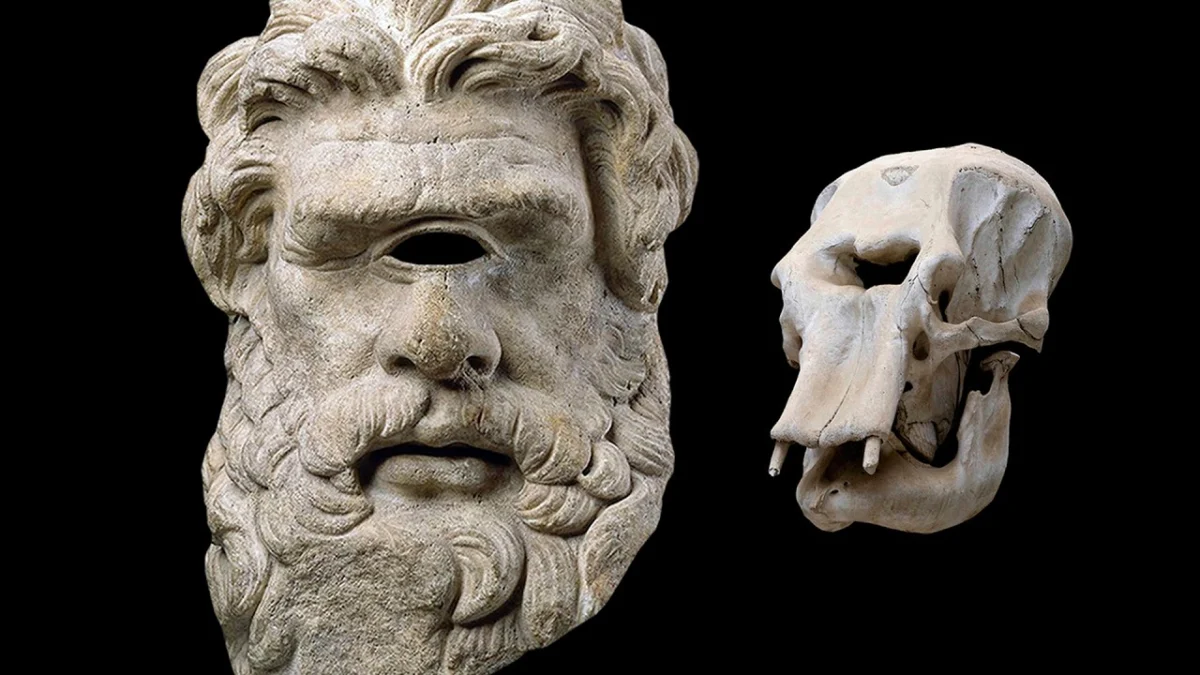
The myth of the Cyclops, for instance, is posited to have potentially been inspired by the fossilized skulls of ancient elephants, whose large central nasal cavities could easily be mistaken for a single, enormous eye socket by early peoples. Alternatively, the concept might stem from a more abstract notion of a brutish inversion of the human form, where the absence of two eyes could be interpreted as a signal of diminished intelligence or a more primitive existence.
The colossal Laestrygonians, described as giants who destroyed Odysseus’s fleet with boulders, might find their origins in monumental Bronze Age stone statues discovered on the island of Sardinia. These imposing figures, with their sheer scale and imposing presence, could have been the archetypal inspiration for such monstrous beings.
The Sirens, often envisioned today as alluring women, were perceived quite differently by pre-Christian ancient Greeks. They were envisioned as strange, winged creatures whose promises were not of romantic enticement but of profound knowledge. This shift in perception highlights how myths evolve and adapt across cultural contexts.
Scylla and Charybdis, who represent the destructive forces of nature, were a powerful means of personifying the inherent perils of the Strait of Messina. Their dual nature – the multi-headed monster and the all-consuming whirlpool – served as a potent metaphor for the unpredictable and devastating power of the sea.
The Evolution of Myth and its Modern Manifestations
The enduring power of these ancient myths lies not only in their original conception but also in their remarkable ability to be reinterpreted and reimagined for new audiences. The challenges they posed to Odysseus continue to resonate, particularly with filmmakers drawn to the spectacle of high-tech cinematic endeavors. The article notes that directors like Christopher Nolan, whose anticipated theatrical release of an Odyssey adaptation is imminent, are particularly captivated by these elements. While audiences know the hero’s ultimate triumph, it is the promise of these fantastical monsters that drives ticket sales.
The exploration of these monstrous origins is not merely an academic exercise; it speaks to the fundamental human impulse to explain the inexplicable, to personify natural forces, and to grapple with the darker aspects of existence. The journey from ancient fossil finds and monumental statues to the cinematic spectacles of today underscores the adaptability and resilience of storytelling.
Supporting Data and Scholarly Perspectives
Scholarly discourse on the origins of Homeric monsters is rich and varied, drawing from archaeology, comparative mythology, linguistics, and ancient history.
- The Cyclops: Beyond the elephant skull theory, some scholars propose that the myth could be aetiological, explaining unusual natural phenomena or even serving as a cautionary tale about the dangers of encountering isolated and potentially hostile populations. The association of one eye with a lack of foresight or wisdom is a recurring theme in mythology.
- The Sirens: Linguistic analysis suggests a possible connection to ancient Greek words related to "binding" or "charming," reflecting their power to ensnare sailors. The shift from winged creatures to anthropomorphic temptresses may be a later development, reflecting changing societal views on female allure and danger.
- Scylla and Charybdis: Geological and maritime historical research into the Strait of Messina offers tangible evidence for the dangers that inspired these figures. Whirlpools and treacherous currents were undoubtedly a significant threat to ancient mariners, making the personification of these forces a natural response. The description of Scylla’s multiple heads and barking could also be linked to descriptions of marine life or even the sound of the waves crashing against rocks.
- The Laestrygonians: Archaeological evidence of large, ancient settlements and fortifications in areas that could have been inhabited by formidable groups provides a potential basis for these giants. The notion of a hostile, powerful race capable of overwhelming a seafaring expedition is a common motif in ancient epics.
The Cinematic Legacy and Future Interpretations
The enduring appeal of Homer’s monsters in modern cinema is a testament to their primal power. Films that have adapted the Odyssey, from early silent films to ambitious modern blockbusters, consistently highlight these encounters. The visual possibilities presented by a one-eyed giant, a ship lured to its doom by enchanting voices, or a vessel navigating between a multi-headed monster and a colossal whirlpool offer directors a canvas for extraordinary visual storytelling.
The anticipation surrounding Christopher Nolan’s upcoming Odyssey adaptation, as mentioned in the original article, underscores this enduring fascination. The success of such films often hinges not just on the hero’s journey but on the captivating and terrifying nature of the obstacles he faces. The monsters, in essence, become characters in their own right, capable of driving plot and captivating audiences with their sheer spectacle.
Implications for Understanding Myth and Culture
The study of the origins of Homer’s monsters offers profound insights into the human mind and the development of culture. It demonstrates how:
- Natural phenomena are often personified: Early societies used mythological figures to explain and make sense of the powerful and often dangerous forces of nature.
- Cultural anxieties and aspirations are reflected in myth: The monsters represent not only external threats but also internal fears and desires, such as the fear of the unknown, the temptation of forbidden knowledge, and the struggle for survival.
- Myths are fluid and adaptable: The evolution of figures like the Sirens shows how myths can change over time, reflecting shifts in societal values and beliefs.
- Ancient narratives continue to inform modern imagination: The enduring power of these myths speaks to their universal themes and their ability to resonate with audiences across millennia.
The journey from the potential inspiration of elephant skulls and ancient statues to the sophisticated CGI creations on a modern cinema screen is a testament to the enduring power of human imagination and storytelling. The monsters of the Odyssey, born from the ancient world’s attempts to understand its environment and its own psyche, continue to thrill and provoke, proving that some fears and wonders are truly timeless.
Related Content:
- Watch the First Spectacular Film Adaptation of the Odyssey (1911)
- An Interactive Map of Odysseus’ 10-Year Journey in Homer’s Odyssey
- Hear What Homer’s Odyssey Sounded Like When Sung in the Original Ancient Greek
- The Ghosts and Monsters of Hokusai: See the Famed Woodblock Artist’s Fearsome & Amusing Visions of Strange Apparitions
- How Many Lives Does God Take in the Bible: An Investigation into a Surprisingly High Body Count
- Memento Mori: How Smiling Skeletons Have Reminded Us to Live Fully Since Ancient Times
Based in Seoul, Colin Marshall writes and broadcasts on cities, language, and culture. He’s the author of the newsletter Books on Cities as well as the books No Summarizing Korea and Korean Newtro. Follow him on the social network formerly known as Twitter at @colinmarshall.