The Solar Paradox: How Clean Energy is Accelerating a Global Groundwater Crisis
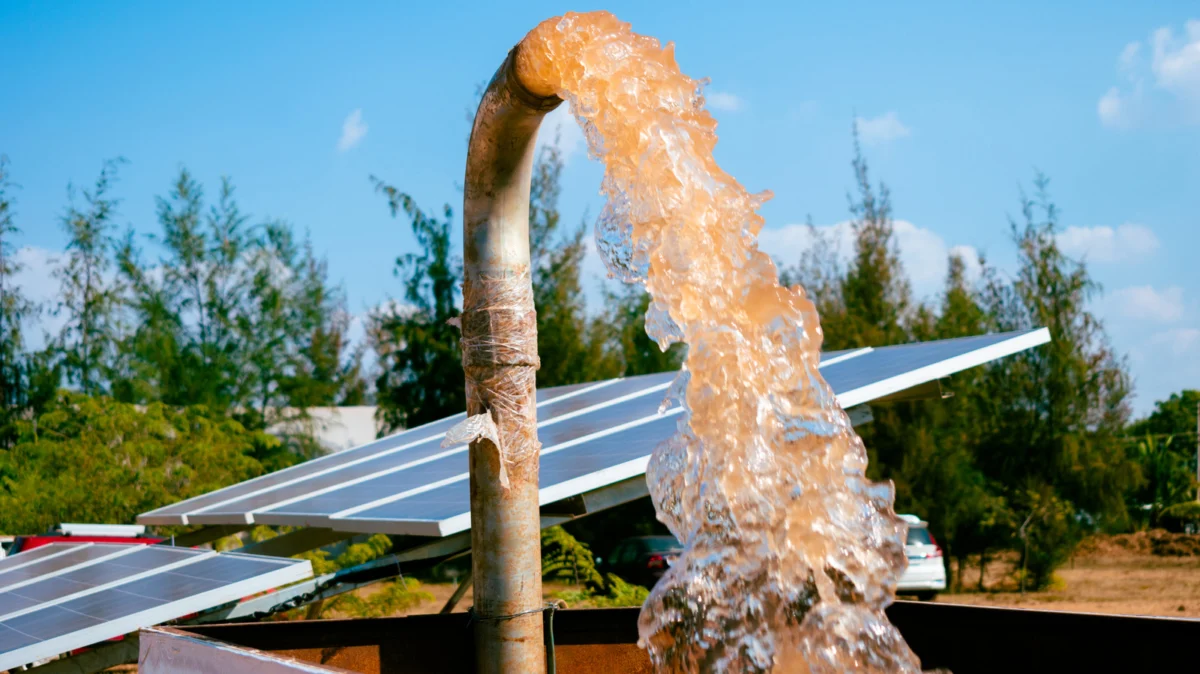
The global transition toward renewable energy has long been hailed as the ultimate panacea for the twin crises of climate change and rural poverty. Among the most celebrated innovations in this movement is the solar-powered irrigation pump (SIP). By replacing expensive, polluting diesel engines and unreliable grid-tied electric motors with clean, sun-driven technology, governments and NGOs hoped to empower farmers in the world’s most arid regions.
However, a disturbing trend is emerging. What was designed as a tool for environmental and economic liberation is backfiring in a profound way. Recent reports from the Yale School of the Environment and the Kleinman Center for Energy Policy at the University of Pennsylvania highlight a "Solar Paradox": by making the cost of pumping water effectively zero, solar technology is driving the rapid and unregulated depletion of the world’s most precious fossil resource—groundwater.
Main Facts: The Double-Edged Sword of Solar Irrigation
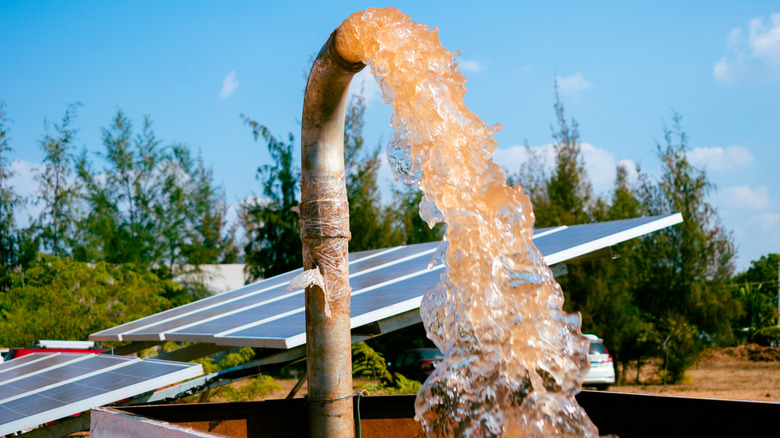
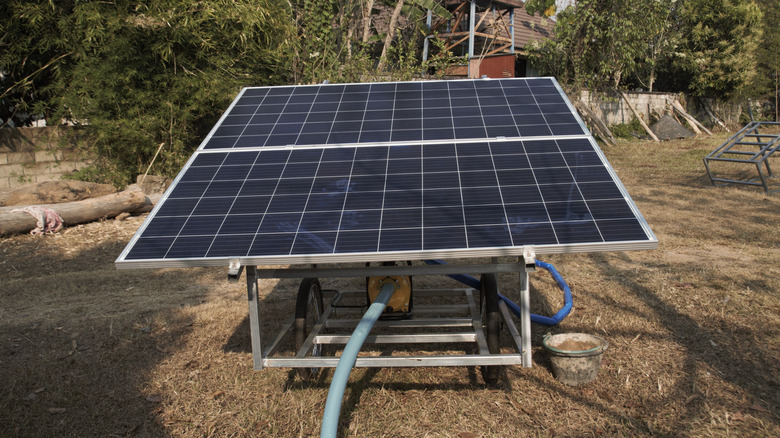
Solar pumps operate on a simple, seductive economic principle: zero marginal cost. Once the initial hardware is installed—often with heavy government subsidies—the cost of extracting an additional liter of water is non-existent. Unlike diesel pumps, which require expensive fuel, or electric pumps, which depend on a metered and often intermittent grid, solar pumps run as long as the sun is shining.
While this has boosted agricultural yields and provided a safety net for millions of subsistence farmers, it has removed the "economic brake" that previously limited water extraction. In regions where water governance is weak and aquifers are not replenished by rainfall, the result is a "tragedy of the commons" played out in high definition.
Key Issues at a Glance:
- Rapid Depletion: Aquifers that took millennia to fill are being emptied in decades.
- Subsidy-Driven Expansion: National targets, particularly in India and across Africa, are flooding the market with millions of new pumps without accompanying water-use regulations.
- The Depth Race: As water tables drop, farmers are forced to drill deeper, requiring more powerful (and expensive) equipment, eventually pricing out the poorest laborers.
- Ecological Decoupling: The "green" label of solar energy is shielding the technology from the scrutiny usually applied to extractive industries.
Chronology: From the Green Revolution to the Solar Surge
To understand how we arrived at this crisis, one must look at the evolution of agricultural irrigation over the last half-century.
The Era of Diesel and Grid Power (1970s–2000s)
Following the Green Revolution, farmers in Asia and Africa transitioned from traditional manual or animal-powered water lifting to mechanized borewells. For decades, diesel was the primary fuel. However, rising oil prices and the carbon footprint of diesel became significant burdens. In countries like India, the government attempted to alleviate this by providing subsidized or free electricity to farmers. This led to the bankruptcy of many state utilities and created a "locked-in" dependence on a failing grid.
The Solar Pivot (2010–2020)
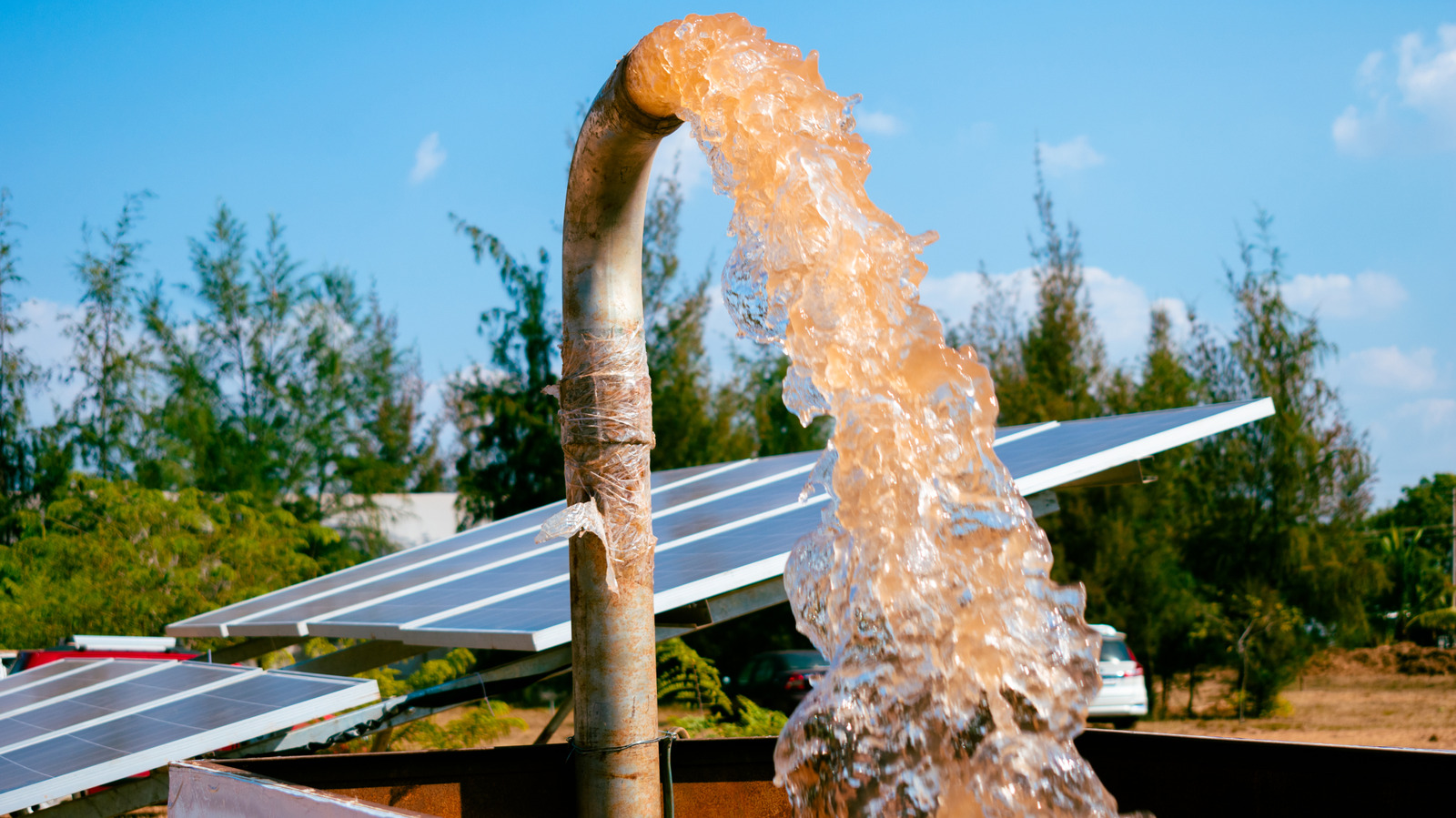
As the cost of photovoltaic (PV) panels plummeted globally, solar pumps emerged as the "perfect" solution. They offered energy independence for farmers and reduced the subsidy burden on state electricity boards. International climate funds began pouring billions into SIP programs, viewing them as a way to meet carbon reduction targets while supporting the United Nations’ Sustainable Development Goals.
The Current Crisis (2021–Present)
The scale of adoption has reached a tipping point. In 2024, the disconnect between energy policy and water policy has become impossible to ignore. Governments are now realizing that they have solved an energy problem only to create an existential water problem.
Supporting Data: Regional Snapshots of Decline
The impact of solar pumps is not theoretical; it is being measured in hundreds of feet of lost water table depth across the globe.
India: The Epicenter
India is the world’s largest user of groundwater, and its solar ambitions are unparalleled. The Indian government’s PM-KUSUM scheme aims to install or convert 3.5 million pumps to solar power. While this reduces the carbon footprint, the regional data is alarming. In Rajasthan, one of India’s most arid states, studies indicate that solar pump usage has increased groundwater extraction by 16% to 39%. In some districts, the water table has plummeted by 400 feet, leaving traditional shallow wells bone-dry.
Pakistan: A 25% Increase in Depth
In the Punjab province of Pakistan, the "breadbasket" of the nation, the story is similar. Since 2020, the depth required to reach water has increased by 25% in areas with high solar pump density. Water levels that were once 40 feet below the surface are now frequently found only at 60 feet or deeper.
Yemen: Pumping from the Abyss
In war-torn Yemen, where the centralized power grid has largely collapsed, solar energy has been a literal lifesaver. However, without any regulatory oversight, the extraction has reached desperate levels. Farmers in some regions are now forced to pump water from staggering depths of 1,300 feet (nearly 400 meters). This is not sustainable irrigation; it is the mining of a finite resource.
Official Responses: Shifting from Promotion to Regulation
Governments and international bodies are beginning to acknowledge that "green" does not always mean "sustainable." The response has been a mix of technological fixes and economic incentives.
The "Net-Metering" Solution
India is pioneered a "Solar as a Cash Crop" model. Under some versions of the PM-KUSUM scheme, farmers are encouraged to link their solar pumps to the regional electricity grid. The incentive is simple: if a farmer saves water and doesn’t run the pump, they can sell the "excess" electricity back to the government. By putting a price on the electricity generated, the government is effectively putting a price on the water saved.
Drip Irrigation Mandates
In Morocco, the government has recognized that changing the power source isn’t enough; you must change the delivery method. The state is pushing for a transition to drip irrigation, which delivers water directly to the roots of plants, reducing waste. However, critics note that drip irrigation often leads farmers to switch to more water-intensive crops or expand their acreage, a phenomenon known as the "Jevons Paradox," where increased efficiency leads to increased total consumption.
The Yale School of the Environment Recommendations
Researchers suggest that solar pump subsidies should be "de-coupled" from pure installation numbers. Instead, subsidies should be contingent on the installation of water meters and the adherence to community-managed water budgets.
Implications: The Long-Term Cost of "Free" Water
The backfiring of solar pumps carries implications that extend far beyond the agricultural sector.
1. Social Inequality and the "Death Spiral"
As groundwater levels drop, only the wealthiest farmers can afford to drill deeper and buy the more powerful solar arrays needed to lift water from 1,000 feet. Small-scale farmers, whose shallow wells dry up first, are often forced to sell their land and migrate to urban slums. This creates a cycle of rural dispossession and increased wealth disparity.
2. Food Security vs. Water Security
There is a fundamental tension between the need to grow more food for a rising population and the need to preserve aquifers. If the aquifers are depleted to the point of exhaustion, the solar pumps—no matter how efficient—will become useless "stranded assets." The result would be a total collapse of agricultural productivity in regions that currently feed hundreds of millions.
3. The Rebound Effect of Clean Energy
The solar pump crisis serves as a cautionary tale for the broader energy transition. It demonstrates that moving to "clean" energy does not automatically solve the problem of over-consumption. In fact, by making resource extraction cheaper and more socially acceptable, clean energy can sometimes accelerate environmental degradation in other spheres.
4. Ecological Collapse
Aquifers are not just water tanks; they support entire ecosystems. As they dry out, land subsidence (sinking ground) can occur, permanently damaging the storage capacity of the earth and destroying infrastructure. Furthermore, the drying of baseflows in rivers—which are often fed by groundwater—can lead to the death of local flora and fauna.
Conclusion: A More Thoughtful Revolution
The solar pump was supposed to be a miracle of modern engineering—a way to harness the sun to feed the hungry. It can still be that miracle, but only if it is stripped of its "free water" status.
The path forward requires a holistic approach that integrates energy policy with hydrogeology. This includes educating farmers on the finite nature of aquifers, implementing strict community-based water monitoring, and ensuring that the financial incentives for saving water are higher than the profits from over-irrigating.
The sun provides an infinite supply of energy, but the earth does not provide an infinite supply of water. If we fail to respect the limits of the latter, the very technology meant to save us may hasten our descent into a dry and thirsty future.