The Battle of Rich Mountain: A Commander’s Myth and the Birth of an Army
Main Facts: The Genesis of a General’s Legend
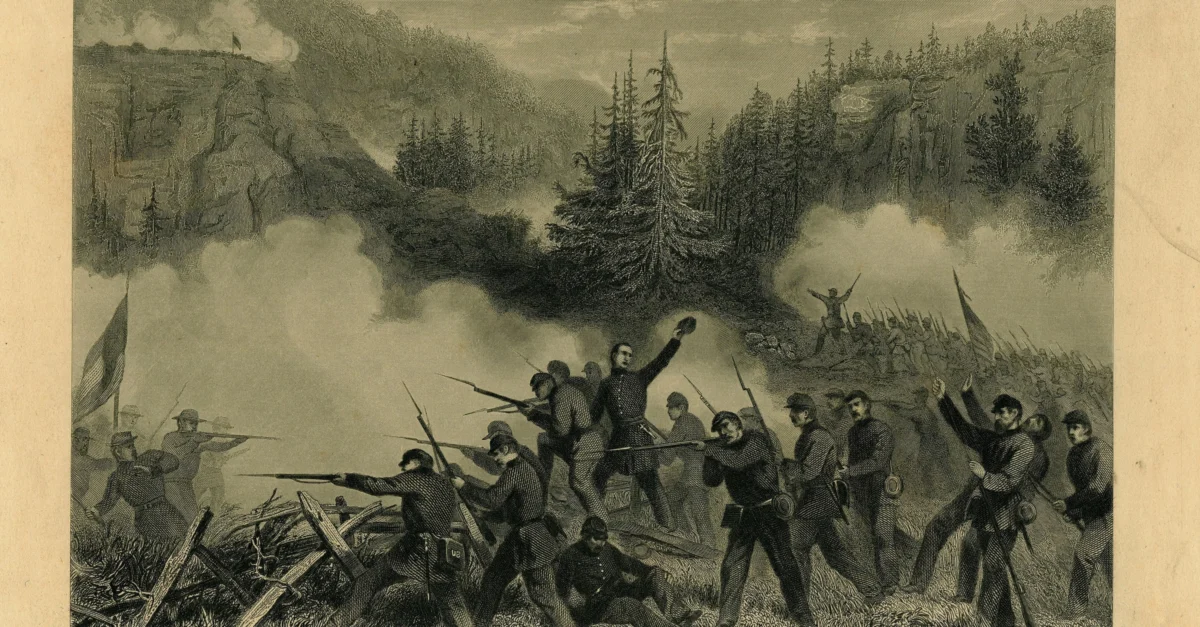
On July 11, 1861, in the rugged terrain of Randolph County, Virginia (an area that would soon become West Virginia), the Battle of Rich Mountain unfolded, marking what was officially reported as the second significant Union victory of the nascent American Civil War. This engagement, following closely on the heels of the Battle of Philippi on June 3, 1861, was quickly attributed to Major General George B. McClellan. The perception of these swift successes catapulted McClellan into the national spotlight, transforming him into a celebrated hero in the North and ultimately leading President Abraham Lincoln to place him in command of the Army of the Potomac, and subsequently, all Union armies.
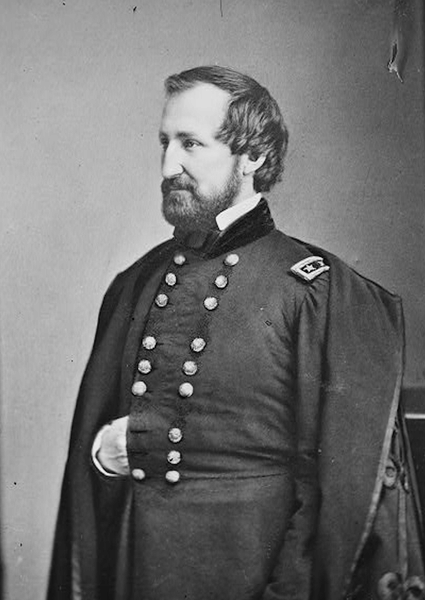
However, historical scrutiny reveals a more complex truth behind these early triumphs. The victory at Philippi, often dubbed the "Philippi Races" due to the Confederate retreat, was primarily secured by Brigadier General Thomas A. Morris, largely owing to the inexperience of the Confederate forces he faced. Similarly, the decisive action at Rich Mountain was orchestrated and executed by Brigadier General William Rosecrans. McClellan, despite his limited direct involvement in the decisive combat, deftly claimed credit for both, solidifying his image as a brilliant, decisive commander. This skillful self-promotion, though based on a distorted reality, paradoxically laid the groundwork for one of the Union’s most crucial contributions to the war effort: the transformation of a demoralized, undisciplined volunteer force into the formidable, professional Army of the Potomac. The Battle of Rich Mountain, therefore, stands as a victory that, through a twist of fate and strategic narrative, inadvertently created the foundation of a future army.
Chronology: The Western Virginia Campaign Unfolds
Early Skirmishes and Strategic Stakes
The spring and early summer of 1861 were a period of intense anticipation and tentative engagements. The Battle of Philippi, fought on June 3, was the first organized land battle of the war and a Union victory, instilling a sense of overconfidence in the North. Conversely, the Confederate victory at Big Bethel on June 10, also in Virginia, briefly countered this narrative, with the Southern press highlighting perceived Union incompetence. Both sides, in those initial weeks, harbored a dangerous illusion that the war would be brief, decided by a few swift encounters.
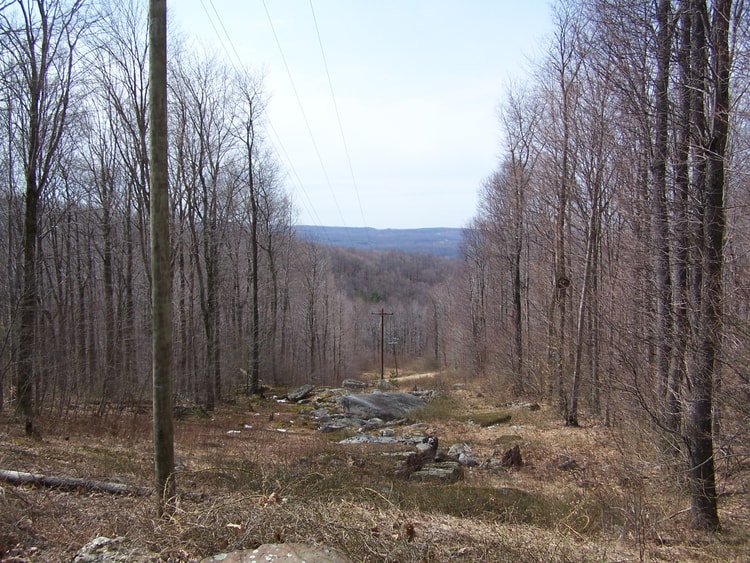
The mountainous region of northwestern Virginia, though geographically isolated from the state’s eastern power centers, held immense strategic value. Its populace was largely Unionist, and control of its passes and turnpikes, particularly the Staunton-Parkersburg Turnpike, was vital for both sides. This road provided access to the Ohio River Valley, a critical supply and transportation artery, and represented a potential invasion route for either Union or Confederate forces.
Following the rout at Philippi, the scattered Confederate forces retreated south to Huttonsville. On June 14, Brigadier General Robert S. Garnett arrived to take command, tasked with consolidating defenses and securing the vital mountain passes. Garnett, recognizing the critical importance of Laurel Hill and Rich Mountain, strategically deployed his force of just over 5,000 men. He established his headquarters at Laurel Hill with the bulk of his troops, while approximately 1,300 men, under the command of Lieutenant Colonel John Pegram, were positioned on Rich Mountain, tasked with defending Camp Garnett at the pass.
McClellan Takes Command
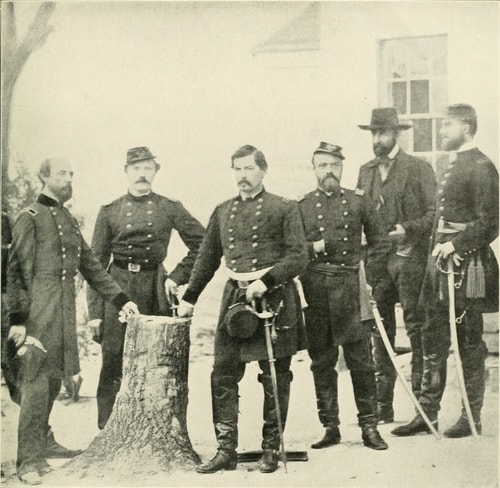
Major General George B. McClellan, having organized the successful Philippi attack from his headquarters in Cincinnati, Ohio, soon arrived in Virginia to assume personal command of the Union forces. His primary directive was clear: drive the secessionists from the strategically vital northwestern region. With Philippi secured, McClellan turned his gaze toward Garnett’s entrenched positions at Laurel Hill and Rich Mountain.
By early July, Union forces were on the move. Brigadier General Morris, leading a substantial contingent, marched from Philippi to confront Garnett at Laurel Hill, initiating skirmishes on July 7. McClellan, meanwhile, advanced with the main Union force to intercept Pegram’s command at Rich Mountain, arriving on July 9. He was reinforced on July 10 by Brigadier General William Rosecrans, bringing additional troops. McClellan’s initial plan involved a multi-pronged assault: a feint against Garnett at Laurel Hill to pin him down, a direct frontal engagement with Pegram at Rich Mountain, and a flanking maneuver around the Confederates to seize the nearby town of Beverly, thereby cutting off any escape route.
The Battle for Rich Mountain (July 11, 1861)
McClellan commanded a significantly superior force, almost 20,000 men against Garnett’s total of 5,300. Yet, in a pattern that would come to characterize his command throughout the war, McClellan vastly overestimated the size of the Confederate enemy. Instead of proceeding directly with his planned attack, he ordered artillery to open fire on the supposedly vast enemy force, a force that, in reality, did not exist. This inherent caution and misjudgment would prove to be a recurring theme.
On the evening of July 10, a pivotal moment arrived in the form of David Hart, a 22-year-old local civilian and staunch Unionist, who knew the intricate mountain paths. Taken to Rosecrans, Hart revealed a concealed route that would allow Union forces to bypass Confederate lines and launch a surprise attack on their flank. Rosecrans presented this daring plan to McClellan, who, despite his usual hesitancy, approved it. Rosecrans, with Hart as his guide, then departed with a brigade, embarking on the arduous flanking march.
The revised strategy was straightforward: Rosecrans would initiate his flanking attack, and upon hearing the sounds of battle, McClellan would launch a coordinated frontal assault. This combined action was intended to overwhelm and destroy the Confederate forces on Rich Mountain. However, the march proved far more challenging than anticipated. Heavy rains had transformed the mountain path into a treacherous quagmire, turning what was estimated to be a few hours’ journey into a grueling ten-hour ordeal.
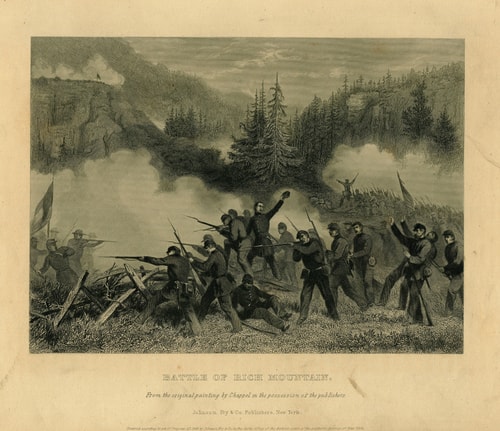
As hours passed, McClellan’s anxiety grew. Concluding that the flanking maneuver had failed, he dispatched a messenger to recall Rosecrans. This messenger, however, was intercepted by Confederate pickets, revealing the Union’s flanking intentions to Pegram. Forewarned, Pegram hastily repositioned his single artillery piece and organized his defenses, anticipating an attack from the north.
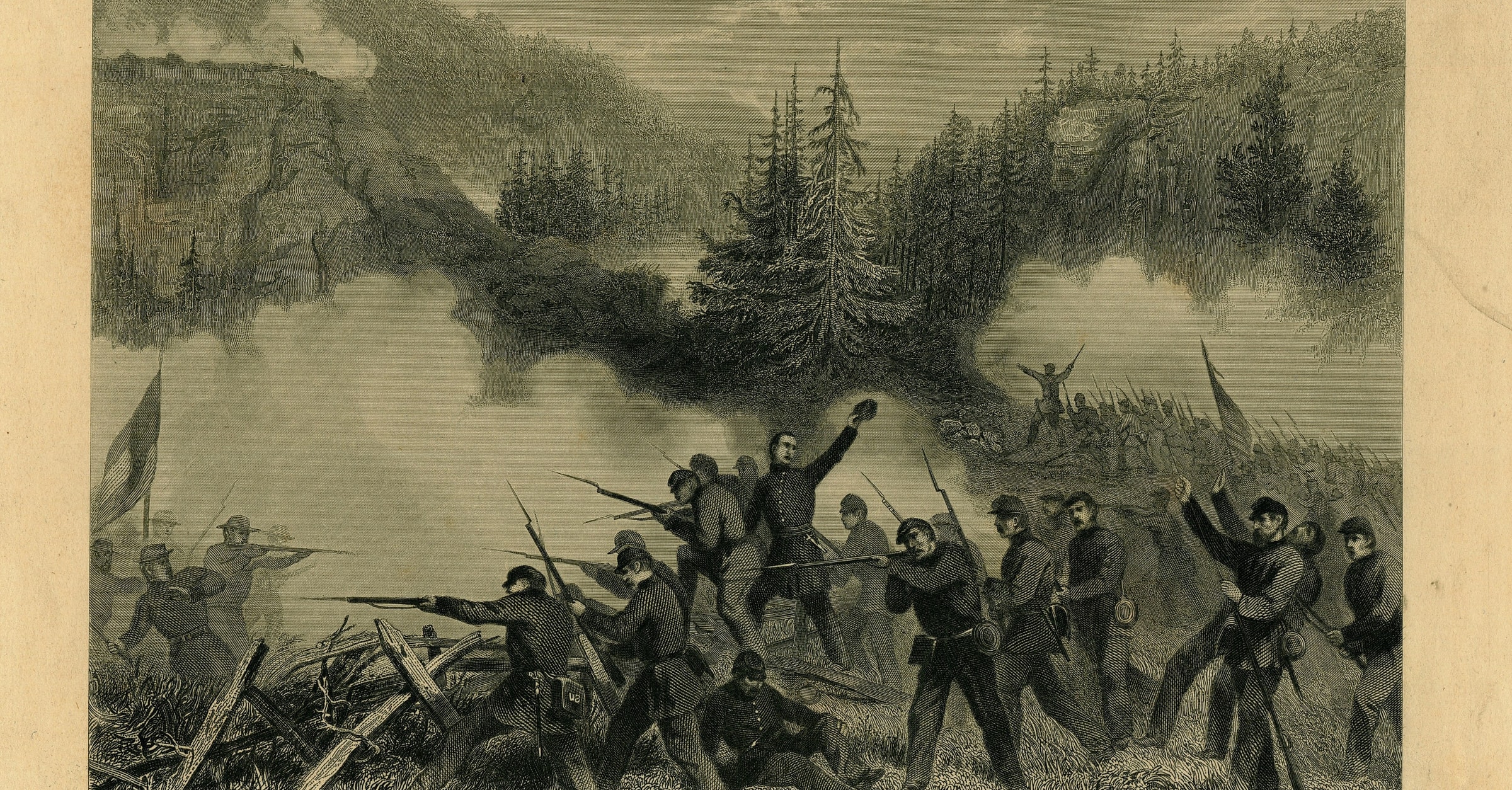
At approximately 2:30 PM on July 11, Rosecrans’s exhausted but determined brigade emerged from the dense woods, attacking Pegram’s position from the unexpected southern flank. Despite being surprised, Pegram’s men, using their sole cannon, managed to repulse Rosecrans’s initial two assaults. In the thick smoke of battle, as Rosecrans’s men briefly fell back to regroup, the Confederates let out a triumphant cheer, believing they had routed the Union forces. Back in his camp, McClellan misinterpreted this cheer as a signal of Rosecrans’s defeat and, plagued by his characteristic indecisiveness, refused to order the frontal assault that was meant to be the hammer to Rosecrans’s anvil.
Unbeknownst to McClellan, Rosecrans had merely ordered his men to take cover and maintain silence, creating the illusion of a retreat. Then, with a sudden and decisive move, he ordered a bayonet charge. The Union soldiers surged forward, overwhelming Pegram’s position. The Confederate defenders, caught off guard by the renewed ferocity, broke and fled down the slope toward Beverly. The town, which McClellan’s original plan called for securing, remained open, providing an escape route. Due to the lateness of the hour and the exhaustion of his troops, Rosecrans chose not to pursue, instead securing the former Confederate position on Rich Mountain for the night.
The Pursuit to Corrick’s Ford (July 12-13, 1861)
Learning of Pegram’s defeat on Rich Mountain, General Garnett, realizing his position at Laurel Hill was now untenable, decided to evacuate under the cover of darkness. He slipped away during the night of July 11-12, heading toward Beverly. As dawn broke on July 12, his advance scouts reported Union troops in the town. These were, in fact, Pegram’s scattered men who had fled Rich Mountain, but Garnett, lacking accurate intelligence, concluded that Beverly had fallen to McClellan’s main force. Believing his primary escape route down the Staunton-Parkersburg Turnpike was cut off, Garnett was forced to backtrack, leading his weary troops onto difficult, secondary roads that would take them south.
Meanwhile, Brigadier General Morris, advancing on Garnett’s abandoned Laurel Hill position, discovered the Confederates had vanished. He immediately dispatched Captain Henry W. Benham with 1,840 men to pursue Garnett’s retreating column. What followed was a frantic chase through the rain-soaked, muddy terrain. Garnett, desperate to slow his pursuers, ordered his men to fell trees, abandon wagons, and create any obstacle possible along their path. The recent heavy rains had turned the mountain roads and trails into thick, sloppy mud, making progress arduous for both sides, but Benham’s determined pursuit kept him within sight of the Confederate rear guard by the morning of July 13.
A running fight ensued, with skirmishes breaking out between the Union vanguard and the Confederate rearguard. The chase culminated at Corrick’s Ford on the Cheat River. Garnett, bravely placing himself in the vanguard, returned with ten sharpshooters to command the rearguard, attempting to make a stand and allow his main force to cross the ford. As he rode back and forth, shouting orders to rally his men, Garnett was struck in the back by a bullet and fell dead into the river. The exact origin of the fatal shot—whether from a Union rifle or, tragically, a Confederate one—remains a point of historical debate. Regardless, Garnett became the first general officer killed in action during the American Civil War, a somber milestone.
Garnett’s death demoralized his already exhausted and retreating army. His remaining forces broke and scattered into the surrounding woods. While some surrendered, most managed to escape into the dense wilderness. Benham, having achieved his objective of breaking the Confederate force and securing the pass, chose not to pursue the scattered remnants further, returning to report to Morris.
Supporting Data: Figures and Context
The Battle of Rich Mountain and the subsequent Corrick’s Ford engagement involved disproportionate forces, a factor that heavily influenced the outcome. At Rich Mountain, Union forces under McClellan (including Rosecrans’s brigade) numbered approximately 20,000 men, though not all were directly engaged. Confederate forces under Pegram at Camp Garnett numbered around 1,300. Rosecrans’s flanking brigade consisted of about 2,000 men. The Union suffered approximately 46 casualties (killed and wounded), while the Confederates lost around 40 killed and wounded, and importantly, 150 were captured.
The pursuit to Corrick’s Ford involved Captain Benham’s 1,840 Union troops against General Garnett’s retreating force, which had started with roughly 3,500 men from Laurel Hill. The casualties at Corrick’s Ford were lower, with Union losses around 2 killed and 6 wounded, and Confederate losses including General Garnett killed, 20 killed or wounded, and 50 captured. The harsh terrain, coupled with incessant rain, significantly impacted troop movements and logistics, turning roads into mud and slowing tactical maneuvers. The strategic importance of the Staunton-Parkersburg Turnpike and the mountain passes cannot be overstated; control of these routes was critical for projecting power and securing loyalties in the region. Communication limitations, as evidenced by McClellan’s intercepted messenger and his misinterpretation of battlefield sounds, also played a crucial role in shaping the events.
Official Responses: Crafting a Narrative
McClellan, quick to seize the moment, dispatched a telegraph to Washington, D.C., that painted a picture of overwhelming success and personal triumph. His report read, in part:
"Garnett’s forces routed…his army demoralized…have taken all his guns, a very large amount of wagons, tents, etc. — everything he had…Garnett killed…We have annihilated the enemy in Western Virginia…Our success is complete & secession is killed in this country." (Lesser, 56)
This hyperbolic declaration, delivered at a time when the North desperately craved good news, was met with widespread jubilation. The Northern press, eager for heroes, hailed McClellan as the "Young Napoleon." His perceived victories at Philippi and Rich Mountain, despite the actual limited nature of his direct command in battle, propelled him into the national consciousness as the Union’s most promising commander.
President Lincoln, grappling with the crushing defeat at the First Battle of Bull Run (Manassas) on July 21, 1861, found himself in urgent need of a leader who could restore morale and organize the shattered Union forces. McClellan’s carefully crafted narrative, coupled with his reputation for organizational skill, made him the obvious choice. Lincoln summoned him to Washington, D.C., and entrusted him with the command of the Army of the Potomac, a monumental responsibility for a general with such limited field experience.
However, behind the public accolades, there were dissenting voices and critical observations. McClellan’s official report notably omitted any significant credit for Rosecrans, the true architect of the Rich Mountain victory, and even criticized Morris for not pursuing Garnett’s army more aggressively, despite Morris’s subsequent effective pursuit by Benham. Jacob Cox, one of McClellan’s brigade commanders, offered a prescient assessment that highlighted McClellan’s inherent flaws, a pattern that would recur throughout his career:
"The Rich Mountain affair, when analyzed, shows the same characteristics which became well known later. There was the same overestimate of the enemy, the same tendency to interpret unfavorably the sights and sounds in front, the same hesitancy to throw in his whole force when he knew that his subordinate was engaged." (Budiansky, 43)
The Southern reaction to the campaign was initially one of dismissal, viewing the losses as minor setbacks. However, the death of General Garnett, the first Confederate general killed in the war, was a significant blow, and the strategic loss of northwestern Virginia was quickly recognized as a serious territorial and political defeat.
Implications: The Unforeseen Legacy
McClellan’s Ascension and Command of the Army of the Potomac
The events of Rich Mountain, though personally mismanaged by McClellan on the field, were instrumental in his meteoric rise. His undeniable strengths lay in administration and organization, not necessarily in aggressive field command. Upon arriving in Washington after the First Battle of Bull Run, McClellan was faced with a demoralized, largely amateur force. He immediately set about transforming it. Between July and November 1861, through sheer force of will, meticulous planning, and an uncanny ability to connect with his men, McClellan forged the undisciplined volunteers into a highly disciplined, well-equipped, and professional fighting force – the Army of the Potomac. His personal charisma and genuine care for his soldiers earned him their deep loyalty, turning a collection of shattered regiments into a formidable machine. This organizational genius, ironically, stemmed from a public image built on victories largely won by others. The paradox was clear: a flawed field commander was given immense power due to perceived early victories, yet he utilized that power to build an army that would eventually win the war, albeit under different leadership.
The Campaign’s Broader Strategic Impact
The Western Virginia Campaign, culminating with Rich Mountain and Corrick’s Ford, had profound strategic consequences. It secured Union control over a crucial region, effectively pushing Confederate influence out of the northwestern counties of Virginia. This strategic gain was a significant factor in the region’s eventual secession from Virginia and its admission to the Union as the new state of West Virginia in 1863. The campaign’s success not only protected the vital Ohio River Valley but also deprived the Confederacy of resources and a significant portion of its population.
However, the campaign also established a troubling pattern for McClellan’s command style. His overestimation of enemy forces, his hesitancy to commit to decisive action, and his tendency to interpret battlefield developments unfavorably would plague his future campaigns, most notably the Peninsula Campaign and the Battle of Antietam. Rich Mountain served as an early indicator of these characteristics, foreshadowing the strategic missed opportunities that would ultimately cost him his command.
A Foundation for Future Victory
The narrative of "fake news" and selective credit is hardly a modern phenomenon, and McClellan masterfully leveraged it to his advantage. Despite his shortcomings as a field commander, the impact of his leadership in creating the Army of the Potomac cannot be overstated. He instilled a sense of pride, professionalism, and cohesion that had been sorely lacking. While he would later be removed from command after Antietam in September 1862, following a series of frustratingly cautious campaigns that exasperated Lincoln, the army he meticulously molded was the very force that Ulysses S. Grant would later lead to crush the Confederacy and secure Union victory.
After Antietam, McClellan was ordered to Trenton, New Jersey, to await further orders that never came. He never again commanded Union forces in the Civil War. Yet, the legacy of the Battle of Rich Mountain, though clouded by the misattribution of credit, remains profound. It was the victory, however won and however reported, that provided the crucial springboard for George B. McClellan’s ascent, allowing him the opportunity to organize and shape the very army that, under subsequent leadership, would ultimately preserve the Union. Without the perception of victory at Rich Mountain, the Army of the Potomac as it came to be known, a pivotal instrument of Union triumph, might never have taken shape.