The Great Partition: Unpacking the Scramble for Africa and Its Enduring Legacy
LONDON, UK – In the final two decades of the 19th century, a relentless and often brutal competition erupted among European imperial powers to carve up the African continent. This period, known as the "Scramble for Africa," witnessed an unprecedented land grab, driven by a complex interplay of economic desires, geopolitical ambitions, and a deeply flawed sense of moral superiority. The consequences of this rapid partitioning, meticulously drawn on maps with little regard for the continent’s intricate realities, continue to reverberate across Africa and the global landscape today.
Main Facts: A Continent Divided
The Scramble for Africa, fundamentally, was a race for control. European nations, including Britain, France, Germany, Belgium, Portugal, and Italy, initially sought to dominate trade routes and access Africa’s vast natural resources. These coveted riches included ivory, gold, diamonds, rubber, palm oil, and groundnuts, essential for fueling the burgeoning industries of Europe and enriching their burgeoning empires. Beyond raw materials, the allure of a global empire offered immense prestige and strategic advantage on the international stage.
However, the motivations extended beyond pure economics and power. A prevailing ideology, often termed the "civilizing mission," saw Europeans justify their expansion through the desire to spread Christianity and what they perceived as "civilisation." This paternalistic view, deeply rooted in racial prejudice, cast African societies as "primitive" and in need of European guidance, conveniently masking the underlying exploitation.
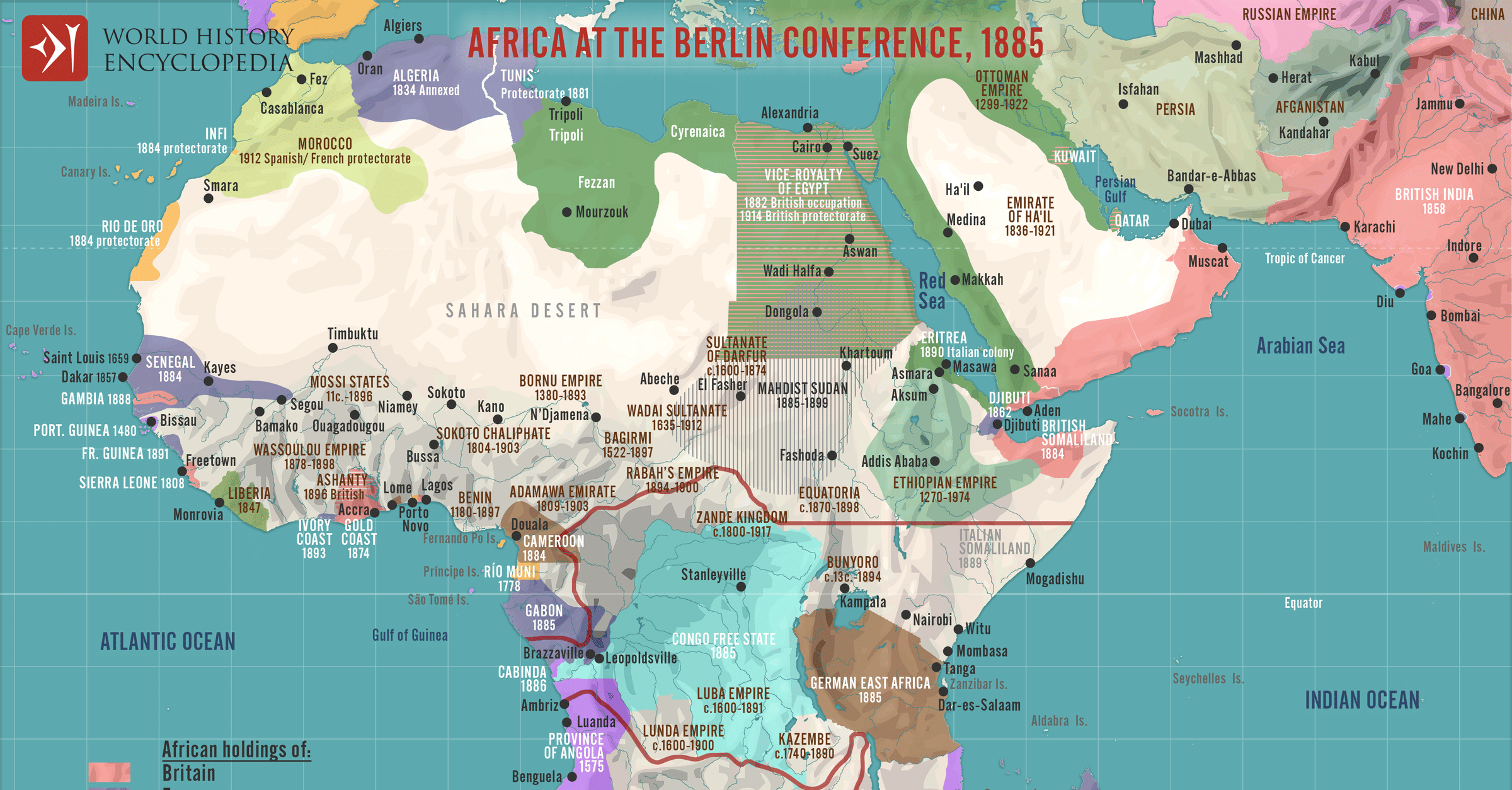
The immediate outcome of this frenzied competition was the near-total subjugation of Africa. By the early 20th century, only two African states—Liberia and Abyssinia (Ethiopia)—remained free from some form of direct European control. The continent was arbitrarily divided by European cartographers, creating artificial borders that ignored existing ethnic, linguistic, and geographical realities. This imposed fragmentation led to devastating divisions among local peoples and disrupted traditional trade networks, setting the stage for long-term instability and conflict. Natural resources and indigenous populations were ruthlessly exploited, their labor and wealth siphoned off to fuel European prosperity.
Chronology: The Accelerating Pace of Conquest
The seeds of the Scramble were sown long before its intense climax. For centuries, European presence in Africa had largely been confined to coastal trading posts, primarily for the transatlantic slave trade. However, by the mid-19th century, the abolition of the slave trade shifted European commercial interests towards other commodities. Explorers and missionaries began to venture deeper inland, mapping uncharted territories and reporting back on the immense potential wealth.
1860s-1880s: Catalysts for Expansion
Several key developments dramatically accelerated European interest in Africa’s interior:
- Resource Discoveries: The discovery of diamonds at Kimberley in Southern Africa in 1867, followed by the monumental gold deposits at Witwatersrand in 1886, sparked a "mineral rush." These finds drew legions of prospectors and colonists, fueling dreams of immense wealth and pushing the frontiers of European influence ever deeper.
- Medical Breakthroughs: The development of quinine as an effective treatment for malaria significantly reduced the mortality rate among Europeans in tropical climates. This medical advancement removed a major barrier to sustained European presence and exploration in previously inaccessible regions.
- Exploration and Infrastructure: Expeditions charting Africa’s great rivers—the Congo, Zambezi, and Niger—and the eventual confirmation of the Nile’s source in the 1860s (Lake Victoria) opened up vital waterways. The advent of steamboats revolutionized transportation, allowing goods to be moved faster and more cost-effectively from the interior to the coast, and facilitating the penetration of European influence. These river systems also became arteries for missionaries, traders, and military expeditions.
- Economic Pressures in Europe: Coinciding with these developments was the "Great Depression" of the international capitalist economy during the last three decades of the 19th century. This period of economic instability, marked by volatile prices and declining profits, spurred European merchants and governments to seek new markets for their manufactured goods and secure new sources of raw materials and investment opportunities in Africa. As The Cambridge Encyclopedia of History notes, merchants warned their governments that "future prosperity might depend on developing new African outlets for exports and investment."
The Berlin Conference (1884-1885): Rules of the Game
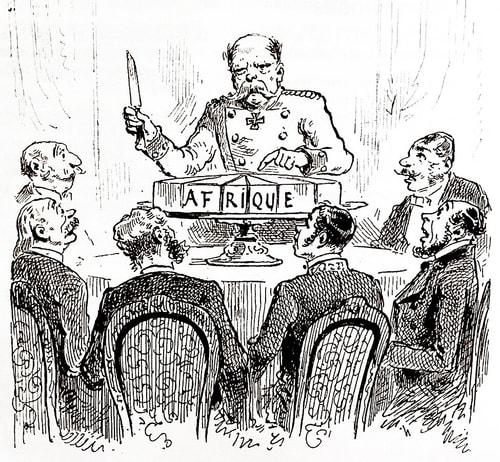
As competition intensified, particularly among Britain, France, and Germany, the risk of inter-European conflict over African territories grew. To prevent these colonial rivalries from escalating into a wider European war, German Chancellor Otto von Bismarck convened the Berlin Conference from November 1884 to February 1885. Notably, no representatives from any African states were invited to this momentous gathering, underscoring the colonial powers’ dismissive attitude towards African sovereignty.
The primary aim of the conference was not to initiate the partition, but to establish a framework for regulating existing and future claims. Key outcomes included:
- Free Navigation: Guaranteeing free navigation on the Niger and Congo rivers for all European powers.
- "Effective Occupation": The most significant principle established was that a European government’s claim to a particular region would only be recognized if that power was already "effectively in control" of the area. This vague definition, however, spurred rather than curbed the scramble, as powers rushed to establish a physical presence—through treaties, military outposts, or administrative structures—to solidify their claims.
- Spheres of Influence: While the conference did not directly draw borders, it legitimized the concept of "spheres of influence" and provided a legalistic veneer for the subsequent territorial acquisitions.
Ironically, what was intended to control colonial activity only served to accelerate, widen, and deepen it. European powers were now compelled to demonstrate "effective occupation" by any means necessary, often leading to aggressive military campaigns and the imposition of treaties on African rulers, frequently under duress or through deception.
The Colonization Process: From Trade to Direct Rule
The process of colonization typically followed a predictable pattern:
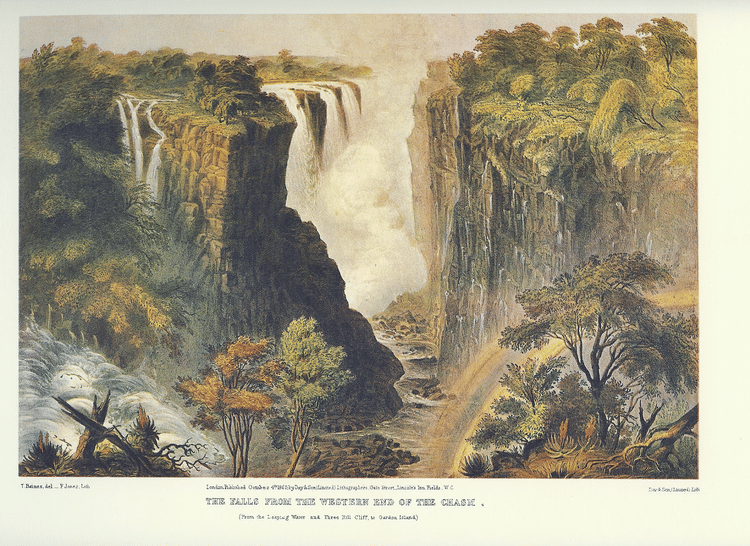
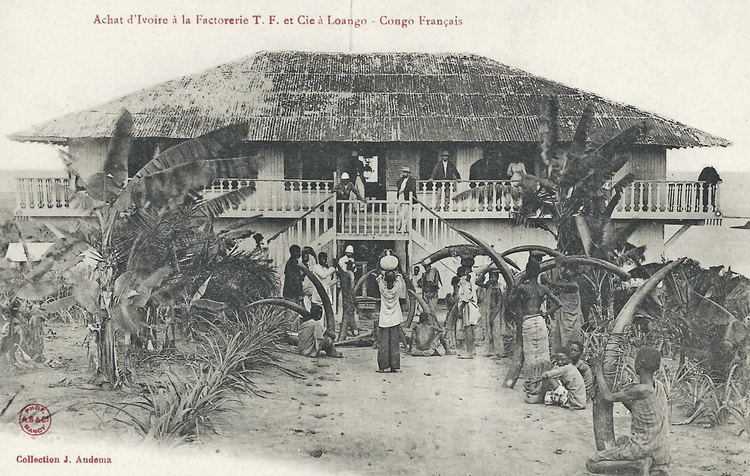
- Trading Stations and Missionary Outposts: Initially, European presence was established through coastal trading stations, often owned by private companies, which monopolized regional trade. Simultaneously, missionaries set up schools, hospitals, and churches, often gaining initial inroads with local chiefs.
- State Investment and Infrastructure: As the lucrative potential of a region became apparent, European governments took a more direct interest. They funded infrastructure projects like roads, bridges, railways, and telegraph systems, designed to facilitate resource extraction and maintain control.
- Military Pacification and Administration: State investment necessitated military protection. Armies were dispatched, and local militia and police forces were formed. African resistance, though often fierce and courageous, was typically overwhelmed by superior European weaponry—rifles, machine guns, and artillery. The economic might of European empires allowed them to sustain costly wars to secure future resource gains, further bolstered by powerful navies (especially Britain and France) for resupply and support.
- Establishment of Colonial Rule: As European settler communities grew, local political institutions were developed, almost invariably excluding Africans. Regions were then formally granted colony status or, in strategically important areas (like Egypt with the Suez Canal), a less controlling "protectorate" status.
Supporting Data: The Pillars of Imperialism
The Scramble for Africa was underpinned by a complex array of economic, political, and ideological justifications that, upon closer scrutiny, reveal a systematic exploitation cloaked in self-serving narratives.
Economic Imperatives: The Engine of Empire
The sheer abundance of Africa’s natural resources was a primary driver. European industries clamored for:
- Minerals: Gold and diamonds from Southern Africa transformed national treasuries and fueled global finance. Copper, tin, and other minerals were vital for industrial production.
- Agricultural Products: Palm oil was crucial for lubricants, soaps, and candles; rubber, increasingly in demand for tires and industrial machinery, led to horrific exploitation in regions like the Belgian Congo; groundnuts, cocoa, coffee, and cotton were cash crops that reshaped African agriculture to serve European markets.
- Ivory: Driven by demand for luxury goods (piano keys, billiard balls, ornaments), the ivory trade decimated elephant populations across the continent.
Beyond raw materials, Africa represented new, untapped markets for Europe’s manufactured goods. As European economies industrialized, they produced surpluses that needed outlets, and African populations, however impoverished, offered a potential consumer base. This economic relationship was inherently asymmetrical, designed to benefit the colonizer at the expense of the colonized.
Geopolitical Grandeur and Strategic Advantage
Possessing a global empire was a potent symbol of national power and prestige in the late 19th century. Britain, already a vast colonial power, sought to solidify its dominance. France aimed to expand its influence across West and North Africa. Germany, a newly unified nation, sought its "place in the sun" to rival older empires. Belgium’s King Leopold II brutally exploited the Congo Free State as his personal domain. Portugal and Italy, seeking to reclaim past glories or establish new ones, also joined the fray.
Strategic locations, such as the Suez Canal in Egypt, were vital for maintaining global trade routes and military projection, making control of surrounding territories a geopolitical necessity. The competition was not just for Africa, but for global supremacy, with Africa serving as a crucial battleground.
The "Civilizing Mission": A Moral Veneer for Conquest
Perhaps the most insidious justification was the concept of the "civilizing mission," often encapsulated by the "3 Cs": Commerce, Christianity, and Civilization. European leaders, missionaries, and citizens alike convinced themselves that their actions were benevolent, an altruistic endeavor to uplift "backward" peoples.
- Christianity: Missionaries, often preceding or accompanying colonial forces, genuinely believed in their duty to spread Christianity and eradicate what they deemed "pagan" indigenous religions and customs. While some provided education and healthcare, their efforts were intrinsically linked to cultural assimilation and the erosion of African belief systems.
- Civilization: This concept entailed imposing European social norms, governance structures, legal systems, and educational models. Europeans believed they were bringing progress, order, and modernity to a continent they viewed as stagnant. This narrative conveniently ignored the rich and diverse civilizations that had thrived in Africa for millennia.
- Social Darwinism and Racism: At the heart of the "civilizing mission" was a pervasive and virulent racism, buttressed by pseudo-scientific theories like Social Darwinism. This ideology posited that certain races and nations were inherently superior and more "evolved" than others, thus granting them the right, even the duty, to dominate. As historian M. E. Chamberlain highlighted, the widespread 19th-century European view was that "It was both proper and inevitable that the more advanced would conquer and rule the less advanced. In the end it would be to the advantage of both…this [view] gave them [imperialists] both a comforting reassurance that they were on the winning side and a kind of absolution for any dubious acts they might commit in fulfilling an inevitable and ultimately benevolent destiny."
This racist vocabulary and worldview were reinforced through popular culture—literature, theatre, music, advertising, and educational materials—which glorified empire, presented Africans as exotic or savage, and instilled a sense of national pride in colonial ventures across all social classes in Europe. The promises made at the Berlin Conference regarding the well-being of Africans largely remained empty, revealing the true priorities beneath the humanitarian rhetoric.
Official Responses: Resistance and Imposed Order
African peoples were not passive recipients of European aggression. While often outmatched by superior weaponry and organization, numerous African states and communities mounted fierce resistance.
African Agency and Resistance:
- Strategic Alliances: Some African rulers attempted to play European powers against each other, or form alliances with one to fend off another, hoping to preserve their autonomy or gain an advantage over local rivals.
- Armed Resistance: Many chose outright military confrontation. Notable examples include:
- The Mahdist War (Sudan, 1881-1899): A protracted and successful rebellion against Egyptian and later British rule led by Muhammad Ahmad al-Mahdi, which established an independent state for over a decade.
- The Zulu Kingdom (Southern Africa): Fiercely resisted British expansion, achieving a famous victory at Isandlwana in 1879 before ultimately being defeated.
- The Ashanti Empire (Ghana): Engaged in multiple wars with the British throughout the 19th century, famously resisting annexation for decades.
- The Maji Maji Rebellion (German East Africa, 1905-1907): A large-scale uprising against German colonial rule, tragically suppressed with immense loss of life.
- Diplomatic Efforts: Some sought diplomatic solutions, sending envoys to Europe, though these efforts rarely yielded positive results against the determined imperialist agenda.
Despite bravery and ingenuity, the technological gap, particularly in military hardware, and the sheer economic might of the European powers, often proved decisive. Those who fought directly were, sooner or later, absorbed into a colony. Nevertheless, underground activism and resistance movements continued, laying the groundwork for the nationalist movements of the 20th century that would eventually achieve independence.
European Administrative Structures:
Once territories were acquired, European powers implemented various forms of administration:
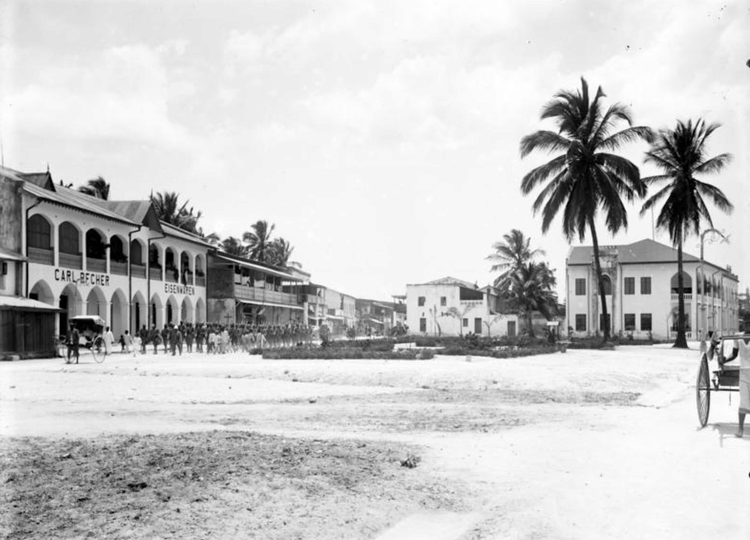
- Direct Rule: Practiced by France, Belgium, Germany, and Portugal, this involved imposing European administrators at all levels of government, with little to no allowance for indigenous leadership or institutions. The goal was often assimilation into the colonizer’s culture.
- Indirect Rule: Favored by Britain, this system utilized existing African political structures and traditional rulers as intermediaries, integrating them into the colonial administration. While seemingly less intrusive, it often reinforced divisions, distorted traditional authority, and served to minimize administrative costs while maintaining effective control.
Regardless of the method, African peoples were systematically excluded from meaningful political participation. Colonial economies were designed for extraction, with minimal investment in local development unless it directly served the colonizer’s interests. This meant the construction of railways and roads primarily linked resource-rich interiors to ports, rather than connecting African communities to each other.
Lasting Impact: A Legacy of Disruption and Development
By the dawn of the 20th century, the Scramble for Africa was complete. Over 100 million Africans found themselves under foreign rule, their destinies dictated by distant European capitals. This monumental shift left an indelible mark on the continent, the repercussions of which are still acutely felt today.
Political Fragmentation and Instability:
The most visible and enduring legacy is the arbitrary nature of Africa’s national borders. Drawn by European cartographers with rulers on maps, these frontiers often sliced through existing ethnic groups, divided communities with shared languages and cultures, and forced disparate groups into single political entities. This artificial fragmentation became a potent source of post-independence conflict, fueling civil wars, ethnic strife, and political instability as newly independent nations struggled to forge cohesive identities within ill-conceived boundaries.
Economic Underdevelopment and Dependence:
Colonial economies were structured for resource extraction and export to Europe, not for integrated internal development. This created economies heavily dependent on primary commodities, vulnerable to global price fluctuations, and lacking diversified industrial bases. Infrastructure development was skewed towards facilitating extraction, leaving many regions underserved. Traditional African economic systems were disrupted, and local industries often suppressed to prevent competition with European manufactured goods. The legacy of economic dependence and the unequal terms of trade continue to challenge African nations today.
Social and Cultural Disruption:
The imposition of European languages, educational systems, legal codes, and religious practices often undermined or outright suppressed indigenous cultures, languages, and belief systems. While some advancements in education and healthcare were introduced, they were often limited and designed to serve colonial administrative needs. The social hierarchies imposed by colonial rule, often based on race, further exacerbated existing tensions and created new divisions.
Environmental Degradation:
The ruthless pursuit of resources had a severe environmental impact. Deforestation for timber and agriculture, unsustainable mining practices, and the decimation of wildlife populations (most notably elephants for ivory) left lasting ecological scars across the continent.
Rise of Nationalism and Decolonization:
Paradoxically, the experience of colonial rule also fostered a nascent sense of pan-Africanism and nationalism. Educated elites, often exposed to European political thought, began to advocate for self-determination. As European powers were weakened by two World Wars in the 20th century, African national movements gained momentum, gradually achieving independence in the latter half of the century.
Contemporary Challenges:
The post-colonial era has been marked by a struggle to overcome the profound disruptions of the Scramble. Many African nations continue to grapple with the problems inherited from colonial rule: weak institutions, corruption, artificial state structures leading to internal conflicts, and persistent economic inequalities. These challenges have, all too often, resulted in civil wars, authoritarian regimes, and humanitarian crises, reflecting the deeply rooted impacts of a century of external control and exploitation.
The Scramble for Africa was a pivotal moment in global history, demonstrating the raw power of imperialism and the devastating consequences of unchecked ambition. Understanding this period is crucial for comprehending the complex historical tapestry of modern Africa and its ongoing journey towards self-determination and sustainable development.