The SteamBoy Project: Merging Retro Aesthetics with Modern Handheld Power
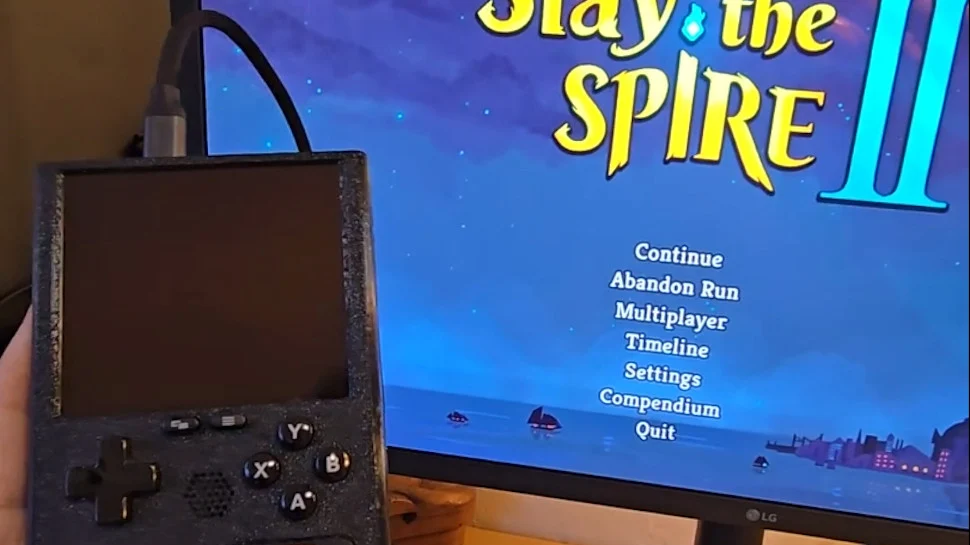
The landscape of portable gaming has undergone a radical transformation over the last three decades, moving from the monochromatic, 8-bit simplicity of the Nintendo Game Boy to the high-fidelity, PC-grade performance of the Valve Steam Deck. However, for a dedicated subset of the gaming community, the sleek, horizontal ergonomics of modern handhelds lack the tactile nostalgia of the late 1980s. Enter the "SteamBoy"—a remarkable engineering feat by a modder known as ‘PhyFawkes’ that transplants the high-performance internals of a Steam Deck into a custom-built, vertical chassis inspired by the iconic 1989 Game Boy.
This project, which recently gained viral traction on Reddit and specialized hardware outlets, represents more than just a visual gimmick. It is a complex technical achievement that highlights the modularity of modern gaming hardware and the enduring legacy of vertical handheld design.
Main Facts: The Anatomy of a Modern Retro Hybrid
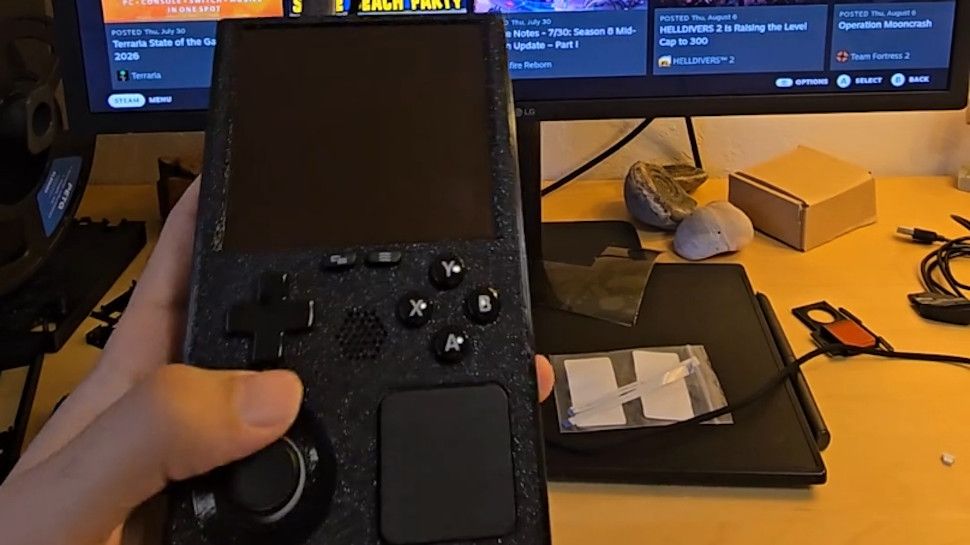
The SteamBoy is not a mere emulation machine or a Raspberry Pi project; it is a full-fledged Steam Deck reshaped into a different silhouette. The project utilizes the core "brain" of Valve’s handheld—the custom AMD APU-powered motherboard—along with several other critical components to ensure that the final product retains the full functionality of a portable PC.
According to technical details shared by PhyFawkes on the r/SteamDeckModded subreddit, the SteamBoy incorporates the following original Steam Deck components:
- The Motherboard: The central processing unit and circuitry remain intact.
- The Controller Boards: The input processing hardware is salvaged to maintain compatibility with SteamOS.
- The Battery: The original 40Wh battery is used, which dictated much of the device’s internal layout.
- Speakers and Buttons: The tactile elements and audio drivers are integrated into the new shell.
The most striking feature of the SteamBoy is its dimensions. The 3D-printed case is designed to match the height and width of the original Nintendo Game Boy (DMG-01). However, due to the sheer volume of the Steam Deck’s internals—particularly the cooling solution and the battery—the device reaches a thickness of 32mm. This "chunky" profile is a necessary compromise to house the Aerith/Sephiroth SOC (System on a Chip) and the heat pipe assembly required to keep the unit from overheating.
Chronology: From Concept to Functional Prototype
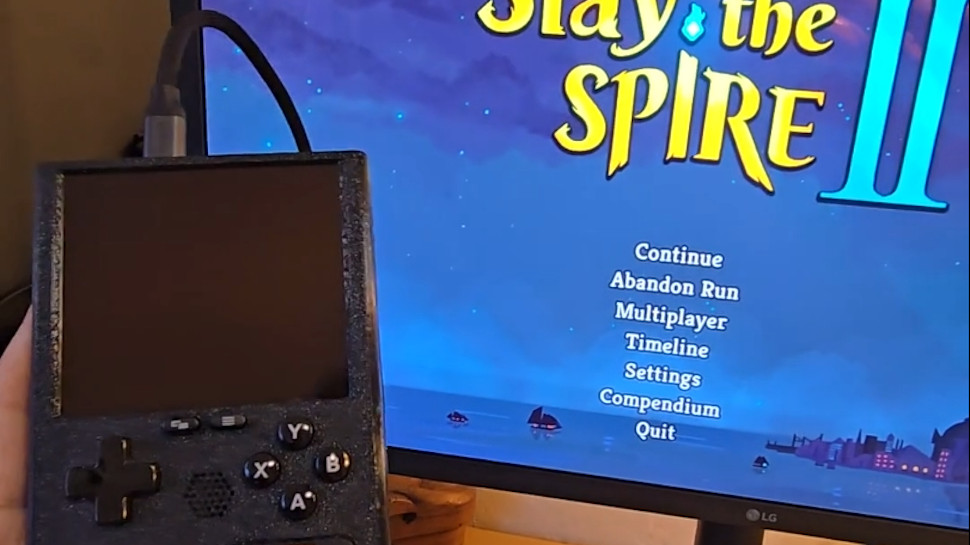
The development of the SteamBoy has been an iterative process, shared semi-publicly through enthusiast communities. The project first caught the attention of the wider tech world when PhyFawkes posted a video demonstration on Reddit, showcasing the device running Slay the Spire 2 while connected to an external monitor.
Phase 1: The Design and Shell Fabrication
The project began with the conceptualization of the shell. Using CAD software, PhyFawkes designed a 3D-printable chassis that could accommodate the irregular shape of the Steam Deck’s motherboard. Unlike the Steam Deck’s original wide, horizontal layout, the SteamBoy requires a vertical "sandwich" architecture. The maker noted that the battery essentially takes up the entire width of the device, positioned precariously between the motherboard and the display assembly.
Phase 2: The Hardware Transplant
Once the shell was prepared, the delicate process of "gutting" a functional Steam Deck began. This involved desoldering or rerouting various ribbon cables and ensuring that the daughterboards (which handle controller inputs) could fit alongside the mainboard. The creator confirmed that the motherboard and controller boards are "completely intact," meaning no destructive trimming of the PCB was required—a feat of spatial management given the Game Boy’s restrictive footprint.
Phase 3: The Current State of Development
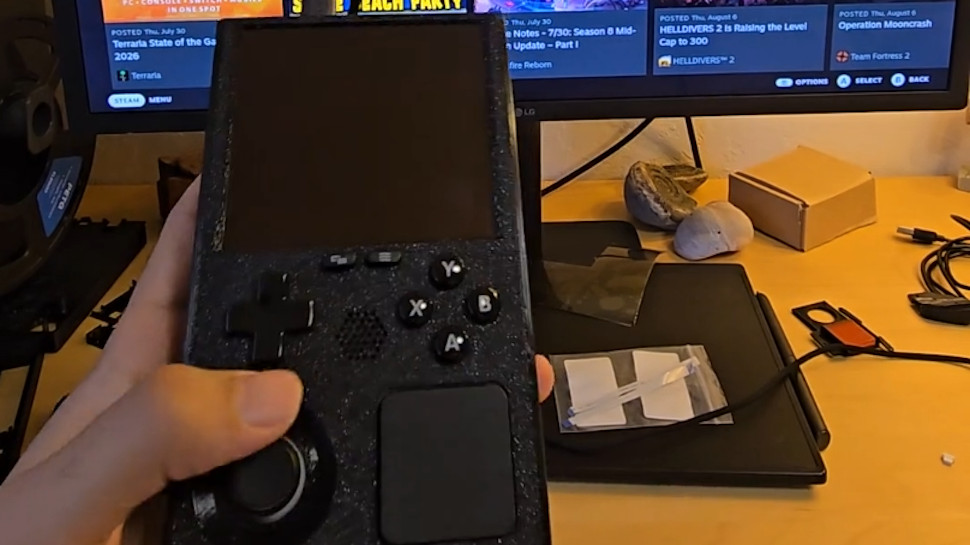
As of the latest updates, the SteamBoy is a "work in progress." While the device is capable of booting into SteamOS and processing inputs, the integrated screen is not yet operational. The modder has successfully demonstrated the unit’s power by tethering it to an external display, proving that the core computing logic and cooling are functional. The next steps involve finalizing the display driver and attempting to integrate the Steam Deck’s complex analog triggers into the much smaller vertical frame.
Supporting Data: Technical Challenges and Thermal Management
Creating a "sleeper" handheld of this caliber involves overcoming significant engineering hurdles that the original Valve engineers solved with a much larger surface area.
The Display Firmware Hurdle
The primary reason the SteamBoy’s screen is currently dark is rooted in how SteamOS interacts with hardware. The Steam Deck’s motherboard firmware (BIOS/UEFI) is hardcoded to report specific display properties (EDID) to the operating system. When a different, smaller screen is connected to the MIPI DSI or DisplayPort interface, the OS often fails to recognize it without a firmware override. PhyFawkes has indicated that they are currently working on updating the firmware details to match the new screen’s specifications, a task that requires deep software expertise.
Thermal Management and Undervolting
The Steam Deck is designed to pull up to 15W of TDP (Thermal Design Power), generating significant heat that is usually dissipated by a wide heatsink and a high-RPM fan. In the cramped 32mm-thick confines of the SteamBoy, airflow is a major concern. To combat this, the creator has utilized "undervolting"—a process of reducing the voltage supplied to the CPU and GPU to lower heat output without significantly sacrificing clock speeds. Preliminary tests suggest the device runs "cool enough" under these modified parameters, though long-term stress tests under heavy AAA gaming loads remain to be seen.
The Missing Triggers
One of the Steam Deck’s greatest strengths is its input suite, including dual capacitive joysticks and analog L2/R2 triggers. Replicating these in a Game Boy form factor is a geometric nightmare. The original Game Boy had no shoulder buttons; the SteamBoy currently lacks them as well. PhyFawkes has expressed a desire to add them but admitted that "space constraints with the case could make this too tricky a proposition."
Official and Community Responses
While Valve Corporation has not issued an official statement regarding the SteamBoy, the company has historically been one of the most mod-friendly entities in the hardware space. When the Steam Deck was first released, Valve partnered with iFixit to provide replacement parts and released the official CAD files for the device’s external shell, encouraging the community to create 3D-printed accessories and shells. This "open-door" policy is precisely what allows projects like the SteamBoy to flourish.
The community response, however, has been overwhelmingly enthusiastic. On Reddit, the project received thousands of upvotes, with users expressing a desire to purchase kits or back a potential crowdfunding campaign.
- "This is legitimately so cool. I would totally back something like this on Kickstarter," noted one user, echoing a sentiment shared by many who miss the vertical form factor popularized by the Game Boy and, more recently, the Analogue Pocket.
- Other users praised the "cyberpunk" aesthetic of the device, noting that the 32mm thickness gives it a rugged, industrial feel that contrasts sharply with the "thin-at-all-costs" philosophy of modern mobile tech.
Implications: The Future of Handheld Modding and "Right to Repair"
The SteamBoy project is a microcosm of a larger trend in the gaming industry: the rise of the "Sleeper Handheld" and the democratization of hardware engineering.

The Modular Era
The success of the SteamBoy highlights the modular nature of the Steam Deck. Unlike many of its competitors, the Steam Deck’s internals are relatively accessible. This has sparked a DIY movement where users aren’t just changing the color of their shells, but entirely reimagining the device’s ergonomics. As handheld PCs become more common, we may see a secondary market for "shell kits" that allow users to migrate their hardware into different form factors—be it a vertical Game Boy style, a clamshell design, or even a tablet-style workstation.
The Demand for Vertical Ergonomics
The fascination with the SteamBoy underscores a persistent demand for vertical handhelds. While horizontal layouts (like the Switch or Steam Deck) are objectively better for 16:9 widescreen gaming and modern ergonomics, the vertical layout remains the "gold standard" for retro enthusiasts and one-handed casual play. The SteamBoy proves that there is a market—perhaps even a commercial one—for a high-power vertical handheld that can play modern indie hits like Hades or Balatro with the same soul as a 1990s classic.
A Masterclass in DIY Engineering
Finally, the SteamBoy serves as a testament to the power of 3D printing and community-driven innovation. A decade ago, a project of this complexity would have required expensive injection molding and professional-grade electrical engineering. Today, an individual with a 3D printer, a soldering iron, and a Reddit account can challenge the design conventions of multi-billion-dollar corporations.
As PhyFawkes continues to refine the SteamBoy—hopefully solving the screen firmware issues and finding a home for those elusive shoulder triggers—the project stands as a beacon for what is possible when modern power meets timeless design. For those who grew up with a brick-shaped console in their backpack, the SteamBoy isn’t just a mod; it’s the ultimate evolution of a childhood dream.