From Editorial Giants to Intimate Canvas: Leonie Bos’s Evocative Journey into the Art of Transformation
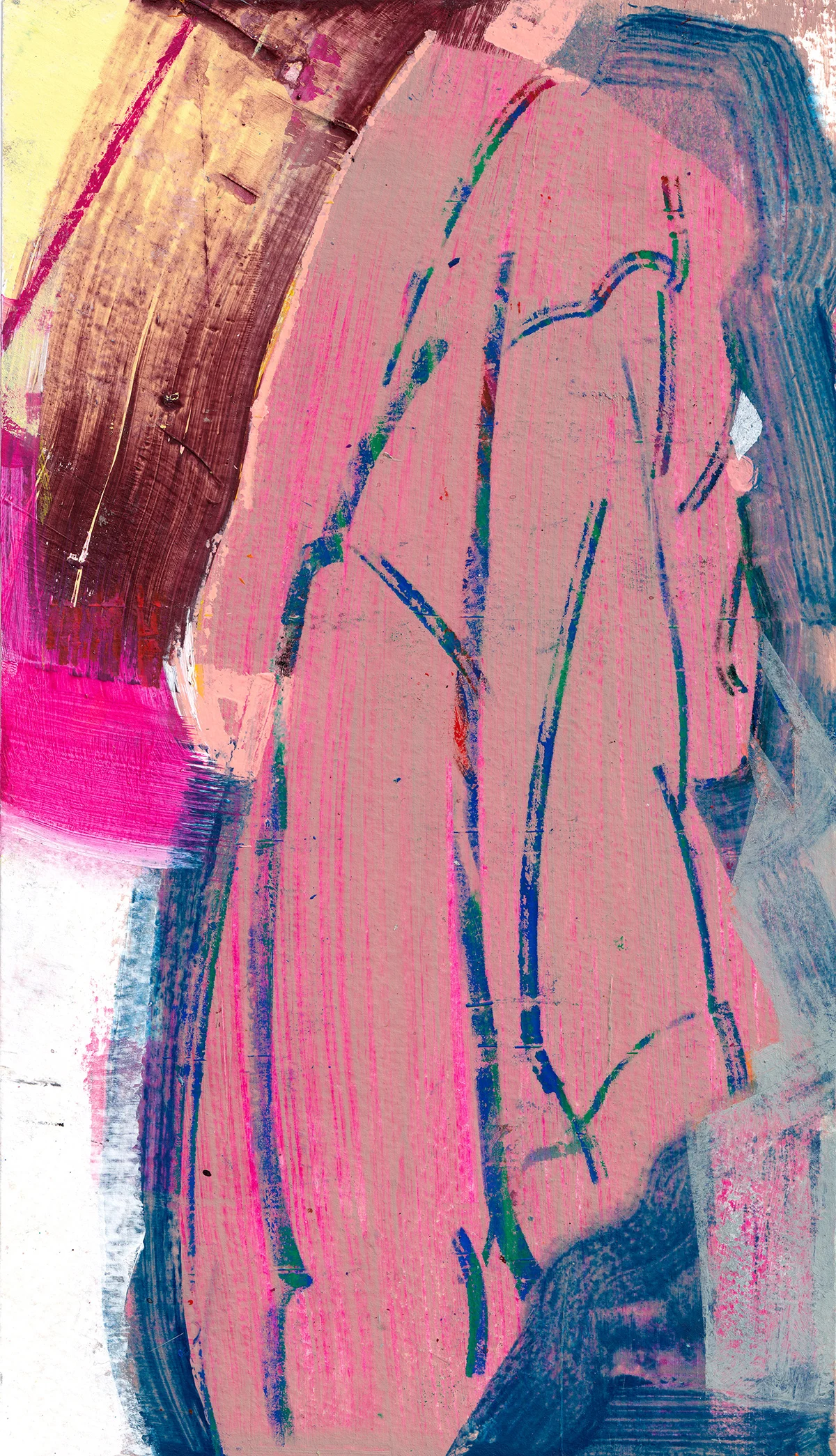
Amsterdam, Netherlands – Renowned Dutch artist and illustrator Leonie Bos, a familiar name to readers of prestigious publications like The New York Times and The Guardian, has embarked on a compelling artistic evolution. After years of honing her craft in the fast-paced world of editorial illustration, Bos is now dedicating her formidable talents to the intimate and tactile realms of painting and drawing by hand. Her current body of work, characterized by its figurative yet abstract explorations, delves into the fascinating tension between recognition and transformation, capturing fleeting moments and reinterpreting them through a unique lens of observation and abstraction.
The Editorial Roots: A Foundation in Visual Storytelling
Leonie Bos’s career began with a significant footprint in the demanding field of editorial illustration. For many years, her work graced the pages of some of the world’s most influential newspapers and magazines. This demanding environment required a keen ability to distill complex ideas into clear, impactful visuals, often under tight deadlines. Her illustrations served as a crucial bridge between journalistic narratives and the reader’s comprehension, demanding both artistic skill and a profound understanding of visual communication.
Working for publications like The New York Times and The Guardian meant engaging with a vast spectrum of subjects, from current events and political analysis to cultural commentary and human interest stories. Each assignment presented a unique challenge: to create an image that not only reflected the essence of the article but also resonated with a global audience. This experience undoubtedly cultivated in Bos a sharp eye for detail, a nuanced understanding of composition, and the ability to imbue her work with a sense of narrative and emotional weight. The constant need to adapt her style and approach to diverse themes and editorial voices likely fostered a remarkable versatility that now informs her more personal artistic endeavors.
A Shift Towards the Tangible: Embracing Acrylic and Wax Pastel
The transition from digital tools and the demands of editorial deadlines to the hands-on process of painting and drawing marks a significant turning point in Bos’s artistic trajectory. Her current practice primarily involves working with acrylic paints and wax pastels on paper, mediums that offer a rich tactile experience and allow for a nuanced exploration of color, texture, and form. These materials, inherently more physical than digital brushes, invite a slower, more deliberate engagement with the creative process.
Acrylics, with their vibrant hues and versatile application, allow Bos to build layers and achieve a range of effects, from opaque coverage to translucent washes. The quick drying time of acrylics can also lend itself to dynamic layering, mirroring the way she describes building up her compositions. Wax pastels, on the other hand, offer a softer, more blended quality, enabling her to introduce subtle transitions and a sense of atmospheric depth. The combination of these two mediums on paper creates a unique interplay of textures and visual qualities, contributing to the distinctive character of her figurative yet evolving works.
The choice of paper as her primary support further emphasizes the intimate scale of her current artistic explorations. Unlike the vast canvases often associated with monumental painting, working on paper encourages a more personal connection between the artist and the artwork. It’s a medium that can be handled, layered, and worked with a degree of immediacy, allowing for a more direct translation of her visual impulses.
The Genesis of a Vision: Photographs as Springboards for Art
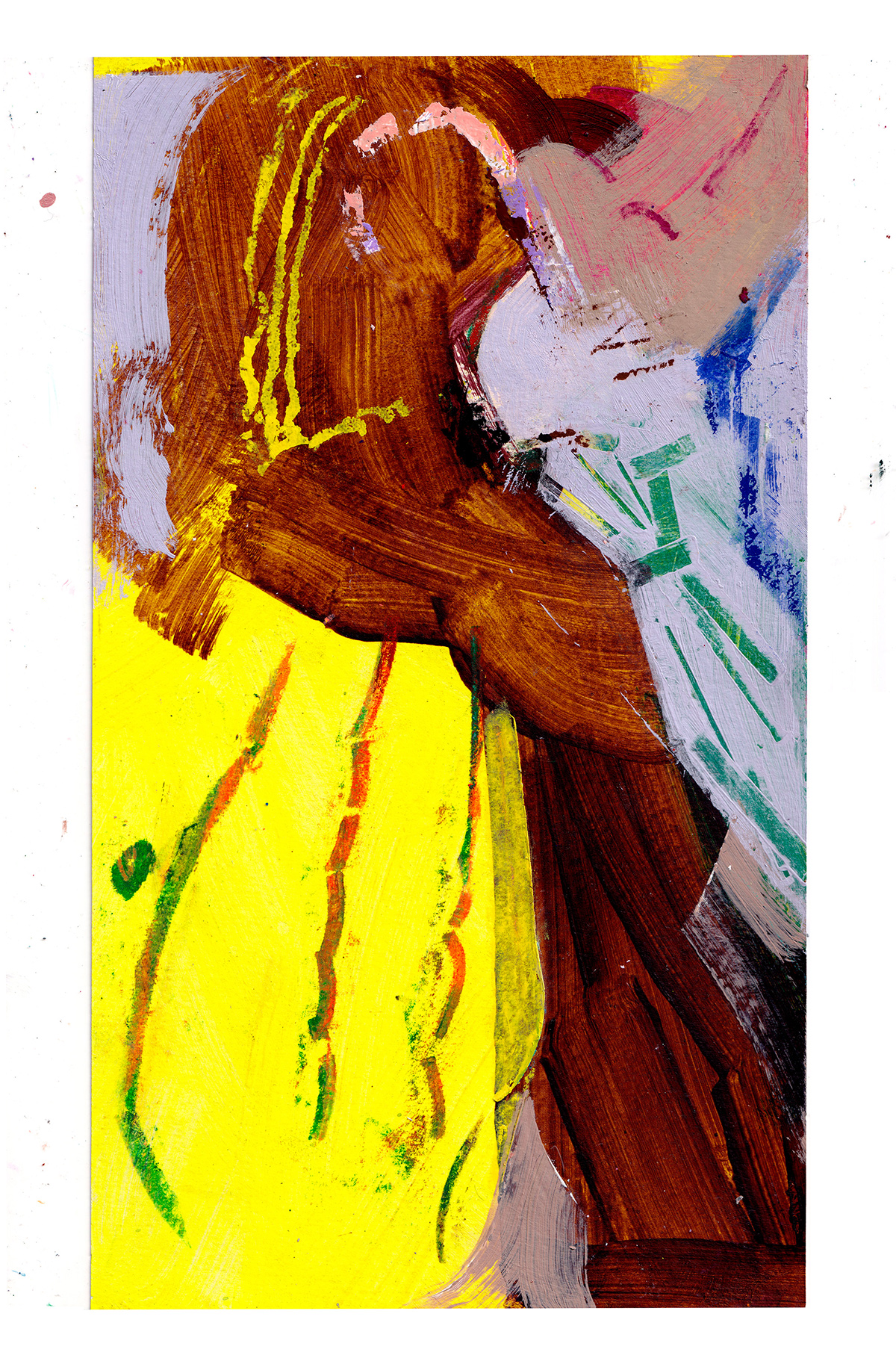
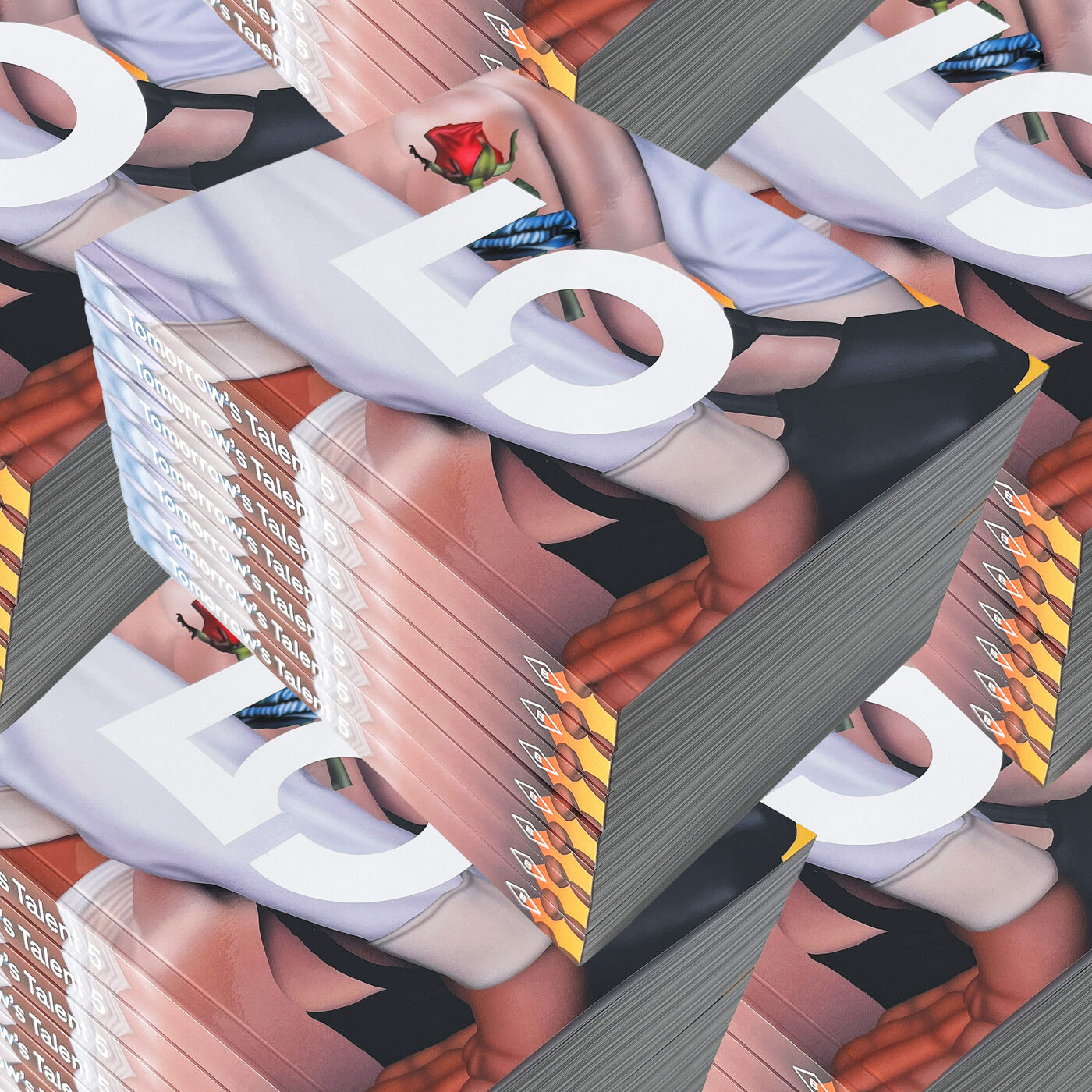
Central to Bos’s artistic process is her engagement with photographs of fleeting moments. These are not merely passive reproductions; rather, they serve as potent springboards for her creative reimagining. Bos actively seeks out images that possess "striking combinations of shapes, volumes and layers," often drawn to elements such as "oversized garments, folds of fabric, or an accumulation of accessories." These visual cues become her "raw materials," the building blocks upon which she constructs her unique artistic language.
Her fascination lies in the inherent dynamism of these captured moments. The way movement can "disrupt a familiar form," causing a jacket to lose its recognizable silhouette or parts of the body to recede from view, is a core element of her investigation. This exploration of how the ordinary can become "almost abstract" speaks to her keen observation of the visual world and her ability to find unexpected beauty and intrigue in the everyday.
The photographic source material, while crucial, is not intended to be replicated faithfully. Instead, it acts as a catalyst, a starting point that sparks a deeper engagement with form, light, and shadow. Bos’s selection process is deliberate, driven by an instinct for visual potential and an interest in the inherent visual language of these candid snapshots.
The Alchemy of Transformation: Layering, Reversal, and Abstraction
Leonie Bos articulates her artistic methodology with remarkable clarity, revealing a thoughtful and systematic approach to transforming photographic source material into her distinctive paintings. The concept of "layering" is paramount in this process, but it is approached with a deliberate and unconventional strategy.
"The layering process is an essential part of this transformation," Bos explains. "By working in reverse order, painting what appears to be in the foreground first and what belongs behind it afterward, I create cut-outs and residual shapes that begin to function as independent forms." This seemingly counterintuitive method of working from front to back, rather than the more conventional back-to-front approach, is key to her exploration of form and space.
This reversal of the typical painting order allows her to deconstruct the original image. By placing elements that would normally be obscured in the foreground, she effectively creates a sense of "cut-outs" or voids within the composition. These negative spaces, or "residual shapes," take on a life of their own, gaining a surprising autonomy and becoming significant compositional elements. They are no longer simply background or empty space but actively contribute to the overall visual narrative.
This technique of building layers in reverse, and the subsequent emergence of independent forms, is directly linked to her interest in the tension between recognition and abstraction. As she builds up the painting, the original photographic reference begins to recede, replaced by the emergent logic of the painted forms. The familiar elements become fragmented, reconfigured, and imbued with a new visual weight.
"The painting remains rooted in a real observation, while the logic of the image starts to shift," Bos notes. This statement encapsulates the delicate balance she strikes. Her work is not an escape from reality but a profound engagement with it, a process of seeing anew. The transformation is not a complete erasure of the source but a sophisticated evolution, where the essence of the original moment is preserved while simultaneously being reinterpreted through the artist’s unique visual vocabulary.
The Delicate Dance: Between Source and New Creation
Leonie Bos describes her artistic practice as a "continuous balancing act." This metaphor perfectly encapsulates the intricate relationship she maintains with her source material. On one hand, she is committed to "staying true to the source image," acknowledging its foundational role and the initial spark of inspiration. This commitment ensures that her work remains grounded in tangible observation, preventing it from drifting into pure abstraction without any discernible connection to reality.
However, this fidelity is not a form of slavish imitation. The other side of the balancing act involves "allowing it to transform into something new." This is where her artistic agency comes into full play. Through her chosen mediums, techniques, and interpretive vision, she imbues the original image with a new life, a new meaning, and a new visual presence. This transformation is not a loss of the original but an expansion of its potential.
The "tension between recognition and transformation" is where the viewer’s engagement is most keenly felt. We are invited to recognize elements of the familiar within the abstract forms, to piece together the fragmented narratives, and to contemplate the journey from a specific photographic moment to a more universal artistic statement. This interplay creates a dynamic viewing experience, where our own perceptions and interpretations are actively engaged.
Bos’s work, therefore, is not simply about depicting what she sees, but about exploring how she sees, and how that vision can be reinterpreted and transformed through the act of creation. The "fleeting moments" she captures are not merely preserved but are given a new permanence and a profound depth through her artistic intervention.
The Broader Artistic Landscape: Echoes and Implications
Leonie Bos’s artistic journey resonates within a broader contemporary art landscape that often grapples with the relationship between photography, painting, and digital media. Her deliberate move towards traditional mediums and hand-drawn techniques can be seen as a response to the pervasive digital saturation of our visual culture. In an era where images are endlessly reproduced and easily manipulated, Bos’s focus on the tangible, the unique mark of the artist’s hand, and the deliberate process of creation offers a powerful counterpoint.
Her exploration of transformation and abstraction also aligns with a long tradition in art history, from Cubism’s deconstruction of form to Abstract Expressionism’s emphasis on gesture and emotion. However, Bos brings a distinctly contemporary sensibility to these concerns, informed by her background in editorial illustration and her acute observation of modern life.
The implications of her work extend beyond the purely aesthetic. By highlighting the way familiar forms can become less defined, she invites contemplation on themes of perception, identity, and the ephemeral nature of reality. In a world often characterized by a demand for clear, unambiguous narratives, Bos’s work suggests that there is profound beauty and insight to be found in ambiguity and transformation.
Her success in transitioning from a highly visible commercial field to a more personal artistic practice also serves as an inspiration to artists navigating their own career paths. It underscores the value of artistic evolution, the courage to embrace new directions, and the potential for growth that lies in pushing creative boundaries. Leonie Bos’s work stands as a testament to the enduring power of the hand-crafted image and the profound insights that can be unearthed when observation meets artistic imagination.