The Passing of a Visionary: Remembering Larry Brill, Co-Founder of ‘The Monster Times’
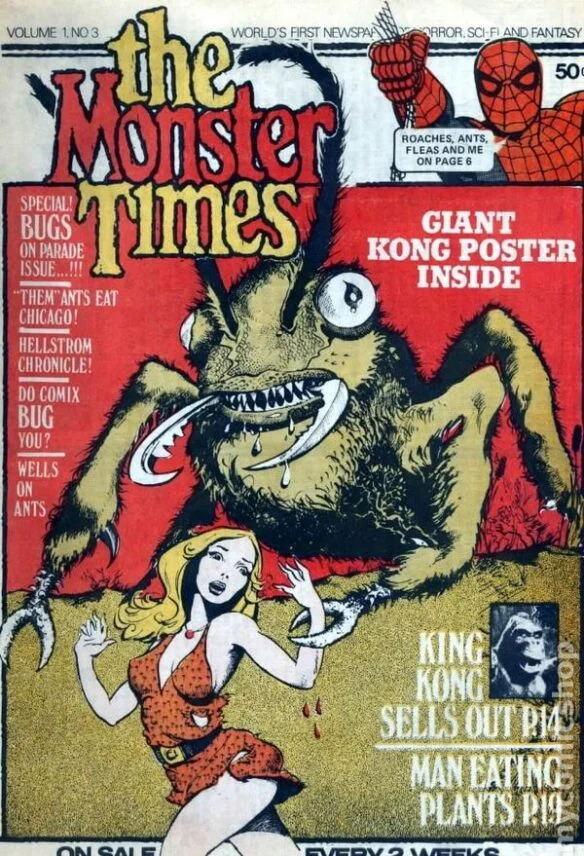
The world of genre journalism and cult cinema history has lost one of its most spirited and defiant pioneers. Larry Brill, the co-founder and publisher of the landmark 1970s tabloid The Monster Times, has passed away at the age of 95. A man described by colleagues as "irascible, irrepressible, and seemingly ageless," Brill leaves behind a legacy that transformed the way science fiction, horror, and fantasy were documented and consumed by the public.
Alongside his late partner, Les Waldstein, Brill defied the skepticism of the professional publishing industry to create a "newspaper of the fantastic." His death marks the end of an era for the "Monster Kid" generation—a demographic of fans who came of age in the mid-20th century and found their voice through the pulp pages of Brill’s ambitious creation.
Main Facts: The Architect of the ‘Monster’ Tabloid
Larry Brill was not merely a businessman; he was a cultural provocateur. In the early 1970s, the landscape of horror fandom was dominated by glossy magazines like James Warren’s Famous Monsters of Filmland. Brill and Waldstein envisioned something different: a bi-weekly tabloid that treated the "fantastic" with the urgency and layout of a major metropolitan newspaper.
The Monster Times premiered in January 1972. While industry insiders predicted a swift and expensive failure, the publication defied the odds, running for 48 issues until 1976. It became a cornerstone of the "Second Wave" of horror fandom, providing a platform for serious film scholarship, investigative reporting on special effects, and a training ground for the next generation of film critics.
Brill’s personality was as much a part of the publication’s DNA as the monsters on the cover. A fierce advocate for human rights and an outspoken participant in cultural debates, he ensured that The Monster Times was more than just a fan magazine—it was a reflection of a creative, adventurous, and often provocative spirit.
Chronology: From "Madness" to Media Icon
The journey of Larry Brill and The Monster Times followed a trajectory of risk and eventual validation.
1971: The Concept of "Madness"
In late 1971, Larry Brill and Les Waldstein began pitching the idea for a bi-weekly newspaper dedicated entirely to monsters, science fiction, and comics. At the time, the publishing world was conservative. The idea that a niche interest could sustain a frequent, tabloid-style publication was dismissed by many as "utter madness." Predictions of imminent bankruptcy were rampant within the inner corridors of New York publishing circles.

1972: The Launch of Issue #1
Ignoring the naysayers, Brill and Waldstein released the first issue in January 1972. The cover story was a deep dive into the 1933 classic King Kong, focusing on the technical evolution and behind-the-scenes production of the film. The reception was immediate and overwhelmingly positive. Unlike its competitors, The Monster Times offered a gritty, news-oriented aesthetic that resonated with a more mature or academically-minded segment of the fandom.
1972–1976: The Golden Age of the Tabloid
Over the next four years, the publication released 48 issues. Under the editorial guidance of Chuck McNaughton and Joe Kane, the paper covered everything from the rise of Star Trek fandom to the burgeoning world of underground comics and the "creature features" of the 1950s. It became a staple on newsstands across America and found a dedicated international following.
Post-1976: Maintaining the Flame
After the original run ended in 1976, Brill remained a fixture in the community. While his partner Les Waldstein passed away several years ago, Brill continued to champion the arts. He transitioned into various creative and advocacy roles, never losing his "infectious romance" with classic cinema.
2024–2026: The Revival Efforts
In his final years, Brill remained remarkably active. He spearheaded a project to revive The Monster Times for a new generation. At the time of his death, he was working on a comprehensive book celebrating the tabloid’s legacy, scheduled for publication in the Fall of 2026, alongside plans for new conventions and magazines.
Supporting Data: The Impact on Genre Journalism
The significance of Larry Brill’s work can be measured by the caliber of talent he fostered. The Monster Times acted as an early training ground for journalists and historians who would go on to define modern film criticism.
The publication was known for its "pioneering commentary," moving beyond simple plot summaries to discuss the sociological impacts of horror and the technical mastery of stop-motion and practical effects. Editors like Joe Kane (who would later gain fame as "The Phantom of the Movies") and Chuck McNaughton pushed for a level of research that was unprecedented in the "fan-rag" era.
Key Contributions of the Publication:

- Serious Scholarship: It treated films like King Kong, Godzilla, and Night of the Living Dead as works of art deserving of historical preservation.
- Format Innovation: By using a newsprint tabloid format, Brill made the magazine affordable and accessible, mirroring the "underground press" movement of the era.
- Diversity of Content: The magazine was among the first to give significant space to comic book history and the burgeoning "Convention" culture, helping to codify the modern geek-culture gathering.
Official Responses and Tributes
Tributes have poured in from the community of "Monster Kids" and the historians who worked under Brill’s wing.
Steve Vertlieb, a long-time friend and prominent genre historian, wrote a moving eulogy highlighting Brill’s indomitable spirit:
"Larry was a visionary publisher, role model, and friend whose creativity and influence shall be cherished for decades to come. He was a fearless, outspoken champion of human rights and never backed away from controversy, inviting often provocative conversation both on and off the well-worn printed page."
Vertlieb characterized Brill as an "intrepid" leader who carried the torch of classic cinema with "dignity, adventure, and a sense of fun."
Other members of the "Times" alumni have noted that Brill was a rare publisher who gave young writers "limitless opportunities for serious research and study," often allowing them to pursue obscure leads that other magazines would have deemed too niche or unprofitable.
Implications: The Future of the Legacy
The passing of Larry Brill raises questions about the future of the planned Monster Times revival. However, according to those close to the project, the groundwork Brill laid in his final years is robust.
The 2026 Legacy Project
The book celebrating the history of The Monster Times is still slated for a Fall 2026 release. This volume is expected to serve as the definitive history of the publication, featuring archived articles, never-before-seen photography, and reflections on the Brill-Waldstein partnership. It is now being viewed by the community as a posthumous tribute to Brill’s lifelong dedication.

The Continued Evolution of Fandom
Brill’s death serves as a reminder of the "changing of the guard" in genre history. As the pioneers of 1970s fandom pass away, the responsibility for preserving the history of the "fantastic" shifts to the digital generation. Brill was unique in that he embraced this transition, actively planning new conventions and digital-friendly formats for his beloved brand well into his 90s.
A Legacy of Courage
Ultimately, Larry Brill’s greatest contribution was his proof that a "niche" passion could be treated with professional journalistic integrity. He proved that monsters were not just for children, and that the "fantastic" was a mirror through which we could examine our own humanity, politics, and culture.
His absence leaves a void in the world of independent publishing, but his "newspaper of the fantastic" remains a blueprint for how to turn a subculture into a movement. As fans look toward the 2026 revival, they do so with the knowledge that the "seemingly ageless" publisher has left them with 48 issues of joy and a lifetime of inspiration.
Larry Brill is survived by a global community of readers, writers, and filmmakers who, perhaps without even knowing his name, have been influenced by the tabloid he dared to print when the rest of the world told him it was madness.