A New Era for Marvel Crisis Protocol: Dissecting the August 2026 Errata
Main Facts:
After months of strategic teasers and fervent community discussion, Atomic Mass Games (AMG) has finally unleashed the August 2026 errata for Marvel Crisis Protocol (MCP). This monumental update, heralded by developers as a "new era" for the skirmish miniatures game, introduces a sweeping array of changes to character statistics, abilities, and even core game mechanics. Far from a minor tweak, this errata significantly rebalances the roster, aiming to inject fresh strategic depth, revitalize underutilized characters, and temper the dominance of long-standing meta powerhouses. The community is abuzz, with players eager to explore the profound implications for roster construction, battlefield tactics, and the competitive landscape of MCP.
Chronology:
The journey to this extensive August 2026 errata has been a carefully orchestrated one, building on a history of iterative game balance adjustments. Since its inception, Marvel Crisis Protocol has seen several significant errata, each responding to evolving meta trends and community feedback. Earlier updates, such as the 2024 overhaul that addressed the pervasive influence of Thanos or the 2025 adjustments to collision damage mechanics, have consistently demonstrated AMG’s commitment to a dynamic and evolving game. Leading up to this latest release, AMG representatives made numerous appearances across various MCP podcasts and community forums, openly discussing their balancing philosophies and hinting at the scale of the impending changes. These discussions generated considerable anticipation, with players speculating on which characters would receive crucial buffs and which dominant archetypes might finally see their reign challenged. The recurring theme from AMG was a desire to broaden character viability and encourage diverse roster building, setting the stage for an errata that is perhaps the most impactful in the game’s history. This latest update also comes alongside a general re-evaluation of character health pools across the board and a standardization of Size 3 terrain throws, ensuring a consistent and refined gameplay experience that lays the groundwork for future releases.
Supporting Data: A Deep Dive into the Roster Reshuffle
The August 2026 errata is characterized by its breadth, touching upon a significant portion of the character roster. We’ll categorize these changes into those who have received substantial buffs, ascending to new levels of playability, and those whose power has been strategically reined in.
Key Buffs: Ascending to Prominence
Angela: The Heavenly Hunter Unleashed
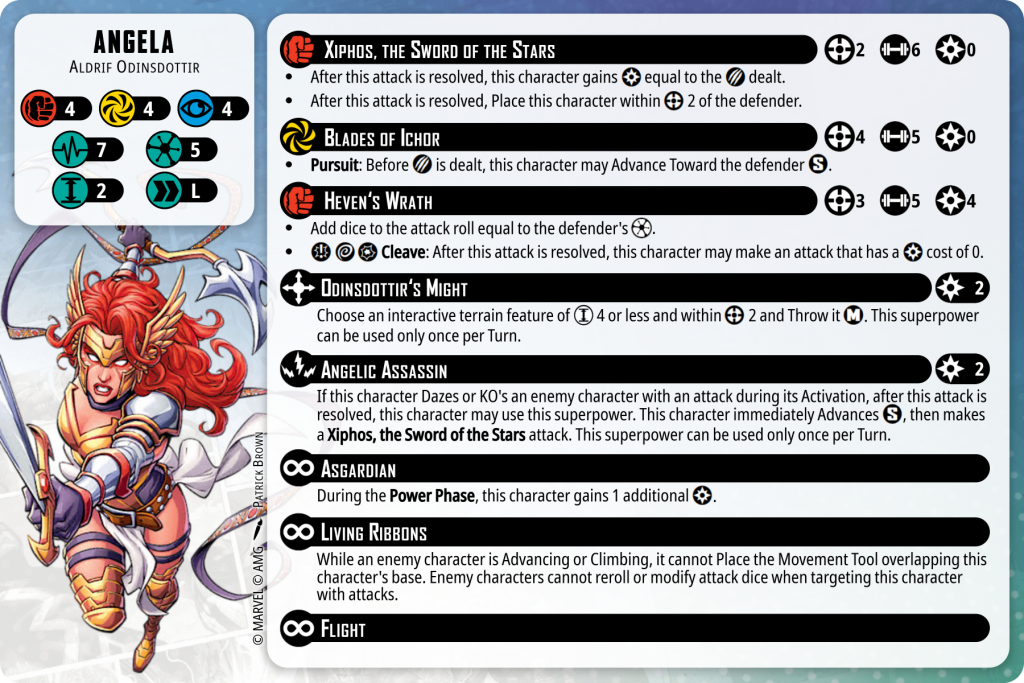
Angela, a character often teetering on the edge of competitive viability, receives a substantial suite of enhancements that firmly place her in the "winners" bracket. Her health pool sees a significant boost, escalating to a robust 7/8. This augmentation immediately elevates her survivability, allowing her to remain a threat on the board for longer durations. The core of her offensive rework lies in "Blades of Ichor" and "Heven’s Wrath." "Blades of Ichor" now benefits from an automatic pursuit and a zero-power cost, streamlining her combat activation and removing a previous hurdle for effective use. This change ensures her foundational attack is consistently rewarding. "Heven’s Wrath" gains a potent new scaling mechanic, adding dice equal to the defender’s threat value. This introduces an exciting element of strategic targeting, making her particularly devastating against high-threat models like Thanos, evoking the powerful scaling seen in characters like Valkyrie & Elendil. Furthermore, the trigger for its bonus follow-up attack has been made more forgiving. A previous errata also refined "Angelic Assassin," allowing Angela to spend 2 power generated by Dazing or KOing a character with "Xiphos, the Sword of the Stars" even if she started the attack with less than the required power, further solidifying her power economy. These changes make Angela a far more consistent and impactful damage dealer.
Magneto: Master of Magnetism Re-Engineered
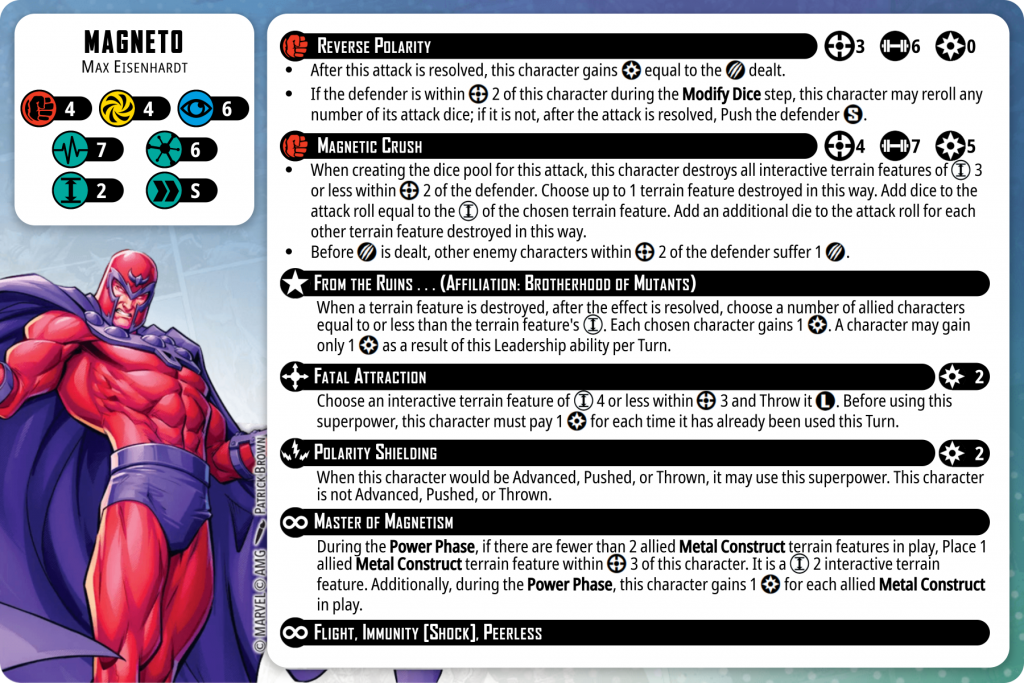
As one of the game’s inaugural releases, Magneto, despite his iconic status, had long yearned for an update that would align his tabletop prowess with his narrative power. His 2026 errata delivers precisely that. His previous spender attack, "Shrapnel Blast," a notoriously suboptimal choice, has been completely removed. In its place arrives "Magnetic Crush," an ability previously confined to a Team Tactics Card (TTC) due to card space limitations. Its direct inclusion significantly enhances Magneto’s offensive toolkit. The preceding errata’s collision changes, coupled with Tournament Organizers (TOs) adapting tables to feature more Size 1 & 2 terrain, now perfectly synergize with Magneto’s core mechanic. He can now throw terrain pieces by paying only their size in power, freeing up power for "Magnetic Crush" and allowing bonus terrain to be incorporated into the attack. The true game-changer, however, is "Polarity Shielding." For 2 power, Magneto can prevent displacement, a crucial counter to his previous vulnerability as a Size 2 character with a Short Move. This ensures the Master of Magnetism can dictate engagements. His signature move, "Fatal Attraction," now costs a flat 2 power for any size terrain throw, leveling out the power economy given the standardized 3 damage from all terrain collisions. An additional health on his healthy side further boosts his durability.
Corvus Glaive: The Obsidian Maw Sharpens Its Edge
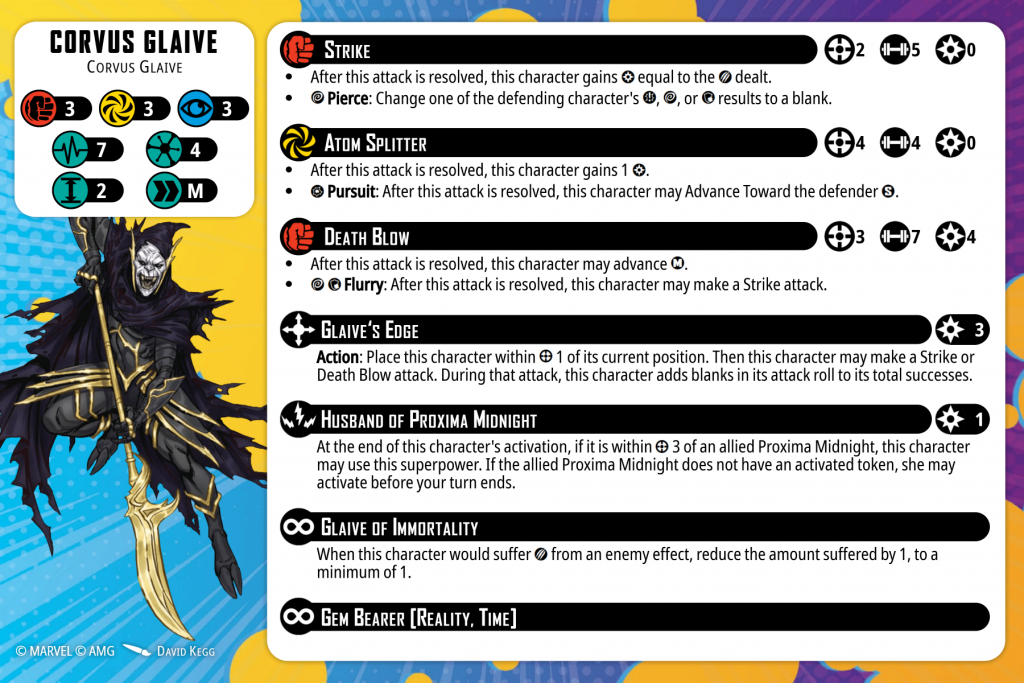
Corvus Glaive, a key member of the Black Order, receives targeted improvements that enhance his threat projection and damage output. "Glaive’s Edge" now grants him a pseudo-charge, a Range 1 "bump" that significantly increases his ability to engage targets and get more attacks off within his medium base. Coupled with a handy Pursuit trigger on a hit for "Atom Splitter," Corvus Glaive becomes a more consistent offensive force. Given that counting blanks is a highly effective form of offensive output in MCP, these mobility improvements translate directly into more devastating damage. These changes, alongside Thanos’s previous nerf and Nebula’s new affiliation, are a substantial boon for aspiring Black Order players, offering a much-needed boost to the faction’s competitive viability.
Ant-Man & Wasp: Pym Particle Pioneers Reimagined
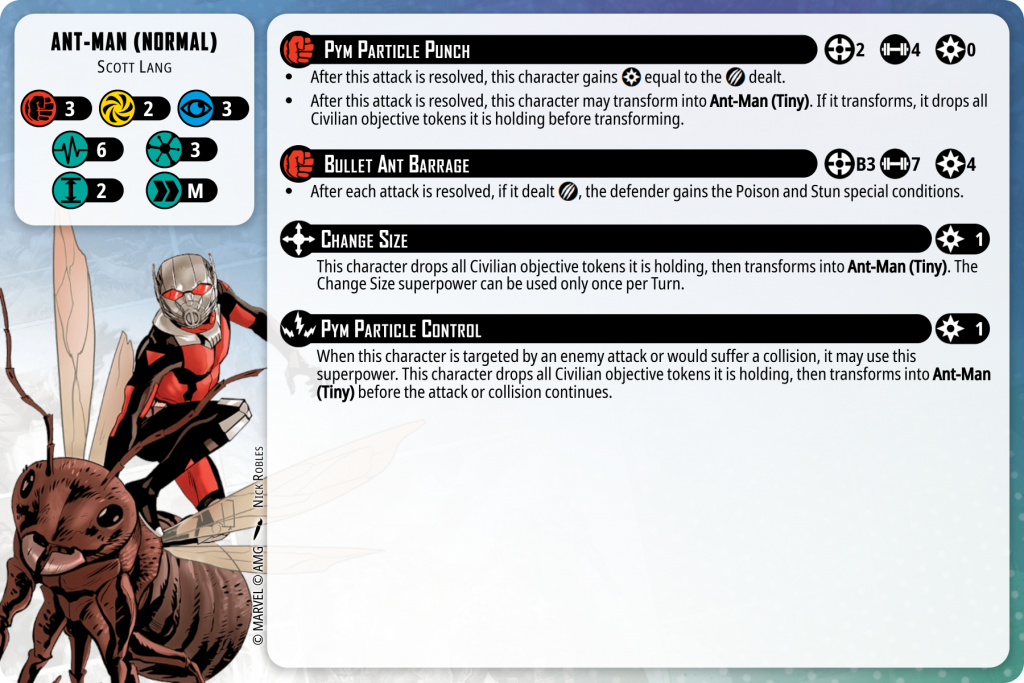
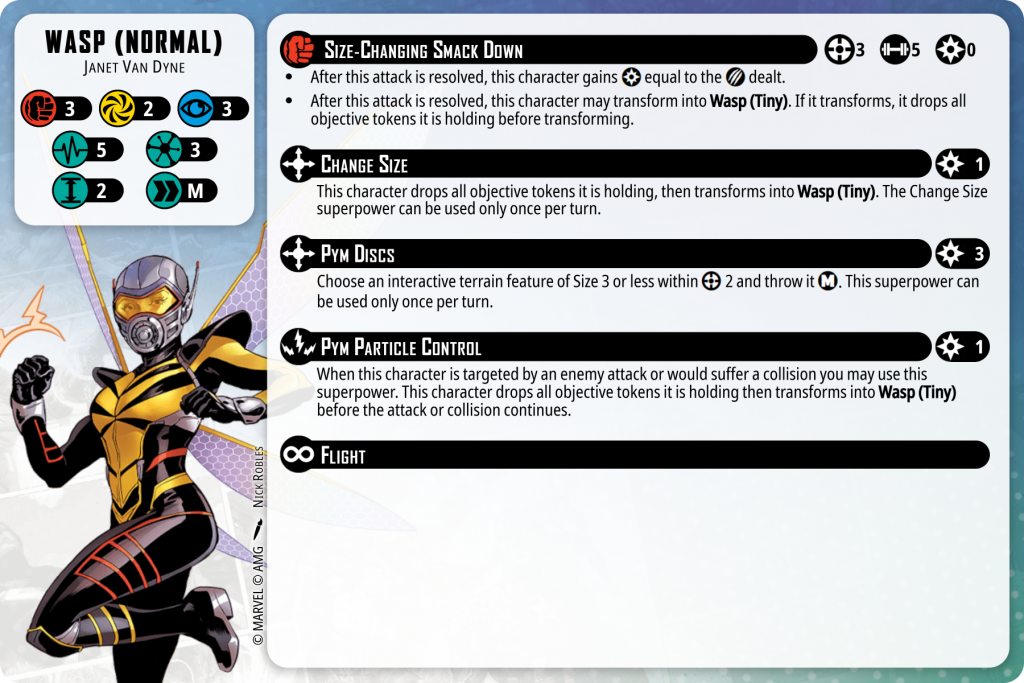
The dynamic duo of Ant-Man and Wasp, often relegated to niche roles or absent from tables entirely, receive much-needed quality-of-life updates. Both gain +2 extra health, bringing them to a respectable 6/6. Critically, both characters can now hold Objective tokens (though not civilians) while in their Tiny forms (Ant-Man with "Tiny" and Wasp with "Pym Particle Control"). While Ant-Man still drops objectives when using "Hitch A Ride," this newfound objective-holding capability in Tiny form opens up intricate new play patterns. The potential synergy with Captain America’s (Steve 1) adjusted leadership, which now indirectly benefits X-cost superpowers, makes Ant-Man a strong Round 1 contender. Wasp’s role as an A-Force character with Flight also makes her an excellent "Special Delivery" partner for She-Hulk (who also received significant changes), suggesting new strategic avenues for both characters. Their newfound utility means players will finally start seeing these iconic Avengers on the tabletop.
War Machine: Rhodey’s Return to Action
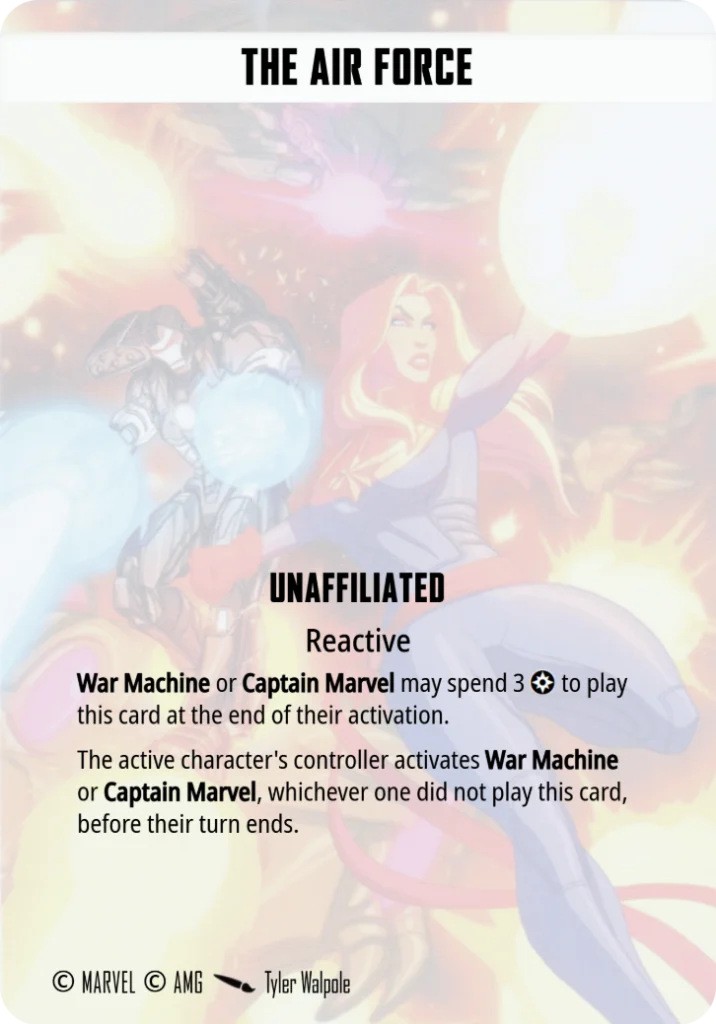
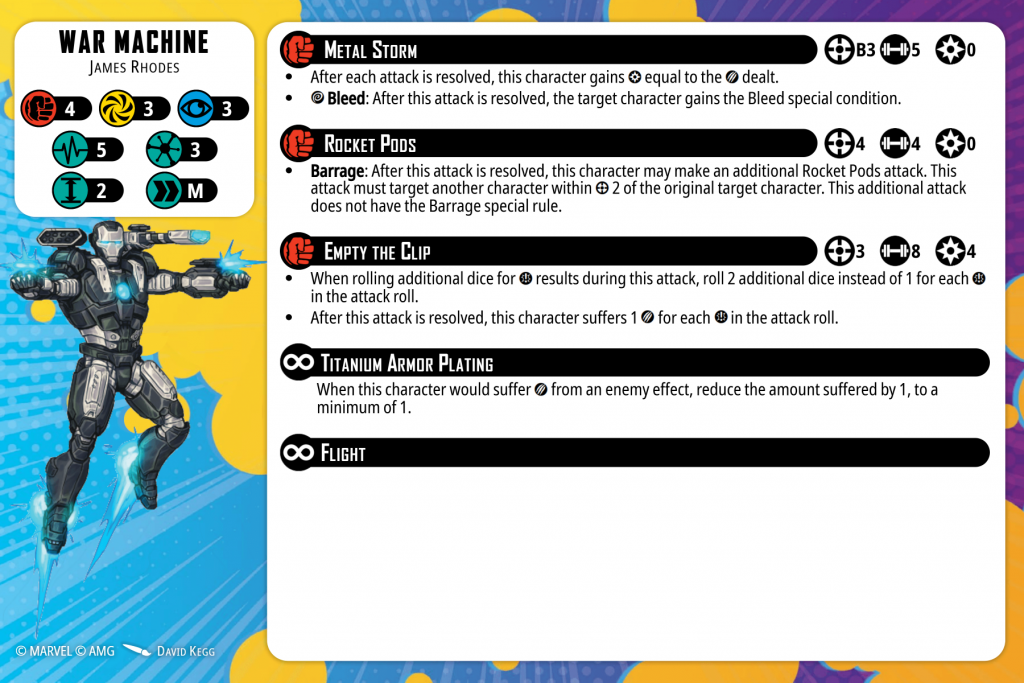
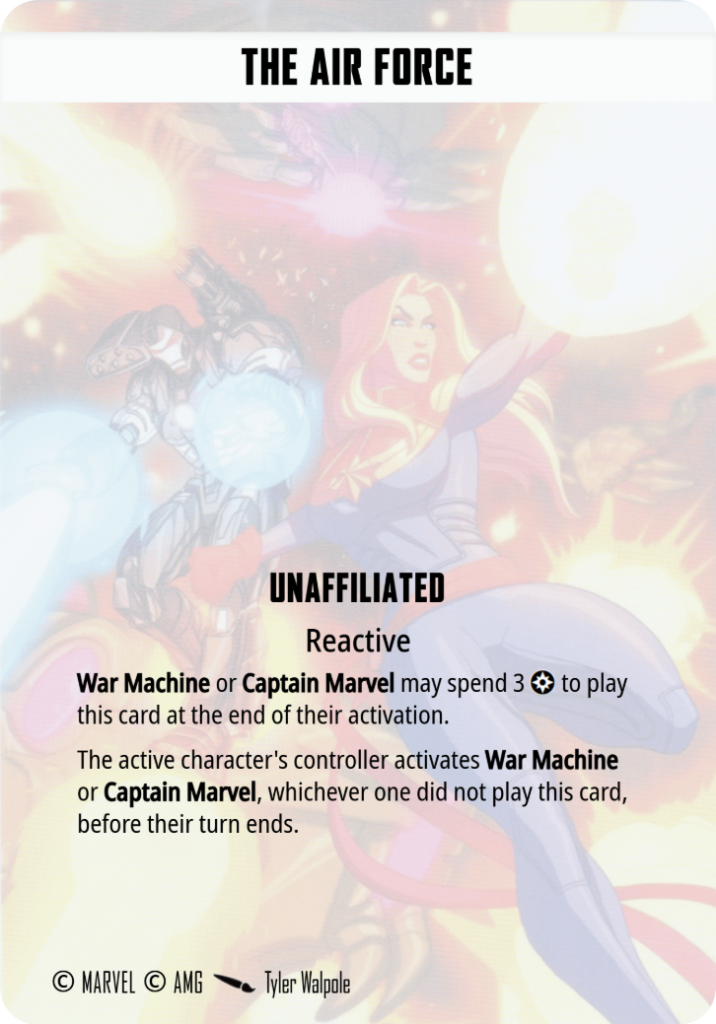
Another character frequently found in the "Wait, they’re in MCP?!" category, War Machine receives a significant overhaul designed to make him a reliable and potent ranged threat. "Empty the Clip" is now capped at dealing 2 damage to War Machine, mitigating the risk of self-Dazing/KOing. A new ability, "Reload," has been added, offering a way to mitigate damage from both combat and "Empty the Clip." With a health bump to 5/6, damage reduction from "Titanium Armor Plating," and self-healing from "Reload," War Machine boasts survivability comparable to characters like Lizard. While these changes may not "light up the world," they transform James Rhodes into a respectable and durable ranged option. Furthermore, these changes breathe new life into the Team Tactics Card "The Air Force," which, while unchanged itself, now has two compelling characters (War Machine and Captain Marvel) to utilize its powerful priority-cheating effect, reminiscent of the banned "Follow Me."
Hulkbuster: The Indomitable Iron Giant
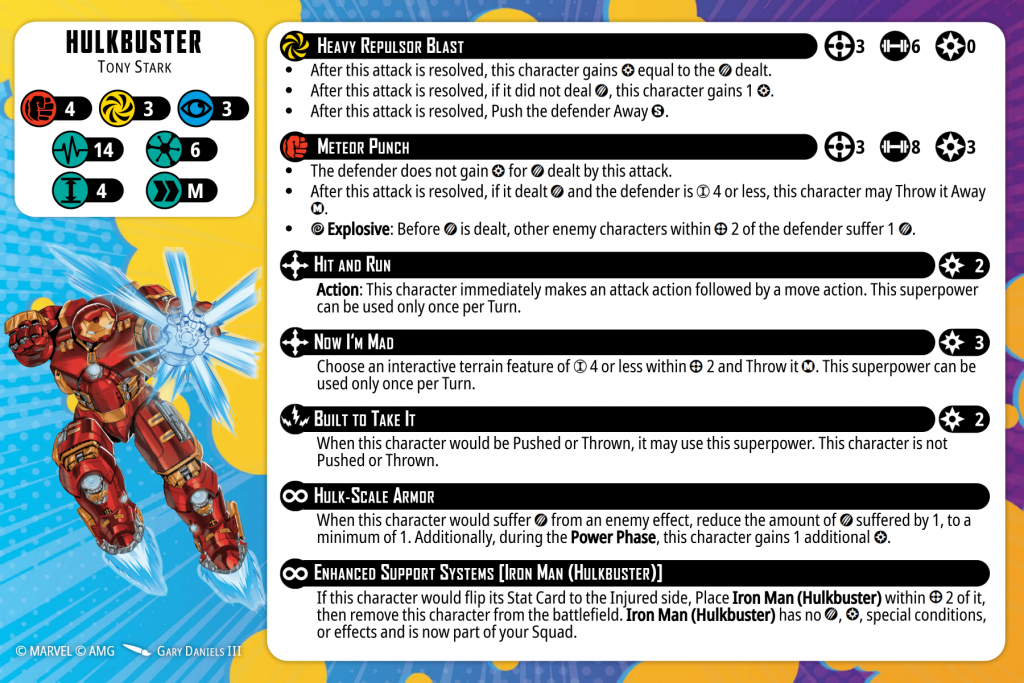
Hulkbuster undergoes a significant re-tooling, most notably losing its leadership ability. While unprecedented for a character to have a leadership removed, this change likely stems from the previous errata’s flat 3 damage for collision effects, which made Hulkbuster’s leadership potentially over-tuned. "Built To Take It" now functions identically to "Indomitable," providing crucial stability. Its unique damage reduction has been re-segmented into a new superpower, "Hulk-Scale Armor," which operates like standard damage reduction effects. With 14 health and damage reduction, Hulkbuster is an absolute tank. Coupled with guaranteed displacement on "Heavy Repulsor Blast" and "Hit & Run" proving potent with the new "Source Extracts" crisis, Hulkbuster emerges as a formidable and resilient piece, encouraging players to finally bring this impressive model to the table.
Omega Red: The Mutant Menace Unleashed
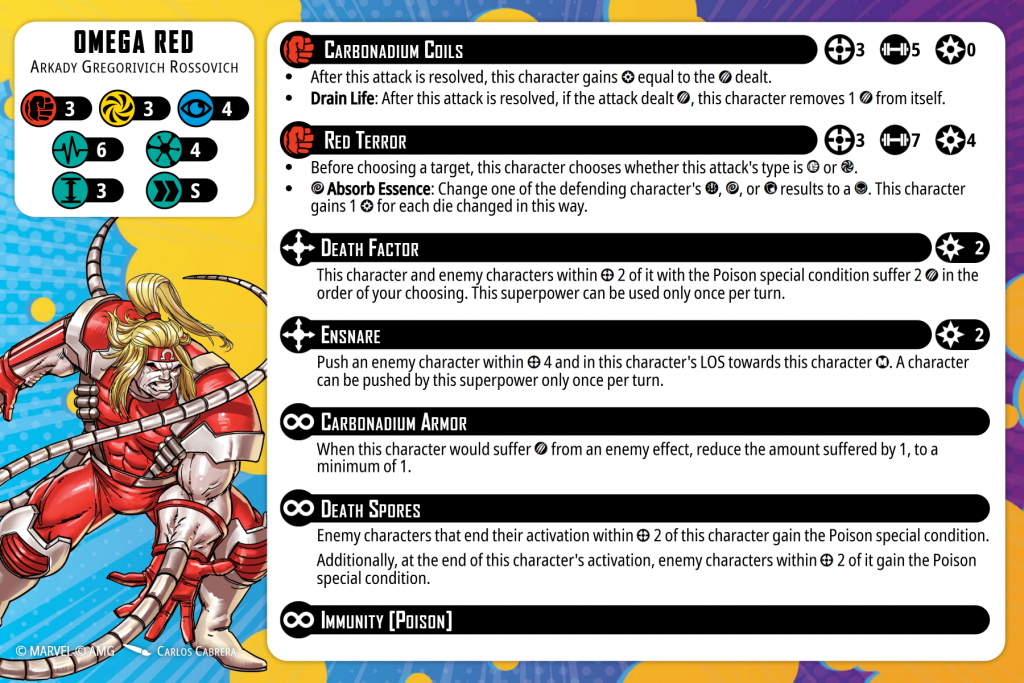
Omega Red exemplifies how elegant, targeted changes can profoundly impact a character’s viability. His movement is increased to Medium, and he gains +1 health on his healthy side. That’s it. However, for a character with an already potent kit, including the fantastic "Ensnare" superpower (often considered superior to Ghost Spider’s "Webline"), this increased mobility is a game-changer. A medium base with a medium move could be precisely what Omega Red needs to consistently get into position and make his mark, making him a character to watch in the evolving meta.
Shadow King: The Astral Fiend Materializes
The errata serves as a lifeline for many underplayed characters, and Shadow King is a prime example. "Astral Fiend" now costs 0 power, down from a prohibitive 3. This significant reduction in cost for a unique control effect demands extensive playtesting to fully gauge its impact. "Nightmare Visions" increases to 4 dice, making it easier to push through damage and trigger its Advance effect, potentially chaining into a second activation. When viewed as a "new" character, Shadow King’s 8/7 health, sizeless Advance from "Mental Shackle" on damage, and "Astral Disintegration" as a powerful spender against Dazed targets, paint the picture of a formidable control piece. This beautifully sculpted model may finally see the tabletop it deserves.
Mister Sinister: The Geneticist’s Gambit
Mister Sinister’s changes are complex, intertwining power generation with his unique "Genetic Sample" tokens. His basic "Strike" attack has been humorously removed, signaling a focus on his more thematic abilities. "Genetic Splicing" now generates 1 power upon completion, a small but welcome improvement from its previous cost. "Recombinant Disintegration" shifts from a range-scaling attack to a fixed Range 2, but now allows Mister Sinister to spend Genetic Sample tokens to increase its dice pool, while also increasing its cost to 6 power. "DNA Database" now grants him 1 Genetic Sample at the start of the game and generates 1 power on a Crit. In essence, he gains more consistent power but not necessarily more Genetic Samples. While his superpowers are already power-efficient, the precise impact of these changes on his complex economy will require extensive tabletop evaluation. Nonetheless, Mister Sinister is undeniably different, offering new strategic puzzles for players to solve.
Strategic Adjustments: Addressing Dominance
Baron Zemo: The End of Endless Rerolls
Baron Zemo, a staple 3-threat character since the game’s release, has long been infamous for his ability to generate endless rerolls, turning otherwise mediocre attacks into devastating damage spikes. AMG has finally addressed this pervasive issue. While his Long move, often cited as a core problem, remains, the critical changes lie elsewhere. "Master Swordsman" is now a "Once per turn" ability, significantly reducing his capacity for successive reroll attacks that could Daze/KO characters with alarming consistency. The more impactful change, however, is the replacement of "Strategic Genius" with "Tactical Insight." This new ability limits the reroll bubble to "Once per turn" and costs 1 power, making it susceptible to "Root" effects and dramatically curbing his ability to immediately supercharge an attrition game. While still a menace, Zemo is now appropriately scaled for a 3-threat character. It’s worth noting that his 4-threat counterpart, Baron Helmut Zemo, with 6/7 health and the original "Strategic Genius," now stands out as a very attractive alternative for those seeking potent reroll support.
Black Bolt: The Silent King’s Echo Fades
The Inhumans, once a dominant force in the meta, particularly after the release of Gorgon & Karnak, have received another targeted nerf. Following the ban of "The Great Refuge" and a challenging crisis rotation, Black Bolt’s leadership has been tweaked. The ability to pass power around can now only affect the character currently being Activated. This crucial change prevents players from "loading up" fast characters like Quicksilver or Miles Morales with multiple power before their turn, effectively shutting down many "Round 1 shenanigans" that allowed for gross Victory Point swings. This, along with the Captain America change, signals AMG’s clear intent to curb overly aggressive early-game power plays.
Hulk: The Green Goliath’s Gentle Nudge
Hulk, long considered a premier displacement engine (as opposed to pure damage), receives a subtle but impactful nerf. "Hulk Smash" has its Wild trigger removed on the Throw, a welcome quality-of-life improvement as missing the Wild for a key displacement was often frustrating. The significant pain point, however, is the increase of "Gamma Leap" to 4 power. This change means Hulk can no longer "leap" into action on Round 1, as he only starts with 3 power. This forces players to adapt, likely resorting to double-moving early or relying on Team Tactics Cards like "Avengers Assemble" under an Avengers leadership. Furthermore, "Strongest One There Is" now only throws terrain, removing his ability to throw characters. This shifts Hulk’s role from a versatile displacement machine to a more limited 6-threat damage stick, now struggling somewhat with board relevance. Players may now look to the revitalized Hulkbuster for their 6-threat displacement needs.
King T’Challa: The Vibranium Spear Blunted (Slightly)
King T’Challa, whose unparalleled threat range has plagued the meta for some time, receives a remarkably light touch from the nerf hammer. His combination of "Bound," a Long move, and a Range 3 "Vibranium Spear" that pulls enemies within Range 2 allowed him to threaten almost any model on the board. The sole change is that "Bound" now rerolls 2 dice on the next "Vibranium Spear" instead of adding 2. While rerolls are powerful, the possibility of exploding crits in MCP makes adding dice generally more potent. This adjustment reduces his ceiling ever so slightly, shifting him from "by far the best 5-threat" to merely "an extremely good 5-threat." Wakanda Forever, indeed.
Captain America (Steve Rogers): The Shield’s New Bearing
Perhaps one of the most fundamental changes in this errata is to Captain America’s (Steve 1) leadership. This leadership has been an MCP staple, a perfect entry point for new players, but also a catalyst for "horrendously egregious plays" in expert hands. AMG has addressed the challenge of designing new characters around this powerful economy. Steve Rogers’ leadership now refunds a power after a superpower has been spent, rather than discounting it beforehand. This critical distinction means characters like Hulk and Shang-Chi can no longer execute their notorious Round 1 plays under Captain America. Interestingly, this change benefits Ant-Man, as the previous leadership had no effect on X-cost superpowers. This forces a re-evaluation of classic Steve 1 Avengers lists but promises a more diverse and strategic meta, encouraging the use of the vast roster of affiliated Avengers characters.
Implications:
This August 2026 errata represents a watershed moment for Marvel Crisis Protocol. The targeted adjustments, particularly the curbing of "Round 1 shenanigans" through changes to Black Bolt and Captain America, suggest a deliberate design philosophy aimed at fostering a more strategic and less explosive early game. The widespread health rebalancing across the roster, though not detailed for every character in this review, contributes to a generally more durable battlefield, potentially extending game rounds and allowing for more tactical back-and-forth.
The revitalization of underplayed characters like Angela, Magneto, Ant-Man, Wasp, War Machine, Omega Red, Shadow King, and Mister Sinister is perhaps the most exciting outcome. These characters now possess distinct strengths and viable roles, promising to diversify competitive rosters beyond the established few. Players will be encouraged to explore new synergies, faction combinations, and play styles that were previously suboptimal.
Conversely, the adjustments to dominant characters like Baron Zemo, Hulk, and King T’Challa were necessary for long-term game health. While these characters remain strong, their overwhelming influence has been tempered, creating more counterplay opportunities and preventing any single character from becoming a "must-take."
The standardization of Size 3 terrain throws also streamlines a complex game mechanic, making the environment a more predictable and consistent element of gameplay.
In conclusion, this errata is far more than a simple numerical adjustment; it is a comprehensive re-engineering of the Marvel Crisis Protocol experience. It promises a vibrant, diverse, and strategically rich "new era" for the game, challenging players to adapt, innovate, and discover fresh ways to assemble their ultimate superhero teams. The coming months will be crucial as the community dives deep into these changes, uncovering the true winners and losers, and shaping the future of competitive MCP.