"Slavers": A Critical Examination of a Greyhawk Revival Attempt Two Decades On
FOR IMMEDIATE RELEASE
A Retrospective on Wizards of the Coast’s "Slavers" Supplement and its Enduring Lessons in RPG Design
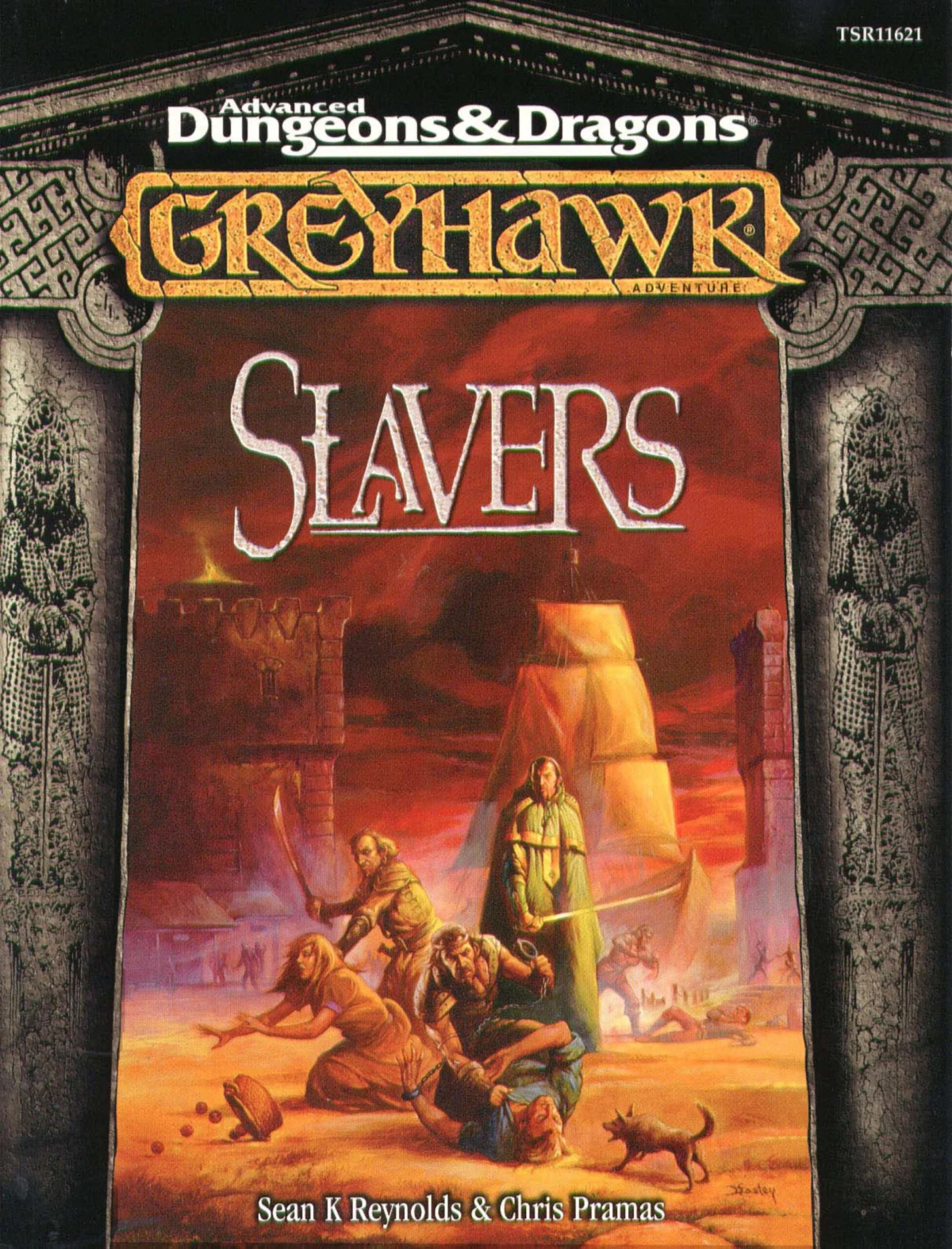
[DATELINE – Greyhawk, Oerth / Earth, 2024] – In the annals of tabletop roleplaying games, certain products become touchstones, not always for their brilliance, but sometimes for the critical discussions they ignite about design philosophy, player experience, and publisher strategy. One such product, "Slavers," published by Wizards of the Coast in 2000 for the Advanced Dungeons & Dragons (AD&D) 2nd Edition, serves as a poignant case study in the complexities of reviving beloved franchises and navigating transitional periods in gaming history. Originally reviewed on March 14th, 2002, the supplement faced substantial criticism for its muddled identity and execution, a critique that remains relevant even today.
Main Facts: A Muddled Legacy Revisited
"Slavers" was conceived as a direct sequel to the iconic "Slavelords saga" (modules A1-A4) from D&D’s First Edition era, an ambitious attempt to bridge generations of players within the venerable Greyhawk setting. Released during a pivotal moment for Dungeons & Dragons – just as the highly anticipated 3rd Edition was gaining traction – the product found itself in an awkward position. It was a 2nd Edition AD&D supplement expected to appeal to a rapidly evolving player base, many of whom were already converting to the new D&D 3rd Edition ruleset.
The core criticism, articulated powerfully in the 2002 review, was its fundamental lack of focus: "This supplement can’t quite focus itself: As a sourcebook it tries to cover too much. As an adventure it doesn’t cover enough." This duality proved to be its undoing. As a narrative adventure, it was deemed vague, railroaded, and repetitive, failing to deliver the epic scope its lineage suggested. As a sourcebook, it offered disjointed geographical coverage, providing neither comprehensive background for its featured locales nor sufficient detail to support its own thinly sketched plot. The review concluded with a cautious recommendation, primarily to "compulsive collectors of Greyhawk material," suggesting its utility lay less in its intended form and more in the raw material DMs might extract and repurpose.
Authored by Sean K. Reynolds and Chris Pramas, and published by Wizards of the Coast at a price of $18.95 for 128 pages (ISBN: 0-7869-1621-4, Product Code: TSR11621), "Slavers" represented a specific moment in the post-TSR acquisition era where Wizards of the Coast sought to breathe new life into classic D&D intellectual properties. Its reception, however, underscored the challenges inherent in such revivals, particularly when grappling with historical context, evolving game mechanics, and the high expectations of a dedicated fanbase.
Chronology: From Classic Origins to a New Millennium
The story of "Slavers" is inextricably linked to the broader history of the Dungeons & Dragons game and its most enduring campaign setting, Greyhawk.
The Enduring World of Greyhawk
Born from Gary Gygax’s home campaign in the early 1970s, Greyhawk rapidly became one of the foundational settings for Dungeons & Dragons. Its rich tapestry of nations, cultures, and arcane mysteries set the stage for countless adventures, defining the very essence of fantasy roleplaying for a generation. By the late 1970s and early 1980s, modules set in Greyhawk, such as the classic "Temple of Elemental Evil" and the "Giant/Drow" series, were instrumental in shaping the early D&D experience.
The Slavelords Saga: A Classic Precedent (A1-A4)
Central to the context of "Slavers" is its predecessor, the original "Slavelords saga." This series of four modules – A1: Slave Pits of the Undercity, A2: Secret of the Slavers Stockade, A3: Assault on the Aerie of the Slave Lords, and A4: In the Dungeon of the Slave Lords – published between 1980 and 1981, represented a significant early campaign arc for D&D. Known for their challenging encounters, emergent narratives (especially in A4, which was a tournament module), and compelling premise of rescuing kidnapped victims and dismantling a vast slaving operation, these modules cemented their place in D&D lore. They were designed for the nascent First Edition of AD&D and became hallmarks of that era, remembered fondly by many veteran players.
Wizards of the Coast’s Acquisition and Revival Efforts
The late 1990s marked a dramatic shift in the D&D landscape. Tactical Studies Rules (TSR), the original publisher of D&D, faced financial difficulties, leading to its acquisition by Wizards of the Coast (WotC) in 1997. WotC, riding high on the success of Magic: The Gathering, embarked on an ambitious plan to revitalize D&D. This included not only developing a new core ruleset (D&D 3rd Edition) but also re-engaging with classic settings like Greyhawk.
The "Greyhawk Lives!" initiative, launched around 2000, was WotC’s concerted effort to bring the venerable setting back into prominence. This included a series of new products, of which "Slavers" was a part. The intent was clear: to leverage the nostalgia and rich lore of Greyhawk while simultaneously introducing it to a new generation of players and providing new content for existing fans. "Slavers" was published in 2000, positioned as a direct continuation of the classic Slavelords narrative, designed for the AD&D 2nd Edition ruleset.
The 2002 Assessment: A Timely Critique
The review of "Slavers" was published on March 14th, 2002. This timing is crucial. By 2002, D&D 3rd Edition, released in 2000, had already firmly established itself as the dominant ruleset. Players and DMs were actively converting their campaigns and collections to 3e, and the industry was rapidly moving forward. The review therefore approached "Slavers" with a specific lens: "This review assumes that this conversion is going to take place: In other words, the question ‘Is this worth taking the time to convert?’ is going to be part of the final judgment of the product." This added a practical dimension to the critique, asking not just about the product’s inherent quality, but also its future utility in a rapidly changing gaming ecosystem. The review highlighted the dilemma faced by many DMs: investing time and effort into adapting a 2nd Edition product when the future clearly belonged to 3rd Edition.
Supporting Data: Deconstructing "Slavers’" Design Flaws
The original review provided a granular breakdown of "Slavers’" shortcomings, offering valuable insights into common pitfalls in adventure and sourcebook design.
Identity Crisis: Adventure or Sourcebook?
At the heart of the critique was the product’s confused identity. Billed as a sequel and an adventure, "Slavers" simultaneously attempted to function as a regional sourcebook. This dual purpose led to a fundamental conflict, as neither aspect was fully realized. As the reviewer noted, "as a sourcebook it tries to cover too much. As an adventure it doesn’t cover enough." This lack of a clear, singular design goal meant that each component undermined the other, resulting in a product that felt incomplete in all its facets.
The Burden of Prior Knowledge
A significant misstep identified was "Slavers’" heavy reliance on player and DM familiarity with the original A1-A4 modules. By 2000, these modules had been out of print for over a decade, making them inaccessible to many new players and even some returning veterans. The supplement’s assumption that "the DM’s knowledge of the previous adventures" and even "players will at least have a passing knowledge of the importance of past events" created an immediate barrier to entry. This issue wasn’t unique to "Slavers"; the review cited "Return of the Eight" (another Greyhawk revival product) as suffering from a similar problem, referencing products nearly three decades out of date. Such design choices alienated potential new players and frustrated DMs who lacked the necessary historical context.
Plotting a Path to Disappointment
The adventure component of "Slavers" was particularly scrutinized for its weak structure and lack of player agency.
Vague Links and Railroaded Narratives
The most damning indictment of the plot came from the book itself, quoted in the review: "However, these sites and people have only vague links that tie them together into a grand adventure." This admission highlighted a fundamental failure in narrative construction. The plot, as described, forced player characters (PCs) into specific, predetermined outcomes, severely limiting their choices and impact. For instance, the PCs are explicitly prevented from discovering the precise location of Blackthorn Caverns or informing authorities, and they are meant to lose badly in their initial encounter. Later, during a slave raid by the Pirates of the Yellow Veil, the PCs are again forced into a limited role: "They can only stop a few of the raiders, and are too late to prevent the ship from setting sail and escaping." Such "railroading" undermines the core appeal of tabletop RPGs, where player choices and their consequences are paramount.
Repetitive Encounters, Missing Scope
The adventure’s structure was criticized for its monotonous progression: "To the secret base in Nyr Dyv. To the Slavers’ Cove. To the slaver ship Eternal Sun. To more slaver bases. To more slaver bases. And still more slaver bases. And a few more slaver bases. And, eventually, the Big Slaver Base." This pattern of repetitive, short, and "practically identical raids" lacked imagination and epic scale. A "grand adventure" requires variety, escalating stakes, meaningful choices, and a sense of progression beyond simply clearing another small dungeon. With most locations having "a half dozen or less" encounter keys, the sense of a sprawling, dangerous world was lost, replaced by a series of disconnected skirmishes.
The Sourcebook’s Scattered Focus
The sourcebook aspect of "Slavers" fared no better, suffering from a lack of coherence and practical utility.
Geographical Disjointedness
The material provided background for Dyvers, North Woolly Bay, the Orcish Wild Coast, and the Pomarj. However, as the review pointed out, there was "no particular rhyme or reason why these particular locations are covered in a sourcebook together." Their inclusion seemed solely dictated by the meandering adventure outline, rather than a cohesive plan to flesh out a specific region or theme. This created a disjointed experience for DMs attempting to use the material for broader campaign building.
Undermining Itself
The core issue was a "cascading problem" where the attempt to be both an adventure and a sourcebook compromised both. The adventure became a mere outline, and the sourcebook material was warped by the adventure’s limited scope. Instead of providing comprehensive coverage of Nyr Dyv, for example, DMs received "paltry coverage… with some focused detail on a handful of locations which are only important for the adventure." This self-defeating structure meant that the sourcebook was neither a good general-purpose reference nor a sufficiently detailed guide for its own accompanying adventure. It fell short on both counts, failing to provide either the breadth or depth expected from a quality supplement.
Industry Context and Publisher Intent: Navigating a New Era
While "Slavers" received a critical review, it’s essential to place its publication within the broader context of Wizards of the Coast’s strategy and the challenges facing the tabletop RPG industry at the turn of the millennium. Direct "official responses" from WotC to this specific review are not publicly known, but the product itself, and the publishing environment of the time, provide insight into their intent and the difficulties they encountered.
The Vision for Greyhawk’s Return
Wizards of the Coast’s "Greyhawk Lives!" initiative was an ambitious undertaking. The intent was undoubtedly to capitalize on the rich heritage of D&D’s first official campaign setting, to reintroduce it to a new generation, and to provide continuity for long-time fans. Products like "Slavers" were designed to tap into existing nostalgia by referencing classic adventures and villains. The idea of a sequel to the "Slavelords saga" was, on paper, a compelling proposition, promising a return to a beloved storyline with updated lore and challenges. The hope was to bridge the gap between the venerated past and the vibrant future of D&D under WotC’s stewardship.
Navigating the Edition Change
A significant factor impacting "Slavers’" reception was the looming, and then actual, release of D&D 3rd Edition. Published in 2000, the same year as "Slavers," D&D 3e represented a radical overhaul of the game’s mechanics, designed to be more accessible, customizable, and internally consistent than its predecessors. This created a dilemma for WotC’s publishing schedule. On one hand, there was still a market for AD&D 2nd Edition products, and existing Greyhawk fans were still playing 2e. On the other, the future was clearly 3e. Publishing "Slavers" as a 2nd Edition product meant it immediately faced the "conversion question" highlighted by the review. WotC likely had products in the pipeline for 2e that were too far along to cancel or easily convert to 3e, leading to a period where both editions were supported, albeit unevenly. This transitional period inevitably meant some products, like "Slavers," felt caught between two eras.
Learning from Critique: Evolving Design Philosophies
While no specific "official response" to the 2002 review exists, the industry at large, including WotC, has shown an evolving understanding of adventure and sourcebook design. The criticisms leveled at "Slavers"—regarding railroaded plots, lack of focus, and reliance on out-of-print material—became common talking points in the wider RPG design community.
Subsequent D&D editions and products, particularly in later years, have often emphasized:
- Player Agency: Campaigns and adventures are increasingly designed to offer multiple paths and allow player choices to genuinely impact the narrative.
- Clear Focus: Products tend to be more clearly defined as either adventures or sourcebooks, or if integrated, they achieve a more harmonious balance.
- Accessibility: Modern D&D products are generally designed to be self-contained or to provide necessary context, minimizing reliance on obscure, out-of-print materials.
- Modular Design: The concept of "node-based scenario design," which the reviewer touched upon in their personal reflection, has gained wider recognition, offering DMs tools to create more flexible and dynamic campaigns.
The experience with products like "Slavers" likely contributed to this evolution, providing valuable, if sometimes painful, lessons about what players and DMs truly value in their gaming supplements.
Implications: Enduring Lessons from a Misfire
Despite its critical reception, "Slavers" offers several valuable implications for Dungeons & Dragons history, adventure design, and the role of supplementary materials.
A Collector’s Item, Not a Campaign Staple
The review’s ultimate recommendation — for "compulsive collectors of Greyhawk material" — perfectly encapsulates its enduring legacy. "Slavers" did not become a universally beloved or essential adventure path like its predecessors. Instead, it holds a niche place in the collections of Greyhawk completists and historians of D&D’s publishing history. For most DMs seeking a compelling adventure or comprehensive setting guide, its flaws proved too significant to overcome, especially given the wealth of other materials available. Its physical existence, however, marks a specific moment in the attempt to bridge D&D’s past and present.
The Art of "Mining" Content
Perhaps the most positive implication derived from the review is the concept of "mining" a product for useful components. The reviewer’s personal experience, using "material from Slavers to help flush out and fill in the weaknesses… in the original Slavers modules," highlights the adaptability and resourcefulness of DMs. This practice of extracting "juicy material" – interesting NPCs, unique locations, or intriguing plot hooks – from a flawed product demonstrates that even commercially unsuccessful supplements can hold value for a creative Dungeon Master. It underscores the idea that published adventures are often raw materials, not rigid scripts, to be molded and adapted to suit individual campaigns. This approach, where DMs act as creative editors, is a testament to the collaborative nature of tabletop roleplaying.
Lessons in Adventure Design and Sourcebook Integration
"Slavers" serves as a cautionary tale and a valuable lesson for aspiring adventure designers and publishers. Its shortcomings illuminate key principles of effective RPG product design:
- Clarity of Purpose: A product must clearly define whether it is primarily an adventure, a sourcebook, or a combination, and then execute that purpose effectively. Ambiguity leads to dilution.
- Player Agency: Meaningful choices and consequences are crucial to engaging players. Railroaded plots diminish immersion and player satisfaction.
- Epic Scope vs. Repetition: Grand narratives require variety, escalating stakes, and distinct challenges, not merely a series of similar encounters.
- Accessibility and Context: Relying on obscure or out-of-print material alienates new audiences and frustrates DMs. Essential context must be provided within the product itself.
- Harmonious Integration: If an adventure and sourcebook are combined, their elements must complement each other, with the source material directly enhancing the adventure, and vice versa, rather than undermining it.
The D&D 3rd Edition Conversion Dilemma
The review’s focus on the "worth taking the time to convert" question highlights a significant challenge during periods of edition changes. For publishers, it means balancing legacy support with forward momentum. For DMs, it means making strategic decisions about which products to invest in, both financially and in terms of preparation time. "Slavers," as a 2nd Edition product released at the dawn of 3rd Edition, perfectly encapsulated this transitional friction, representing a product that, for many, simply wasn’t worth the conversion effort given its inherent weaknesses. This period of rapid evolution underscored the importance of future-proofing products where possible, or at least being acutely aware of the market’s direction.
The Enduring Appeal of Greyhawk
Despite the specific criticisms of "Slavers," the product’s very existence is a testament to the enduring appeal of the Greyhawk setting. Wizards of the Coast recognized the demand for new Greyhawk content, even if their execution in this particular instance fell short. The continued discussion around Greyhawk, its history, and its potential for new stories demonstrates that the foundation laid by Gygax and subsequent designers remains robust, capable of inspiring DMs and players decades later, even when specific supplements don’t quite hit the mark.
In conclusion, "Slavers" stands as a complex artifact in the history of D&D. While critically panned for its design flaws and muddled identity, it offers invaluable insights into the challenges of franchise revival, the intricacies of adventure and sourcebook design, and the dynamic evolution of the tabletop roleplaying game industry. Its legacy is not one of unmitigated success, but rather a rich source of lessons for designers and a testament to the enduring, adaptable spirit of Dungeon Masters everywhere.
About the Original Reviewer:
The original review was published on March 14th, 2002, by a contributor to RPGNet. The author later detailed the circumstances of their reviews and their departure from RPGNet on their personal blog, The Alexandrian. The personal reflections shared alongside the review provide a rare glimpse into the practical realities of a DM attempting to integrate published material into their home campaigns.