"Dawn of Silence": A Post-Apocalyptic Epic Forges a New Path in Dark Fantasy
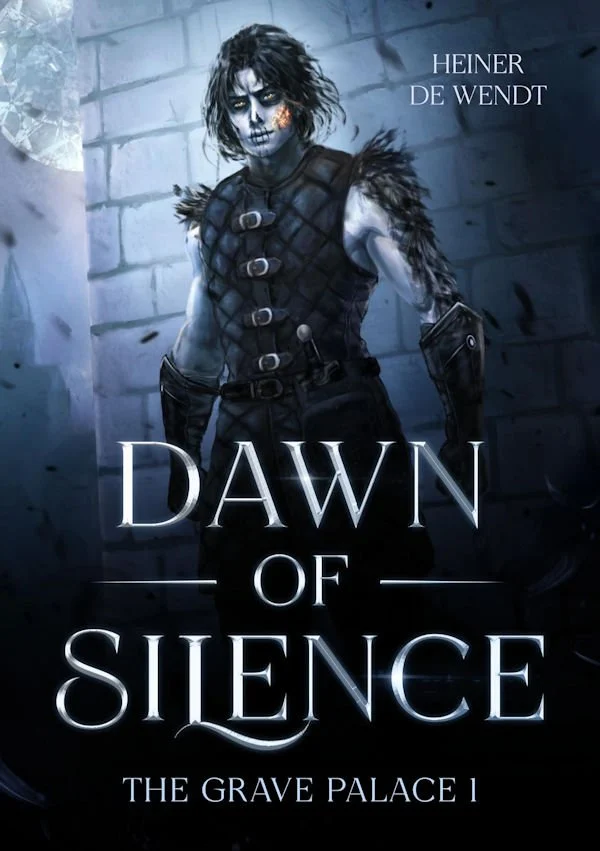
LONDON, UK – [Date of Publication] – In a literary landscape often saturated with familiar tropes, a new voice has emerged to challenge conventions and captivate readers with a richly imagined, post-apocalyptic dark epic fantasy. "Dawn of Silence," penned by the promising debut author de Wendt, is quickly garnering attention for its intricate worldbuilding, complex characters, and a narrative that masterfully blends high stakes with profound thematic depth. Discovered through BookMatch.co.uk, a novel service connecting authors with reviewers, the novel plunges readers into Ashandri, a world scarred by a cataclysm yet vibrant with the echoes of a reforged reality.
At its heart, "Dawn of Silence" follows Arkan, a protagonist driven by the deeply personal mission to locate his missing sister. This quest, however, swiftly propels him into the perilous epicentre of a vast and sinister conspiracy, one orchestrated by a formidable antagonist from his own shadowed past. To navigate this treacherous web, Arkan finds himself in an improbable alliance with two equally compelling outcasts: a seasoned vampire hunter and a resourceful illusionist, both on the run from their own troubles. Together, this unlikely trio must unite their disparate skills and resolve to safeguard a beleaguered city from an encroaching tide of the undead. Yet, as their immediate struggle unfolds, an even more profound and ancient darkness casts its menacing shadow over Ashandri, threatening to engulf not just a city, but the very fabric of their reforged world.
The narrative promises a relentless struggle, pitting these misfit heroes against a formidable array of adversaries. From Arkan’s own ruthless brother to a pantheon of monsters, manipulative aristocrats, ethereal spirit beings, and the relentless undead, the challenges are multifaceted and relentless. Beyond external threats, the novel delves into the internal battles of its protagonists, forcing them to confront their own traumatic pasts and personal demons. "Dawn of Silence" is poised to leave a significant mark on the dark fantasy genre, offering a narrative that is both gritty and intellectually stimulating, a testament to de Wendt’s burgeoning talent.
Main Facts
Unveiling Dawn of Silence: A New Literary Star on the Horizon
"Dawn of Silence" introduces readers to the distinctive literary vision of de Wendt, a debut author whose work immediately establishes a unique presence within the dark epic fantasy genre. The novel is set in Ashandri, a meticulously constructed world that bears the indelible scars of a past apocalypse, yet pulsates with a resilient, albeit grim, vitality. This foundational detail – a world that has already survived its end – serves as a powerful hook, promising a narrative that explores not just the struggle against immediate threats, but the profound implications of rebuilding and adapting in the wake of ultimate devastation.
The core premise is one of escalating stakes and an unlikely camaraderie. Arkan, a skilled thief, embarks on a personal odyssey to find his sister, a mission that quickly intertwines with a grander, more perilous conspiracy. This personal motivation grounds the epic scope of the narrative, making the broader stakes feel acutely felt through the lens of individual suffering and hope. The revelation that the conspiracy is orchestrated by a terrifying foe from Arkan’s past adds layers of psychological depth and personal vendetta to the unfolding conflict, ensuring that the battles are not merely physical but deeply emotional.
Core Narrative Threads: An Alliance Against Annihilation
The heart of "Dawn of Silence" beats with the formation of an improbable fellowship. Arkan, the thief, finds himself allied with a stoic vampire hunter and a quick-witted illusionist, each bringing a unique skillset and a troubled history to the nascent team. This "found family" dynamic, characterized by diverse backgrounds and shared adversity, is a central pillar of the narrative. Their immediate objective is critical: to defend a besieged city from an overwhelming surge of the undead. This localized conflict serves as a visceral entry point into the dangers of Ashandri, showcasing the direct consequences of the apocalyptic event and the persistent threats that plague its survivors.
However, de Wendt masterfully crafts a sense of ever-present, escalating peril. Beyond the immediate undead threat, the narrative hints at an "even greater darkness" that extends its tendrils across Ashandri. This suggests a multi-layered conflict, moving from personal vendettas and regional battles to potentially world-ending stakes. The enemies are varied and numerous, ranging from Arkan’s own ruthless brother – a figure representing a deeply personal betrayal – to monstrous entities, corrupt aristocrats, enigmatic spirit beings, and the relentless legions of the undead. This expansive rogue’s gallery ensures that the heroes face challenges on every front: physical, political, magical, and spiritual.
The World of Ashandri: A Reforged Reality
Ashandri is not merely a backdrop but a character in itself. The designation "reforged world" implies a profound transformation, where the remnants of a prior civilization have been reshaped, repurposed, and perhaps even mutated by the cataclysm. This post-apocalyptic setting allows de Wendt to inject truly inventive ideas into the fantasy genre. It suggests a landscape where magic might manifest differently, where technology could be a forgotten art or an emergent necessity, and where new societal structures have arisen from the ashes of the old. The very existence of metallic gnomes, as revealed in the review, points to a fascinating blend of magic, engineering, and perhaps even biological adaptation in this transformed world. This emphasis on a world that has already faced and overcome a major destructive event provides a unique canvas for exploring themes of resilience, survival, and the enduring nature of both good and evil in a radically altered reality.
Chronology
The Genesis of Conflict: A Personal Mission’s Unforeseen Expansion
The narrative arc of "Dawn of Silence" commences with a universally relatable and deeply human motivation: Arkan’s desperate search for his lost sister. This initial, personal quest acts as a catalyst, pulling him from the periphery into the very heart of Ashandri’s political and magical turmoil. What begins as a solitary endeavour rapidly escalates when Arkan unearths a vast conspiracy, revealing that his sister’s disappearance is not an isolated incident but a symptom of a much larger, more insidious plot. The re-emergence of a terrifying foe from Arkan’s past injects a potent sense of personal history and unresolved trauma into the narrative, transforming a search-and-rescue mission into a vendetta against a familiar, deeply personal evil. This early phase establishes the intimate stakes that underpin the novel’s epic scope.
This critical juncture forces Arkan to forge an alliance with two other individuals similarly caught in the currents of fate: a pragmatic vampire hunter and an elusive illusionist. Their coming together is not born of shared ideology or long-standing friendship, but rather a convergence of immediate necessity and mutual survival. This initial formation of the "found family" unit marks a significant shift in the narrative, moving from a singular protagonist’s journey to a collective struggle, laying the groundwork for the complex interpersonal dynamics that will define their subsequent adventures.
Rising Stakes and Evolving Threats: A City on the Brink
As the unlikely trio solidifies their bond, the narrative swiftly moves to a more immediate and pressing crisis: the impending destruction of a city by an onslaught of undead. This phase of the story provides a tangible, high-stakes conflict that allows the heroes to test their combined abilities and trust in one another under extreme pressure. The battle for the city serves as a microcosm of the larger war plaguing Ashandri, demonstrating the devastating power of the undead and the desperate measures required to combat them.
De Wendt then meticulously layers the opposition, ensuring that the heroes face a constant escalation of challenges. Beyond the mindless hordes, Arkan confronts the personal agony of battling his own ruthless brother, a conflict laden with emotional baggage and moral ambiguity. The introduction of monsters, manipulative aristocrats, and enigmatic spirit beings diversifies the threats, demanding not just physical prowess but also strategic thinking, political maneuvering, and an understanding of Ashandri’s unique magical and spiritual ecology. This varied array of antagonists ensures that the heroes are always on their toes, unable to rely on a single approach or strategy. Crucially, the external conflicts are mirrored by internal ones; each hero is forced to confront "their own past," adding psychological depth and emotional resonance to their fight for survival.
Towards a Climax: The Shadow of Greater Darkness
The story’s progression builds towards a grander, more existential confrontation. While the immediate battles for the city and against specific foes are crucial, "Dawn of Silence" consistently alludes to an "even greater darkness" that looms over Ashandri. This overarching threat suggests a larger, perhaps cosmic, struggle that transcends the current conflicts. It implies that the events unfolding are but pieces of a grander tapestry, hinting at ancient evils, forgotten powers, or fundamental imbalances within the world itself.
This narrative strategy effectively positions "Dawn of Silence" as potentially the inaugural chapter in a sprawling saga. The resolution of immediate conflicts, while satisfying, is likely to pave the way for a deeper exploration of Ashandri’s history, its magical underpinnings, and the true nature of the apocalyptic event that shaped it. The shadow of this greater darkness serves as a powerful testament to de Wendt’s ambition, promising a series that continually expands its scope and delves into ever more profound mysteries, ensuring that readers remain invested in the fate of Ashandri and its resilient, if troubled, inhabitants.
Supporting Data
The Cornerstone of Worldbuilding: Ashandri’s Inventive Core
The most lauded aspect of "Dawn of Silence," according to early reviews, is de Wendt’s exceptional worldbuilding. In a genre often constrained by established fantasy tropes, Ashandri stands out as a triumph of originality, largely because it is presented as a world that has already endured an apocalypse. This premise allows for a creative freedom that many traditional fantasy settings lack, enabling de Wendt to craft genuinely inventive ideas that permeate every aspect of the narrative.
The vivid depiction of a gnome with metallic limbs and a dim purple light emanating from its chest is a prime example of this ingenuity. This single image immediately sparks curiosity: What forces in Ashandri could lead to such biomechanical augmentation? Is it advanced technology, a unique form of magic, or a necessary adaptation for survival in a harsh, post-cataclysmic environment? Such details suggest a world where the lines between organic and inorganic, magic and science, are blurred, where new forms of life and existence have emerged from the ashes of the old. This level of detail and conceptualization elevates Ashandri beyond a mere backdrop, transforming it into a living, breathing entity with its own unique history and rules, making readers eager to uncover its secrets. The world feels authentically "reforged," rather than simply rebuilt, suggesting a deeper, more fundamental alteration to its very essence.
Character Dynamics and Relatability: A Refreshing Found Family
De Wendt also receives significant praise for his approach to character dynamics, particularly among the core trio. The review highlights the refreshing absence of manufactured romantic tension between the mixed-gender protagonists, instead emphasizing their genuine trust and collaborative spirit. This choice allows the narrative to focus squarely on the challenges they face and the bonds of friendship and loyalty that form under pressure, rather than diverting attention to predictable romantic subplots. In a genre that frequently relies on such tropes, this deliberate omission feels both mature and progressive, allowing for a deeper exploration of platonic relationships and the strength derived from mutual respect and shared purpose.
The concept of "found family" is central to the appeal of these heroes. Thrust together by circumstance, they form a unit based on necessity and evolving affection, demonstrating that familial bonds can be forged through shared adversity as powerfully as by blood. While the protagonists are described as "good-hearted," a trait that some readers might find slightly idealistic, this is contextualized within a "dark book that doesn’t mistake grimness for depth." Their inherent goodness shines as a beacon in a bleak world, suggesting that hope and compassion can endure even in the darkest of times. Furthermore, the villains are not simply caricatures of evil; they "get reasons rather than just menace." This nuanced approach to antagonist development adds considerable depth to the conflicts, inviting readers to consider the complex motivations behind even the most nefarious actions, thereby enriching the moral landscape of Ashandri.
Narrative Structure and Style: Embracing the Epic Scope
De Wendt’s narrative style, while exhibiting some hallmarks of a debut, is ambitious and largely successful. The reviewer notes a familiar "mirror scene" trope, where a character confronts their altered reflection. While the delivery might be a well-worn device, the content of Arkan’s reflection – a man "burned to ash by apocalyptic fire" and transformed into something "unrecognisable" – justifies its inclusion. This scene serves not just as a moment of self-discovery but as a poignant reminder of the apocalypse’s devastating impact and Arkan’s personal journey of transformation and survival. It speaks to the psychological toll of living in Ashandri and the ongoing struggle for identity in a world that has fundamentally changed.
The novel also embraces a sprawling ensemble cast with frequently shifting points of view. While this might require readers to "adjust expectations" if they prefer a tight, singular focus, it is presented as a strength for those who appreciate an immersive, expansive world. This multi-perspective approach allows de Wendt to paint a richer, more comprehensive picture of Ashandri, showcasing its diverse cultures, conflicts, and characters from various angles. It reinforces the epic scale of the story, signaling that the fate of Ashandri is not dependent on one hero alone, but on the interwoven destinies of many. This structural choice caters to readers who relish complex narratives and the feeling of truly inhabiting a vast, intricately detailed fictional universe.
Official Responses
The Author’s Vision: A Response to Genre Tropes
While "Official Responses" from the author, de Wendt, or the publisher are not explicitly detailed in the provided review, the critical analysis within the article allows for a strong inference of the author’s intentionality. The choices made in "Dawn of Silence"—the deliberate lack of manufactured romantic tension among the main heroes, the emphasis on a nuanced portrayal of villains, and the prioritization of world and character impact over gratuitous grimness—can be interpreted as de Wendt’s considered "response" to prevalent genre tropes.
This approach suggests an author who is keenly aware of contemporary reader expectations and a desire to contribute to the evolution of dark fantasy. By crafting protagonists who are good-hearted but not naive, and villains who possess discernible motivations rather than pure malevolence, de Wendt appears to be striving for a more sophisticated and emotionally resonant narrative. This artistic stance aligns with a broader trend in modern fantasy towards complexity, moral ambiguity, and a deeper exploration of human nature under duress, rather than simply replicating established formulas. The book’s very existence, with its unique blend of post-apocalyptic elements and traditional fantasy, signifies an author boldly carving out a distinct niche within a crowded market.
BookMatch.co.uk: A New Avenue for Discovery and Endorsement
The discovery of "Dawn of Silence" through BookMatch.co.uk itself constitutes a significant "official response" within the literary ecosystem. BookMatch is presented as a "new service for authors, allowing reviewers to browse a catalogue and download the books that sound like their kind of thing." This platform plays a crucial role in the modern publishing landscape, particularly for debut authors like de Wendt. In an era where countless titles compete for attention, services like BookMatch provide a vital conduit, connecting deserving new works with influential reviewers who are genuinely interested in their specific genre.
The reviewer’s decision to download and subsequently praise "Dawn of Silence" through this service serves as an implicit endorsement of both the book’s quality and the efficacy of BookMatch.co.uk as a discovery tool. For a debut author, securing positive early reviews, especially from platforms dedicated to identifying quality literature, can be instrumental in building initial momentum and gaining visibility. This process highlights how innovative platforms are becoming integral to the "official" channels of literary recognition, acting as gatekeepers and tastemakers in an increasingly digital and democratized publishing world. It speaks to the potential of such services to bring truly original voices, like de Wendt’s, to a wider audience, fostering a more diverse and vibrant literary landscape.
Implications
Redefining Dark Epic Fantasy: Beyond Grimness to Depth
"Dawn of Silence" carries significant implications for the trajectory of dark epic fantasy. The review explicitly states that the book is "dark but doesn’t mistake grimness for depth." This distinction is crucial in a subgenre that has sometimes been criticized for equating overt violence and bleakness with profound storytelling. De Wendt’s approach suggests a more nuanced understanding of darkness, one that delves into the psychological toll of a ravaged world and the moral complexities of its inhabitants, rather than simply relying on shock value.
By blending the inherent despair of a post-apocalyptic setting with elements of hope, resilience, and genuine human connection (through the found family dynamic), the novel offers a fresh perspective. It implies that dark fantasy can explore profound philosophical questions, such as the nature of good and evil in extreme circumstances, the cost of survival, and the enduring capacity for compassion, without sacrificing its gritty edge. This could set a new standard, encouraging future authors to explore the intricate interplay between light and shadow, fostering a richer, more emotionally resonant subgenre that prioritizes thematic substance alongside visceral action.
The Future of Ashandri and de Wendt’s Trajectory
The review’s observation that "Dawn of Silence" contains "enough ideas to fuel a whole series" is perhaps its most exciting implication. This suggests that the initial novel is merely the first plunge into the vast and intricate world of Ashandri, promising readers a continuing saga of epic proportions. The "greater darkness" hinted at throughout the narrative implies a grand overarching conflict that will likely unfold across multiple volumes, allowing de Wendt to further explore the unique lore, diverse cultures, and complex magical systems of his creation. This bodes well for readers seeking long-term immersion in a meticulously crafted fantasy universe.
For de Wendt as a debut author, the positive reception and the evident potential for a series mark a highly promising trajectory. A strong debut that establishes a compelling world and engaging characters is often the foundation for a successful literary career. If de Wendt continues to build on the inventive worldbuilding, nuanced character development, and unique narrative voice showcased in "Dawn of Silence," he has the potential to become a significant figure in contemporary fantasy literature, drawing comparisons to established masters while forging his own distinct path.
Impact on Reader Expectations and Literary Trends
"Dawn of Silence" is poised to influence reader expectations regarding character dynamics and narrative complexity. The emphasis on a mixed-gender found family unit devoid of romantic tension between its core members is a powerful statement, demonstrating that deep, meaningful relationships can exist without being defined by romance. This approach caters to a growing segment of readers who seek diverse and authentic character interactions, challenging traditional genre conventions and promoting more inclusive storytelling.
Furthermore, the novel’s commitment to nuanced villains and a world that prioritizes impact on people over manufactured drama suggests a trend towards more thoughtful and psychologically rich fantasy. Readers are increasingly seeking stories that offer moral ambiguity and explore the human condition in all its messy complexity. "Dawn of Silence," with its blend of dark themes and genuine warmth, contributes to this evolution, encouraging a literary landscape where depth, invention, and emotional resonance are held in the highest regard. The call to action, "Come for the mystery, stay for the worldbuilding," perfectly encapsulates the enduring appeal and significant promise of this remarkable new entry into the dark fantasy canon.