The Enduring Enigma: A Deep Dive into the Ostroc BattleMech
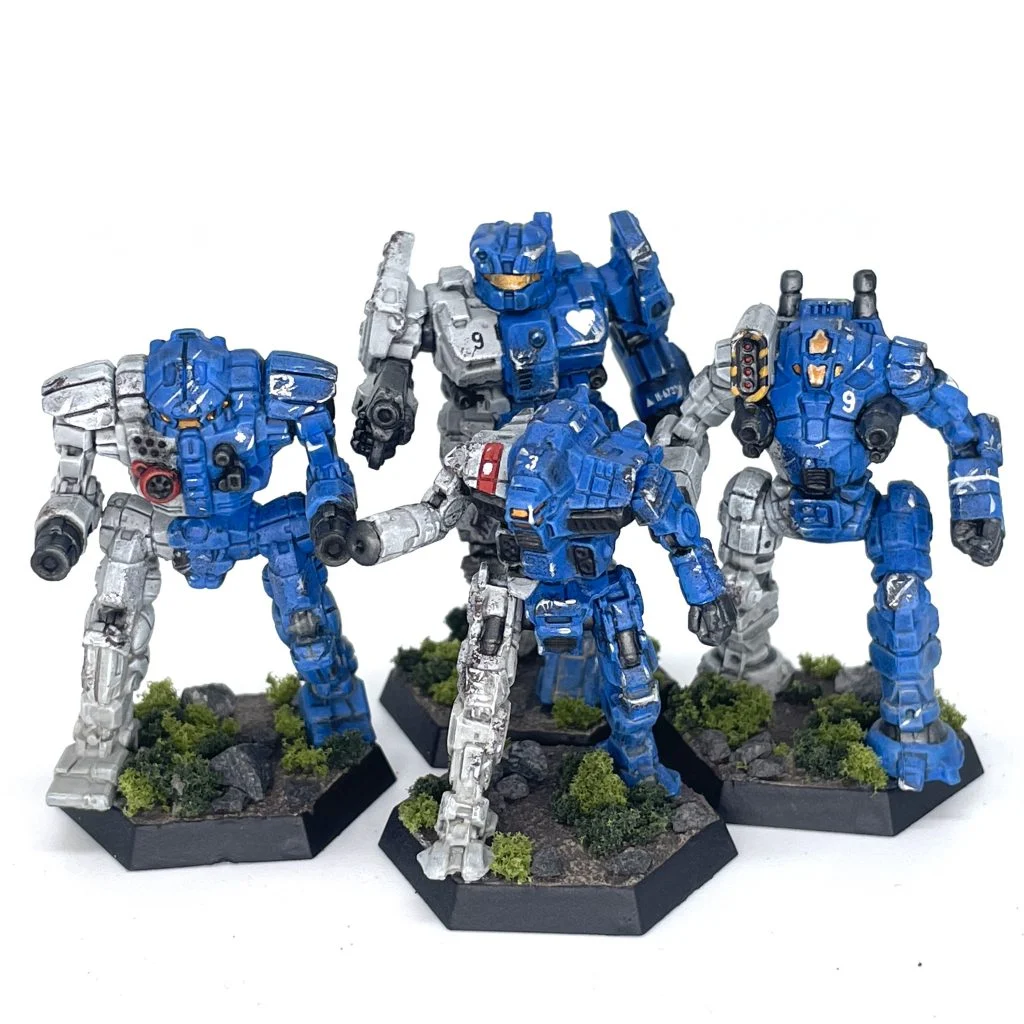
Qualzi, Unaffiliated Territories – June 12th, 3038 – The desolate plains of Qualzi bore witness to a stark illustration of combat tenacity as two BattleMechs, an Ostroc and a Merlin, pushed through a relentless sandstorm. Pilot Carmine Aven, commanding the ancient Ostroc OSR-2C, navigated the howling winds alongside her partner, Major Jeremiah, in his Merlin. Their black-and-orange paint schemes, once vibrant, were now dulled by the abrasive sands that whipped against their chassis.
"Wizard One, Wizard Two, this is Roundtable, copy?" Rebecca’s voice, fractured by static, cut through the din from the Ostmann-L communications array.
"Copy," Jeremiah affirmed, his Merlin briefly slowing to survey the obscured landscape. "Go for traffic."
"Target readings have closed to within ten clicks. Wizard Three and Wizard Four are approximately two clicks off your aft," Rebecca continued, her words battling the atmospheric interference. "Support assets are vectoring inbound, but the storm is likely to keep them high and ineffective for some time."
"What are you saying, ‘Becca?" Carmine queried, adjusting her viewscreen settings in a futile attempt to pierce the obfuscation.
Jeremiah’s sigh was palpable even over the comms. "We’re going to have to hold out until the storm passes. A lance against a company in an open field, in the middle of a sandstorm." His Merlin sagged slightly, the ‘Mech seeming to reflect its pilot’s grim realization.
"Correct, Major," Rebecca confirmed, a note of solemn apology in her tone. "I’ll do my utmost to keep you and your support apprised, but for a while, the best you’ll get is flat-dropped ordnance."
"Understood," Jeremiah grunted, shaking sand from his ‘Mech as he brought his weapon systems online. "Guess we’ll just have to make do."
This vignette, drawn from the logs of MechWarrior Carmine Aven, highlights the challenging operational environments and tactical dilemmas often faced by mercenary commands, and by extension, the heavy BattleMechs that form their backbone. Among these, the Ostroc stands out as a ubiquitous, if sometimes confounding, fixture across the Inner Sphere.
Main Facts: A Veteran of the Battlefields
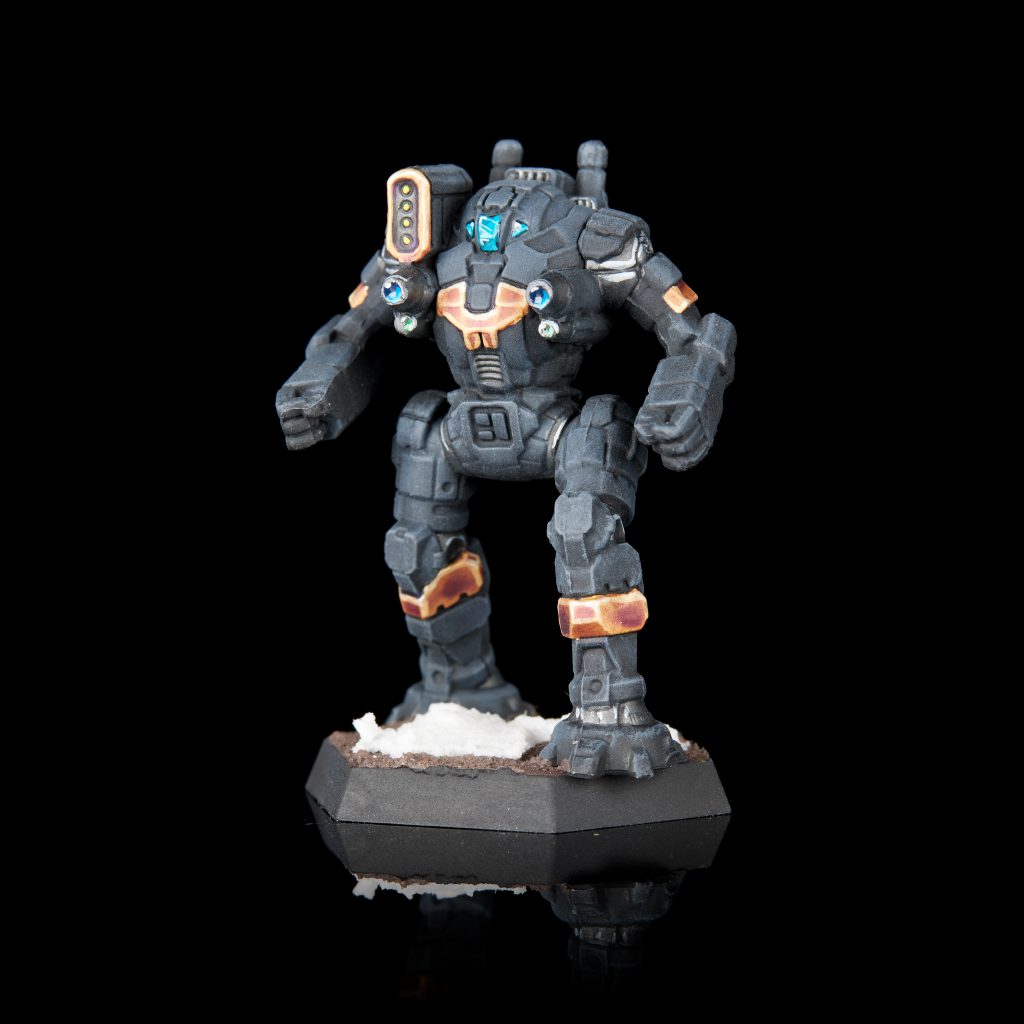
The Ostroc, a 60-ton heavy BattleMech, represents a fascinating blend of enduring design principles and peculiar aesthetic choices that have allowed it to persist from the mid-26th century well into the IlClan era. Designed by Ostmann Industries, the Ostroc first rolled off production lines in 2511, quickly establishing itself as a reliable, if not revolutionary, combat platform. Its widespread distribution, from the core worlds of Terra to the furthest reaches of the Periphery, underscores its adaptability and ease of maintenance.
Characterized primarily as an "energy boat," the Ostroc typically mounts a substantial array of laser weaponry, often complemented by missile systems. Its combat profile usually involves sustained energy fire, making it a dependable choice for holding defensive lines or contributing to offensive pushes. Despite its age and the advent of more advanced designs, the Ostroc remains a common sight, a testament to its fundamental utility and the sheer volume of units produced over centuries.
Historical Context and Design Chronology: From Unseen Origins to Enduring Icon
The genesis of the Ostroc is deeply intertwined with the early, often tumultuous, history of BattleTech design. Introduced in 2511, the Ostroc’s distinctive, somewhat rounded silhouette has been a consistent point of discussion among MechWarriors and historians alike. This unconventional aesthetic, often described as an "egg that didn’t hatch quite right," belies a deeper, fascinating origin story.
From a meta-historical perspective, the Ostroc, along with other early BattleMechs, drew inspiration from various science fiction franchises. Notably, its design was technically based on the Regult/Zentradi Battle Pod from the Japanese anime series Macross. This connection, however, proved to be a fortuitous one for the Ostroc. Unlike many of its anime-derived contemporaries, which later became embroiled in the infamous "Unseen" legal disputes due to their close resemblance to their inspirations, the Ostroc’s original artwork and subsequent redesigns drifted significantly from the Regult Battle Pod. This visual divergence inadvertently rescued the Ostroc from the legal quagmire that sidelined classics like the Warhammer or Marauder, allowing it to remain a canonical and continuously represented ‘Mech throughout BattleTech’s evolution.
Beyond its meta-origins, the in-universe design rationale for the Ostroc’s rounded form is less explicitly stated but can be inferred. Such a shape might have contributed to structural integrity, ease of manufacturing, or simply reflected a prevalent aesthetic at the time of its initial conception. Regardless of the exact intent, the design proved robust enough to see the Ostroc endure through the technological golden age of the Star League, the devastating Succession Wars, and the subsequent eras of technological renaissance, right up to the modern IlClan period. Its survival is a testament not just to its design, but to the adaptability of its chassis, which has seen numerous variants emerge to meet the ever-changing demands of interstellar warfare.
Chassis and Core Characteristics: The Workhorse Beneath the Shell
The Ostroc’s chassis is defined by its 60-ton heavy classification, balancing firepower and armor with moderate mobility. Across its fifteen known variants, certain core characteristics consistently emerge, shaping its tactical role on the battlefield.
Movement Profile: Most Ostrocs typically feature a ground movement profile of 4/6 (four hexes walking, six hexes running) or 5/8, providing respectable speed for a heavy ‘Mech, enabling it to keep pace with medium lances or support slower assaults. The occasional integration of jump jets further enhances its tactical flexibility, albeit often at the cost of other systems.
Armament and Heat Management: As an archetypal "energy boat," the Ostroc’s primary offensive capability lies in its paired Large Lasers and Medium Lasers, typically mounted in the side torsos. These are frequently supplemented by short-range missile (SRM) systems in the right torso, providing a burst damage option for close-quarters engagements. However, the reliance on energy weapons often presents significant thermal management challenges. Many early variants, equipped with only fifteen single heat sinks, struggle to dissipate the heat generated by sustained fire, often forcing MechWarriors to make difficult choices between firepower and thermal stability. Later variants, incorporating double heat sinks, mitigate this issue, allowing for more aggressive tactical maneuvers.
Armor and Vulnerabilities: The most prolific armor belt on the Ostroc provides a total of 144 pips, representing approximately 72% of its maximum potential armor. This distribution, typically 8 pips on the arms, 20 on the legs, 22 on the side torsos, and 22 on the center torso, reveals a critical design flaw: the notoriously thin arm armor. This vulnerability has become a consistent operational issue, leading to the frequent and predictable loss of the Ostroc’s arms in combat. This characteristic became so prevalent during the Succession Wars that it influenced tactical doctrines, with opponents often targeting these weak points. This particular vulnerability, from a Doylist perspective, is an artifact of the Regult Battle Pod’s original design, which lacked conventional arms, forcing the BattleTech designers to make concessions for the ‘Mech’s canonical armaments.
Cost-Effectiveness: The Ostroc’s market value, reflected in its Battle Value (BV), demonstrates a wide spectrum. Base models can be acquired for as little as 1,228 BV, making them an attractive, cost-effective option for forces on a budget. Conversely, advanced or highly customized variants can command prices upwards of 2,095 BV, reflecting the integration of advanced Star League or Clan technologies. This price variability underscores its role as both a common, expendable asset and, in its more refined forms, a capable front-line combatant.
Operational History and Strategic Implications: A Mercenary’s Companion
Throughout its long service history, the Ostroc has proven to be a resilient and adaptable BattleMech, frequently found in the arsenals of Great House militaries, minor powers, and, most prominently, independent mercenary commands. Its combination of respectable firepower, moderate speed, and widespread availability makes it a pragmatic choice for a variety of combat roles.
For mercenary outfits like the Daylight Mercenary Company, as exemplified by MechWarrior Carmine Aven’s deployment, the Ostroc serves as a reliable workhorse. Its relative simplicity and robust construction, despite the arm vulnerability, mean it can withstand the rigors of extended campaigns and operate in diverse environments, from the sand-swept plains of Qualzi to dense urban sprawls. In situations where numerical superiority is lacking, as in Aven’s engagement against a full company, the Ostroc’s sustained energy output and the threat of its missile systems provide crucial suppressive fire, buying time for strategic retreats or the arrival of support.
The Ostroc’s tactical role often involves acting as a secondary line ‘Mech, supporting faster medium ‘Mechs or providing additional firepower to heavier assault units. Its energy-centric loadout allows for flexible engagement ranges, though its heat management often dictates cautious firing discipline. The perennial issue of its fragile arms forces MechWarriors to adopt defensive tactics, using terrain or torso twisting to shield vulnerable components. Despite these drawbacks, the Ostroc’s sheer prevalence ensures its continued relevance, often serving as a training ‘Mech for new pilots or a dependable anchor for veteran lance commanders.
Variant Analysis: Evolution and Stagnation
The Ostroc boasts fifteen distinct variants, each attempting to refine or redefine its combat role. However, a review of key models reveals a pattern of both incremental improvement and, at times, perplexing design choices.
OSR-2C (Baseline)
The original OSR-2C, valued at 1,228 BV, serves as the progenitor for the entire line. It carries twin Large Lasers and twin Medium Lasers, with an SRM-4 in the right torso, supported by one ton of ammunition in the center torso. Its fifteen single heat sinks struggle to manage the thermal output of its primary weapons, leading to significant heat buildup during sustained engagements. Its movement profile of 5/8 is adequate, but its limited armor (72%) and particularly vulnerable arms mark it as a ‘Mech that performs its function without notable distinction.
Evaluation: C-. A foundational ‘Mech, hampered by thermal inefficiencies and armor vulnerabilities.
OSR-2Cb (Star League Upgrade)
An evolution incorporating Star League technology, the OSR-2Cb (1,478 BV) upgrades the Large Lasers to Extended Range Large Lasers (ERLLs), replaces the SRM-4 with a pair of Streak SRM-2s, and converts to double heat sinks. One heat sink is sacrificed for a ton of additional armor. This variant represents a significant improvement in both firepower projection and thermal management, allowing for more aggressive engagements. Its ability to run and fire all lasers while managing heat, with potential for streak missile locks, makes it a more formidable presence.
Evaluation: C+. A solid upgrade, offering improved range, accuracy, and heat efficiency for a reasonable price increase.
OSR-2D
This variant, priced at 1,396 BV, is a direct upgrade of the 2C, integrating ERLLs and double heat sinks while retaining the original SRM-4. The changes are minimal but impactful, providing better range and thermal management.
Evaluation: C. A functional, if uninspired, improvement over the baseline.
OSR-2L (Liao Modification)
A Capellan Confederation modification, the OSR-2L (1,233 BV) replaces the SRM-4 with an LRM-5, offering minor long-range support but without any corresponding improvements to armor or heat sinking. This variant highlights a faction-specific adaptation that prioritizes different tactical roles, though its overall combat effectiveness remains similar to the 2C.
Evaluation: C-. A marginal alteration that does little to address core design limitations.
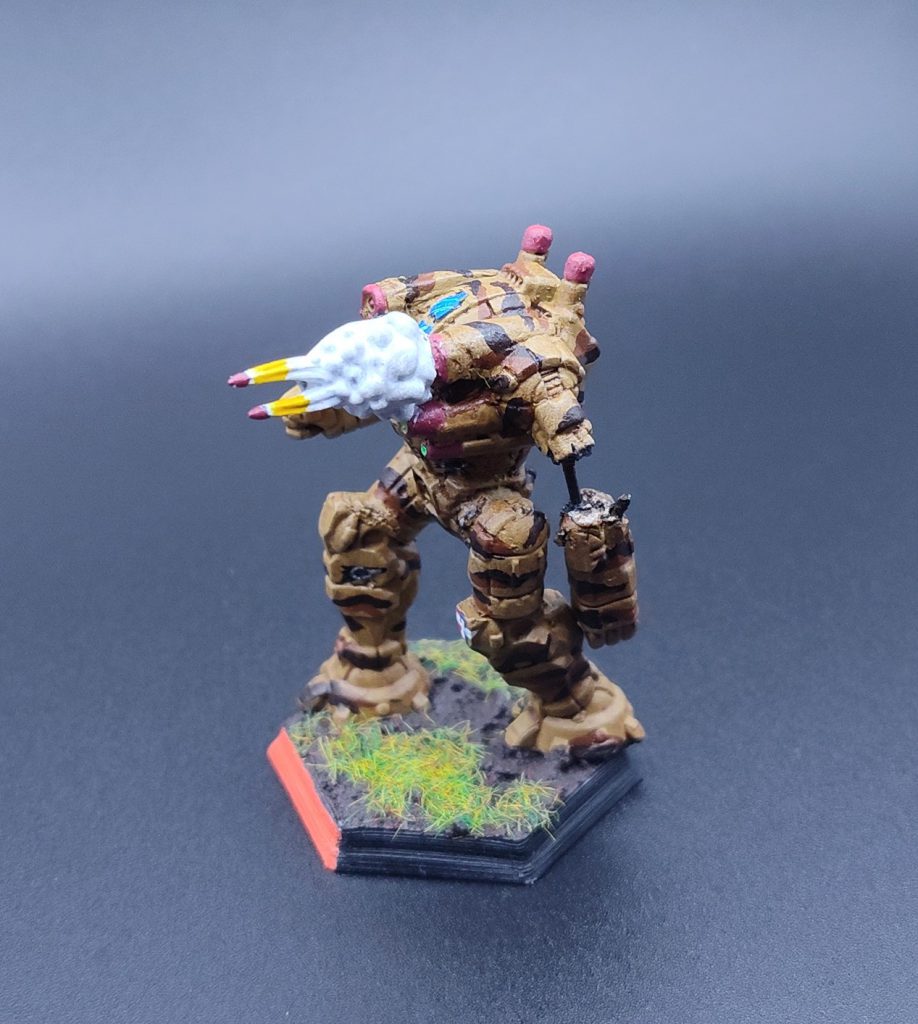
OSR-2M (Jump-Capable)
The OSR-2M (1,239 BV) sacrifices its Medium Lasers and SRM-4 for five jump jets, granting it unprecedented tactical mobility for an Ostroc. While its primary armament consists solely of two Large Lasers, the ability to traverse difficult terrain or quickly reposition offers unique tactical options, particularly in urban or broken environments. Its thermal profile, while still challenging, is more manageable with fewer weapons.
Evaluation: D+. A niche variant that prioritizes mobility over sustained firepower, suitable for specific tactical scenarios.
OSR-3C (Firepower Focus)
The OSR-3C (1,288 BV) removes the Medium Lasers and SRM-4 in favor of an additional Large Laser, resulting in three Large Lasers. Critically, it does so without adding extra heat sinks, exacerbating its thermal management issues. This variant represents a raw focus on long-range energy output but suffers severely from heat buildup.
Evaluation: D. A design flaw; its heat issues severely limit its combat endurance.
OSR-3M (Supercharged Mobility)
Introduced later in 3088, the OSR-3M (1,594 BV) reverts to the original weapons loadout but upgrades to ER Lasers and a Streak SRM launcher, cooled by twelve double heat sinks. Its standout feature is a Supercharger, boosting its ground speed to 5/8[10]. While heat-neutral when firing ERLLs, engaging all weapons carries a thermal risk. This variant offers a unique blend of sustained firepower and burst mobility.
Evaluation: C. A peculiar but potentially effective design, offering high-speed dashes and respectable firepower.
OSR-4C (Rocket Launcher Hybrid)
The OSR-4C (1,325 BV) drops the SRM-4, adds minor armor, and mounts a pair of RL-10s and RL-20s alongside its standard Large and Medium Lasers. These single-use rocket launchers provide significant burst damage at close range, making it somewhat unpredictable but potentially devastating in its initial engagement. It retains the thermal management challenges of earlier models.
Evaluation: C-. A situational variant, offering potent alpha strike capabilities but limited sustained combat value from its missile payload.
OSR-4K (Snub-PPC Specialist)
A notable improvement, the OSR-4K (1,490 BV) boasts slightly increased armor and a unique movement profile of 4/6/6 (walking/running/jumping). It swaps the ERLLs for a pair of Snub-Nose PPCs and the MLs for ERMLs, and incorporates a Heavy Duty Gyro. With 22 heat sinks, it can operate its Snub-Nose PPCs heat-neutrally while running or jump-firing with minimal heat buildup. This variant provides respectable damage, enhanced durability, and improved survivability due to the Heavy Duty Gyro. It is a highly functional and tactically versatile design.
Evaluation: B. A strong variant, offering excellent firepower, durability, and a balanced heat profile, making it a valuable front-line heavy.
OSR-4L (Stealth and ECM)
The OSR-4L (1,778 BV) is a 5/8/5 Ostroc equipped with ERLLs and ERMLs, but crucially, it integrates an ECM suite and 84% stealth armor, along with thirteen double heat sinks. While it can run and fire its ERLLs, activating the stealth armor significantly impacts its thermal efficiency. This variant prioritizes electronic warfare and stealth over raw damage output, making it an expensive but specialized scout or infiltrator.
Evaluation: C-. A high-cost, specialized variant whose stealth capabilities come at the expense of consistent firepower and heat management.
OSR-5C (Mixed PPC and Mobility)
This variant (1,788 BV) pushes the mobility envelope with a 6/9/5 movement profile and 94% armor, but at the cost of an XL engine, increasing its critical vulnerability. Its armament is a disparate mix: a Heavy PPC and an ERML in the right torso, and a Light PPC and an MPL in the left. This eclectic loadout, while powerful, lacks synergy and makes optimal targeting complex. The XL engine also compromises its survivability despite the increased armor.
Evaluation: C. An intriguing but ultimately disjointed design, sacrificing durability for a confusing mix of mobility and firepower.
OSR-5W (C3i Spotter)
The OSR-5W (1,655 BV), a Word of Blake variant, features a 5/8/5 movement profile, the 4K’s Snub-PPC and ERML loadout, thirteen DHS, a Light Fusion Engine, and a Compact Gyro. Its defining feature is a C3i computer located in a Small Cockpit. While offering slightly more firepower than the 4K without heat issues and serving as a capable C3i spotter, the Small Cockpit introduces pilot discomfort and vulnerability, and its cost is higher than the more straightforward 4K.
Evaluation: C+. A functional C3i node, but the Small Cockpit and higher cost detract from its overall appeal compared to simpler, equally effective designs.
OSR-6R (Clan Technology Integration)
Representing a significant technological leap, the OSR-6R (2,095 BV) integrates Clan technology, mounting two Clan ERLLs, two Clan ERMLs, and an Inner Sphere Streak SRM-4 with CASE II protected ammunition. Clad in Reflective Armor and powered by an Inner Sphere XL engine for 6/9 movement, it boasts eighteen double heat sinks, allowing for highly aggressive alpha strikes with minimal heat penalty. Its Reflective Armor provides excellent defense against energy weapons, but the XL engine and the armor’s vulnerability to physical attacks (like kicks) make it a glass cannon. Empirical combat observations suggest a 4/5 pilot skill rating can lead to disastrous falls, highlighting the need for highly skilled MechWarriors.
Evaluation: B. A potent, high-performance variant, excelling against energy-heavy opponents but requiring careful piloting to mitigate critical vulnerabilities.
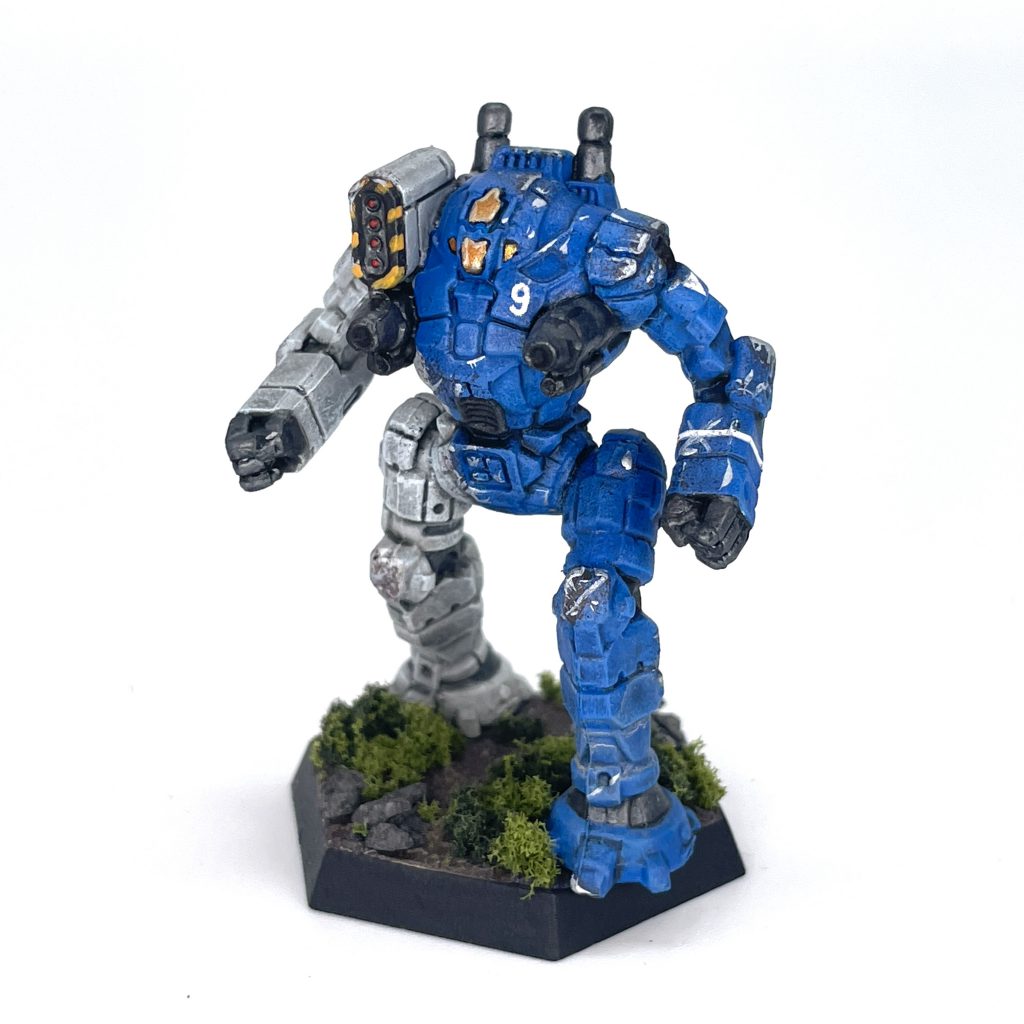
OSR-9C (Succession Wars Refinement)
This Succession Wars-era model, at 1,310 BV, demonstrates a pragmatic approach to design. It reduces speed to 4/6/3 but carries the standard energy loadout, trading the SRM-4 for a pair of SRM-2s in the arms (replacing hands). With nineteen single heat sinks, it can effectively cool its Large Laser strike. Its armor is slightly improved (76%) over the 2C. This variant, which notably originated as an apocryphal "Ostroc Mk. II" model kit, eventually found its way into canon. It represents a robust and viable BattleMech for its era, offering balanced firepower and improved thermal management.
Evaluation: B. A well-balanced and robust design for its technological period, offering reliable performance and improved survivability.
Implications: A Legacy of Reliability and Frustration
The Ostroc’s journey through BattleTech history is a testament to the enduring appeal of heavy BattleMechs and the diverse approaches to military hardware design. From its "Unseen" origins to its current role in the IlClan era, the Ostroc has consistently occupied a niche as a capable, if sometimes idiosyncratic, combatant.
The most significant implication of the Ostroc’s long design lineage is the apparent struggle to move beyond its core "energy boat" concept. While variants like the OSR-4K and OSR-6R demonstrate genuine innovation and tactical specialization, a substantial portion of the Ostroc family represents minor tweaks or questionable design decisions that fail to fundamentally enhance the ‘Mech’s combat effectiveness. This design stagnation, particularly evident in the Succession Wars era, reflects the pressures of limited resources and a focus on incremental, rather than radical, improvements.
Despite these criticisms, the Ostroc’s widespread availability and relative simplicity ensure its continued presence. It remains a reliable workhorse for many forces, a testament to the fundamental soundness of its 60-ton chassis. Its enduring legacy is one of a dependable, if often frustratingly consistent, BattleMech that has served countless MechWarriors across centuries of interstellar conflict. For military strategists, the Ostroc offers a cost-effective option for sustained energy firepower, albeit one that requires careful consideration of its thermal limitations and notorious arm vulnerabilities.
As the Inner Sphere continues to evolve under the IlClan, the Ostroc will likely persist, perhaps seeing new iterations that finally embrace more radical design shifts—a true pulse laser variant, or a dedicated brawler with reinforced arms. Until then, MechWarriors will continue to "make do" with the enduring enigma that is the Ostroc, a constant reminder of BattleTech’s rich and sometimes peculiar history.
Have any other questions or feedback? Drop us a note in the comments below or email us at [email protected]. Want articles like this linked in your inbox every Monday morning? Sign up for our newsletter. And don’t forget that you can support us on Patreon for backer rewards like early video content, Administratum access, an ad-free experience on our website, and subscriber-only content covering competitive Warhammer 40K!