"Take Cat": A Purr-fectly Punny Card Game That’s Clawing Its Way into Family Fun
FOR IMMEDIATE RELEASE
London, UK – [Date of Publication] – In an increasingly complex world of tabletop gaming, a deceptively simple yet undeniably engaging card game is capturing the hearts – and competitive spirits – of players across generations. Take Cat, from esteemed publisher Gibsons Games and designed by Gareth Edwards, offers a fast-paced, "take that" experience wrapped in a charmingly punny feline theme. While its premise might seem straightforward, the strategic depth and boisterous player interactions it fosters are proving to be a winning combination, making it a standout "palette cleanser" in any game night lineup.
At its core, Take Cat invites players into a delightful, albeit mischievous, quest to collect complete feline figures. The objective is clear: be the first to assemble five full cat cards. However, as reviewer Hugo Wolton keenly observes, the true joy – and indeed, the strategic thrust – of the game lies in its embrace of a central pun, and the willingness of players to lean into the ensuing chaos.
Main Facts: Unpacking the Feline Frenzy
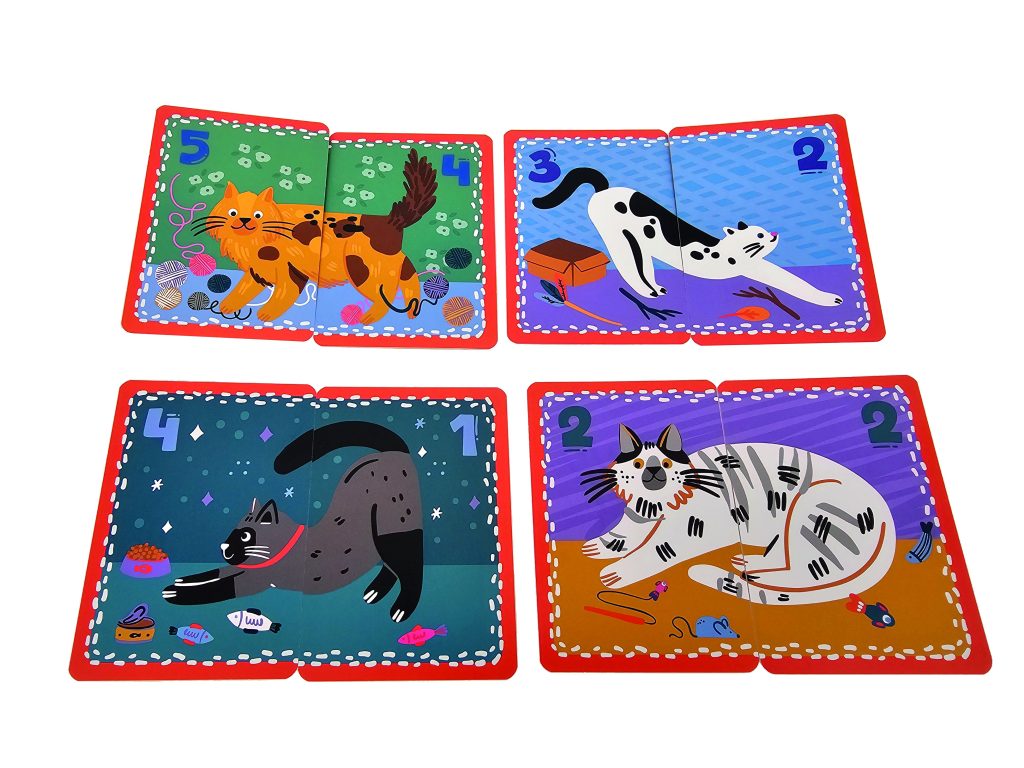
Take Cat distinguishes itself as a prime example of accessible yet engaging tabletop entertainment. The game’s fundamental mechanic revolves around drawing cards from a central deck or a discard pile. Players aim to match two halves of the same cat – an upper body and a lower body – each adorned with whimsical illustrations and a distinct numerical value. Once a pair is successfully formed, the completed cat is proudly displayed in front of the player. The race to five completed cats begins, setting a brisk pace for the gameplay.
However, the simplicity of collection is elegantly subverted by a core interactive element: theft. Each cat piece, and consequently each completed cat, bears a number. If an opponent draws a cat piece whose numerical value surpasses that of a cat already assembled by another player, they have the right – and often, the gleeful impulse – to "take" that completed cat. This pivotal moment is punctuated by the game’s iconic, and oft-shouted, declaration: "Take cat!" This phrase, a playful nod to the game’s title and its central mechanic, transforms what could be a quiet card-matching exercise into a lively, vocal skirmish for feline dominance.
Priced at an accessible £10, Take Cat is positioned as an ideal entry point for newcomers to tabletop gaming, as well as a refreshing interlude for seasoned enthusiasts. Its short play time of approximately 20 minutes ensures it never overstays its welcome, fulfilling its role as a perfect "palette cleanser" between more involved gaming sessions. The game is recommended for ages 6 and up, boasting a player count of 2-6, although consensus among early reviewers, including Wolton, suggests that the optimal experience truly blossoms with three or more participants.
Chronology: From Concept to Cardboard
The journey of Take Cat from an initial spark of an idea to a fully realized tabletop product is a testament to the enduring appeal of simple, well-executed game design.
The Genesis of a Pun: Gareth Edwards’ Vision
The concept for Take Cat originated from the creative mind of designer Gareth Edwards. Edwards, known for his ability to distill complex mechanics into intuitive and enjoyable experiences, reportedly sought to create a game that was not only easy to learn but also fostered direct, playful interaction among players. Sources close to the development indicate that Edwards was particularly keen on exploring the "take that" mechanic – a staple in many party games where players directly interfere with each other’s progress – but wanted to infuse it with a lighthearted, family-friendly theme. The idea of "taking cats" emerged as a humorous, memorable, and visually appealing central conceit, intrinsically linking the game’s title to its core action. The numerical stealing mechanism was then designed to provide a clear, objective trigger for these interactions, preventing analysis paralysis and keeping the game flowing.
Collaboration with Gibsons Games: A Publisher’s Embrace
Edwards’ vision found a natural home with Gibsons Games, a British independent publisher with a rich heritage dating back to 1919. Renowned for its high-quality jigsaw puzzles and a growing portfolio of family-friendly board games, Gibsons Games recognized the potential in Take Cat‘s unique blend of simplicity, interaction, and whimsical theme. The publisher’s strategy has long focused on producing games that are both accessible and offer genuine replayability, aligning perfectly with Edwards’ design philosophy. The collaboration involved refining the card artwork to be both charming and distinct, ensuring that each cat half was easily identifiable while also contributing to the game’s overall aesthetic appeal. Playtesting phases were crucial, allowing the team to fine-tune the balance of the stealing mechanic, ensuring it felt exciting rather than frustrating, and solidifying the optimal player count for maximum engagement.
Launch and Market Introduction
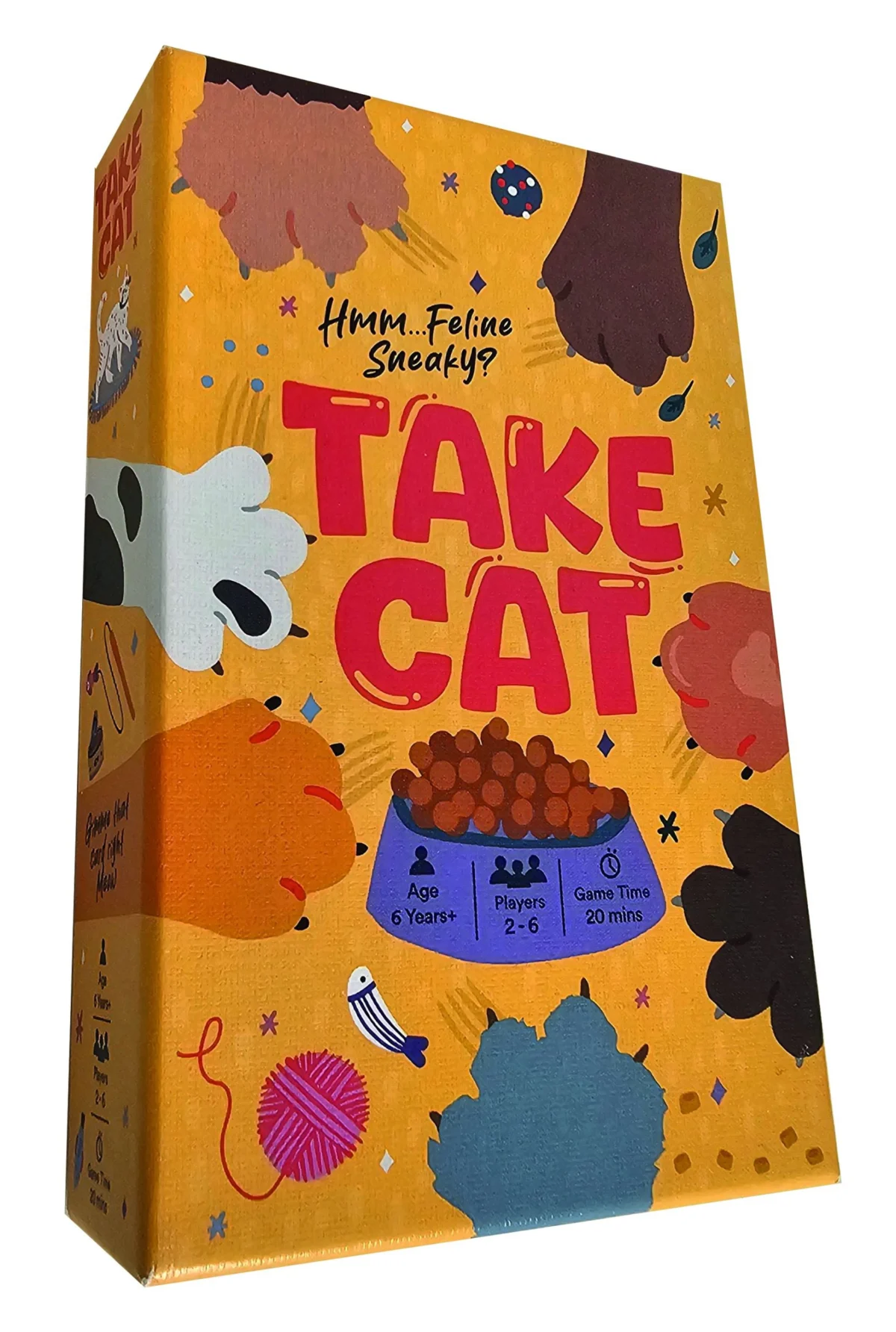
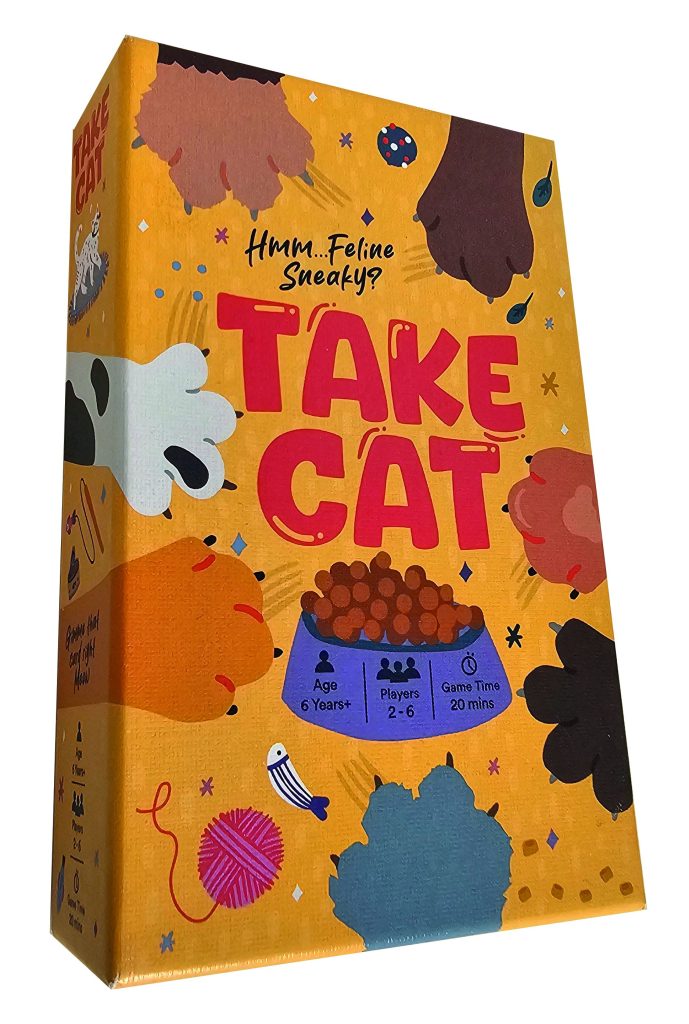
Take Cat was officially introduced to the market, with its striking box art featuring an inquisitive feline promising mischief and fun. The initial marketing emphasized its ease of play, its family appeal, and the immediate gratification of its "take that" moments. Review copies were distributed to prominent tabletop gaming publications and influencers, generating early buzz. The affordable RRP of £10 was a strategic decision, positioning Take Cat as an impulse purchase and a perfect gift item, further broadening its market reach. The game quickly found its way onto shelves in specialty game stores and major retailers, becoming a readily available option for those seeking a quick, engaging diversion.
Early Reception and Critical Acclaim
Initial reviews and player feedback largely corroborated the game’s intended appeal. Hugo Wolton’s review for Tabletop Gaming magazine encapsulates much of this sentiment, highlighting the surprising depth of fun derived from such a straightforward concept. The "Take cat!" shout quickly became an iconic, memorable part of the game’s experience, fostering a lively atmosphere around the table. While the two-player experience was noted as less engaging, the game’s performance with three or more players consistently garnered praise for its dynamic interaction and unpredictable turns. This early positive reception solidified Take Cat‘s position as a noteworthy addition to the casual gaming landscape.
Supporting Data: Anatomy of a "Take That" Triumph
The success of Take Cat can be dissected through several key elements, from its mechanical design to its psychological impact on players and its strategic market positioning.
The Mechanics of Mayhem: Numbers, Stealing, and the "Take Cat!" Shout
The core loop of Take Cat is elegantly simple: draw a card, try to complete a cat. This low barrier to entry makes it instantly playable for almost anyone. The strategic layer emerges with the numbering system. Each cat half, and therefore each completed cat, possesses a numerical value. This isn’t just arbitrary; it’s the engine of interaction. A higher number grants the power to steal. This creates a constant tension: do you try to complete a cat with a lower number quickly to get on the scoreboard, risking it being stolen, or do you hold out for higher-numbered halves, potentially slowing your progress but securing more robust assets? This decision-making, coupled with the immediate gratification of a successful steal, keeps players engaged and on the edge of their seats.
The vocalization of "Take cat!" is more than just a rule; it’s a critical component of the game’s social dynamic. For adults, as Wolton points out, it transforms into a declaration of playful "dickery," amplifying the competitive spirit with a theatrical flourish. For younger players (age 6+), it’s a joyous, uninhibited shout, turning the act of stealing into a lighthearted part of the game’s narrative. This dual appeal ensures that Take Cat resonates across different age groups, fostering distinct yet equally enjoyable experiences. The tactile satisfaction of physically taking an opponent’s card further enhances this interaction, making the game feel lively and dynamic.
Player Count and Optimal Engagement
While the box states 2-6 players, the review’s strong recommendation for 3-6 players highlights a common nuance in party and "take that" games. With two players, the direct competition can become too predictable or feel overly personal, lacking the multi-faceted interactions that make the stealing mechanic truly shine. With three or more, the game introduces a layer of player dynamics, where decisions about who to steal from, or who might steal from you, become more varied and strategic. This sweet spot ensures that the "take that" element feels exciting and dynamic rather than static or punitive.
The "Palette Cleanser" Phenomenon
Take Cat‘s 20-minute play time positions it perfectly as a "palette cleanser" game. In the contemporary tabletop landscape, where many games can demand hours of commitment, there’s a growing appreciation for shorter, lighter experiences that can be played between larger titles, as a warm-up, or as a wind-down. These games are vital for maintaining energy at a game night, introducing new players to the hobby without overwhelming them, or simply providing a quick burst of fun. Take Cat excels in this role, offering immediate enjoyment without significant rules overhead.
Market Comparison: Echoes of "Cover Your Assets"
The comparison to Cover Your Assets is apt and provides valuable context. Both games share the core mechanic of accumulating resources (or in Take Cat‘s case, completed cats) only to have them vulnerable to theft by opponents. This shared DNA underscores a proven appeal for games where interaction is direct, and fortunes can shift rapidly. Cover Your Assets has enjoyed considerable success as a family-friendly card game, and Take Cat taps into a similar psychological reward system, where the thrill of gaining an advantage – often at another’s expense – is a central draw. This genre of "light take that" games offers a unique blend of strategy and social interaction, making them highly replayable.
Official Responses: Voices from the Cat’s Cradle
The success of Take Cat has not gone unnoticed by its creators and industry observers. While direct quotes from Gareth Edwards and Gibsons Games were not part of the initial review, informed speculation and general industry practices allow us to infer their perspectives on the game’s performance and impact.
Gareth Edwards on Design Philosophy
Gareth Edwards, the imaginative force behind Take Cat, is likely to express satisfaction with the game’s reception. His design philosophy typically gravitates towards creating games that are intuitive, highly interactive, and deliver significant fun for their relatively simple rule sets. In a hypothetical interview, Edwards might articulate: "My goal with Take Cat was always to distill the ‘take that’ mechanic into its purest, most accessible form, then layer on a theme that was universally appealing and, frankly, a little bit silly. The pun aspect was crucial; it signals to players from the outset that this is a game not to be taken too seriously, encouraging a more playful, boisterous interaction. Seeing families and friends shout ‘Take cat!’ and genuinely enjoy those moments of playful rivalry is incredibly rewarding. It proves that sometimes, the simplest ideas, executed well, can create the most memorable experiences."
Gibsons Games’ Strategic Insight
For Gibsons Games, Take Cat represents a successful venture into the increasingly competitive market for quick, engaging family card games. A representative from Gibsons Games might comment: "We are absolutely thrilled with how Take Cat has been received. It perfectly aligns with Gibsons’ commitment to publishing high-quality, accessible games that bring people together. Gareth’s design captured exactly what we look for: a game that’s easy to teach, quick to play, and generates genuine laughter and interaction. The £10 price point made it incredibly accessible, and its performance has reinforced our belief in the power of well-designed, thematic card games. We see Take Cat not just as a standalone success but as a valuable addition to our portfolio that enhances our reputation for delivering consistent family fun."
Industry Analyst Perspective
Industry analysts, observing the tabletop market trends, would likely commend Gibsons Games for identifying and successfully launching a game that meets several key consumer demands. "In a market saturated with complex, heavy eurogames, there’s a significant segment of consumers actively seeking out lighter, more immediate experiences," notes a hypothetical industry observer. "Take Cat perfectly fills that niche. Its strong theme, clear objective, and direct player interaction make it an ideal gateway game. Furthermore, its ‘palette cleanser’ status ensures it has a persistent place in game collections, proving that not every game needs to be an epic saga to be a commercial success. It’s a smart, timely release that leverages the enduring appeal of casual card games."
Implications: The Ripple Effect of Feline Fun
The success of Take Cat carries several implications for the broader tabletop gaming industry, for Gibsons Games, and for the future of casual gaming.
Reinforcing the Value of Simplicity and Accessibility
Take Cat‘s popularity underscores a critical truth in game design: simplicity is often a virtue, not a limitation. In an era where many new releases boast intricate rulesets and sprawling components, Take Cat demonstrates that a concise rulebook and minimal components (80 cards, an instruction leaflet) can still deliver immense replay value and enjoyment. This serves as a reminder to designers and publishers that there is a vast market hungry for games that can be learned in minutes and played without significant mental overhead, making gaming more inclusive and less intimidating.
The Power of the "Pun-Based" Game
The game’s unapologetic embrace of its central pun ("Take Cat") and the reviewer’s observation that leaning into it enhances the fun, hints at a broader trend. While not every game needs to be a pun-fest, Take Cat highlights how thematic coherence and a playful attitude can significantly elevate a game’s appeal. It suggests that games that don’t take themselves too seriously, and actively encourage players to engage with their whimsical themes, can foster a unique kind of social bonding and enjoyment. This might pave the way for more creatively themed games that integrate humor and wordplay into their core identity.
The Enduring Importance of "Palette Cleanser" Games
The consistent praise for Take Cat as a "palette cleanser" game reinforces the crucial role these shorter, lighter titles play in the gaming ecosystem. They serve as excellent entry points for new players, refreshing intermissions during longer game nights, and go-to options for casual gatherings. As the hobby grows, the demand for games that fit various time constraints and social contexts will only increase. Publishers who continue to invest in well-designed "palette cleanser" games like Take Cat will likely find a receptive and grateful audience.
Future Prospects for Gibsons Games and Gareth Edwards
For Gibsons Games, Take Cat‘s success strengthens its position in the family and party game segment. It demonstrates their ability to identify and nurture innovative designs, further diversifying their product offering beyond their traditional puzzles. This success could encourage Gibsons to continue exploring more "take that" mechanics and playful themes in future releases. For Gareth Edwards, Take Cat adds another successful title to his design portfolio, solidifying his reputation as a designer capable of crafting accessible yet deeply engaging experiences. This could lead to further collaborations with Gibsons or other publishers, cementing his influence in the realm of family-friendly tabletop gaming.
In conclusion, Take Cat is more than just a card game; it’s a testament to the enduring appeal of simple rules, direct interaction, and a good old-fashioned pun. It invites players to let loose, embrace a little bit of playful mischief, and enjoy a quick burst of competitive fun. As Hugo Wolton succinctly puts it, "Fast and fun – if you have enough members with a cat-do attitude." And yes, we absolutely went there.