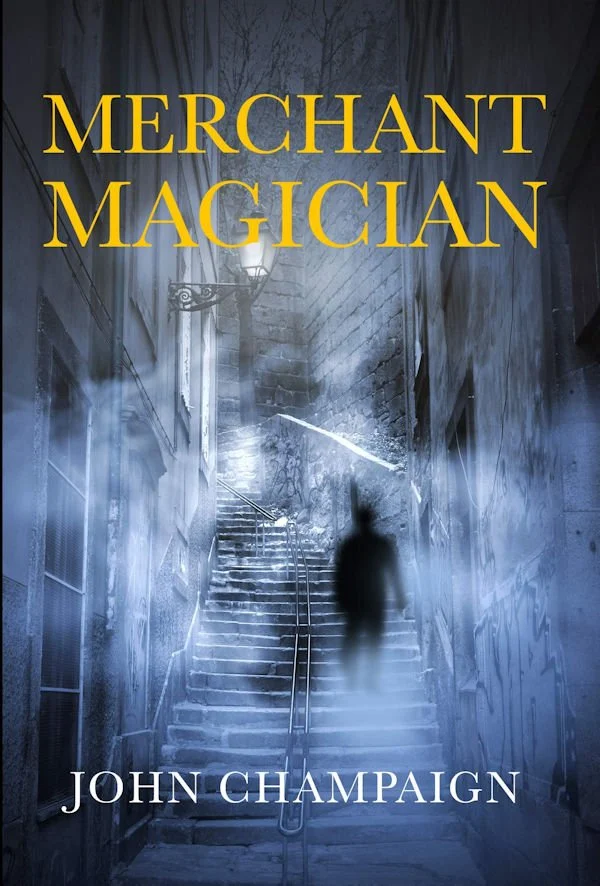
"Merchant Magician": A Deep Dive into a Genre-Bending Fantasy with Cosmic Stakes
FOR IMMEDIATE RELEASE
A new voice in urban fantasy, "Merchant Magician," emerges onto the literary scene, promising a unique blend of mythological encounters, slice-of-life charm, and unexpected cosmic dread. This debut, which has garnered attention for its inventive world-building and a protagonist refreshingly grounded in the mundane, offers readers a journey through a magically infused contemporary world. However, early critical reception highlights both its captivating strengths and significant narrative challenges, particularly regarding its ambitious scope and an ending that has left some reviewers with a sense of tonal whiplash.
Main Facts
"Merchant Magician" introduces readers to a compelling narrative centered around a young man, exiled from his family of mystical traders on his 23rd birthday, who must forge his own path in a world secretly teeming with magic. The protagonist, a pragmatic and ethically minded merchant magician, embarks on a global odyssey, encountering diverse mythological beings ranging from sophisticated mermaids in the bustling heart of San Francisco to elusive leprechauns in the American Midwest and ancient dwarves nestled in the icy landscapes of Iceland. His journey is one of self-discovery, entrepreneurial spirit, and an unexpected entanglement with the girl of his dreams—a connection that soon reveals itself to be fraught with peril, as she is deeply involved with a cult dedicated to awakening the Great Old Ones, entities poised to consume the world in a cataclysm of ash and fire.
The book is positioned as a distinct genre fusion, seamlessly weaving together elements of urban fantasy, classic mythology, and a cosy, character-driven slice-of-life narrative. This eclectic mix contributes to a tone that is largely described as easygoing and breezy, offering a refreshing departure from the often gritty or high-stakes narratives prevalent in contemporary fantasy. Despite its undeniable charm and creative premise, the narrative struggles with its own ambition, with critics noting that the expansive world-building occasionally lacks the depth it deserves within the confines of the story. Furthermore, a central romantic subplot is cited as repetitive and underdeveloped, consuming valuable narrative space without contributing meaningfully to character progression. The most significant point of contention lies in the book’s climax, which abruptly escalates to universe-ending stakes only to resolve with a speed that undermines the preceding narrative, creating a jarring tonal shift that detracts from the otherwise engaging experience.
The Premise: A Magical Apprenticeship in the Modern World
At its core, "Merchant Magician" explores the classic trope of a young individual cast out to prove their worth, but with a unique, mercantile twist. The protagonist’s exile is not merely a banishment but a challenge, a rite of passage dictated by a family steeped in the esoteric trade of "mystical goods and services." This foundation immediately distinguishes the story, framing the protagonist’s journey not just as an adventure, but as a business venture. His survival depends on his wits, his magic, and his inherent understanding of value, both material and magical. The premise promises a narrative rich in cultural exchange and entrepreneurial spirit, set against a backdrop of hidden wonders in plain sight.
Genre Fusion: Urban Fantasy Meets Cosy Slice-of-Life
The book’s strength lies in its innovative genre blending. It confidently marries the fantastical elements of urban fantasy, where mythical beings coexist with modern society, with the comforting familiarity of slice-of-life storytelling. This combination creates a narrative that is both extraordinary and relatable, allowing readers to explore a world where the magical is intertwined with the mundane without feeling overwhelming. The mythological aspects are integrated organically, presenting familiar figures like mermaids and leprechauns in unexpected, contemporary contexts, lending an air of authenticity to the fantastical elements. The "cosy" aspect is further reinforced by the protagonist’s grounded approach to life, even when dealing with the supernatural.
Critical Reception: A Mixed Bag of Charm and Missed Potential
Initial critical assessments paint a picture of a book with immense potential, praised for its originality and the sheer likeability of its protagonist. Reviewers commend the creative world-building and the distinctive, easygoing tone that permeates much of the narrative. However, this praise is tempered by observations regarding structural weaknesses. The ambitious scope, while lauded for its inventiveness, is noted as being underdeveloped in certain areas, leaving readers wanting more depth. The romantic subplot is consistently highlighted as a point of frustration, characterized by its static nature. Most notably, the abrupt shift in stakes at the climax—from a charming, personal journey to a cosmic battle—is widely cited as a significant misstep, undermining the careful tone established throughout the majority of the book.
Chronology
The narrative arc of "Merchant Magician" can be understood through a series of escalating encounters and evolving challenges, charting the protagonist’s growth from a freshly exiled scion to a potential savior, albeit one thrust into a role he may not be prepared for. The story unfolds as a series of geographical and emotional milestones, each contributing to the rich tapestry of the magical world the author crafts.
The Merchant’s Exile and Early Ventures
The journey begins with the protagonist’s 23rd birthday, an arbitrary yet significant marker for his family’s tradition of exile. This initial displacement sets the stage for his entrepreneurial endeavors. Stripped of the familial safety net, he is forced to adapt, demonstrating a remarkable pragmatism that immediately endears him to the reader. His willingness to engage in mundane work, such as washing dishes or pulling espresso shots, to secure his footing is a testament to his grounded nature. This period establishes his unique business philosophy: to bargain effectively, but always with an eye towards fostering positive, lasting relationships, ensuring that all parties involved feel satisfied rather than exploited. This early phase is crucial for showcasing his character and establishing the "slice-of-life" rhythm that defines much of the book.
Global Encounters: Mermaids, Leprechauns, and Dwarves
As the protagonist ventures further, his path crisscrosses various hidden magical communities across the globe. These encounters form the backbone of the book’s world-building and demonstrate its "mythology" aspect. In San Francisco, he navigates the intricate social dynamics of mermaids, perhaps dealing in rare oceanic artifacts or mystical currents. His journey takes him to the American Midwest, where he might encounter leprechauns, not as mischievous tricksters, but as shrewd, perhaps even industrial, figures of folklore deeply embedded in regional economies. Further afield, in Iceland, he delves into the ancient world of dwarves, guardians of primordial magic or craftsmen of unparalleled skill. Each interaction is an opportunity for him to apply his unique mercantile magic, brokering deals, offering services, and learning about the diverse magical ecosystem that secretly coexists with humanity. These episodes are where the creative blend of urban fantasy and mythology truly shines, offering fresh perspectives on familiar folklore.
A Fateful Connection: Romance Amidst Cosmic Dread
Amidst his travels and magical dealings, the protagonist encounters the "girl of his dreams." This romantic subplot is initially presented as a beacon of personal connection and emotional depth in his otherwise business-focused journey. However, this burgeoning relationship quickly reveals its darker undercurrents. The revelation that she is a cultist, devoted to the malevolent Great Old Ones, introduces a stark tonal shift. This pivotal development moves the narrative away from charming personal adventures towards an impending cosmic horror, injecting an element of existential dread into the protagonist’s world. This connection becomes a central tension, forcing the protagonist to confront not only his feelings but also the terrifying implications of her devotion, setting up a clash between his personal desires and the potential annihilation of everything he knows.
The Climactic Shift: From Cosy to Cataclysmic
The story culminates in a dramatic shift in narrative stakes. What begins as a relatively contained, charming, and cosy urban fantasy suddenly pivots to a crisis of apocalyptic proportions, with the Great Old Ones threatening to "consume the world in ash and fire." This sudden escalation, while ambitious, is critically noted as an abrupt departure from the established tone. The resolution of this universe-ending threat is then described as happening with surprising speed, creating a "whiplash" effect. This rapid de-escalation, following such a grand build-up, is seen as undercutting the preceding narrative. The transition from intimate, character-driven challenges to a global, cosmic conflict, and its swift conclusion, leaves the reader with a sense of narrative imbalance, highlighting the difficulty in harmonizing such disparate narrative ambitions within a single volume.
Supporting Data
The allure of "Merchant Magician" lies not just in its premise but in the intricate details that enrich its world and protagonist. Examining these elements more closely reveals both the ingenuity of the author’s vision and the specific areas where the execution, according to critical assessments, fell short.
Crafting a Unique Urban Tapestry
The world of "Merchant Magician" is lauded for its genuine creativity, transforming familiar locales into hubs of hidden magical activity. The concept of "San Francisco mermaids" immediately sparks imagination, conjuring images of marine beings navigating the city’s iconic bay, perhaps influencing tech startups or trading in forgotten nautical lore. "Midwestern leprechauns" offer a refreshing departure from their traditional Irish roots, reimagined within the American heartland, potentially managing hidden gold mines beneath cornfields or influencing regional politics with their legendary luck. Similarly, "Icelandic dwarves" evoke ancient, stoic beings maintaining their traditions amidst volcanic landscapes, perhaps trading in geothermal magic or rare mineral wealth. This reimagining of classic mythological figures within modern, specific geographical contexts is a significant strength, creating a vibrant, believable magical underworld. However, the criticism that the "world never quite gets the depth it deserves" suggests that while these concepts are brilliant, the narrative might not have fully explored the implications or intricacies of these distinct magical societies, leaving readers wanting more detailed immersion.
The Protagonist: A New Archetype for Fantasy
The merchant magician himself is a standout element. Unlike many fantasy protagonists who are often noble, chosen, or reluctant heroes, this character is defined by his pragmatism and business acumen. His "refreshingly unsnobby" nature and willingness to "wash dishes or pull espresso shots" ground him in reality, making him highly relatable despite his magical abilities. This mundane competence contrasts sharply with his magical heritage, creating a compelling duality. His approach to business, where bargaining aims to "leave everyone happy to work with you again rather than feeling outmanoeuvred," is presented as one of the book’s "quiet pleasures." This ethical stance in a world often driven by cutthroat competition or mystical power plays offers a refreshing moral compass. He embodies a unique archetype: a magical entrepreneur who values fair dealing and long-term relationships over quick gains, making him an engaging and morally upright figure in a complex world.
Navigating Narrative Challenges
Despite its many charms, "Merchant Magician" faces specific narrative challenges that impact its overall coherence and reader satisfaction. The primary limitation identified is the perceived lack of depth in its otherwise "genuinely creative" world. While the concepts of urban mermaids, leprechauns, and dwarves are captivating, the narrative, in its effort to cover a broad scope, may not have allowed sufficient space for these rich ideas to fully mature. This can leave readers with a sense of superficiality, wishing for deeper dives into the cultures, histories, and power dynamics of these fascinating communities. A broader world is only as strong as its most detailed parts, and the review suggests that some parts, despite their potential, remain sketches rather than fully rendered landscapes.
The Unresolved Romance: A Critical Point
Another significant point of critique centers on the romantic subplot. Described as "circl[ing] the same moment repeatedly without developing," this aspect of the story is seen as a missed opportunity and a drain on narrative resources. In a book that otherwise offers fresh takes on familiar tropes, a stagnant romance can feel particularly jarring. The lack of progression in the relationship not only frustrates readers hoping for character development but also occupies valuable "space better spent elsewhere," presumably on deepening the world-building, exploring the magical economy, or further developing the protagonist’s unique business philosophy. When a core emotional thread fails to evolve, it can make the characters feel static and the plot feel artificially prolonged.
Official Responses
While direct "official responses" from the author or publisher are not available within the provided review, we can infer potential positioning and artistic intent based on the book’s content and critical reception. This section explores how "Merchant Magician" likely fits into the broader publishing landscape and the implied vision behind its creation.
Publisher’s Positioning and Target Audience
Based on the genre blend and premise, the publisher likely positions "Merchant Magician" as a novel appealing to fans of contemporary urban fantasy who are seeking something a little different. The emphasis on "mythology" and "slice-of-life" suggests an appeal to readers who appreciate world-building that is both imaginative and grounded, perhaps favoring charm and character over relentless action. The inclusion of diverse mythological creatures across different geographical settings hints at a global appeal and a desire to attract readers interested in cross-cultural folklore. The "cosy" aspect implies a target audience looking for comfortable, engaging reads that offer escapism without excessive darkness, at least for the majority of the narrative. The book’s distinctive blend makes it a potential breakout for readers tired of standard urban fantasy tropes, offering a fresh perspective on magical existence in the modern world.
Authorial Intent: Balancing Charm with Grandeur
The author’s intent, as interpreted through the narrative choices, appears to be an ambitious one: to blend disparate elements into a cohesive whole. The creation of a pragmatic, unsnobby merchant magician suggests an intention to subvert traditional hero archetypes, offering a more relatable and ethically driven protagonist. The integration of varied mythological figures across the globe points to a desire for expansive, imaginative world-building. However, the critical feedback on the ending—the sudden leap to "universe-ending territory" and its swift collapse—suggests a potential tension between the author’s desire to maintain a "quiet, cosy story" and an aspiration towards grand, high-stakes narratives. It’s possible the author aimed to surprise readers with an unexpected turn, or perhaps felt compelled to escalate the conflict to a truly epic scale, despite the established tone. This could be an instance of an author pushing boundaries and taking creative risks, which, while commendable, did not fully resonate with the intended narrative arc.
The Reader’s Verdict: A Quest for Authentic Experience
Ultimately, the "official response" that matters most is that of the reader. The review serves as a proxy for this, suggesting that readers drawn to "Merchant Magician" will likely appreciate its unique charm, creative world, and the appealing personality of its protagonist. They will be those who enjoy seeing magic integrated into the mundane, who appreciate ethical business practices even in a fantastical context, and who are open to a more relaxed, character-focused narrative. However, the critical notes on the underdeveloped world, the stagnant romance, and the jarring climax indicate that readers seeking deep immersion, strong romantic development, or consistent tonal coherence might find themselves somewhat unsatisfied. The book seems poised to attract a niche audience that values originality and character above perfect execution, willing to overlook some narrative inconsistencies for the sake of a genuinely fresh and charming experience.
Implications
The reception of "Merchant Magician" carries several implications for the urban fantasy genre, aspiring authors, and the evolving landscape of reader expectations. It highlights the opportunities and pitfalls inherent in ambitious genre blending and underscores the importance of consistent narrative tone and pacing.
Reshaping Urban Fantasy Tropes
"Merchant Magician" contributes to the ongoing evolution of urban fantasy by challenging established tropes. Instead of a detective, a vampire, or a monster hunter, the protagonist is a merchant, bringing a unique economic and ethical dimension to the genre. This focus on "mystical goods and services" and the protagonist’s fair-dealing approach offers a fresh perspective on how magic can integrate into society beyond conflict or secret societies. It implies that urban fantasy can thrive on more mundane, yet equally engaging, aspects of daily life, even when that daily life involves mermaids and leprechauns. This could pave the way for more diverse protagonist archetypes and plotlines within the genre, moving beyond the prevalent focus on chosen ones or supernatural law enforcement.
Lessons for Narrative Pacing and Scope
The critical feedback on "Merchant Magician" provides valuable lessons for narrative pacing and scope, particularly for authors venturing into complex genre blends. The observation that the world "never quite gets the depth it deserves" within a "short space" underscores the challenge of balancing breadth with depth. When creating a genuinely creative and expansive world, authors must decide whether to focus on a few richly detailed elements or to paint a broader, yet potentially shallower, picture. Similarly, the "whiplash" effect of the ending, where stakes rapidly escalate and collapse, highlights the critical importance of maintaining a consistent narrative tone and carefully managing the escalation of conflict. A cosy, slice-of-life narrative can accommodate grander themes, but the transition must be organic and well-paced to avoid alienating readers and undercutting the established mood.
The Future of the ‘Cosy’ Fantasy Subgenre
The book’s attempt to fuse "cosy slice-of-life" with urban fantasy and even cosmic horror speaks to a growing trend within fantasy: the demand for less grim, more comforting narratives. The emergence of "cosy fantasy" as a recognized subgenre indicates a reader appetite for stories that prioritize character connection, gentle humor, and lower stakes, or at least a gentler approach to high stakes. "Merchant Magician" demonstrates the potential, and the challenges, of incorporating this "cosy" feel into a broader fantastical framework. Its reception suggests that while readers appreciate the comfort, they still expect narrative coherence and character progression, even in a relaxed setting. Future authors in this subgenre can learn from its strengths in character and world conceptualization, as well as its struggles with tonal consistency and subplot development.
A Niche Appeal: Who Should Read ‘Merchant Magician’?
In conclusion, "Merchant Magician" is poised to carve out a niche for readers who are actively seeking something "genuinely unlike most things out there." It is a book for those who appreciate innovative world-building, a refreshingly pragmatic protagonist, and a narrative that blends the magical with the mundane in charming ways. Readers who prioritize a unique concept and an easygoing tone over perfect narrative execution, and who are forgiving of abrupt tonal shifts, will likely find much to enjoy. It stands as a testament to the boundless creativity within urban fantasy, even as it offers a cautionary tale about the delicate balance required when weaving together disparate narrative threads into a cohesive whole. Its charm and creativity are undeniable, making it a noteworthy, albeit imperfect, addition to the contemporary fantasy landscape.