SpriteLoop: Unlocking Accessible 2D Cut-Out Animation for Indie Developers
A Free and Open-Source Tool Emerges to Empower Game Creators and Animators
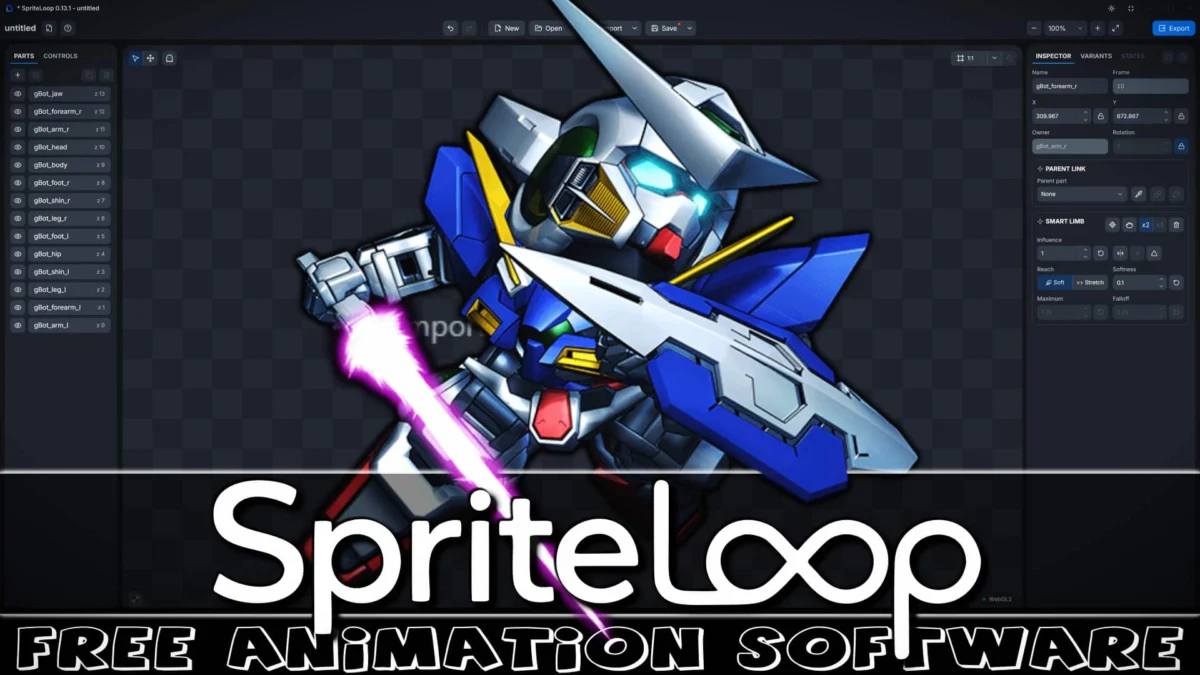
In the dynamic landscape of game development and digital art, the creation of compelling 2D animations often necessitates specialized software, which can carry a significant financial commitment. For independent developers and aspiring animators, this barrier to entry can be substantial. However, a new contender in the free and open-source arena, SpriteLoop, is aiming to democratize the art of cut-out 2D animation, offering a powerful yet accessible tool for a global audience. Developed by Balkan Ram Games, SpriteLoop provides a robust feature set for creating intricate animations from a series of individual image assets, presenting a compelling alternative to more established, commercial software.
SpriteLoop distinguishes itself by focusing on the cut-out animation technique, a method where pre-drawn or rendered image elements are manipulated and animated as if they were physical puppets. This approach allows for efficient animation workflows, particularly for character animation, where different body parts can be swapped and transformed independently. While it shares similarities with industry-standard tools like Spriter and Spine, SpriteLoop carves out its own niche by prioritizing accessibility and a commitment to the open-source philosophy.
The Core Functionality of SpriteLoop
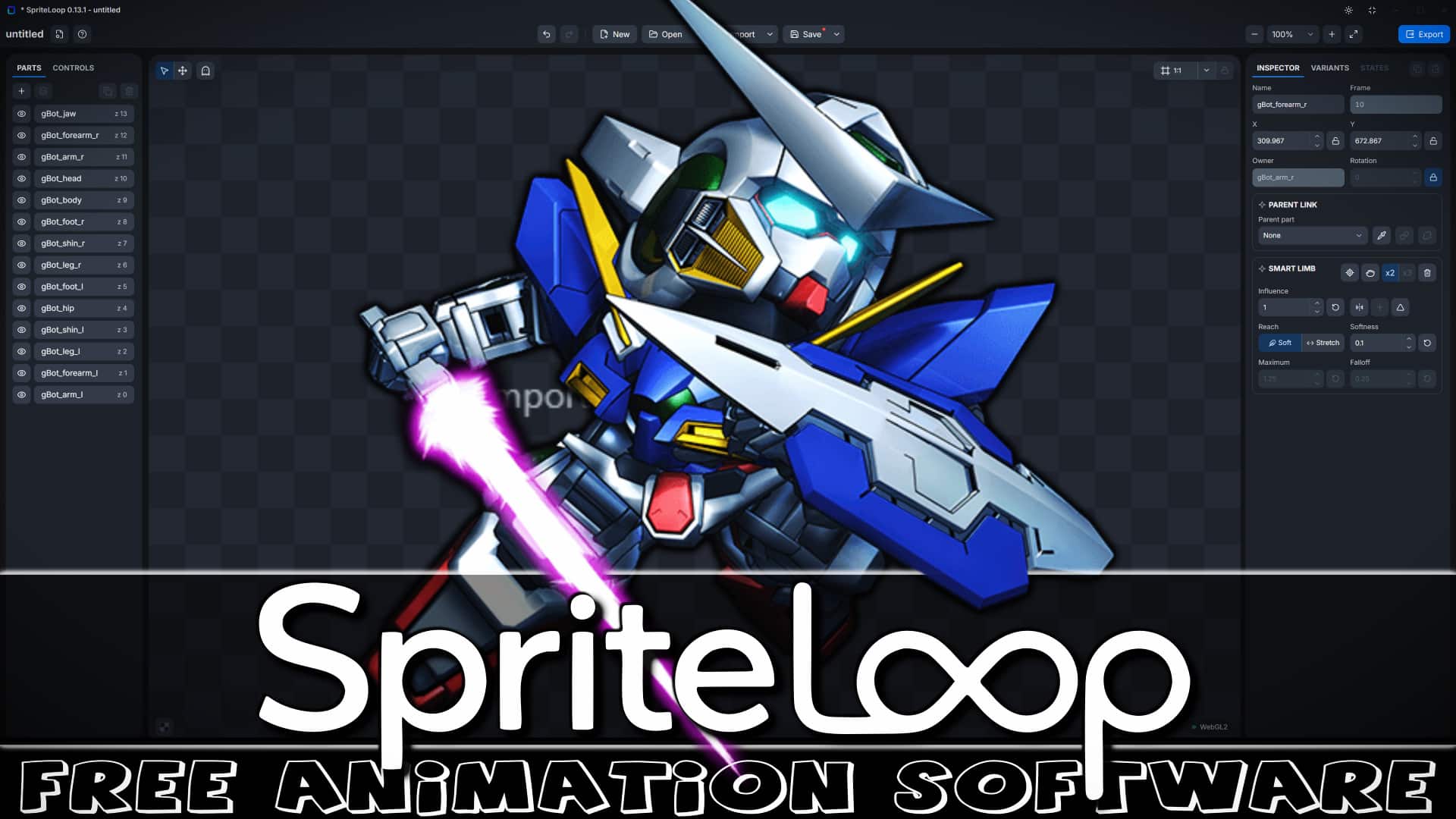
At its heart, SpriteLoop is designed to streamline the process of bringing static 2D assets to life. Users can import a collection of individual image files, typically representing different body parts or elements of a character or object. The software then allows for the arrangement and rigging of these elements, much like a digital puppet. Key features include:
- Importing Image Sequences: SpriteLoop supports the import of individual image files that form the constituent parts of an animation. This allows for a modular approach to asset creation, where each element can be designed and refined independently.
- Skeletal Animation: A cornerstone of SpriteLoop’s functionality is its skeletal animation system. Users can create an armature of bones and attach them to their image elements. By manipulating these bones, the attached sprites can be moved, rotated, and scaled, creating the illusion of fluid motion. This is a crucial feature for creating complex character animations.
- Keyframing: The animation process in SpriteLoop relies heavily on keyframing. Users define the position, rotation, and scale of their rigged elements at specific points in time (keyframes). The software then interpolates the motion between these keyframes, generating the animation sequence. This allows for precise control over every aspect of the animation.
- Inverse Kinematics (IK) and Forward Kinematics (FK): While the provided content doesn’t explicitly detail IK/FK support, these are common features in skeletal animation software. IK allows for intuitive posing of limbs by moving the end effector (e.g., a hand or foot), and the rest of the limb follows realistically. FK offers direct control over each bone in a chain. The presence or absence of these would significantly impact the complexity of animations that can be achieved.
- Timeline Editing: A visual timeline provides a clear overview of the animation sequence, allowing users to scrub through frames, adjust keyframes, and fine-tune the timing and pacing of their animations. This is essential for achieving smooth and expressive motion.
- Exporting Animations: SpriteLoop is designed to export animations in formats suitable for integration into game engines and other multimedia projects. The specific export formats are a critical aspect of its utility, determining how easily animations can be used in real-world applications.
A Chronology of Development and Accessibility
While the provided text doesn’t offer a detailed timeline, the existence of SpriteLoop as a free and open-source project suggests a development journey driven by community and a desire to contribute to the creative ecosystem. Open-source projects often evolve through iterative development, with contributions from a global network of developers and users.
The availability of SpriteLoop on multiple platforms—Windows, Mac, and Linux—underscores a commitment to broad accessibility. This cross-platform compatibility ensures that a wider range of users can benefit from the software, regardless of their operating system preference.
The "Key Links" provided offer significant insight into the project’s ecosystem and its dedication to open-source principles:
- SpriteLoop Homepage (itch.io): This link points to the primary distribution platform, likely offering downloads and community interaction. It.io is a popular hub for indie game developers and creators, fostering a supportive environment for sharing projects.
- SpriteLoop Defold (GitHub): The inclusion of a Defold project suggests a strong integration or intended integration with the Defold game engine. Defold is a free, lightweight, and powerful 2D and 3D game engine, and this link indicates that SpriteLoop animations are designed to be readily usable within this engine.
- Krita Exporter (GitHub): The presence of a Krita exporter is a significant indicator of SpriteLoop’s interoperability with other creative tools. Krita is a professional-grade, free, and open-source painting program, widely used by digital artists. A dedicated exporter means that artists can seamlessly transfer their sprite assets and potentially animation data from Krita into SpriteLoop.
- Photoshop Exporter (GitHub): Similarly, the Photoshop exporter highlights an effort to integrate with Adobe Photoshop, a ubiquitous industry-standard image editing software. This allows artists who are more familiar with Photoshop’s workflow to leverage SpriteLoop for animation without a drastic shift in their toolset.
These GitHub repositories are crucial for an open-source project. They serve as the central hubs for code development, bug tracking, feature requests, and community collaboration. The fact that exporters for popular art software are available as separate GitHub projects suggests a modular and extensible design, allowing for community contributions and further integrations.
Supporting Data and Community Integration
The absence of explicit feature lists beyond the core functionality in the provided text means that a deeper dive into "supporting data" is limited. However, the existence of the GitHub repositories and the itch.io page strongly implies a growing community around SpriteLoop.
- GitHub Activity: Examining the commit history, issue trackers, and pull requests on the respective GitHub repositories would reveal the level of active development, the types of issues being addressed, and the pace of new feature implementation. This is the primary source of "supporting data" for an open-source project.
- itch.io Community: The itch.io page likely hosts comments, forums, or a community section where users can share their experiences, ask questions, and provide feedback. This can offer qualitative data on user satisfaction and common challenges.
- Video Tutorial: The mention of a YouTube video tutorial is invaluable. It provides a practical demonstration of SpriteLoop in action, showcasing its interface, workflow, and the quality of animations it can produce. This serves as crucial "supporting data" for potential users, offering a tangible preview of the software’s capabilities.
The integration with Krita and Photoshop exporters is particularly noteworthy. It signifies an understanding of the typical workflows of 2D animators and game developers. By facilitating a smoother transition from asset creation to animation, SpriteLoop reduces friction in the production pipeline. This interoperability is a key differentiator and a strong indicator of the project’s thoughtful design.
Official Responses and Project Vision
As an open-source project, "official responses" typically come in the form of developer statements, release notes, or community forum interactions. The information provided doesn’t include direct quotes or statements from the developers. However, the very existence of SpriteLoop as a free and open-source tool speaks volumes about its underlying vision:
- Democratization of Animation Tools: The primary goal appears to be making sophisticated 2D cut-out animation accessible to everyone, regardless of their budget. This aligns with the broader trend of open-source software empowering creators and fostering innovation.
- Community-Driven Development: By making the source code available on GitHub, Balkan Ram Games has invited collaboration. This suggests a belief in the power of collective effort to improve and expand the software’s capabilities.
- Interoperability and Workflow Enhancement: The development of exporters for popular art software indicates a strategic focus on fitting into existing creative pipelines rather than demanding a complete overhaul of user workflows.
The project’s commitment to being "free" extends beyond just monetary cost; it encompasses the freedom to use, modify, and distribute the software, which are the hallmarks of the open-source movement.
Implications for Game Developers and Animators
The emergence of SpriteLoop carries several significant implications for the 2D game development and animation communities:
- Reduced Barrier to Entry for Indie Developers: For solo developers or small indie studios with limited budgets, SpriteLoop offers a powerful animation solution without the prohibitive costs of commercial software. This can enable them to create more polished and professional-looking games.
- Enhanced Character Animation Capabilities: Cut-out animation is particularly well-suited for character animation, allowing for expressive and fluid movements. SpriteLoop empowers creators to bring their characters to life with a level of sophistication previously out of reach for many.
- Cross-Pollination of Skills: By integrating with tools like Krita and Photoshop, SpriteLoop encourages artists to leverage their existing skills in new ways. A digital painter can transition into animation more easily, and animators can benefit from the advanced features of these art programs.
- Potential for Innovation: As an open-source project, SpriteLoop has the potential to evolve rapidly based on community needs and contributions. This could lead to unique features and workflows that push the boundaries of 2D animation.
- Educational Tool: SpriteLoop can serve as an excellent educational tool for students and aspiring animators learning the principles of skeletal and cut-out animation. Its accessibility and free nature make it an ideal platform for experimentation and skill development.
- Competition and Market Dynamics: The availability of a capable free alternative like SpriteLoop can put pressure on commercial software providers to innovate and potentially adjust their pricing strategies, ultimately benefiting the entire industry.
In conclusion, SpriteLoop represents a significant development in the realm of free and open-source 2D animation tools. By providing a robust feature set for cut-out animation, prioritizing cross-platform compatibility, and fostering integration with popular art software, it empowers a new generation of creators to bring their visions to life. Its continued development, fueled by community engagement and a commitment to accessibility, promises to make sophisticated 2D animation a more attainable goal for developers and artists worldwide. The future of 2D animation is looking increasingly accessible, and SpriteLoop is poised to play a vital role in shaping that future.