The Gilded Age Reimagined: The Legacy of Charles Dana Gibson and the Genesis of the Graphic Novel
The history of sequential art is often told through the lens of the 1930s—the era of capes, masks, and the birth of the "Golden Age" of comics. However, decades before the first appearance of Action Comics, a different kind of visual revolution was taking place in the pages of high-society weeklies. Charles Dana Gibson, an artist whose name became synonymous with an entire generation’s aesthetic, was crafting a narrative language that bridged the gap between classical illustration and the modern graphic novel.
With the release of The Complete Charles Dana Gibson, Vol. 1: A Widow and Her Friends (1899-1901), historians and art enthusiasts are revisiting the work of a man who was, in his time, perhaps the most influential cultural figure in American media. This volume, meticulously edited and featuring an introduction by Sean Michael Robinson, serves as both a historical archive and a compelling argument for Gibson’s inclusion in the pantheon of comic book pioneers.
Main Facts: The Resurrection of a Cultural Titan
Charles Dana Gibson (1867–1944) was more than an illustrator; he was a social architect. His most famous creation, the "Gibson Girl," became the first national beauty standard for American women—a figure of austere dignity, cool composure, and subtle strength. The new collection focuses on a pivotal three-year window (1899–1901) where Gibson’s work moved beyond the singular "pin-up" and began to experiment with serialized, character-driven storytelling.
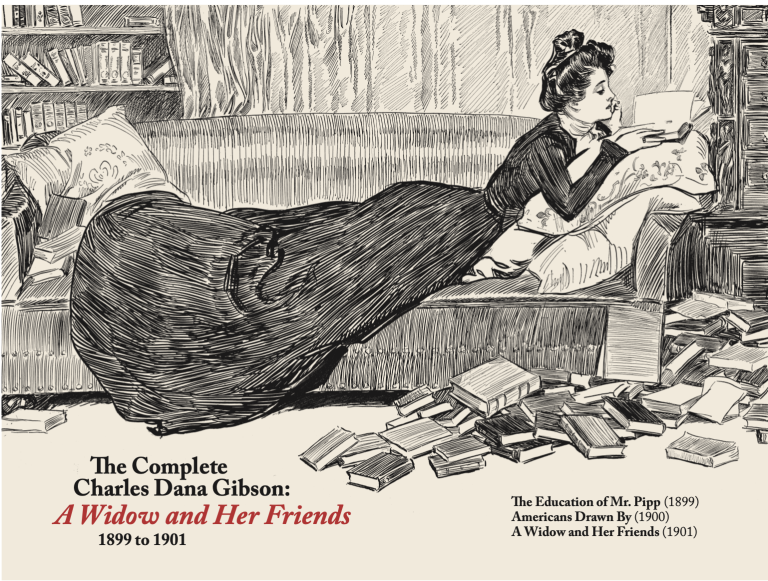
The volume collects three major works: The Education of Mr. Pipp, Americans Drawn By, and A Widow and Her Friends. These works highlight Gibson’s ability to weave wry, highbrow humor with a level of draftsmanship that remains unparalleled in the medium of pen and ink. While modern readers might not immediately associate his work with "comics," the sequential nature of Mr. Pipp reveals a structural sophistication that predates the formalization of the graphic novel by nearly a century.
One of the most striking aspects of this release is its emphasis on Gibson’s role in the birth of mechanical reproduction. At the turn of the century, the ability to replicate fine-line art for mass-market magazines was a burgeoning technology. Gibson was the master of this transition, developing a technique that ensured his intricate cross-hatching and deep contrast would remain sharp even on the rapid-fire presses of the era.
Chronology: From Single Vignettes to Sequential Narratives
Gibson’s career trajectory, as captured in this volume, reflects a maturation of both the artist and the medium.
1899: The Education of Mr. Pipp
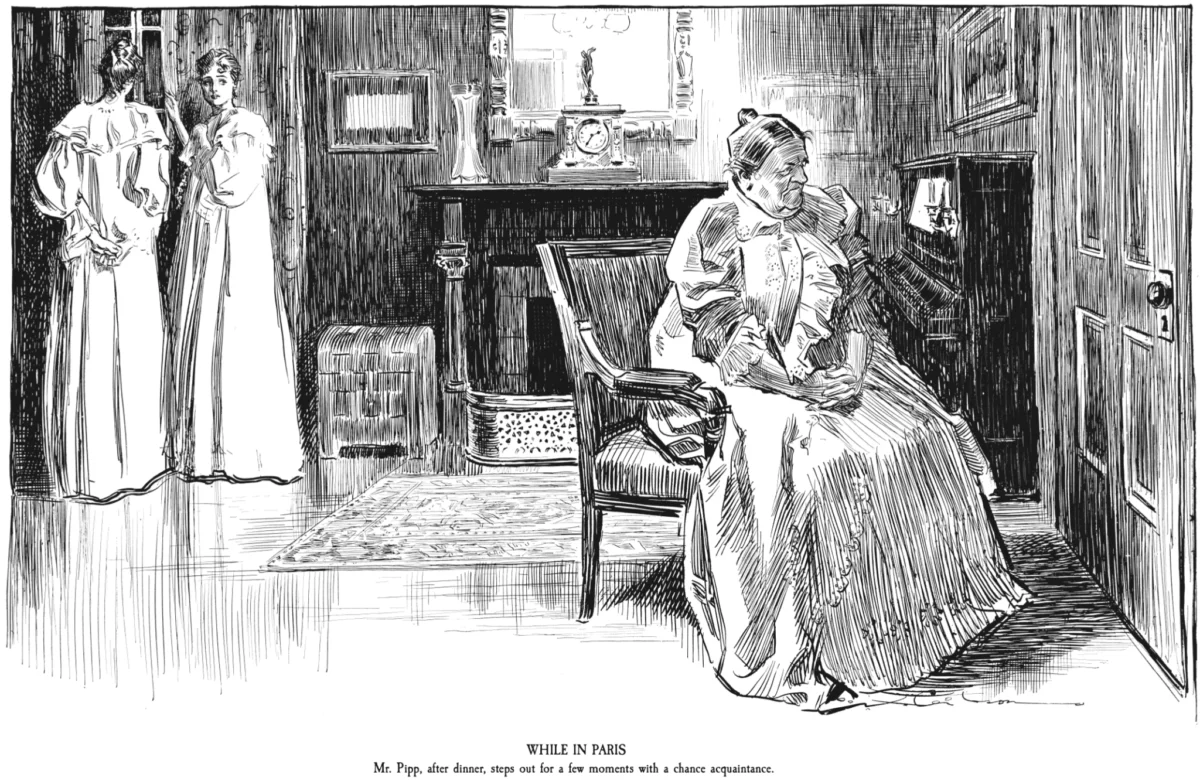
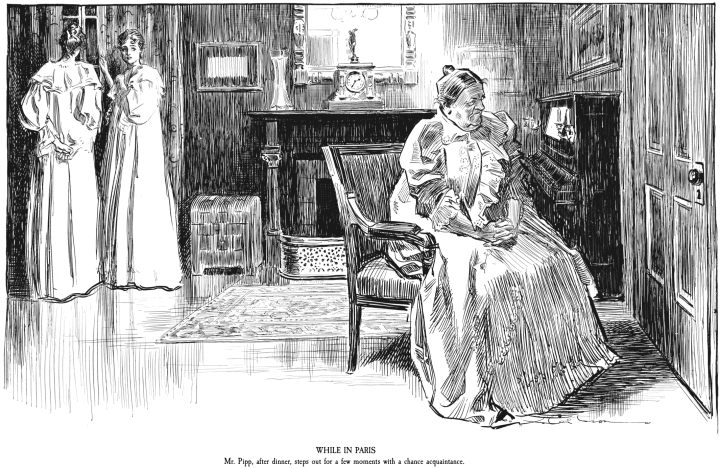
The collection opens with what is arguably Gibson’s most cohesive narrative work. The Education of Mr. Pipp follows a crotchety, self-made American industrialist who is dragged across Europe by his socially ambitious wife and daughters. Unlike the stand-alone cartoons of the day, Mr. Pipp functions as a proto-graphic novel.
The story is told through full-page illustrations accompanied by sophisticated captions that feel more aligned with the novels of Henry James or Edith Wharton than the "low-brow" humor of early Sunday funnies. Over the course of the series, Pipp transforms from a grumpy fish-out-of-water into a man who, while still world-weary, has gained a quiet understanding of the world his family so desperately wants to join.
1900: Americans Drawn By
By 1900, Gibson’s fame was at its zenith. Americans Drawn By represents a broader survey of the American social landscape. This period saw Gibson leaning into his role as a social satirist. The work moved away from the linear story of a single character like Mr. Pipp and toward a series of vignettes that captured the "types" of the Gilded Age—the aspiring socialite, the bored aristocrat, and the frantic suitor. It was during this phase that Gibson’s captions became increasingly wordy, requiring the reader to engage with the social context of the scene as much as the art itself.
1901: A Widow and Her Friends
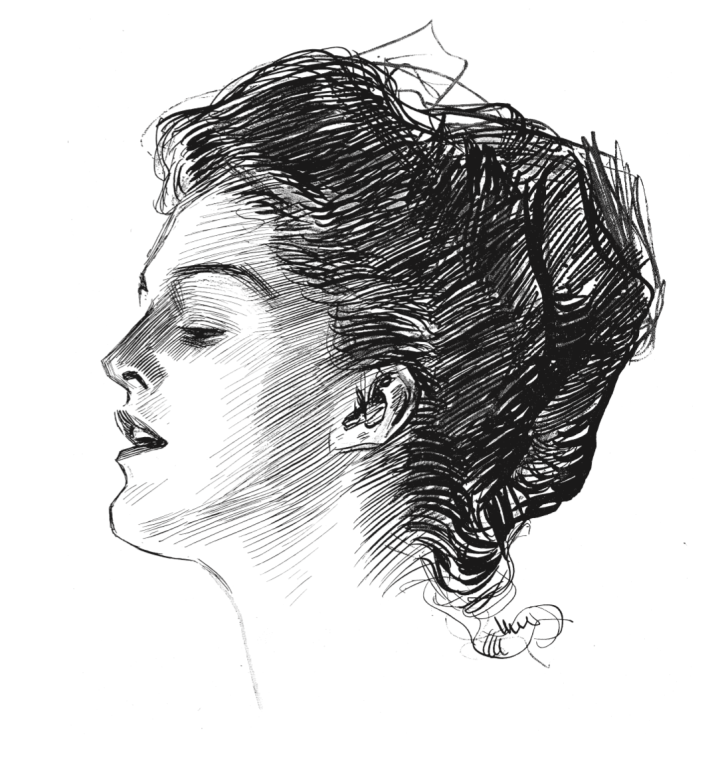
The titular work of the volume marks a return to a more focused narrative arc. The series begins with a young widow in the depths of grief, followed by her gradual re-emergence into society. While the "Widow" is a classic Gibson Girl—composed, beautiful, and emotionally impenetrable—the series allows for a subtle exploration of mourning and the performative nature of social life. By the end of the series, the narrative shifts back toward the vignette style, but the emotional core established in the early pages remains a highlight of Gibson’s career.
Supporting Data: The Technical Mastery of the Pen
The enduring power of Gibson’s work lies in his technical execution. Analysis of the original pen-and-ink drawings reveals a mastery of line that served a dual purpose: aesthetic beauty and reproductive clarity.
- Mechanical Synthesis: Gibson understood that the "halftone" process of the 1890s had limitations. To combat this, he used bold, decisive lines and intricate cross-hatching to create the illusion of gray tones without actually using gray ink. This ensured his work looked "high-definition" compared to his contemporaries.
- The Power of White Space: The editing of the new volume emphasizes Gibson’s use of negative space. In The Education of Mr. Pipp, the book layout places singular, isolated figures on the left-hand pages to face full, detailed backgrounds on the right. This highlights Gibson’s ability to integrate characters into complex environments—such as crowded ballrooms or windy ship decks—without losing the clarity of their expressions.
- Market Value Discrepancy: Despite his massive historical importance, the market for Gibson’s originals remains surprisingly accessible. Expert analysis in the volume notes that pen-and-ink originals from this peak period often sell for around $5,000. Adjusted for inflation, this is significantly less than what the artwork was worth in 1901, suggesting that Gibson remains an "undervalued" asset in the world of high-end art collecting.
Official Responses and Expert Analysis: The "Gibson Girl" as Power
In his introduction to the volume, Sean Michael Robinson argues that Gibson’s work is the genesis of wide-scale mechanical reproduction in the United States. Robinson posits that the "Gibson Girl" was not merely an object of desire but a symbol of female agency during the late Gilded Age.
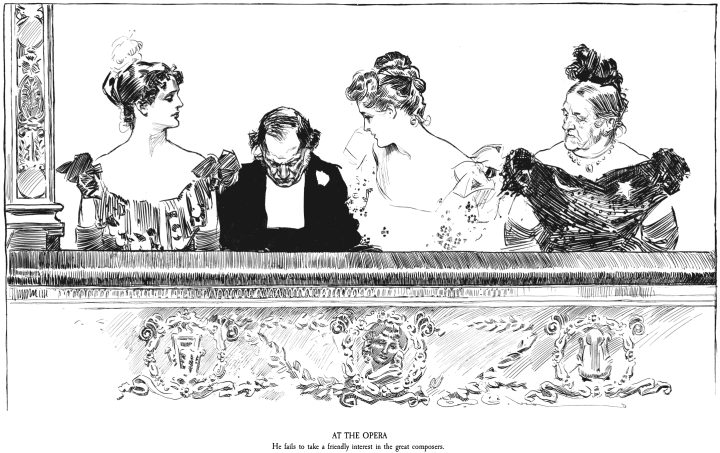
"The Gibson Girl is posed not just to provide an appealing image," Robinson notes, "but to exert her strength on the world around her by sheer force of will." This sentiment is echoed by art critics who point out that in Gibson’s compositions, it is almost always the men who are "falling to pieces," while the women remain "cool and composed." This reversal of the traditional gender dynamics of the era provided a wry, feminist undercurrent to his work that resonated with the "New Woman" of the 20th century.
Furthermore, William Schwartz, reviewing the volume for The Comics Journal, emphasizes Gibson’s range. Schwartz notes that while the "Gibson Girl" is his most famous archetype, his ability to convey the "crooked gaze" and "crotchety" nature of a character like Mr. Pipp proves his depth as a storyteller. Schwartz argues that Gibson’s draftsmanship creates an "entirely convincing" illusion of life, where even a character with their back to the reader can "communicate volumes."
Implications: Bridging the Gap to the Modern Graphic Novel
The publication of The Complete Charles Dana Gibson, Vol. 1 has significant implications for how we view the history of the comic medium.
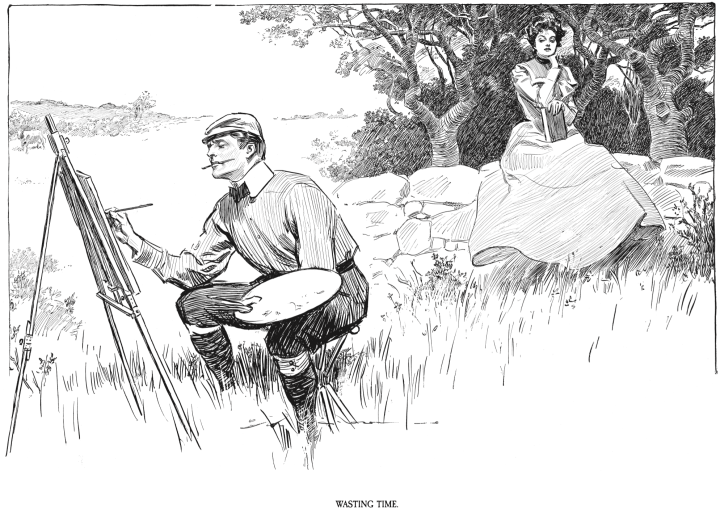
First, it challenges the notion that "comics" and "high literature" were always separate entities. Gibson’s work lived in the pages of prestigious magazines like Life and Collier’s, yet it employed the same sequential techniques that would later define the comic strip. By "understating or even excluding romantic scenes entirely," as Schwartz observes, Gibson allowed the intensity of his characters’ gazes to communicate "erotic yet chaste" narratives that required a high level of visual literacy from the reader.
Second, Gibson’s influence on the "graphic novel" format is profound. The way The Education of Mr. Pipp builds a long-form story through weekly installments suggests that the roots of the modern graphic novel are much deeper than the 1970s "underground" movement.
Finally, the release of this volume serves as a reminder of the fleeting nature of cultural dominance. In 1900, Charles Dana Gibson was a household name whose style dictated fashion, decor, and social etiquette. Today, he is a figure rediscovered by specialists and historians. By bringing these works back into print with high-quality restoration, this collection ensures that the "austere, highly dignified personages" of Gibson’s imagination will continue to exert their "sheer force of will" on a new generation of readers.
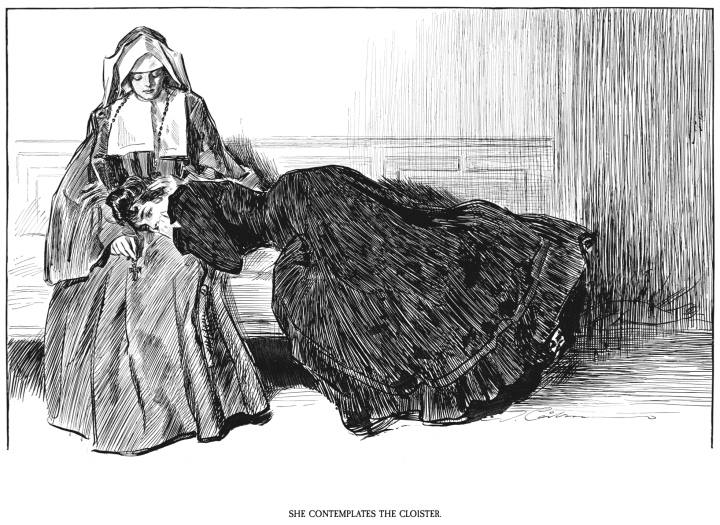
As the collection concludes with the hauntingly beautiful image of a couple in the snow, unable to finish saying goodbye, it leaves the reader with a lingering sense of the "mood of the moment" from a century ago—a mood that, thanks to Gibson’s pen, remains as vivid today as it was in 1901.