The Digital Iron Curtain: Analyzing the Global Surge in Social Media Bans for Minors
The landscape of the digital age is undergoing a fundamental shift as governments across the globe move to impose strict age-gating on social media platforms. Led by the United Kingdom and Australia, a growing coalition of nations is attempting to "reclaim childhood" from the algorithmic grip of Silicon Valley. However, as legislative walls go up, experts, satirists, and parents alike are questioning whether these bans are a substantive solution to a mental health crisis or a performative gesture by embattled political leaders.
Main Facts: The UK’s Landmark Move and the Global Precedent
The United Kingdom has officially joined a burgeoning international movement to restrict social media access for children under the age of 16. Described by the government as a "landmark move," the policy aims to mitigate the documented harms of user-to-user platforms such as Facebook, Snapchat, TikTok, and Instagram. The core objective, according to Prime Minister Keir Starmer’s administration, is to "give kids their childhood back," prioritizing face-to-face interaction and physical safety over digital engagement.
This policy follows the trailblazing efforts of Australia, which recently implemented similar restrictions. The bans generally target platforms where the primary function is interaction between users, often involving the sharing of user-generated content. While the specific mechanisms of age verification vary by jurisdiction, the overarching trend is clear: the era of the "unregulated digital playground" is coming to a close.
The UK’s decision arrives at a time of significant political volatility. Critics, including prominent political cartoonists like Blower, have characterized the move as a tactical distraction by Prime Minister Starmer. Starmer’s leadership has faced internal pressure following the election of Andy Burnham—often referred to as the "King of the North"—to a seat in Parliament, a move that some analysts believe signals a shift in the Labour Party’s internal power dynamics. In this context, the social media ban is viewed by some as a populist "low-hanging fruit" designed to project strength and moral clarity.
Chronology: From Digital Frontier to Regulated Utility
The trajectory of social media regulation has moved with remarkable speed over the last two decades. To understand the current climate of prohibition, one must look at the evolution of digital access and the subsequent legislative backlash.
The Era of "Wild West" Expansion (2004–2015)
When Facebook debuted in 2004, followed by the rise of Twitter and Instagram, the digital world was largely seen as a supplementary tool for communication. During this period, the prevailing parental advice was "analog" in nature: place the family computer in the living room to monitor usage. However, the advent of the smartphone rendered this advice "quaint." By the mid-2010s, the internet had moved from the living room to the pocket, making 24/7 access the new norm for adolescents.
The Rise of the Mental Health Crisis (2016–2023)
As social media platforms pivoted toward engagement-based algorithms—designed to maximize time spent on the app—rates of anxiety, depression, and body dysmorphia among teenagers began to skyrocket. This period saw the first serious discussions regarding "digital safety acts" in various Western parliaments.
The Prohibitive Turn (2024–Present)
In late 2024 and early 2025, the conversation shifted from "safety features" to "outright bans." Australia became the first major Western power to codify a minimum age of 16 for social media use. Following Australia’s lead, the UK announced its intentions, and Canada began formal considerations for its own "Digital Safety Act," slated for potential implementation by mid-2026.
Supporting Data: The Efficacy of Age-Based Restrictions
While the political will to ban social media is high, data from existing restricted zones suggests that enforcement is a Herculean task.
The Workaround Phenomenon
Data from Australia reveals a sobering reality: approximately 60% of youth report accessing social media despite the legal restrictions. This mirrors historical trends in other "vice" categories. Young people have historically bypassed age limits on alcohol and tobacco, circumvented bans on illicit substances, and ignored cultural mandates regarding sexual abstinence.
The technological nature of the internet makes it even more susceptible to workarounds. Virtual Private Networks (VPNs), burner accounts, and age-spoofing techniques are widely understood even by pre-teens. Critics argue that unless age verification involves invasive biometric data or government-issued ID—which raises significant privacy concerns—the bans may remain largely symbolic.
The Cost of Moderation and the "Engagement" Trap
A primary argument against the efficacy of these bans is the refusal of tech giants to self-regulate. Effective moderation—the removal of hate speech, bullying, and toxic content—is expensive. Platforms like Meta (Facebook) have been criticized for their inconsistent application of "community values."
For instance, reports have surfaced of users reporting overt racial slurs and dehumanizing content, only to be told by automated systems that such content "does not violate community standards." This suggests that moderation is often a secondary priority to "engagement," as toxic interactions often generate more traffic than peaceful ones.
The AI Factor and Intellectual Mediocrity
The debate over social media is now inextricably linked to the rise of Artificial Intelligence (AI). Recent studies indicate that over-reliance on AI for schoolwork and social interaction is harming critical thinking skills. This has led to concerns of a "one-size-fits-all intellectual mediocrity," where the nuance of human thought is replaced by the bland, predictive text of large language models.
Official Responses: Global Perspectives and Corporate Pushback
The international response to social media regulation is deeply divided along ideological and economic lines.
The UK and Commonwealth Stance
The UK government maintains that the ban is a necessary public health intervention. They argue that the "duty of care" owed to children outweighs the libertarian arguments for unfettered internet access. Canada has followed suit, offering parents guidance on how to adjust to a post-social media world, recognizing that legislation alone is not a panacea.
The United States’ Free Speech Argument
In contrast, the political climate in the United States remains resistant to such broad bans. The Trump administration has historically opposed European and British digital controls, labeling them as "burdensome" to providers and a threat to "free speech." This stance creates a geopolitical friction point, as American-based tech giants are caught between the regulatory demands of the EU/UK and the laissez-faire protections of the US legal system.
Corporate Evasion
Social media companies generally respond to these bans with a mix of public cooperation and private lobbying. While they publicly state their commitment to youth safety, they often oppose the specific technical requirements of age verification, citing user privacy and the high cost of implementation. The underlying reality remains: an industry that depends on "toxic engagement" has little financial incentive to exclude a massive demographic of future consumers.
Implications: The Paradox of Adult Addiction and Parental Roles
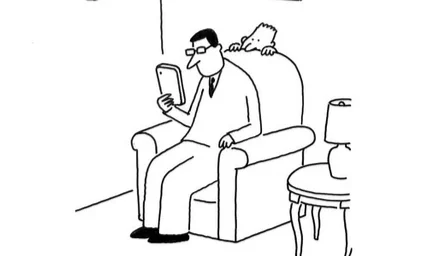
Perhaps the most significant implication of these bans is the spotlight they shine on adult behavior. Cartoonists like MacKay and Banx have pointed out the inherent hypocrisy in adults attempting to ban social media for children while remaining "willfully addicted" themselves.
The "Candy Crush" Contradiction
The effectiveness of any parental or governmental restriction is undermined by the example set by adults. A parent who brings their phone to the dinner table or mindlessly scrolls through "Candy Crush" while their children are present has little moral authority to lecture on the dangers of screen time. The digital habits of parents serve as the primary model for children; if the model is one of "mindless consumption," the child is likely to follow, regardless of the law.
The Return to Analog Values
The move toward social media bans suggests a societal yearning for a pre-digital era. Before the ubiquity of smartphones, parental control was exercised by setting physical boundaries—limiting what could be watched on broadcast television or preventing minors from entering R-rated movies.
In the modern world, these boundaries have collapsed. The "living room computer" has been replaced by the "bedroom smartphone." Experts suggest that the only way to make a ban effective is to replace digital engagement with meaningful physical alternatives: family dinners, weekend trips to museums, or outdoor activities.
The Future of Human Meaning
As we rely more on AI to curate our feeds and mediate our social lives, there is a risk that our existence becomes "less and less about us." The early internet mantra of "GIGO" (Garbage In, Garbage Out) has become the default setting for many online spaces. If the current trend of intellectual and social "mediocrity" continues, the social media bans of the 2020s may be remembered as a desperate, last-ditch effort to preserve human agency in an age of algorithmic dominance.
In conclusion, the UK and Australia’s move to ban social media for those under 16 is more than a policy change; it is a cultural referendum. While the logistical challenges of enforcement are vast and the political motivations may be complex, the movement reflects a growing global consensus: the digital world, in its current form, is fundamentally incompatible with a healthy childhood. Whether the law can succeed where parenting has struggled remains the defining question of the digital age.