The Actor’s Whisperer: Remembering the Prolific Legacy of Mark Rydell (1929–2024)
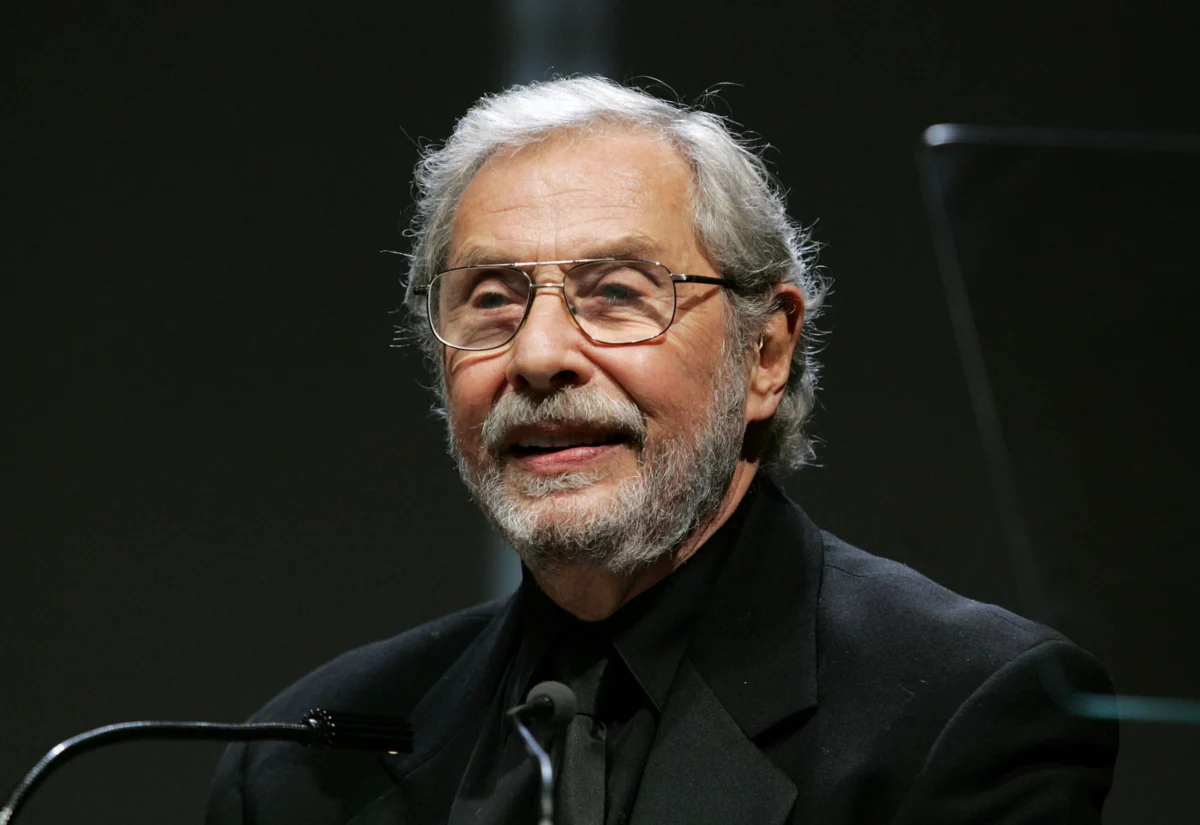
Mark Rydell, the Academy Award-nominated director whose sensitive touch and deep roots in the Meisner technique transformed him into one of Hollywood’s most respected "actor’s directors," passed away on Friday at the age of 97. Known for helming the multi-Oscar-winning On Golden Pond and launching the film career of Bette Midler in The Rose, Rydell leaves behind a body of work defined by its emotional intelligence, stylistic versatility, and an unwavering commitment to the craft of acting.
Rydell’s career spanned over seven decades, bridging the gap between the Golden Age of television and the "New Hollywood" era of the 1970s. Whether he was directing John Wayne in a gritty Western or guiding Katharine Hepburn to her record-breaking fourth Oscar, Rydell’s hallmark was a profound respect for the performer—a trait born from his own extensive background as a Broadway and television actor.
Main Facts: A Career of Accolades and Human Connection
Mark Rydell was a rare breed of filmmaker who excelled both in front of and behind the camera. While he is most frequently remembered for the 1981 classic On Golden Pond, which earned him a Best Director nomination and secured Academy Awards for leads Henry Fonda and Katharine Hepburn, his influence on the industry was much broader.
Throughout his career, Rydell became a primary architect of the "performance-driven" film. Under his tutelage, actors consistently delivered career-defining work. He guided Bette Midler to two Oscar nominations (The Rose and For the Boys), Marsha Mason to a nomination for Cinderella Liberty, and Sissy Spacek for The River. Even his supporting players found critical acclaim; Rupert Crosse became the first African-American to be nominated for Best Supporting Actor for his role in Rydell’s The Reivers.
Beyond his filmography, Rydell was a foundational figure at the Actors Studio and a lifelong devotee of Sanford Meisner. His approach to directing was less about visual pyrotechnics and more about "whispering"—finding the exact psychological trigger to help an actor inhabit a moment with absolute truth.
Chronology: From the Juilliard School to the Director’s Chair
Early Life and Artistic Foundations
Born Mortimer H. Rydell in New York City on March 23, 1929, Rydell’s journey into the arts began with music. He attended the prestigious Juilliard School, where he trained as a jazz pianist. This musical foundation would later inform the rhythmic pacing of his films and his deep affinity for musical biopics like The Rose.
However, the allure of the stage proved stronger. He transitioned into acting, training at the Neighborhood Playhouse under the legendary Sanford Meisner and later at the Actors Studio. To support himself during the lean years of the 1950s, he moonlighted as a jazz pianist in Manhattan clubs while appearing on Broadway in productions such as Seagulls Over Sorrento and Moonbirds.
The Acting Years and the TV Transition
Rydell first gained national recognition as an actor on the long-running soap opera As the World Turns, where he played the character Jeff Baker for six years. His film debut came in 1956’s Crime in the Streets, playing a juvenile delinquent alongside John Cassavetes and Sal Mineo.
By the early 1960s, Rydell felt the pull of the director’s chair. Like many of his contemporaries, he used the booming television industry as his training ground. He built an impressive resume directing episodes of iconic series, including Gunsmoke, The Fugitive, I Spy, and The Wild, Wild West. His reputation for efficiency and his ability to handle "difficult" talent quickly made him a favorite among studio executives.
The Rise of a Feature Film Auteur
In 1967, Rydell made his feature film directorial debut with The Fox, an adaptation of a D.H. Lawrence novella. The film was controversial for its time, featuring themes of lesbianism and sexuality that challenged the prevailing censorship of the era. Despite the friction with censors, the film was a critical success in the arthouse circuit, establishing Rydell as a director unafraid of complex human dynamics.
The 1970s solidified his status. He directed Steve McQueen in The Reivers (1969) and took the bold step of directing John Wayne in The Cowboys (1972). In a move that shocked audiences at the time, Rydell convinced Wayne—the ultimate symbol of American invincibility—to play a character who dies on screen.
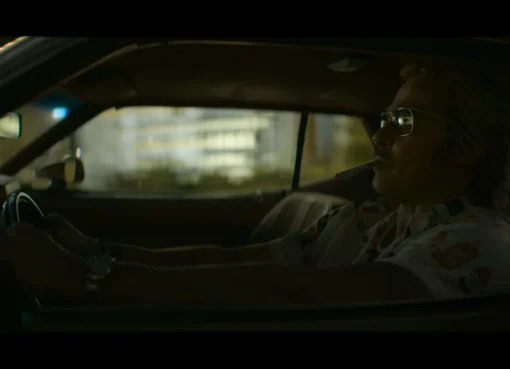
While his directing career flourished, Rydell occasionally returned to acting. His most memorable performance came in 1973, playing the psychotic, soda-bottle-wielding gangster Marty Augustine in Robert Altman’s neo-noir The Long Goodbye. It was a performance so chilling and visceral that it remains a benchmark for cinematic villainy.
The Peak: On Golden Pond and Bette Midler
The late 70s and early 80s represented the zenith of Rydell’s creative output. In 1979, he directed The Rose, a fictionalized take on the life of Janis Joplin. He took a chance on Bette Midler, then primarily known as a cabaret singer, and helped her deliver one of the most explosive debut performances in Hollywood history.
Two years later, he directed On Golden Pond. The production was fraught with historical weight; it was the first and only time screen legends Henry Fonda and Katharine Hepburn worked together, and it served as a public reconciliation between Henry and his daughter, Jane Fonda. Rydell’s sensitive navigation of these real-world tensions resulted in a film that resonated globally, grossing over $119 million and earning 10 Academy Award nominations.
Later Career and Television Return
Rydell continued to work steadily through the 1990s and 2000s. He reunited with Midler for the ambitious USO epic For the Boys (1991) and explored the Lindbergh kidnapping in the HBO film Crime of the Century (1996).
In 2001, he directed the TNT biopic James Dean, starring a then-emerging James Franco. The film was a massive critical success, earning 11 Emmy nominations and a win for Franco. Rydell also appeared in the film as studio head Jack Warner, showcasing his ability to inhabit the very industry types he had navigated for decades. His final directorial effort was an episode of Masters of Science Fiction in 2007.
Supporting Data: The "Rydell Touch" by the Numbers
Mark Rydell’s success was not merely anecdotal; it was backed by a staggering track record of critical and commercial achievements.
- Academy Award Impact: Rydell-directed films earned a combined total of over 20 Academy Award nominations. He is one of the few directors to have guided three different actors to four Oscar wins across just two films (On Golden Pond and The Rose).
- Box Office Success: On Golden Pond was the second-highest-grossing film of 1981, trailing only Raiders of the Lost Ark. This was a monumental feat for a quiet, dialogue-heavy family drama.
- The Midler Connection: Both of Bette Midler’s Academy Award nominations for Best Actress came from Rydell-directed projects.
- Industry Leadership: Rydell served as an executive consultant on the groundbreaking series Family (1976–1980) and formed Sanford Productions with fellow director Sydney Pollack, a partnership that fostered several mid-budget prestige dramas.
Official Responses: Tributes to the "Actor’s Whisperer"
The news of Rydell’s passing prompted an outpouring of grief and gratitude from the Hollywood community, particularly from those whose careers he helped launch.
Bette Midler, in a poignant Instagram tribute, credited Rydell with her entire film career:
"Mark Rydell, the director of my first film, The Rose, died this morning. He was an actor of note before he became a director, and I was so lucky to have met him when I did; he taught me so much… Two Oscar nominations both because of him. He was the actor’s whisperer; just a few words was all it took to understand what was needed. Devoted to Meisner. So many happy memories."
Colleagues from the Actors Studio, where Rydell served as an Artistic Director for the West Coast branch, remembered him as a tireless educator. "Mark didn’t just direct movies; he directed souls," said one former student. "He believed that if you could find the truth in a single moment, the rest of the film would take care of itself."
Implications: The End of a Performance-First Era?
The passing of Mark Rydell marks the loss of one of the final links to a specific philosophy of filmmaking. In an era currently dominated by intellectual property, visual effects, and "content" algorithms, Rydell represented the "Performance-First" school of thought.
His legacy suggests several vital implications for the future of cinema:
- The Importance of the "Actor-Director": Rydell proved that a director’s greatest tool is an intimate understanding of the actor’s psychological process. His ability to speak the "language of the craft" allowed him to bypass ego and reach the emotional core of a scene.
- Prestige Drama as a Commercial Powerhouse: The success of On Golden Pond serves as a reminder that human-centric stories about aging, family, and reconciliation can compete with blockbusters when handled with sincerity and technical skill.
- The Teacher-Director Model: Through his work at the Actors Studio and his mentorship of actors like James Franco and Bette Midler, Rydell ensured that the Meisner technique would continue to influence modern acting. His death leaves a void in the mentorship landscape of Hollywood.
Mark Rydell was more than a director; he was a custodian of the human experience on screen. He understood that while cameras and technology would evolve, the fundamental desire of an audience to see "truthful behavior under imaginary circumstances" would never change. As the credits roll on a storied life, his films remain as masterclasses in the art of the whisper.