C.L. Clark’s "Magic of the Lost" Trilogy: A Masterclass in Modern Fantasy’s Moral Complexities
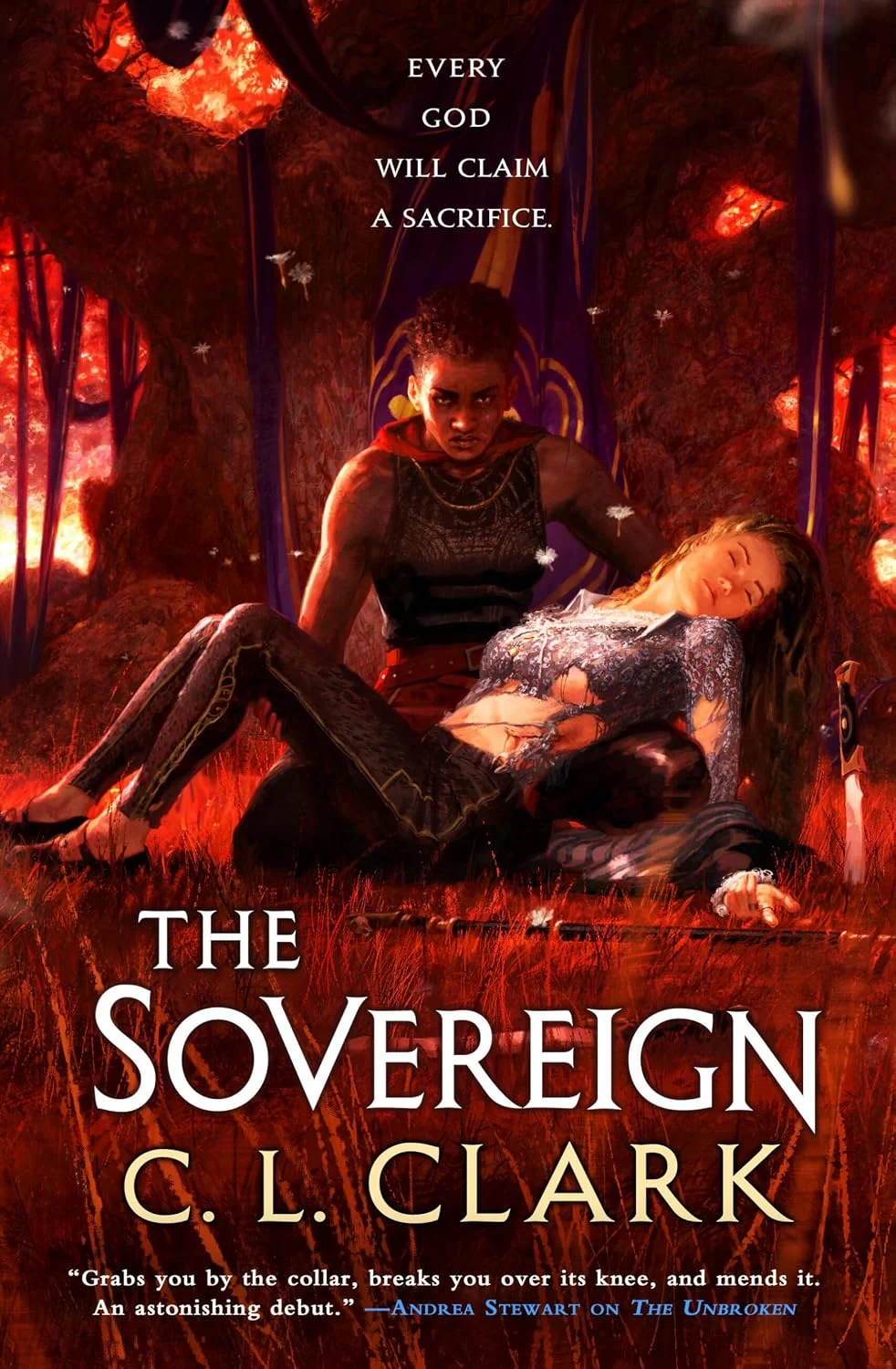
C.L. Clark’s "Magic of the Lost" trilogy, culminating in the recently released The Sovereign, stands as a powerful testament to the evolution of the fantasy genre beyond simplistic narratives of absolute good versus evil. This ambitious series embarks on a courageous exploration of colonialism, identity, power dynamics, and the often-uncomfortable truths of moral compromise, challenging readers to confront a world far richer and more fraught than traditional escapist fantasy.
From its very inception, the trilogy signals a departure from the archetypal struggles popularized by works like J.R.R. Tolkien’s The Lord of the Rings, where antagonists like Sauron’s orcs embodied pure, destructive malice. Clark, instead, delves into the intricate web of human and societal motivations, questioning the very sustainability of absolute destruction and the nutritional value of cinders and ash in a conqueror’s future. By discarding the comforting clarity of unambiguous triumph, Clark demonstrates the profound potential of adult fantasy to reflect the nuanced complexities of our own globalized reality.
Main Facts: Reshaping Genre Conventions
The "Magic of the Lost" trilogy by C.L. Clark is a groundbreaking fantasy series that deliberately deconstructs conventional heroic narratives and black-and-white morality. The final volume, The Sovereign, brings to a head the series’ central themes: the insidious nature of colonialism, the arduous journey of identity formation, and the inherent moral costs of wielding power.
Set against the backdrop of the Balladairan Empire’s colonial rule over the territory of Qazāl, the narrative centers on two pivotal figures: Touraine, an imperial conscript stolen from her homeland as a child and trained as a soldier, and Princess Luca, the heir to the Balladairan throne, whose aspirations for reform are frequently at odds with the brutal realities of her empire. Clark eschews easy answers, instead portraying protagonists who are both products of and resistors to oppressive systems, forcing readers to grapple with their conflicted loyalties and morally ambiguous choices. The trilogy is a significant contribution to contemporary fantasy, pushing the boundaries of what the genre can achieve by mirroring the uncomfortable truths of historical and modern geopolitical conflicts.
A Chronological Journey Through Moral Ambiguity
The "Magic of the Lost" trilogy unfolds with a meticulous progression, each book peeling back layers of perceived simplicity to reveal a world steeped in moral complexity and human frailty.
Book One: The Colonial Crucible
The inaugural volume immediately immerses the reader in a stark colonial tableau, opening with an assassination attempt on the Balladairan Empire’s heir, Princess Luca, during her visit to Qazāl. The perspective is firmly anchored in Touraine, a young imperial conscript, one of countless children forcibly taken from conquered lands and indoctrinated into Balladaire’s military service. Touraine is portrayed not as a mere victim, but as a capable, ambitious soldier—the first conscript to achieve the rank of lieutenant—deeply committed to her military career despite its origins.
Clark masterfully weaves in poignant echoes of real-world genocidal campaigns and cultural erasures. The descriptions of the conscripts’ "civilizing" education powerfully evoke the historical trauma of Native American boarding schools in the US and Canada, as well as contemporary campaigns against the Uyghurs in China. These institutions, designed to sever bonds with birth cultures, ultimately serve to create a disenfranchised class of second-class citizens, perpetually existing on the margins without true integration into the conquering society. The conscript corps themselves draw parallels to historical military units like the Nepalese Gurkhas in the British Imperial Army or the "colored" troops in various American conflicts, highlighting the uncomfortable reality of subjugated peoples being utilized to maintain the very empires that oppressed them. The Balladairan presence in Qazāl further mirrors the Spanish conquest of South America, where local populations were tolerated as long as they remained docile enough for exploitation, secretly practicing "the old ways" under the veneer of imperial control.
Initially, the setup presents the tantalizing prospect of a clear anti-colonial treatise: violent repression, cultural persecution, economic exploitation, and entitled overlords against noble rebels. The narrative hints at Touraine’s potential to overcome her imperial brainwashing, promising both personal and political liberation. However, Clark’s courage as an author quickly becomes evident as she allows Touraine to fully embody her warrior identity. Despite enduring abuse within the imperial system, Touraine and her fellow conscripts are depicted as proud, competent warriors, whose ambition and skill are central to their character. Their return to their birthland as leaders of the conquering army creates a rich source of internal and external conflict, elevating the plot beyond simple allegories.
Clark introduces further complexities with the burgeoning romantic connection between the haughty blonde Princess Luca and the brawny, brown Touraine. Luca’s conviction that she can reform her people and secure her throne by reviving ancient, banned magical practices—believing she can remove the colonial yoke in exchange for Qazāl’s healing magic—presents her as a seemingly earnest reformer. The rebels’ refusal to cooperate highlights modern concerns about cultural appropriation and exploitation, exposing Luca’s profound naivete. This nuanced portrayal of Luca, coupled with Touraine’s equally ambitious yet naive journey, ensures that Book One culminates in significant harm and unpredictable violence, yet paradoxically results in a liberated colony. The lingering subplot of Qazāl’s "uncivilized" magic introduces an intriguing polarity: initially framed as traditional beliefs oppressed by colonialism, it is later revealed that surrendering oneself to an ill-defined god is the sole path to unlocking these healing powers. This challenging alignment of rationalism with oppression and faith with healing forces readers, particularly those with secular worldviews, to re-evaluate their own assumptions.
Book Two: Fractured Loyalties and Darker Truths
Book Two expands the narrative’s scope and deepens its moral ambiguities, effectively shattering any remaining shallow polarities. The story splits to follow multiple protagonists, allowing Clark to explore a more complicated world. Spiritually, the lost magic reveals darker dimensions; secondary characters find themselves allied with cannibals and violent shape-shifters, exploring the wilder, more dangerous edges of their powers. While Touraine and Luca initially continue their quest for benign healing magic, they soon uncover disturbing evidence of child sacrifice to the gods. This revelation forces a re-evaluation, suggesting that Luca’s ancestors may have, in fact, taken the moral high ground when they banned such magic, complicating the initial "colonial practices oppress traditional belief systems" narrative.
Politically, the rebel alliance proves far more fragile and dependent on the goodwill of their former colonizers than anticipated. The liberation of a neighboring colony threatens to transform a former freedom fighter into a ruthless warlord, and a subdued rival to the Balladairan empire is exposed as equally bloody and ambitious. Simultaneously, the oppressive Balladairan empire itself shows surprising amenability to reform, drawing readers into the clash between Princess Luca’s enlightened crusade and her Machiavellian uncle’s rule. Luca, though outnumbered, is not entirely alone in her struggle for internal reform.
A particular highlight of Clark’s craft in this volume is the introduction of "The Fingers," a rebel movement within the Balladairan empire. Through the character of Fili, a young girl whose anger at how Princess Luca has treated her mother is projected onto political figures, Clark beautifully captures the psychological reality of such dynamics. The leader of "The Fingers" is a callous braggart, willing to sacrifice supporters for the cause, making it difficult to envision him as a better alternative to the existing rulers, especially when compared to the principled Luca. "The Fingers" represent a convincing portrayal of a resistance organization that, while fighting clear injustices, lacks a coherent plan for preventing new, potentially worse, problems from emerging from the wreckage. In a brilliant twist, Fili herself is gifted with the Balladairan magic that eludes Princess Luca, adding another layer of irony and complexity.
Book Two concludes with Luca and Touraine married, and Luca ascending to the Balladairan throne. Her aspirations for enlightened rule are already compromised by the violence necessary to secure her position and the nobility’s entrenched resistance to relinquish privilege. Looming threats of plague and invading armies set the stage for the trilogy’s dramatic conclusion.
Book Three: The Sovereign’s Reckoning
The Sovereign proves an irresistible page-turner, transcending the abstract morality play hinted at in Book One. Readers are deeply immersed in the personal stories of individuals striving to control their lives amidst plague and political upheaval. While many characters perish, few are reduced to mere plot devices to demonstrate cruelty or savagery. Queen Luca battles to extract concessions from her nobility and protect her besieged empire with dwindling resources. "The Fingers," while engaging in theatrical seizures of noble property, also organize effective treatment centers and mutual aid networks. The invading armies, a loose coalition united only by their desire to crush Balladaire, remain relentlessly on task. This is a world teeming with protagonists, each tragically driven by a complicated mix of motivations, moving through a landscape largely indifferent to their individual dreams.
The author’s refusal to guarantee a happy ending keeps the reader in a state of heightened suspense. The looming final battle, combined with the sheer number of remaining pages, signals that a conventional resolution is unlikely. This mastery of suspense, compelling a jaded veteran of the genre to "writhe," is the highest compliment to Clark’s storytelling prowess.
Two particularly masterful plot lines exemplify Clark’s craft in The Sovereign. First, the complex relationship between Luca and her uncle, Nicolas Ancier. He is a power-hungry imperialist and her greatest mentor and father figure. As her prisoner, he constantly taunts her, serving as an external voice for her self-doubt and a reminder of her own ruthless actions. For hundreds of pages, Luca hesitates to eliminate this malignant force. When his attempted coup is surprisingly anticlimactic and easily suppressed, she orders him returned to his cell, only to have a sudden, stark realization:
"All this grief she had wasted. All the chances she’d given him, denial. She hadn’t been able to fix it, only to delay this moment. When she was no longer here, she didn’t want him to claim what remained in the ashes.
‘Let’s have done with this, Nicolas. Commander Perrot, shoot him.’ … She met her uncle’s eyes across the length of the bridge. … Commander Perrot shot Duke Nicolas Ancier in the head." (p. 408)
Clark allows readers to witness Luca’s internal struggle against a deeply ingrained, demeaning parental voice, transforming a political execution into a profound act of psychological liberation. The author’s restraint in this scene, avoiding a melodramatic Hollywood-style struggle, further enhances its impact, emphasizing Luca’s decisive initiative rather than self-defense.
Second, Touraine’s evolving relationship with the empire that stole her childhood. Reunited with her mother and practicing her native magic, Touraine still finds herself longing for the "green hills and icy winters of Balladaire"—the world of her imperial training camps. This simmering subplot comes to a full boil as she marches towards the final battle:
"It was new, this wholeness, and maybe Touraine only felt it because she knew she would die today, but she felt a certainty: home was as much about claiming a thing, a place—a person—as it was about being claimed. Touraine could claim Balladaire, and there it was—hers. All its faults, all its beauty—hers, and no one could take it away from her. She was part of it; one of its darker parts, aye, but she was woven as deep into the fabric of this empire as it was in her." (p. 503)
This passage beautifully illustrates that no person is merely a victim of political or economic forces. Touraine’s ability to claim a part of the empire, even with its faults, highlights the profound complexity of identity formed through trauma and displacement.
Supporting Data: Crafting Nuance and Relatability
Clark’s trilogy is a masterclass in character development and thematic depth, utilizing specific narrative choices to achieve its profound impact. The deconstruction of archetypes is evident in how Touraine and Luca are presented. They are not flawless heroes but deeply flawed individuals, driven by ambition and loyalty, making choices with real, often devastating, consequences. Touraine’s unwavering loyalty to her fellow conscripts, born from a shared experience of cultural displacement and perpetual outsider status, defies easy categorization of right and wrong, revealing a deeply human truth about bonds forged in trauma. Luca, the "earnest reformer," is shown to be blinded by her own privilege and naivete, forcing readers to question the efficacy and morality of even well-intentioned interventions.
The thematic depth extends to a rigorous exploration of power. Clark meticulously illustrates that any exercise of power carries moral costs, which escalate exponentially with the scale of that power. The trilogy navigates the treacherous waters of cultural appropriation versus genuine exchange, demonstrating how even attempts at benevolent interaction can be fraught with exploitation. Personal ambitions are consistently pitted against moral principles, forcing protagonists to confront their inner demons and the ways they betray loved ones and cherished values. This internal conflict makes all characters richer and more relatable, moving them beyond mere plot functions to embody universal struggles.
Challenging Genre Expectations: An Authorial Response
C.L. Clark’s "Magic of the Lost" trilogy is, in essence, an authorial response to the conventional tropes of the fantasy genre. It challenges readers to abandon their expectations for clear-cut narratives, moral absolutes, and convenient resolutions. Clark demonstrates immense courage in depicting difficult truths, refusing to sanitize the violence, the political maneuvering, or the personal sacrifices inherent in struggles for liberation and power.
The series actively positions itself within the broader evolution of contemporary fantasy, often aligned with movements like "grimdark" or "new wave" fantasy, which prioritize realism, moral ambiguity, and diverse perspectives over traditional heroic epics. By presenting a world where "good people make uncomfortable trade-offs" and "any expression of power has moral costs," Clark implicitly argues for a more mature and intellectually engaging form of speculative fiction. This approach not only provides a compelling story but also serves as a critical commentary on the genre’s potential to reflect, rather than merely escape, the complexities of the human condition.
Implications: A Mirror to Our Complex World
The "Magic of the Lost" trilogy holds profound implications for both the fantasy genre and its readership. Its unflinching gaze at the mechanisms and consequences of colonialism, cultural erasure, and resistance offers a powerful lens through which to examine contemporary global issues. The nuanced portrayal of identity, particularly for characters like Touraine, who grapple with belonging to both their stolen heritage and their adopted imperial culture, resonates deeply in a world increasingly defined by migration, diaspora, and multiculturalism.
By moving beyond the simplistic "hordes of orcs racing through Sauron’s no-man’s-land," Clark invites readers into a "crushingly complicated, global world that we all actually inhabit." The trilogy’s exploration of flawed leaders, fractured resistance movements, and the enduring human capacity for both cruelty and compassion serves as a vital commentary on political leadership, social justice, and the perennial struggle against oppression.
Ultimately, "Magic of the Lost" is more than just a captivating fantasy series; it is a profound literary achievement that enriches the genre by infusing it with rigorous social commentary and psychological depth. It fosters critical thinking about power structures, identity, and the compromises inherent in political action. Perhaps, as the reviewer suggests, it is in better understanding the agency of others, even those operating in morally grey areas, that we can best discern how to resist the resurgent forces that continue to dig new trenches in our backyards, demanding more than just escapism but profound engagement.