Meta Horizon+ Evolution: Strategic Xbox Game Pass Integration and the Future of Spatial Gaming
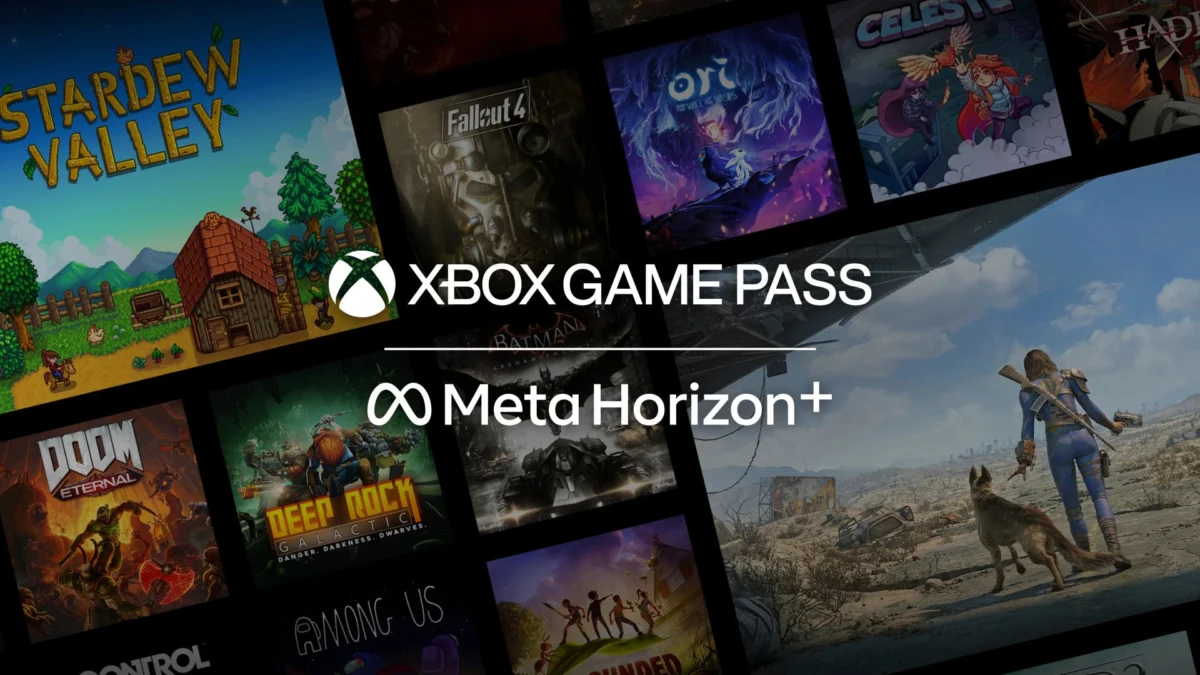
In a move that signals a deepening alliance between two of the world’s most influential technology giants, Meta has announced a significant expansion of its Horizon+ subscription service. By integrating a "Starter Edition" of Microsoft’s Xbox Game Pass at no additional cost, Meta is not only increasing the value proposition of its VR ecosystem but also fundamentally altering the landscape of cloud and spatial gaming. This partnership bridges the gap between traditional "flatscreen" AAA gaming and the immersive world of virtual reality, positioning the Meta Quest series as a versatile hub for all forms of interactive entertainment.
Main Facts: The Horizon+ and Xbox Game Pass Synergy
The core of the announcement centers on a substantial content injection for Meta Horizon+ subscribers. Formerly known as Meta Quest+, the service has undergone a strategic rebranding to align with Meta’s broader "Horizon" ecosystem—a move intended to unify its hardware, social platforms, and software distribution under a single, cohesive brand identity.
The Value Proposition
For the existing price of $7.99 per month or $59.99 annually, Horizon+ members now gain access to a curated selection of over 50 Xbox titles. This is provided alongside the existing catalog of more than 100 native Quest VR games. When compared to the standalone Xbox Game Pass Essential, which retails at $9.99 per month in the United States, the Horizon+ bundle emerges as one of the most cost-effective subscriptions in the gaming industry.
The Game Library
The "Starter Edition" of Xbox Game Pass included in the bundle features high-profile titles that have seen resurgence in popular culture. Key highlights include:
- Bethesda Staples: Fallout 4 and Fallout 76, capitalizing on the massive success of the Fallout television series.
- Social and Survival Hits: Grounded and Overcooked 2, which emphasize the social gaming aspect Meta is keen to promote.
- Cross-Platform Accessibility: A rotating selection of established Xbox IP designed to appeal to both hardcore gamers and casual users.
Delivery Methods and Limitations
Subscribers are offered two primary ways to engage with the Xbox content:
- Xbox Cloud Gaming: Players can stream games directly to a massive, customizable virtual screen within the Meta Quest headset. This requires a stable internet connection and offers the "cinema-style" experience of playing on a 100-inch display.
- Local Play: Users with a gaming PC or an Xbox console can download supported titles for unlimited local play, bypassing the need for cloud streaming.
However, the "Starter Edition" comes with a notable caveat: a 10-hour monthly limit on Xbox Cloud Gaming. While downloaded games have no such restriction, the cloud limit serves as a "taster" experience, likely designed to encourage heavy users to eventually upgrade to a full Xbox Game Pass Ultimate subscription.
Chronology: The Road to a Unified Horizon
The integration of Xbox Game Pass is the latest milestone in a multi-year strategy to transition Meta from a hardware-focused VR company to a platform-centric spatial computing leader.
- June 2023: The Launch of Meta Quest+: Meta introduced its first dedicated subscription service, offering a "two games per month" model similar to PlayStation Plus Essential. The goal was to provide a steady stream of content to new Quest 2 and Quest 3 owners.
- December 2023: Initial Xbox Cloud Gaming Beta: Microsoft and Meta launched the official Xbox Cloud Gaming (Beta) app on the Quest Store. At this stage, it required a separate Xbox Game Pass Ultimate subscription and a compatible Bluetooth controller.
- Early 2025: The Horizon Rebranding: Recognizing that the "Quest" brand was too tied to specific hardware, Meta rebranded the service to Horizon+. This coincided with the opening of "Horizon OS" to third-party hardware manufacturers like ASUS ROG and Lenovo, ensuring the subscription would work across a wider range of upcoming headsets.
- Mid-2025: The "Starter Edition" Integration: Meta officially bundles the Xbox Game Pass Starter Edition into Horizon+, removing the financial barrier of maintaining two separate subscriptions for casual gamers.
- Upcoming: Gamepad Emulation: Meta is set to release a software update that allows Quest Touch controllers to emulate a standard Xbox controller, removing the final hardware barrier for cloud gaming.
Supporting Data: Market Context and Competitive Analysis
To understand the weight of this move, one must look at the competitive pricing and the sheer volume of content now available to Meta users.
Comparative Subscription Costs (Monthly)
| Service | Price (USD) | Content Provided |
|---|---|---|
| Meta Horizon+ | $7.99 | 100+ VR Games + 50+ Xbox Games (Starter) |
| Xbox Game Pass Essential | $9.99 | 25+ Console Games (No Cloud) |
| Xbox Game Pass Ultimate | $16.99 | 100+ Games + Cloud + PC |
| PlayStation Plus Extra | $14.99 | 400+ Games (No VR Cloud Integration) |
The data suggests that Meta is subsidizing the cost of Xbox content to drive "lock-in" for its Horizon OS. By offering a combined VR and flatscreen library for less than the price of a standard Xbox subscription, Meta is making a play for the "center of the living room" status.
Technical Integration: Beyond the Headset
Meta’s strategy also includes Xbox Remote Play, which differs from Cloud Gaming. While Cloud Gaming runs on Microsoft’s servers, Remote Play allows a user to stream their own physical Xbox console to the Quest. This feature ensures that even if a user exhausts their 10-hour cloud limit, they can still utilize the Quest as a high-end display for their local hardware.
Furthermore, the addition of GeForce Now support on Quest provides a secondary pillar for cloud gaming. While not bundled with Horizon+, the presence of Nvidia’s service allows users to play their existing Steam and Epic Games Store libraries in VR, reinforcing the Quest’s position as the most versatile "monitor" on the market.

Official Responses and Strategic Vision
While formal press releases focus on "value for gamers," industry analysts and internal Meta sources suggest a broader architectural goal.
Meta’s Perspective:
Mark Zuckerberg has frequently spoken about the "Horizon" brand as the "Windows of the Metaverse." By integrating Xbox, Meta is essentially providing a "compatibility layer" for legacy gaming. An internal Meta spokesperson noted, "Our goal is to make the transition between 2D and 3D content seamless. You shouldn’t have to take off your headset to play your favorite Xbox games; the headset should be the best place to play them."
Microsoft’s Perspective:
For Microsoft, this partnership is a realization of their "Everywhere is Xbox" strategy. After the acquisition of Activision Blizzard, Microsoft’s priority shifted toward platform-agnostic software sales and Game Pass subscriptions. By partnering with Meta, Microsoft gains access to millions of Quest users without having to develop their own expensive VR hardware—a market they largely exited after the stagnation of Windows Mixed Reality.
Implications: The Future of Spatial Computing and Gaming
The inclusion of Xbox Game Pass in Horizon+ has far-reaching implications for the XR (Extended Reality) industry and the broader gaming market.
1. The Erosion of the "VR Only" Stigma
For years, VR headsets were criticized for being "niche" devices with limited software. By allowing users to play Fallout 4 or Starfield on a massive virtual screen, Meta is transforming the Quest from a "VR machine" into a "personal theater and gaming hub." This makes the hardware more attractive to traditional gamers who were previously skeptical of immersive-only content.
2. Pressure on Apple and Sony
Apple’s Vision Pro, while technically impressive, lacks a dedicated gaming ecosystem and a viable cloud gaming strategy. Meta’s $500 Quest 3, paired with an $8/month subscription that includes Xbox hits, presents a much more compelling consumer package than Apple’s $3,500 productivity-focused device.
Similarly, Sony finds itself in a complex position. While the PSVR 2 offers high-end VR experiences, it is tethered to the PlayStation 5 and lacks a robust cloud-streaming solution for its VR library. Meta’s move to embrace the "flatscreen-in-VR" trend highlights a feature currently underutilized by Sony.
3. The "Gateway" Effect
The 10-hour limit on cloud gaming is a calculated risk. It acts as a "gateway drug" for the Xbox ecosystem. If a user spends 10 hours playing Fallout 4 in a virtual wasteland and runs out of time, they are highly likely to either subscribe to Game Pass Ultimate or purchase an Xbox console. This makes Meta a powerful top-of-funnel partner for Microsoft.
4. Hardware Independence
As Meta begins licensing Horizon OS to companies like ASUS and Lenovo, Horizon+ becomes a platform-level service rather than a hardware-level one. In the future, a user might buy a Lenovo "VR Laptop" or an ASUS "Gaming Visor," and their Horizon+ subscription—with all its Xbox and Quest content—will be there waiting for them.
Conclusion
The enrichment of Meta Horizon+ with Xbox Game Pass marks a turning point in the maturity of the VR market. It is a recognition that the future of headsets lies not just in "new" experiences, but in the enhancement of "existing" ones. By lowering the barriers to entry—both financial and technical—Meta is positioning its ecosystem as the indispensable platform for the next generation of digital consumption. For $7.99 a month, the line between the console in the living room and the headset on the desk has never been more blurred.