The Silent Revolution: Redefining Freedom Through the Lens of Intergenerational Trauma and Self-Parenting
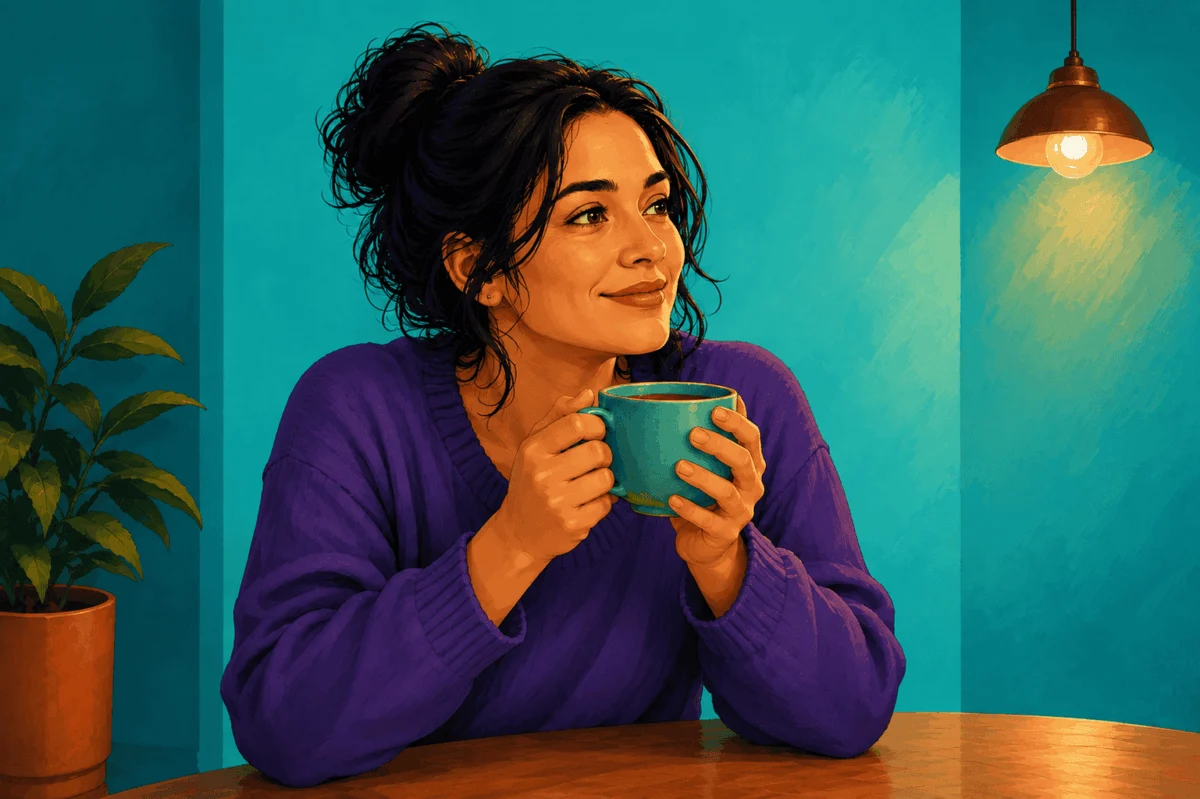
VENICE MALL — At a quiet corner table overlooking the water at a popular café in Venice Mall, a woman sits with a cup of tea. To a casual observer, she is merely another patron enjoying a moment of solitude. However, for Sangeeta Kumari, this seat represents the front lines of a profound internal conflict—one that has transitioned from a desperate search for escape to a grounded realization of self-worth.
Kumari’s journey, recently documented through her reflections on trauma and recovery, serves as a poignant case study in the growing movement of "cycle breakers": individuals who consciously choose to identify and heal from toxic family dynamics and intergenerational trauma. Her story highlights a critical shift in modern psychology—the understanding that true liberation often begins not with a change in geography, but with a transformation of the internal landscape.
I. Main Facts: The Anatomy of a Masked Childhood
The core of Kumari’s experience lies in the duality of her upbringing. For years, she operated under the belief that she had a "good" childhood, a survival mechanism common among children raised in high-stress environments. Psychologists define this as "dissociation," a mental process where a child disconnects from painful realities to maintain the necessary bond with their primary caregivers.
In Kumari’s case, the trauma was not characterized by physical abandonment but by emotional volatility and performance-based affection. Her mother, herself a victim of childhood cruelty, inadvertently perpetuated a cycle of "narcissistic parenting," characterized by:
- Public vs. Private Personas: Acting as a doting mother in the presence of others while being emotionally distant or cruel in private.
- Emotional Scapegoating: Casting the child as the "family villain" to deflect from the parent’s own unhealed wounds.
- Conditional Support: Offering material comforts while simultaneously using them as tools for shame and control.
Kumari’s father, though driven by a different set of anxieties, contributed to this environment through "financial coercion" and "fear-based parenting." Having risen from extreme poverty, his obsession with security manifested as a dismissal of his daughter’s creative identity, viewing her artistic inclinations as a threat to her survival.
II. Chronology: From Survival to Self-Actualization
The Era of Dissociation (Childhood – Early Adulthood)
Throughout her formative years, Kumari internalized the criticisms of her parents as objective truths. This period was marked by "the wet pillow" syndrome—nightly bouts of crying that were suppressed by day. To survive, she convinced herself that her mother’s cruelty was an exception rather than a pattern.
The Professional Mirror (College and Career)
The impact of this domestic environment eventually bled into Kumari’s professional life. Despite being a top-tier student in college, she found herself at the bottom of the recruitment list, securing the lowest salary package. This "under-earning" and lack of confidence are classic symptoms of "Internalized Incapacity," where a child who is told they are "unworthy" or "incapable" subconsciously sabotages their own success to align with the family narrative.
The Catalyst of Acceptance (The "Fever" Realization)
The turning point occurred during a period of deep emotional exhaustion. Kumari recalled a specific childhood memory of being sick and alone with her mother. While her mother ignored her needs when they were alone, she performed a dramatic "transformation" into a caring parent the moment the father walked through the door. This epiphany—that the love was a performance—allowed Kumari to stop seeking a maternal bond that did not exist.
The Integration Phase (Present Day)
Currently, Kumari remains in the family home but has achieved what experts call "Emotional Detachment." By "reparenting" her inner child—providing herself with the validation and safety she lacked—she has reached a state of peace that is independent of her parents’ behavior.
III. Supporting Data: The Science of Emotional Neglect
Kumari’s personal narrative is backed by an increasing body of psychological research regarding Adverse Childhood Experiences (ACEs).
1. The Impact of Narcissistic Abuse:
According to the Journal of Applied Psychology, children of narcissistic parents often struggle with "Chronic Self-Doubt" and "C-PTSD" (Complex Post-Traumatic Stress Disorder). Because the abuse is often subtle and "gaslighting" in nature, victims frequently take years to identify their experience as trauma.
2. Intergenerational Transmission:
Research from the American Psychological Association (APA) suggests that trauma can be "inherited" not just through behavior, but through epigenetic markers. Kumari’s mother, orphaned and raised in a domestic-servant role, likely lacked the emotional vocabulary to nurture, instead repeating the "servitude and cruelty" model she was taught.

3. The Role of Creativity in Healing:
Kumari’s father’s suppression of her art is a documented form of "Identity Erasure." Studies in Art Therapy show that creative expression is often the first casualty in authoritarian households because it represents the child’s unique, uncontrollable "Self." Conversely, reclaiming that creativity is a primary step in nervous system regulation and trauma recovery.
IV. Official Responses: Expert Perspectives on Recovery
Mental health professionals emphasize that Kumari’s approach to healing—staying in the environment while detaching emotionally—is a sophisticated, albeit difficult, strategy.
Dr. Aris Thorne, Clinical Psychologist and Trauma Specialist:
"What Sangeeta Kumari describes is the ‘Grey Rock’ method taken to a spiritual level. When you cannot physically leave a toxic environment, you must build an internal fortress. By ‘mothering her own inner child,’ she is effectively rewiring her brain’s reward system. She is no longer looking for the ‘dopamine hit’ of parental approval, which was always intermittent and toxic."
Social Worker and Family Consultant, Maria Gonzalez:
"The most striking part of this case is the shift from ‘Escape’ to ‘Presence.’ Many trauma survivors believe that a plane ticket is the only cure. While physical safety is paramount, Kumari’s story teaches us that if you don’t heal the belief that you are ‘incapable,’ you will carry that prison with you to the next city. Her freedom was found in the realization that she no longer needs permission to exist."
Educational Experts on "The Star Student" Paradox:
Career counselors often see students like Kumari—academically brilliant but professionally stagnant. "We call it ‘The Invisible Glass Ceiling of the Home,’" says career coach Julian Vane. "If a parent tells a child that ‘Art is a crime’ or ‘Earning is too hard,’ that child will walk into a job interview with the posture of someone who is apologizing for taking up space."
V. Implications: The Rise of the "Inner Child" Movement
Kumari’s journey reflects a broader societal shift toward "Emotional Literacy." In the past, family loyalty was often viewed as an absolute obligation, regardless of the emotional cost. Today, the conversation is shifting toward "Boundaries" and "Self-Parenting."
1. The Redefinition of Freedom
The narrative challenges the traditional definition of freedom. It suggests that autonomy is not merely the absence of external constraints, but the presence of internal self-trust. For Kumari, freedom is sitting in the same café, in the same seat, but with a different "internal narrator."
2. Breaking the Cycle for Future Generations
By acknowledging that her mother’s behavior was a result of her own unhealed trauma, Kumari "stops the bleed." This level of awareness ensures that these patterns are not passed down to future generations. The "Wildflower" metaphor used in her writing represents a resilient form of growth that doesn’t require a manicured garden—only the courage to bloom in the cracks of a concrete environment.
3. The Role of Digital Communities
Kumari shares her journey on platforms like Tiny Buddha and Substack, contributing to a digital "safe haven" for others. This democratization of trauma recovery allows individuals in isolated or traditional households to realize they are not "difficult" or "bad," but are instead responding to systemic family dysfunction.
Conclusion: The Home Within
As the sun sets over the Venice Mall, Sangeeta Kumari finishes her tea. The questions from her parents may still wait for her at home—Where were you? Why? Who gave you permission?—but the internal weight of those questions has vanished.
Her story serves as a roadmap for those navigating the "heavy" life of parental expectation and emotional neglect. It posits that while trauma creates a change we do not choose, healing allows us to create the change we do. In the quiet halls of a shopping mall, a silent revolution has taken place: a woman has decided that she is worthy of her own love, and that, as she concludes, "feels like everything."
If you or someone you know is struggling with family dynamics or emotional health, experts recommend seeking licensed therapeutic support specializing in C-PTSD and narcissistic abuse recovery.