The Long Road to the Hive: Analyzing the Box Office Debut of ‘The Rivals of Amziah King’
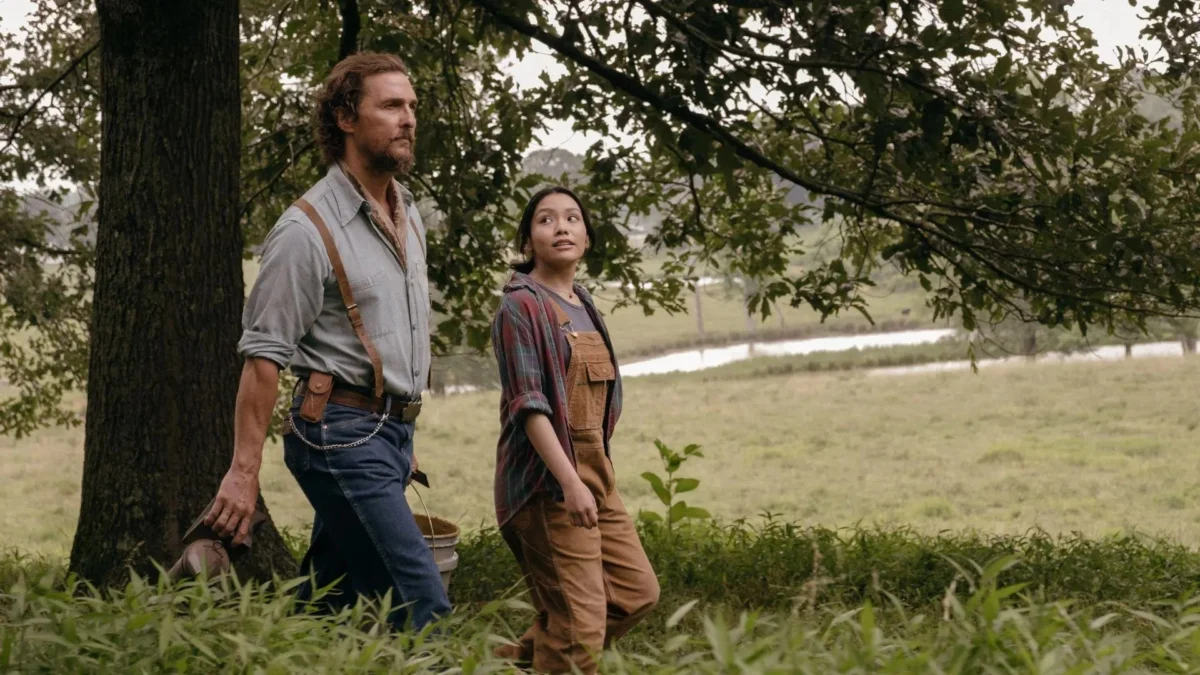
The cinematic landscape of 2025 has been defined by a curious tension between massive franchise spectacles and the precarious survival of the mid-budget auteur film. Standing at the center of this tension is The Rivals of Amziah King, a film that arrived with the pedigree of an awards-season heavyweight but has found itself navigating a complex and sobering theatrical reality. Directed by Andrew Patterson and starring Academy Award winner Matthew McConaughey, the film represents both a high-stakes gamble for its distributor, Black Bear, and a litmus test for the drawing power of one of Hollywood’s most idiosyncratic leading men.
While the film’s opening weekend performance—grossing just over $1 million—may not have set the industry ablaze, it offers a fascinating case study in modern distribution, the evolution of the "McConaissance," and the challenges of marketing "genre-defying" narratives in an increasingly polarized market.
Main Facts: A Respectable But Muted Entrance
After a lengthy journey from the festival circuit to the multiplex, The Rivals of Amziah King officially opened in 632 theaters across North America during the mid-August window. The film, which features Matthew McConaughey in his first live-action leading role in six years, earned approximately $1.02 million over its first three days.
The statistics paint a picture of a "specialized" release struggling to find a foothold against diverse counter-programming. With a per-screen average (PSA) of $1,625, the film failed to break into the domestic Top 10. It was notably outpaced by several niche titles, including the K-pop concert documentary Katseye: Wild Hearts, the Bollywood drama Vishwanath & Sons, and even a tenth-anniversary re-release of the Japanese anime classic Your Name.
The film is the latest effort from Black Bear’s nascent distribution arm. Having financed the project, the company opted to handle the domestic release themselves after the film—described as a "bluegrass-tinged crime saga"—proved to be a difficult sell for major studios and international buyers. Despite a unique premise involving a singing beekeeper caught in a web of rural corruption, the movie is currently fighting to prove it can sustain a "slow-burn" theatrical run through word-of-mouth.
Chronology: From SXSW Hype to Distribution Hurdles
The narrative of The Rivals of Amziah King began with immense optimism. When the project was first announced, it was framed as the triumphant return of Matthew McConaughey, an actor who had largely stepped away from the screen to focus on personal ventures and his best-selling memoir, Greenlights. Pairing him with Andrew Patterson—the wunderkind director behind the low-budget sci-fi sensation The Vast of Night—suggested a marriage of star power and visionary filmmaking.
The Festival Spark
In the spring of 2025, the film premiered at the South by Southwest (SXSW) Film Festival. The reception was electric. Critics praised Patterson’s atmospheric world-building and McConaughey’s weathered, soulful performance. At the time, industry insiders whispered about potential Oscar nominations and compared the film’s "Americana" aesthetic to modern classics like Hell or High Water or Winter’s Bone.

The "Hard Sell" Reality
However, as the buzz from Austin cooled, the harsh realities of the global film market set in. While the film was a "crowdpleaser" in a festival setting, its idiosyncratic blend of musical elements and gritty crime proved difficult to categorize. International distributors were reportedly hesitant, fearing the "bluegrass" themes were too regionally specific to the American South to translate to overseas audiences.
Throughout late 2025 and early 2026, the film sat in a state of limbo. Rather than selling the rights to a traditional "major" like A24 or Searchlight, producer Black Bear decided to double down on their investment. By launching their own distribution wing, they sought to retain a larger share of the profits, but they also inherited the massive risk of marketing a non-IP (Intellectual Property) film in a crowded summer.
Supporting Data: Comparative Performance and Market Context
To understand the $1 million opening of Amziah King, one must look at the recent track record of Black Bear’s distribution efforts and the broader performance of "star-driven" indie films.
The Shadow of ‘Christy’
Black Bear’s distribution journey has been a rollercoaster. Last fall, the company released Christy, a $15 million biopic of a female boxer starring Sydney Sweeney. Despite Sweeney’s status as a burgeoning A-lister, the film was a commercial disaster, grossing less than $2 million in its entire domestic run. The failure of Christy served as a warning that internet popularity does not always equate to box office "butts in seats."
The ‘Tuner’ Success Model
Conversely, Black Bear found success with Tuner, directed by Daniel Roher. That film utilized a "platform release" strategy, opening on just four screens with a staggering PSA of over $26,000. It eventually expanded to 450 screens and legged out to $4.51 million.
| Film Title | Opening Screens | Opening Weekend | Total Domestic | PSA (Opening) |
|---|---|---|---|---|
| The Rivals of Amziah King | 632 | $1.02M | TBD | $1,625 |
| Tuner | 4 | $104K | $4.51M | $26,105 |
| Christy | 1,200 | $800K | $1.9M | $666 |
The Rivals of Amziah King sits somewhere in the middle. It opened in more theaters than Tuner but failed to generate the same "must-see" urgency. Its PSA of $1,625 is significantly better than Christy’s disastrous $666, but it suggests the film is not currently benefiting from the "sold-out" momentum necessary for a major expansion.
Official Responses and Critical Reception
While Black Bear has not issued a formal "damage control" statement, sources close to the production suggest the company is playing the long game. The strategy appears to be focused on stabilizing the screen count rather than a rapid wide expansion. By maintaining roughly 500 to 600 screens, they hope to allow critical reviews and audience scores to percolate.

The critical response has been a mixed bag, which may be contributing to the sluggish start. IndieWire’s initial review out of SXSW was lukewarm, noting that while the film is "visually arresting," its pacing may alienate mainstream audiences. However, the film currently holds a "Fresh" rating on Rotten Tomatoes, with many critics celebrating it as a "singular, weird, and deeply felt" piece of cinema.
The "weirdness" factor is a double-edged sword. In an era where audiences often complain about "cookie-cutter" movies, Amziah King offers something genuinely different. Yet, that very uniqueness makes it difficult for a distributor to create a 30-second trailer that clearly communicates the film’s "vibe" to a general audience.
Implications: The Future of the Upstart Distributor
The performance of The Rivals of Amziah King reflects a broader trend in the film industry: the rise of the "financier-turned-distributor." Companies like Black Bear, 1-2 Special, and Row K are increasingly cutting out the middleman.
The Narrowing Needle
For these upstarts, the goal is to find a "theatrical-to-PVOD" (Premium Video on Demand) pipeline. Even if Amziah King fails to hit $10 million at the box office, a respectable theatrical run establishes the film’s "prestige" value, making it a more lucrative asset for streaming services or digital rentals later in the year.
However, the "unforgiving" nature of the theatrical market remains a hurdle. When a film with a star of Matthew McConaughey’s caliber cannot crack the Top 10, it sends a signal to the industry that the "middle-class movie" is still in a state of crisis. The success of upcoming titles like Wicker—another Black Bear project starring Olivia Colman—will be crucial. Wicker has already generated significant "meme-ability" on social media, a digital currency that Amziah King lacks.
Conclusion: A Waiting Game
The Rivals of Amziah King is far from a total loss, but it is a reminder that in 2025, star power is only one piece of the puzzle. For Andrew Patterson, the film confirms his status as a director of immense ambition. For Matthew McConaughey, it is a reminder that his brand of "Texas cool" remains a niche, albeit beloved, commodity.
Whether the film can find its audience in the coming weeks will depend on whether the "singing beekeeper" can generate enough buzz to transcend its quiet opening. For now, the film stands as a testament to the beauty—and the extreme difficulty—of bringing original, eccentric stories to the big screen in a world dominated by giants.