
The Architect of Known Space: Celebrating the 88th Birthday and Enduring Legacy of Larry Niven
By [Your Publication Name] Staff
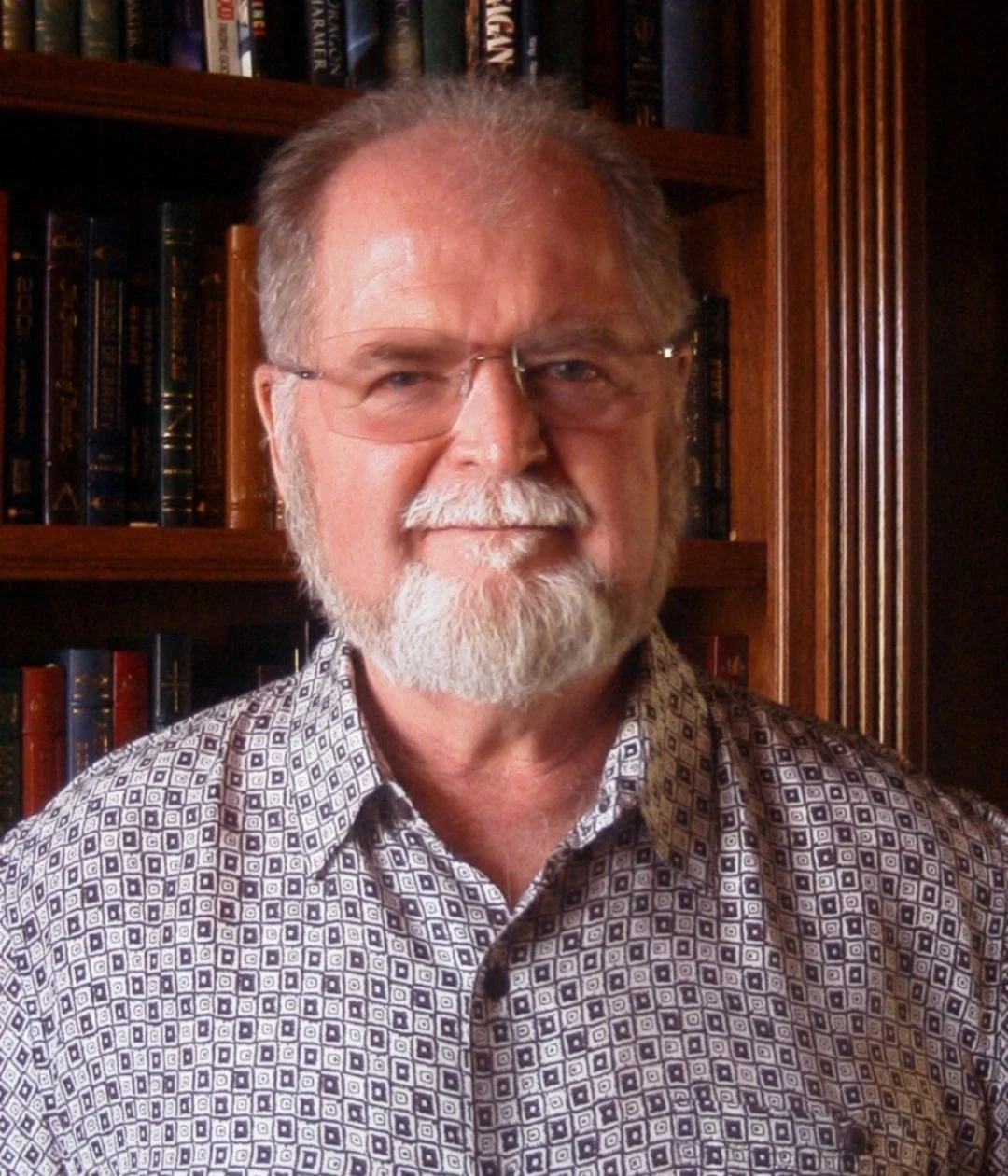
The landscape of modern science fiction is often defined by its "Big Dumb Objects"—colossal, awe-inspiring structures that defy planetary scales. While the genre has many pioneers, few have shaped its scientific rigor and imaginative breadth as profoundly as Laurence van Cott Niven, known to millions of readers as Larry Niven. Last month, as the literary community celebrated Niven’s 88th birthday—a number regarded as "doubly lucky" in various cultural traditions—critics and contemporaries alike paused to reflect on a career that has spanned over six decades.
John Hertz, a noted commentator and fan historian, recently offered a retrospective on Niven’s contributions, suggesting that the author’s "independent mind" is both his greatest strength and, for some modern readers, a point of contention. Hertz’s insights serve as a springboard for a deeper examination of Niven’s role as the "idea-smith" of the Space Age.
Main Facts: The Titan of Hard Science Fiction
Larry Niven is perhaps the quintessential practitioner of "Hard Science Fiction," a subgenre characterized by an emphasis on scientific accuracy and technical detail. Born on April 30, 1938, in Los Angeles, Niven utilized his background in mathematics and psychology to construct a future history known as the "Known Space" series.
Niven’s impact on the field is cemented by his most famous creation: the Ringworld. An artificial ring encircling a star, with a surface area millions of times that of Earth, the Ringworld became the gold standard for "megastructure" fiction. His work earned him multiple Hugo and Nebula Awards, the highest honors in the science fiction community.
Beyond his solo work, Niven is celebrated as one of the most prolific collaborators in literary history. His partnership with the late Jerry Pournelle produced some of the best-selling science fiction novels of the 20th century, including The Mote in God’s Eye and Lucifer’s Hammer. These works blended Niven’s speculative physics with Pournelle’s expertise in military strategy and political science, creating a "Niven-Pournelle" brand that dominated the New York Times Best Seller lists.
Chronology: A Journey Through Known Space and Beyond
The Formative Years (1964–1969)
Niven’s professional writing career began in 1964 with the publication of "The Coldest Place" in If magazine. At the time, it was believed that Mercury was tidally locked, with one side always facing the sun. Niven’s story was based on this "fact," though by the time the story reached print, radar observations had proven Mercury rotated. Rather than being discouraged, Niven leaned into the "hard" aspect of the genre, using it as a lesson in the fluidity of scientific discovery.
In the late 1960s, he began weaving together short stories and novels into the "Known Space" tapestry. Works like World of Ptavvs (1966) and the "Neutron Star" stories introduced iconic alien races like the cowardly, three-legged Pierson’s Puppeteers and the warlike, felinoid Kzinti.
The Ringworld Era (1970–1975)
1970 marked a paradigm shift with the release of Ringworld. The novel won the Hugo, Nebula, and Locus Awards, a rare "triple crown." It introduced Louis Wu and the concept of "scrith," the indestructible material needed to build a megastructure. This period also saw Niven exploring the "hard fantasy" subgenre with The Magic Goes Away (1976), where magic is treated as a non-renewable natural resource (mana) that eventually runs out—a metaphor for the 1970s energy crisis.
The Powerhouse Collaborations (1976–1990)
Starting in the mid-70s, Niven’s career entered a new phase of massive commercial success through his partnership with Jerry Pournelle. The Mote in God’s Eye (1974) was hailed by Robert A. Heinlein as "possibly the finest science fiction novel I have ever read." The duo followed this with the disaster epic Lucifer’s Hammer (1977) and the alien invasion thriller Footfall (1985).
The Modern Legacy (1991–Present)
In the latter part of his career, Niven expanded his collaborative circle to include authors like Steven Barnes, Edward M. Lerner, and Gregory Benford. He returned to the Ringworld and Known Space universes repeatedly, answering long-standing fan questions and filling in the gaps of his 1,000-year future history. At 88, Niven remains a fixture at science fiction conventions, continuing to influence new generations of "hard" SF writers.
Supporting Data: The "Niven Flavor" and Literary Mechanics
Critics often point to Niven’s "idea-smithing" as his primary contribution. John Hertz argues that Niven is fundamentally a "comedian" and a "poet," though these traits are often buried beneath the veneer of hard science.
The Humor of Logic
Hertz points to The Mote in God’s Eye as a misunderstood comedy. He cites the character Renner’s snarling "Show-off!" and the absurdity of the Motie Mediators as examples of Niven’s dry, often dark, wit. Niven’s humor often stems from the logical extension of a strange premise. For example, in the short story "What Can You Say About Chocolate-Covered Manhole Covers?", he satirizes social rituals through the lens of a futuristic divorce.

Realism vs. Verisimilitude
Niven’s approach to "realism" in science fiction is rooted in what Hertz calls "verisimilitude"—the appearance of truth. Niven famously stated, "You have to give them something. If everything is strange, what can the reader do?" This philosophy explains why Niven anchors his wildest interstellar adventures with mundane human details. As Hertz notes, this is the same technique Isaac Asimov used when he gave the legendary Hari Seldon a father who was a simple tobacco farmer. By grounding the "strange" in the "familiar," Niven allows the reader to accept the impossible.
The Collaborative Record
Niven’s ability to work with others is statistically staggering. His list of collaborators includes:
- Jerry Pournelle: (The Mote in God’s Eye, Lucifer’s Hammer, Footfall, Escape from Hell)
- Steven Barnes: (The Legacy of Heorot, Dream Park)
- Edward M. Lerner: (Fleet of Worlds series)
- Gregory Benford: (Bowl of Heaven)
- Multiple Authors in the "Man-Kzin Wars" Shared Universe: (Including Poul Anderson, Hal Colebatch, and S.M. Stirling)
This collaborative spirit suggests a writer who is less interested in ego and more interested in the "Niven flavor"—a specific blend of rigorous logic, high-stakes engineering, and speculative evolution.
Official Responses and Critical Reception: The "Independent Mind"
The reception of Niven’s work has evolved alongside the culture. In the 1970s and 80s, he was the undisputed king of the genre. However, as science fiction shifted toward social commentary and "soft" SF in the 21st century, some of Niven’s political and social views—often expressed through his characters or his work with the "Citizens’ Advisory Council on National Space Policy"—became polarizing.
John Hertz addresses this directly, noting that Niven possesses an "independent mind." Hertz writes, "When the different drummer he was marching to had a beat we liked, we loved him. When he marched to yet a different drummer, we dropped him." This serves as a critique of modern "cancel culture" and a defense of Niven’s craftsmanship. Hertz suggests that even when a reader disagrees with Niven’s conclusions, they should appreciate the skill with which he constructs his arguments.
The scientific community, however, has always held Niven in high regard. After the publication of Ringworld, students at MIT pointed out that the structure was unstable and would eventually drift and collide with its sun. Rather than ignoring the critique, Niven wrote the sequel, The Ringworld Engineers (1980), which focused entirely on fixing the orbital instability. This willingness to engage with his audience on a technical level earned him a unique level of respect among physicists and engineers.
Implications: The Legacy of a Master Idea-Smith
Larry Niven’s legacy is visible in almost every corner of modern speculative fiction. The concept of the "Halo" in the Halo video game franchise is a direct descendant of the Ringworld. The gritty realism of The Expanse owes a debt to Niven’s "Belters"—the salt-of-the-earth miners of the asteroid belt who developed their own culture and physiology in low gravity.
Redefining the Alien
Perhaps Niven’s most lasting implication is his mandate: "Show me a being who thinks as well as a man, but not like a man." Before Niven, many aliens in science fiction were simply humans in rubber suits or "monsters of the week." Niven introduced aliens with biology-driven psychologies. The Puppeteers are cowards because they have two heads and a central brain that is difficult to protect; the Kzinti are aggressive because they evolved from apex predators. This "biological determinism" changed how writers approached alien world-building.
The Future of Hard SF
As Niven enters his 89th year, the "hard SF" tradition he championed faces new challenges in an era of rapid technological advancement. Yet, Niven’s work reminds the genre that at its heart, science fiction is about the "Idea." Whether it is a teleportation booth that changes the nature of crime or a magic system governed by entropy, Niven’s stories prove that logic is not the enemy of imagination—it is its most powerful engine.
In closing his tribute, John Hertz offered a tanka—a Japanese poetic form—to encapsulate Niven’s multifaceted career. The acrostic poem spells out "LARRY," serving as a final nod to the man who looked at the stars and saw not just points of light, but a blueprint for the future.
Laughter. Some rise to it,
And if they haven’t, they might.
Reaching as I can,
Real, comic, and poetic,
Yet painting it as I see.
As Larry Niven celebrates another year, his "Known Space" continues to expand in the minds of readers, proving that while authors may age, great ideas are immortal.

Leave a Comment