The Architect of Australian Fandom: Remembering Robin Johnson (1937–2026)
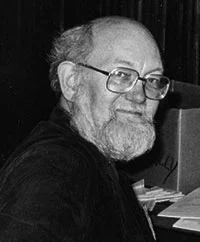
The international science fiction community is mourning the loss of Robin Johnson, a pivotal figure in the history of Australian speculative fiction and a cornerstone of global fandom for over half a century. Mr. Johnson passed away on July 6, 2026, in Ballarat, Victoria, at the age of 89. His death followed complications arising from a fall, compounded by underlying health issues.
Robin Johnson’s legacy is inextricably linked to the professionalization and internationalization of Australian science fiction. As the chairman of the first-ever Australian World Science Fiction Convention (Worldcon) in 1975, he was instrumental in bridging the vast geographical gap between the Southern Hemisphere and the established hubs of the genre in North America and Europe. His passing marks the end of an era for the "Golden Age" of fan organization.
I. Main Facts: A Life Dedicated to the Genre
Robin Johnson was born on March 9, 1937. Throughout his long and storied life, he became a nomad of the Australian continent and beyond, living and working in Melbourne, Sydney, Hobart, and Ballarat, with significant periods spent in England. This transient lifestyle allowed him to weave a network of connections that would eventually serve as the foundation for the Australian Science Fiction Foundation (ASFF).
Johnson was not merely a consumer of science fiction; he was an architect of the structures that allowed the genre to flourish in Australia. His most notable achievement was chairing "Aussiecon One," the 33rd World Science Fiction Convention, held in Melbourne in 1975. This event is widely regarded by historians of the genre as the moment Australia "arrived" on the global stage.
Beyond Worldcon, Johnson was a tireless advocate for regional fandom. He founded and chaired the Thylacons (Thylacon 1, 2, and 3), which brought the convention experience to Tasmania. His contributions were recognized by his peers through numerous accolades, including multiple Ditmar Awards and the prestigious Big Heart Award, the latter of which honors lifetime service to the international science fiction community.
II. Chronology: From Early Fandom to Elder Statesman
The Formative Years (1937–1960s)
Born in the late 1930s, Johnson grew up during the transition from the "pulp era" of science fiction to the more literary "Golden Age." His early interest in the genre was nurtured by the burgeoning fanzine culture of the 1950s. During his time in Melbourne and Sydney, he became a fixture in local clubs, participating in the rigorous debates and social gatherings that defined the era’s fandom.
The London Connection and the Worldcon Bid (1960s–1974)
In the 1960s, Johnson spent significant time in England. This period was crucial, as it allowed him to establish relationships with the British Science Fiction Association and international figures. It was during this time that the ambitious idea of bringing the World Science Fiction Convention to Australia began to take shape. Upon returning to Australia, Johnson became the driving force behind the bid, navigating the logistical nightmare of convincing an international voting body that Melbourne could host an event of such magnitude.
Aussiecon One and the 1970s Boom (1975–1979)
The year 1975 served as the pinnacle of Johnson’s career. As Chairman of Aussiecon One, he oversaw an event that hosted legendary guests such as Ursula K. Le Guin. The success of this convention proved that Australian fandom was organized, capable, and vibrant. In recognition of his efforts leading up to the bid, he was awarded a Special Ditmar Award in 1974.
The Thylacon Era and Regional Growth (1980s–1990s)
Moving to Hobart, Tasmania, Johnson refused to let the island’s smaller population limit its cultural output. He established the Thylacon series of conventions, named after the extinct Tasmanian tiger (Thylacine). These events were critical in decentralizing Australian fandom from the mainland capitals. He received a second Special Ditmar Award in 1983 for his continued service.
Late Career and the Big Heart (2000s–2026)
In his later years, Johnson moved to Ballarat, where he remained an active mentor to younger organizers. In 2007, at the Worldcon in Yokohama, Japan, he was presented with the Big Heart Award. This honor, traditionally given to those who demonstrate exceptional kindness and service to the community, solidified his reputation as a "gentleman of fandom." He remained a fixture at conventions until his health began to decline in the early 2020s.
III. Supporting Data: The Impact of Aussiecon One
To understand the magnitude of Robin Johnson’s contribution, one must look at the data surrounding Aussiecon One. Prior to 1975, Worldcon had only been held outside of North America three times (all in the United Kingdom). Johnson’s successful bid broke the North Atlantic monopoly on the event.
- Attendance: Despite the high cost of international air travel in 1975, the convention drew over 600 attendees, a significant number for a remote location at the time.
- Literary Impact: The convention facilitated the first major interaction between Australian authors (such as A. Bertram Chandler and George Turner) and the American/European publishing markets.
- Legacy Events: The success of Johnson’s 1975 convention paved the way for subsequent Australian Worldcons in 1985, 1999, and 2010. Without the precedent set by Johnson, it is unlikely that Australia would have become a recurring host for the event.
Furthermore, Johnson’s work with the Thylacons helped establish a template for "relaxicons"—smaller, more social-focused events that prioritized community building over commercial interests. This model remains the backbone of regional Australian fandom today.
IV. Official Responses and Community Impact
The news of Johnson’s passing has prompted a wave of tributes from across the literary world.

The Australian Science Fiction Foundation (ASFF) issued a statement praising his foresight:
"Robin Johnson was a visionary who saw potential where others saw distance. He didn’t just want to read science fiction; he wanted to build a world where Australian voices were heard alongside the giants of the genre. His leadership during the 1975 Worldcon remains the gold standard for convention organization in this country."
The World Science Fiction Society (WSFS) noted his international influence:
"Robin was a bridge-builder. At a time when the global community was fractured by geography and the limitations of pre-digital communication, Robin used his ‘Big Heart’ to bring people together. He was a diplomat for the imagination."
On social media and fan forums, long-time collaborators remembered Johnson not just as an organizer, but as a friend. Many cited his encyclopedic knowledge of the genre’s history and his willingness to help novice fans navigate the complexities of "con-running." His move to Ballarat in his final years did not diminish his involvement; he frequently contributed to historical archives and provided oral histories to researchers documenting the 20th-century speculative fiction movement.
V. Implications: The Future of Fandom Without Its Pioneers
The passing of Robin Johnson highlights a significant transition within the science fiction community. As the generation that built the foundations of modern fandom—the organizers of the 1960s and 70s—begins to fade, the community faces the challenge of preserving its history.
The Preservation of Fannish History
Johnson was a living link to the era of mimeographed fanzines and letter-writing chains. His death underscores the urgency of archiving physical documents from the early Australian conventions. Organizations like the ASFF are now tasked with ensuring that Johnson’s records and the history of the Thylacons are digitized for future generations.
The Evolution of Convention Culture
Johnson’s "Big Heart" philosophy represented a specific type of fandom: one based on volunteerism, shared passion, and a lack of commercial motive. As modern conventions become increasingly corporate and media-focused (centered on film and television franchises), the "Johnson Model" of literature-heavy, fan-run gatherings is becoming a rarity. His legacy serves as a reminder of the importance of grassroots community building.
Australia as a Global Hub
Perhaps the most lasting implication of Johnson’s work is the permanent placement of Australia on the "genre map." Because of his early efforts, Australian writers like Greg Egan, Margo Lanagan, and Terry Dowling found a more receptive global audience. The infrastructure Johnson built allowed for a distinct "Australian voice" to emerge in speculative fiction—one that is often characterized by a unique perspective on isolation and the environment, mirroring the very geography Johnson worked so hard to overcome.
Conclusion: An Enduring Legacy
Robin Johnson’s life was a testament to the power of organized enthusiasm. He understood that for a literary genre to survive, it required more than just writers and readers; it required a community, a platform, and a sense of history.
From the hotel ballrooms of Melbourne in 1975 to the quiet streets of Ballarat in 2026, Johnson remained a steadfast champion of the "sense of wonder." While the fall he suffered in July may have taken his life, it could not diminish the monumental structures he built for the Australian imagination. As the community looks toward future Worldcons, they do so standing on the shoulders of a giant who proved that no distance was too great for a shared love of the stars.
Locus Magazine relies on the support of its readers to continue documenting the history and news of the science fiction and fantasy field. To support our mission and ensure the legacies of figures like Robin Johnson are preserved, please consider a donation.