The Blueprint of Imagination: Analyzing the Latest Visual Development Insights from Concept Art World
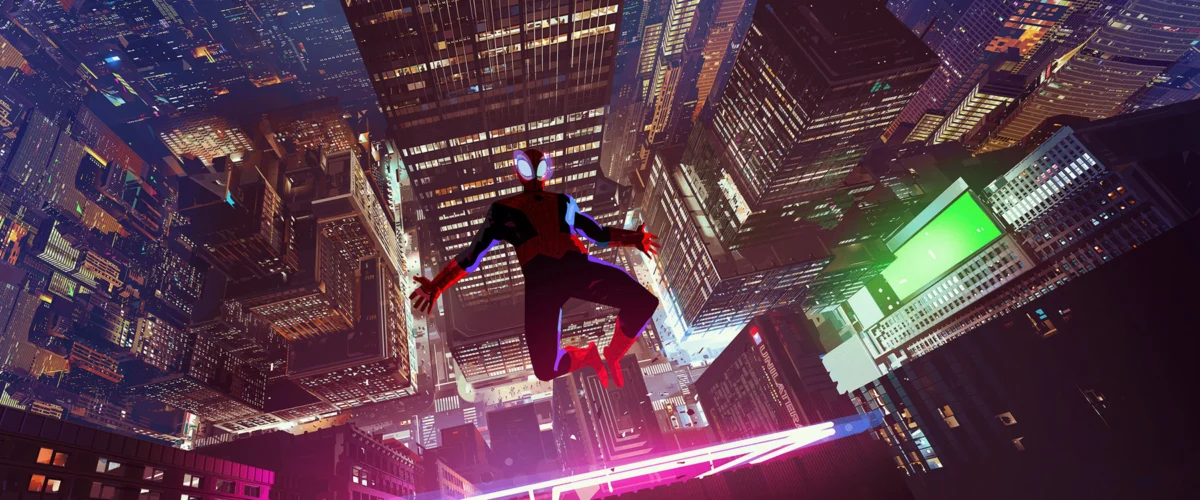
In the rapidly evolving landscape of global entertainment, the bridge between a script’s first draft and the final frame of a blockbuster film or AAA video game is built by concept artists. Recently, Concept Art World (CAW), a premier digital repository for visual development, released a series of deep dives into the archives of some of the industry’s most influential creators. From the gritty, unused cinematics of the Batman: Arkham universe to the meticulous architectural whimsy of Wes Anderson’s cinema, these updates provide a rare look at the labor-intensive process of world-building.
This report examines the latest professional contributions from artists Calum Alexander Watt, Ulrich Zeidler, Phillip Boutte Jr., and Paolo Puggioni, while exploring the broader implications of these works on the industry and the growing movement to protect human-led creativity against unauthorized digital exploitation.
Main Facts: A Quad-Fold Insight into Visual Development
The recent disclosures from Concept Art World highlight four distinct pillars of visual storytelling:
- The "Lost" Batman Cinematics: Artist Calum Alexander Watt has unveiled storyboard and cinematic art for a cancelled sequel to Batman: Arkham Origins Blackgate. These assets provide a glimpse into a darker, more industrial Gotham that never reached the screen.
- The Architecture of Whimsy: Ulrich Zeidler’s work on The Grand Budapest Hotel showcases the precision required to translate Wes Anderson’s highly specific symmetrical aesthetic into buildable sets and believable environments.
- Modernizing the Man of Steel: Phillip Boutte Jr.’s costume illustrations for Zack Snyder’s Man of Steel reveal the complex textile engineering and cultural world-building behind Superman’s iconic suit.
- The Lore of Westeros: Paolo Puggioni’s contributions to The World of Ice & Fire illustrate the historical depth of George R.R. Martin’s universe, moving beyond the television adaptation to capture the "true" literary scale of the Seven Kingdoms.
Collectively, these updates emphasize that concept art is not merely "pre-production" but a foundational narrative tool that dictates the tone, physics, and emotional resonance of a project.
Chronology of Development: From Sketch to Screen
The timeline of these artistic contributions spans over a decade of entertainment history, reflecting the shifting trends in digital painting and production design.
2011–2013: The Reconstruction of the Superhero
During the early 2010s, the "gritty reboot" era was at its peak. Phillip Boutte Jr. was tasked with reimagining Superman for a modern audience. The challenge was to move away from the "spandex" look of the 20th century. His illustrations from this period show a transition toward alien, bio-organic textures, which eventually defined the visual language of the DC Extended Universe (DCEU).
2013–2014: The Peak of the Arkham Era
Following the success of Batman: Arkham Origins, development began on expanding the "Blackgate" storyline. Calum Alexander Watt’s work dates back to this period of intense franchise expansion. While the sequel was ultimately shelved, his cinematic art remains a testament to the era’s focus on "hand-drawn" digital aesthetics within game menus and cutscenes.
2014: The Convergence of Fine Art and Film
Ulrich Zeidler’s involvement in The Grand Budapest Hotel coincided with a resurgence in practical-effect-heavy filmmaking. His work helped bridge the gap between 2D illustration and 3D set construction, leading to the film’s eventual Academy Award for Production Design.
2014–Present: Expanding the Literary Mythos
Paolo Puggioni’s work on The World of Ice & Fire (published in 2014) has seen a renewed interest as the Game of Thrones franchise expands into House of the Dragon. His illustrations serve as the definitive visual guide for the history of Westeros, predating many of the visual choices made by HBO’s later spin-offs.
Supporting Data: The Technical Evolution of the Medium
The work featured on Concept Art World demonstrates a significant shift in technical execution. In the cases of Boutte Jr. and Watt, there is a clear reliance on "photobashing" and 3D base-modeling—techniques that allow artists to produce high-fidelity images that simulate lighting and texture with photographic accuracy.
- Costume Illustration: For Man of Steel, Phillip Boutte Jr. utilized digital painting to simulate how light interacts with the "chainmail" texture of the Kryptonian suit. This data was essential for the costume department to source specific fabrics and for the VFX teams to match digital doubles with the physical suit worn by Henry Cavill.
- Production Design: Ulrich Zeidler’s work on The Grand Budapest Hotel highlights the use of perspective drawing to solve architectural puzzles. His concept art had to account for the physical constraints of the Gorlitzer Warenhaus (the department store used as the film’s primary set), proving that concept art is as much about engineering as it is about aesthetics.
- Narrative Illustration: Paolo Puggioni’s work for the George R.R. Martin universe often requires a deep understanding of historical armor and medieval heraldry. Unlike film concept art, which is meant to be seen for seconds, his illustrations are designed for print, requiring a higher density of detail and a more "painterly" finish.
Official Responses and Ethical Standards
The publication of these portfolios comes at a time of significant tension within the creative community regarding Artificial Intelligence. Concept Art World has taken a definitive stance on the matter.
In an official statement accompanying the latest features, the platform clarified its position: "All images are © by the artist(s) or their respective copyright holders. Any training of AI systems using this content is strictly prohibited."
This response reflects a broader industry-wide movement. Professional concept artists like Phillip Boutte Jr. and Calum Alexander Watt have been vocal about the importance of protecting the "human element" in design. The studios they work for—including Warner Bros., DC Entertainment, and various gaming giants—maintain strict Intellectual Property (IP) controls over these assets. The release of "unused" or "archival" art is often carefully curated to ensure it does not violate non-disclosure agreements (NDAs) while still allowing the artists to showcase their professional growth.
Furthermore, the artists themselves emphasize that concept art is a collaborative dialogue. Ulrich Zeidler has often noted in interviews that his work is a response to the director’s vision, suggesting that an AI cannot replicate the nuanced, back-and-forth creative process required to build a world like Wes Anderson’s.
Implications: The Future of Visual Development
The showcasing of these diverse portfolios has three major implications for the future of the entertainment industry:
1. The Preservation of "Unseen" Creativity
The release of Calum Alexander Watt’s unused Batman art highlights the amount of creative labor that never reaches the public. As the industry moves toward more "live-service" games and precarious film slate changes, the role of archives like Concept Art World becomes crucial. They serve as a museum for the "what ifs" of pop culture, preserving artistic innovations that might otherwise be lost to deleted server drives.
2. Higher Standards for World-Building
As audiences become more sophisticated, the demand for internal consistency in fictional worlds grows. The level of detail in Paolo Puggioni’s Westeros illustrations or Phillip Boutte Jr.’s costume designs suggests that "good enough" is no longer the standard. Every buckle, stone, and texture must have a story or a function. This necessitates a more specialized class of concept artists who are also part-historian, part-engineer, and part-sociologist.
3. The Human vs. Machine Paradigm
The explicit prohibition of AI training on CAW’s platform sets a precedent for digital galleries. If the industry’s top artists refuse to allow their work to be used as training data, it creates a "walled garden" of high-quality, human-made art. This could lead to a premium being placed on "certified human-made" production design in future film and game marketing, distinguishing high-budget, artisan-crafted projects from lower-tier, AI-generated content.
Conclusion
The latest updates from Concept Art World are more than just a gallery of beautiful images; they are a documentation of the intellectual rigors of the creative process. Whether it is Calum Alexander Watt’s gritty Gotham, Ulrich Zeidler’s symmetrical pastel hotels, Phillip Boutte Jr.’s alien icons, or Paolo Puggioni’s ancient histories, these artists define the visual language of our modern myths.
As the industry grapples with technological disruption, the work of these individuals serves as a reminder that at the heart of every digital masterpiece is a human hand guided by years of study, cultural awareness, and a profound sense of imagination. The "unseen" art of the past is paving the way for the visual standards of the future, ensuring that the worlds we inhabit on screen remain as rich and complex as the ones we live in.