The Instant Revolution: How Flipkart Minutes is Redefining India’s Quick-Commerce Hierarchy
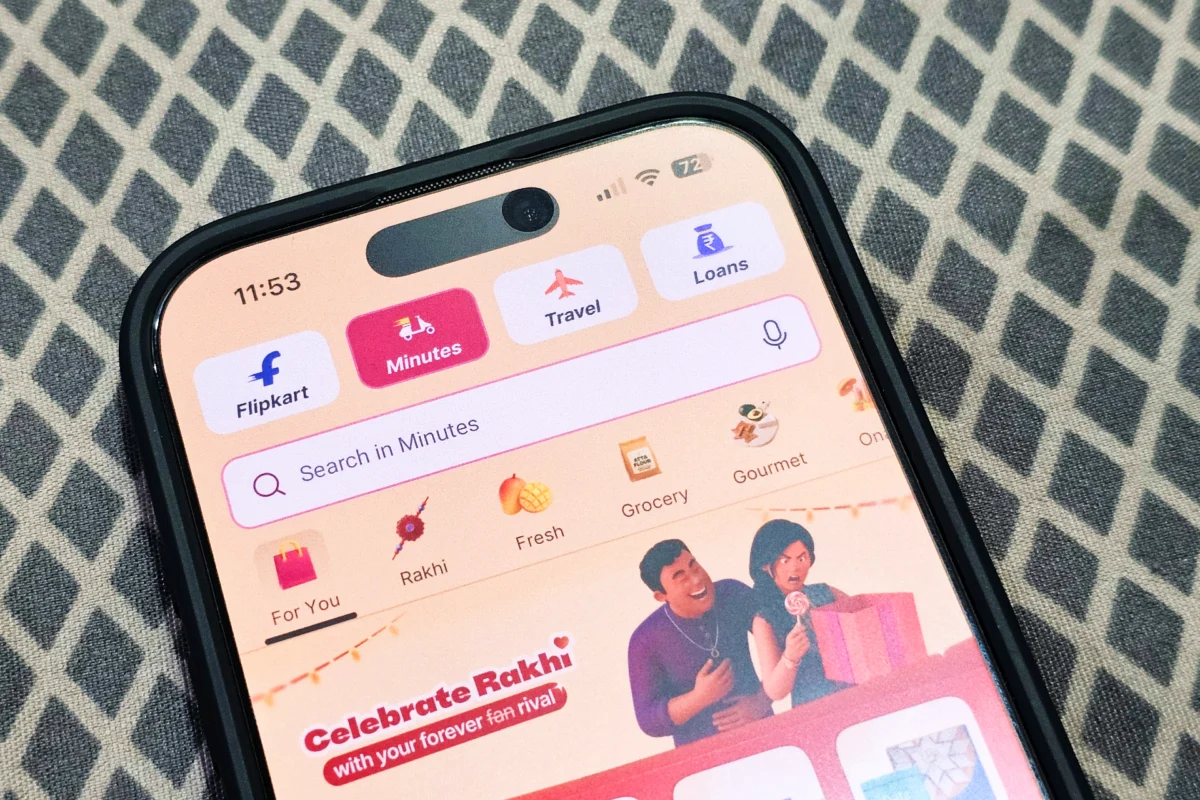
The landscape of Indian retail is undergoing its most significant transformation since the arrival of the internet. For years, Indian startups invested billions of dollars and countless logistical hours to train the world’s most populous nation to expect groceries and household essentials at their doorstep. Now, that expectation has shifted from "sometime today" to "within ten minutes."
In this high-stakes race for speed, Walmart-owned Flipkart is no longer just a spectator. Its quick-commerce arm, Flipkart Minutes, which debuted only in August 2024, is rapidly closing the gap with industry pioneers. As global behemoth Amazon prepares its own massive offensive in the instant-delivery space, the battle for the Indian consumer’s "daily wallet" has reached a fever pitch.
1. Main Facts: The Meteoric Rise of Flipkart Minutes
Flipkart Minutes has achieved a scale of growth that has caught both competitors and market analysts by surprise. According to sources familiar with the matter who spoke to TechCrunch, the service is now processing between 1.1 million and 1.2 million orders per day. To put this in perspective, in November 2023, the service was handling a relatively modest 390,000 to 400,000 orders daily. This represents a nearly 200% increase in order volume in just a few months.
This surge has placed Flipkart Minutes within striking distance of Swiggy Instamart, one of the "big three" pioneers of the sector. Instamart currently processes approximately 1.4 million orders per day. While Flipkart still trails the market leaders—Zomato-owned Blinkit and the venture-backed Zepto—its trajectory suggests that the "latecomer" disadvantage is being neutralized by Flipkart’s massive existing infrastructure and deep pockets.
Current Market Standings (Daily Order Estimates):
- Blinkit: 3.4 million – 3.6 million
- Zepto: 2.4 million – 2.6 million
- Swiggy Instamart: ~1.4 million
- Flipkart Minutes: 1.1 million – 1.2 million
The rapid ascent of Minutes is not merely a result of aggressive marketing but a fundamental shift in Flipkart’s operational DNA. By leveraging its vast existing user base—customers who have spent a decade buying smartphones and apparel on the platform—Flipkart has managed to convert "high-intent" shoppers into "instant" shoppers with significantly lower acquisition costs than its rivals.
2. Chronology: From Scheduled Delivery to the 10-Minute War
To understand the significance of Flipkart’s growth, one must look at the timeline of India’s e-grocery evolution. The market has moved through three distinct phases: traditional e-commerce, scheduled grocery, and now, quick commerce (q-commerce).
- 2013–2019: The Foundation. Grofers (now Blinkit) was founded in 2013, initially focusing on a marketplace model for local stores before pivoting to a warehouse-led model. During this era, delivery windows were typically 24 to 48 hours.
- 2020: The Pandemic Pivot. As COVID-19 lockdowns gripped India, the demand for home delivery skyrocketed. Swiggy, already a leader in food delivery, launched Instamart in August 2020, promising delivery within 45 minutes. This proved to be a watershed moment, proving that consumers valued speed over a wider selection.
- 2021: The Zepto Disruption. Zepto arrived on the scene in 2021, promising 10-minute deliveries. This forced the entire industry to rethink its logistics. Grofers rebranded as Blinkit and pivoted entirely to the 10-minute model.
- 2024: The Entry of the Giants. Recognizing that q-commerce was cannibalizing traditional e-commerce sales, Flipkart finally launched "Minutes" in August 2024. This was a defensive move turned offensive, as the company realized that if it didn’t deliver milk and bread in 10 minutes, it might eventually lose the ability to sell detergent and electronics to those same customers.
- 2025 and Beyond: Amazon, having observed the market from the sidelines, is now ramping up "Amazon Now," signaling that the 10-minute delivery model is no longer a niche startup experiment but the new standard for global retail.
3. Supporting Data: The Logistics and Economics of Speed
The engine behind Flipkart Minutes’ growth is a sprawling network of "dark stores"—micro-fulfillment centers located in high-density urban neighborhoods. These are not traditional warehouses; they are optimized for hyper-fast picking and packing.
Infrastructure Expansion
One of the most telling metrics of Flipkart’s commitment is the expansion of its physical footprint. Minutes currently operates between 1,020 and 1,050 micro-fulfillment centers. This is a staggering increase from 600 facilities in January 2024 and just 340 a year ago. The company is currently adding approximately 100 new facilities every month, with an internal target of reaching 1,500 dark stores by the end of 2026.
Efficiency and Customer Behavior
Speed is the primary currency of this market. Flipkart has successfully reduced its average delivery time from 13 minutes last year to approximately 11 minutes today. This efficiency has translated into high customer stickiness:
- Repeat Buyers: 65% to 70% of monthly customers are repeat users.
- Frequency: The number of transactions per customer has increased by 50% to 60% year-over-year.
- Average Order Value (AOV): Customers are spending between ₹400 and ₹500 (approx. $4.20–$5.20) per order.
While the "staples" (milk, eggs, vegetables) remain the volume drivers, Flipkart is strategically expanding into high-margin categories. This includes organic produce, artisanal meats, and gourmet products. By increasing the AOV through premium offerings, Flipkart hopes to solve the perennial problem of q-commerce: unit economics.
The Profitability Factor
Competitor Swiggy recently stated that over 45% of its dark-store network is now "contribution-margin positive." This suggests that while the industry is still burning cash to expand, the path to profitability is becoming visible. Flipkart, backed by Walmart’s supply chain expertise, is likely following a similar trajectory, focusing on density and high-margin "long-tail" products to offset delivery costs.
4. Competitive Landscape and Official Responses
The quick-commerce sector in India is currently a four-way battle, with a fifth giant looming.
- Blinkit (Zomato): The undisputed leader. By integrating with Zomato’s massive food-delivery fleet, Blinkit has achieved a scale that allows it to dominate the "mindshare" of urban Indians.
- Zepto: The "pure-play" challenger. Zepto’s singular focus on quick commerce has allowed it to remain agile, recently raising massive rounds of capital to maintain its second-place position.
- Swiggy Instamart: Currently the most vulnerable to Flipkart’s rise. While Swiggy has a massive user base, Flipkart’s aggressive infrastructure build-out is directly challenging Instamart’s market share in Tier 1 and Tier 2 cities.
- Amazon Now: The sleeping giant. Amazon CEO Andy Jassy’s recent visit to India underscored the importance of this segment. Amazon Now is reportedly the company’s fastest-growing business unit in India, with plans to expand to 300 cities and establish over 1,000 micro-fulfillment centers.
Official Responses
As is common in high-stakes corporate maneuvering, the primary players have remained tight-lipped regarding specific internal metrics. Flipkart, Amazon, Swiggy, Zepto, and Zomato (parent of Blinkit) did not respond to requests for comment regarding these latest order estimates. However, their public filings and recent press releases emphasize a shared belief: quick commerce is the future of Indian consumption. Swiggy, for instance, has publicly stated an aim for ₹10,000 crore in adjusted EBITDA by FY31, largely driven by its Instamart strategy.
5. Strategic Implications: The Death of the "Scheduled" Mindset
The rise of Flipkart Minutes and the impending Amazon offensive represent a fundamental shift in the psychology of the Indian consumer. Satish Meena, an adviser at Datum Intelligence, notes that the move toward quick commerce is both "defensive and offensive."
The Erosion of Traditional E-Commerce
For years, Flipkart and Amazon dominated by offering a massive selection with 2-day delivery. However, q-commerce platforms are now expanding their catalogs to include electronics, beauty products, and even small home appliances. If a consumer can get a replacement charging cable or a lipstick in 10 minutes from Blinkit or Flipkart Minutes, they will not wait 48 hours for an Amazon package.
The "No-Return" Point
"Can you go back to scheduled delivery now in grocery? No," Meena told TechCrunch. "You will not go back." This sentiment captures the "ratchet effect" of consumer convenience. Once a population is accustomed to instant gratification, the previous standard of service becomes obsolete.
Socioeconomic Impact
The expansion of these 1,500+ dark stores by Flipkart and similar numbers by rivals will have a profound impact on urban employment and real estate. The demand for delivery partners continues to surge, while small-scale commercial real estate is being repurposed into windowless warehouses.
The Walmart vs. Amazon Proxy War
Perhaps the most intriguing implication is that India has become the primary global laboratory for the Walmart vs. Amazon rivalry. In the United States, Walmart uses its thousands of physical stores to compete with Amazon’s logistics. In India, Walmart (via Flipkart) is building a digital-first, hyper-local infrastructure to beat Amazon at the game of speed.
Conclusion
Flipkart Minutes’ achievement of 1.2 million daily orders is more than just a statistical milestone; it is a declaration of intent. By rapidly narrowing the gap with Swiggy Instamart, Flipkart has proven that its legacy as an e-commerce giant is an asset, not a burden, in the transition to quick commerce.
As Amazon prepares to flip the switch on its own massive infrastructure, the "10-minute war" is entering its most volatile phase. For the Indian consumer, the result is a level of convenience unparalleled anywhere else in the world. For the companies involved, it is a billion-dollar race where the winner takes the most valuable prize in retail: the daily habit of the Indian household.